The fascinating world of wine extends far beyond simple immediate tasting. Thus, while the majority of wines produced worldwide are meant to be enjoyed in their youth, certain vintages are able to stand the test of time while improving, thereby creating a category known as age-worthy wines. These exceptional bottles, rewarding our patience, offer a unique and memorable sensory experience.
In this article, we will explore the subtleties of this style of wine by examining their characteristics and attempting to understand why certain vintages are more suitable for aging than others. We will conclude by giving you all our advice on how to best preserve your favorite bottles, whether they are for aging or not!
So, pour yourself a glass (in moderation) and embark on a journey defying time!
Summary
Wine for aging: definition
As mentioned in the introduction, a wine for aging is a wine capable of withstanding the years while improving over time.
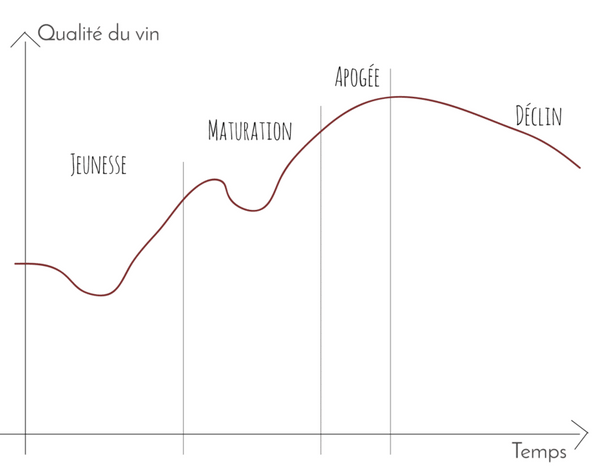
Although no legal age limit is set to define this type of wine, at La Cave Éclairée, we believe that the classification below is appropriate. As a reminder, the peak of a wine is the moment when it reaches its optimum potential for tasting. This is therefore THE moment when you should open your bottle.
- Peak within 1 to 5 years : wines to be enjoyed in their youth and which do not gain in complexity over time. Their bouquet mainly expresses primary aromas (fruits, flowers, spices) and secondary aromas (from fermentation: butter, brioche, toasted bread, etc.).
- Peak between 5 to 10 years : wines for medium aging. This type of cuvée benefits from being kept in the cellar for a few years to refine.Here, tertiary aromas (related to aging: woody, vanilla, humus, undergrowth, leather, etc.) may appear and make the wine more complex.
- Peak after more than 10 years : wines for long aging. Here we enter the very definition of age-worthy wines: cuvées that can be kept for 10, 20, 50 years, or even longer in the cellar! These are bottles whose aromatic complexity and greatness are revealed only thanks to the work of time. It is therefore necessary to be patient in order to appreciate them at their peak.
The characteristics of age-worthy wines
The ability of a wine to age well is influenced by a multitude of factors. Here are the most important ones.
- The grape variety : this is the type of grape used. Some varieties indeed have powerful tannins, high acidity or even an expressive aromatic profile, all factors contributing to the good longevity of a cuvée. Tannins indeed act as antioxidants while acidity, for its part, builds the backbone of the wine. Finally, a bottle expressing few aromas in its youth will have great difficulty becoming gustatorily interesting as the years go by.
- The winemaker's work : while the creation of wine is a completely natural process, there can, however, be no age-worthy wines without human intervention. The role of the winemaker and their choices are therefore crucial. Vineyard management, choice of grape varieties, winemaking processes, types of aging (see next point) are all decisive points of consideration when it comes to creating a wine (whether for aging or not, for that matter!).
- Aging : stainless steel tank, concrete tank, oak barrel, cask or amphora are all types of containers in which a wine can be aged. Thus, as an example, aging a cuvée in an oak barrel or in an amphora (porous materials), will allow it to experience a measured exchange with oxygen. Once bottled, this same wine will therefore be better able to resist it because, let us remember, it is indeed the contact of wine with oxygen that makes it evolve... both positively and negatively!
- The vintage : man does not do everything (and fortunately so)! The climate indeed plays a decisive role in the aging potential of a wine.Thus, a good vintage (sunshine, adequate temperatures, etc.) will give the same cuvée a much better aging potential than a cool and rainy year.
Other elements such as the terroir or even the quality of the plant material (choice of clones, age of the vines, etc.) also contribute to the longevity potential of a wine.
So, in the end, how can you know if you have an age-worthy wine in your cellar? Well, find out about all the factors mentioned above and don't hesitate to ask for advice from La Cave Éclairée or the producer!
Examples of age-worthy wines
Red wines are probably the first type of cuvée that comes to mind when we talk about "age-worthy wines". However, white wines, sweet wines, champagnes and even rosés all have, in their category, delicious bottles capable of aging gracefully over the years while improving! Here are some examples of appellations and regions known for their age-worthy wines.
Age-worthy red wines
Age-worthy red wines often stand out for a robust tannic structure in their youth as well as a pronounced acidity, although balanced. In addition, they are regularly (but not always) aged in oak barrels, which, when skillfully managed, adds an extra layer of complexity.
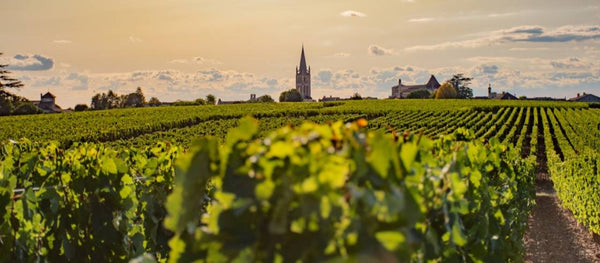
- Bordeaux : it is probably THE region that everyone thinks of when the concept of age-worthy wines is mentioned. It is true that the grape varieties Cabernet Sauvignon, Merlot and Cabernet Franc stand out for the creation of this type of cuvée. It is also true that the Bordeaux vineyard has a myriad of prestigious appellations and Grands Crus dedicated to this type of wine. Pauillac, Saint-Estèphe, Saint-Julien, Margaux, Pessac-Léognan as well as Saint-Émilion and Pomerol are just a few examples.
- Burgundy : while Pinot Noir is a grape variety with low tannins, its natural acidity as well as its delightful aromatic profile, combined with high-quality terroirs classified as Premier Cru or Grand Cru, also allow for the creation of age-worthy wines. Appellations such as Gevrey-Chambertin, Pommard, Nuits-Saint-Georges or Chambolle-Musigny perfectly embody this.
- Rhône Valley : with Syrah in the north, and the grape varieties Grenache and Mourvèdre further south, the Rhône Valley produces delicious age-worthy red wines.AOCs such as Côte Rôtie, Hermitage or Châteauneuf-du-Pape are indeed among the most prestigious in France.
- Languedoc-Roussillon : The largest wine region in France is full of great wines. The appellations Pic-Saint-Loup, Minervois or even certain IGPs such as Côtes Catalanes all have fantastic terroirs allowing the creation of long-ageing cuvées.
- South-West : Madiran and its Tannat grape variety, Bergerac and its trio of Bordeaux grape varieties, Cahors and its famous Malbec...here are three proofs that the South-West can also produce great age-worthy red wines!
Of course, this is a non-exhaustive list! Many other regions and countries also produce age-worthy red wines. We could, for example, mention Italy (Chianti, Brunello di Montalcino, Barolo etc.) and its grape varieties Sangiovese and Nebbiolo or even Spain, where Tempranillo shines in the appellations Rioja and Ribera del Duero.
Age-worthy white wines
White wines can also have great aging potential.Acidity, aromatic profile, terroir, and the winemaker's vinification are the key factors here.
- Loire : in AOCs such as Savennières or Vouvray, the Chenin grape variety can produce stunning wines, capable of aging for several decades. In rarer cases, Sauvignon (AOC Sancerre or Pouilly-Fumé) can also create white wines with remarkable longevity.
- Alsace : the Alsace region is a true viticultural gem, particularly renowned for its production of characterful white wines. Here, the three most iconic grape varieties are Riesling, Gewurztraminer and Muscat. Producing cuvées with very different characteristics, these three varieties share the ability to produce incredible age-worthy white wines.
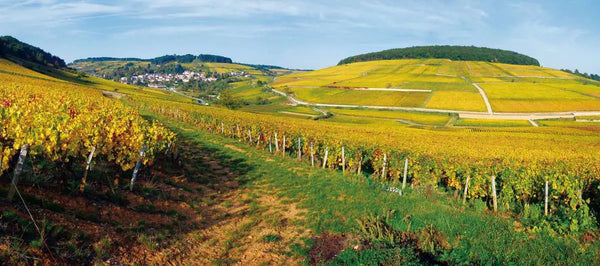
- Burgundy : the Chardonnay is the flagship white grape variety of Burgundy. With it, wines can be mineral-driven as in Chablis or Puligny-Montrachet or powerful, rich and opulent as in Meursault or Corton-Charlemagne. Regardless of its style, on interesting terroirs, this variety produces some of the greatest white wines in the world.
Once again, this is a non-exhaustive list and other vineyards such as Condrieu in the Rhône Valley (grape variety Viognier) or Pacherenc du Vic-Bilh (Petit Courbu, Gros Manseng, Petit Manseng, etc.) in the South-West can also produce great age-worthy white wines.
Other age-worthy wines: rosés, champagnes, and sweet wines
While red and white wines are the two main categories of age-worthy wines, champagnes, sweet wines, and even rosés can also improve in the cellar over the years!
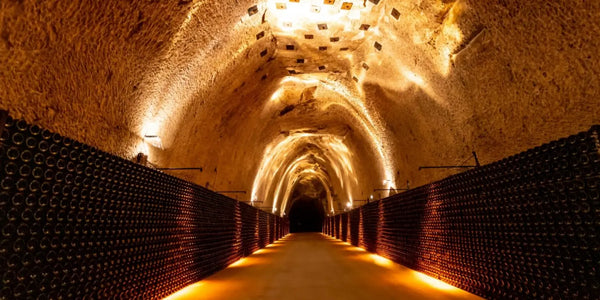
- Champagnes : the finest sparkling wines of France can absolutely be suitable for long aging! In fact, although the majority of champagnes are intended for relatively quick consumption (1 to 5 years maximum), a few exceptional bottles, most of them vintage, are capable of defying time.
- Sweet wines : many dessert wines have a great aging potential thanks to their natural acidity as well as their sugars, which act as natural preservatives. Sauternes, sweet Chenin wines from the Loire or Natural Sweet Wines from Roussillon (Maury, Banyuls, etc.) illustrate this perfectly.
- Rosés : It is indeed rare to come across age-worthy rosé wines. However, certain appellations such as Bandol or Palette in Provence can sometimes produce full-bodied rosés with a true aromatic structure and even, at times, tannic qualities.This is also the case for some Côtes-de-Provence.
Finally, other wines such as Vin jaune in the Jura also stand the test of time.Thus, in 2018, a Vin Jaune dating from 1774 (you read that right) was sold at auction for €103,700!
How to properly store your wines ?
Now that you have a better understanding of age-worthy wines as a whole, a question arises: how should you store them properly? Because it's all well and good to have bottles with incredible aging potential in your cellar, but if you don't store them correctly, you risk being very disappointed when you open them!
Here are the 6 essential rules to follow so that your bottles age harmoniously.
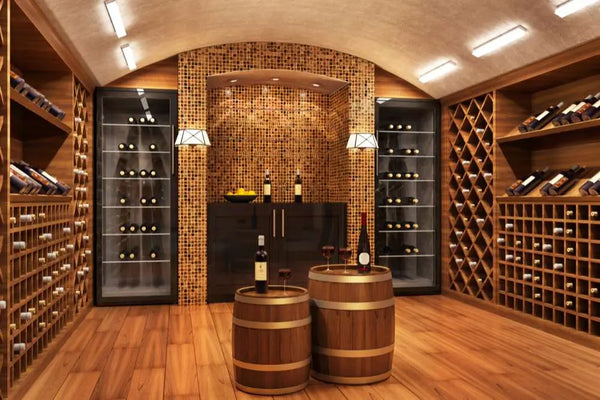
- Suitable humidity level : a humidity percentage of 70 to 80% minimum is ideal to prevent the corks of your bottles from drying out. The risk: excessive contact with oxygen, which can permanently spoil your wines.
- Protected from light : both natural and artificial, light is the enemy of wine. A defect known as "lightstruck taste" even exists! In fact, prolonged exposure of your bottles to light can give your precious wines a taste of cauliflower or rubber that is particularly unpleasant.
- A constant temperature : a temperature fluctuating between 12° and 14°C is ideal for storing your bottles. Above this range, the wine will age more quickly. Below it, your wines will evolve more slowly.
- Horizontal storage : your bottles should be stored horizontally so that the wine remains in contact with the cork. Once again, the risk here is that the cork dries out, thus causing premature oxidation of your precious nectar.
- Good ventilation and absence of odors : over time, wine can absorb surrounding odors. So avoid storing paint or garlic right next to your vintage gem!
- No vibrations : wine likes calm. Vibrations and other movements accelerate its aging and make it more fragile. So be careful with household appliances, subways, or cars.
You are now a true expert on wines for aging! All that remains is to make your choice wisely from all the vineyards previously mentioned, remembering to store your purchases properly afterwards! Cheers and feel free to contact La Cave Éclairée to perfect your selection, we are here to provide you with advice and guidance.