





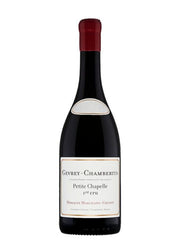
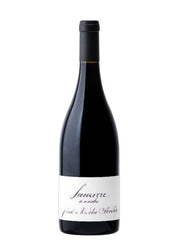


Cultivated all over the world, Pinot Noir is one of the most appreciated grape varieties among wine enthusiasts, notably for its ability to produce red wines of rare delicacy. While its very name evokes for everyone the Burgundy region as well as prestigious appellations such as Chambolle-Musigny, Gevrey-Chambertin or even Nuits-Saint-Georges, it is nonetheless well established on all five continents. Thus, today it is the 6th most planted grape variety in France and the 9th worldwide.
But then, what are its origins? In which regions of France and the world is it found? What are its tasting characteristics? What should you eat with a glass of Pinot Noir? If you want the answers to all these questions, this article is for you... follow the guide!
The origins and growing regions of Pinot Noir
Pinot Noir is a very ancient grape variety. Only a few generations separate it in fact from the wild vines found in forests, even before domestication by humans. Moreover, due to its age, it is considered the father (or grandfather) of a multitude of other grape varieties such as Chardonnay, Gamay, Syrah and Aligoté.
Most certainly originating from Burgundy, the first written mentions of Pinot Noir date back to 1375, when it was also called "Plant Fin". Nevertheless, it is known that the Romans found plantations of it in Gaul upon their arrival and thus cultivated it for many centuries before this date.
Most certainly originating from Burgundy, the first written mentions of Pinot Noir date back to 1375, when it was also called "Plant Fin". Nevertheless, it is known that the Romans found plantations of it in Gaul upon their arrival and thus cultivated it for many centuries before this date.
From the Middle Ages onwards, it was the monks who contributed to its development, notably within the vineyards of Burgundy and Champagne. However, it was from the year 1395 that Pinot Noir truly began to shine almost exclusively in Burgundy. Indeed, it was precisely at this date that the Duke of Burgundy Philip II the Bold forbade on his lands the cultivation of "the vile and disloyal Gamay" in favor of Pinot Noir, renowned for its greater finesse and delicacy.
Since then, Pinot Noir has spread to many other French regions. Thus, it is the most planted grape variety in Champagne (38% of the vineyard), where it is used to produce delicious characterful sparkling wines alongside Pinot Meunier and Chardonnay.
It is also found in the Loire Valley where it is the only red grape variety allowed in prestigious appellations such as Sancerre or Menetou-Salon. Many other wine regions also cultivate it, such as Jura, Alsace or even Savoie. Finally, although much rarer, it can also be found in the vineyards of Languedoc-Roussillon or Southwest France.
It is also found in the Loire Valley where it is the only red grape variety allowed in prestigious appellations such as Sancerre or Menetou-Salon. Many other wine regions also cultivate it, such as Jura, Alsace or even Savoie. Finally, although much rarer, it can also be found in the vineyards of Languedoc-Roussillon or Southwest France.
Of course, its influence is not limited to France! Thus, it is found in Germany, Austria, Italy, the United States, South Africa, and even New Zealand! In short, a true international success story!
Aromatic profile and aging potential of Pinot Noir
Pinot Noir is a grape variety that particularly thrives in cool and temperate climates. As a result, it will generally express more delicacy and aromatic nobility if it comes from regions such as Burgundy, Jura, or the Loire. It will then offer delicate aromas of fruit and flowers such as cherry, raspberry, strawberry, or violet.
Conversely, if the Pinot Noir you are drinking comes from warmer, southern climates, as is often the case when it is not French, its aromas will then be warmer, more powerful, and may evoke blackberry or blackcurrant. Furthermore, while Pinot Noir usually has very fine and delicate tannins, these may seem more pronounced in this type of climate.
Conversely, if the Pinot Noir you are drinking comes from warmer, southern climates, as is often the case when it is not French, its aromas will then be warmer, more powerful, and may evoke blackberry or blackcurrant. Furthermore, while Pinot Noir usually has very fine and delicate tannins, these may seem more pronounced in this type of climate.
Of course, there are between these two extremes many possible nuances of aromatic profiles. Nevertheless, you now know the main markers of this delicious grape variety to help you find your way during a tasting.
Finally, regarding the aging potential of Pinot Noir, this will vary greatly depending on its terroir of origin, the quality of the vines, or even the type of aging the wine has undergone. Thus, a Pinot Noir aged in stainless steel tanks and offering light and fruity notes will be ideal to drink within the first 3 to 5 years. Conversely, a wine aged in oak barrels, from old vines from a quality terroir can be kept for 20 years or more! It will therefore really depend on each wine, which is why it is important to seek advice to be sure to make the right choice.
What to eat with Pinot Noir?
The art of pairing food and wine reaches its peak with Pinot Noir. Its versatility and subtle structure make it an ideal partner for a variety of dishes, whether delicate or more robust.
Thus, with a light-bodied Pinot Noir, pairings with charcuterie, fresh cheeses or even white meats (chicken, pork, etc.) will work wonderfully.
Conversely, a more full-bodied Pinot Noir can ideally be paired with dishes and ingredients such as red meat (duck breast, rib of beef, lamb chops, etc.) or aged cheeses offering more character.
Conversely, a more full-bodied Pinot Noir can ideally be paired with dishes and ingredients such as red meat (duck breast, rib of beef, lamb chops, etc.) or aged cheeses offering more character.
Moreover, as Pinot Noir is a red wine with a delicate profile and low tannins, serving it at a temperature between 14-16°C is ideal to reveal all its aromatic complexity while preserving its characteristic freshness.
You now know all the key points to enjoy it at its best!
What are the best Pinot Noirs?
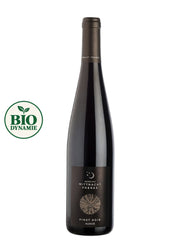
Although it is very complex to provide an exhaustive list of the best Pinot Noirs (as this is above all a matter of personal taste), La Cave Éclairée offers you nonetheless a selection of its finest wines and champagnes from this grape variety. There is something for every taste and budget so don't hesitate and be curious !
Whether you prefer Alsace with the Barmès-Buecher estates and Mittnacht Frères, are a Burgundy enthusiast with Domaine du Cellier aux Moines (Givry) or Decelle & Fils or even a fan of the Loire Valley with the beautiful Sancerre wines from Fleuriet and Pascal & Nicolas Reverdy, we are sure you will find what you are looking for!
Now that Pinot Noir holds no more secrets for you, all that remains is to put theory into practice.
Happy tastings and see you soon at La Cave Éclairée!


