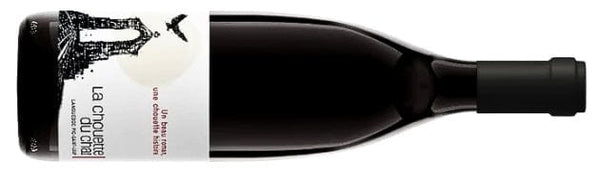
Grenache noir is a major grape variety on the global wine scene. With more than 163,000 hectares planted worldwide, including 81,000 ha in France, it is simply the 7th most widely planted wine grape variety internationally and the 3rd in France, behind Merlot and Ugni blanc.
In this article, we will dive into its captivating world and explore its origins, its presence around the world, its aromatic profile, its food pairings as well as its aging potential.
Good reading !
Summary
Origins and cultivation of Grenache Noir
Grenache Noir is native to Spain, and more specifically to Aragon, a region located in the northeast of the country (to the east of Rioja) where its cultivation dates back more than 2,000 years. Since the Middle Ages, it was introduced in France, where it is said to have been brought back by pilgrims returning from Santiago de Compostela. At the same time, it spread throughout the Mediterranean basin (Corsica, Sardinia, Italy, Greece, etc.).
From the 19th century onwards, its cultivation expanded worldwide and the Garnacha, as it is called in Spain, gradually became one of the most widely planted varieties in the world. Today, it can be found, among other places, in the United States, Argentina, Chile, Mexico, and also in Australia.
Nevertheless, France and Spain remain to this day the preferred countries for Grenache noir, accounting for approximately 90% of global production.
In Spain, it is today mainly cultivated in the north of the country, particularly in the regions of Castile and León, Catalonia and Rioja. In the latter, it often complements Tempranillo, the flagship variety of the vineyard, while it is the most important grape variety in an appellation such as Priorat, in Catalonia.
In France, the Rhône Valley is its region of choice.This variety actually represents 65% of the local red grape plantings and is the predominant variety within renowned appellations such as Côtes-du-Rhône, Vacqueyras, Châteauneuf-du-Pape, Gigondas and also Beaumes-de-Venise. Indeed, Grenache is mainly found in the southern part of the region
Beyond the Rhône Valley, Grenache is also well established in Languedoc-Roussillon where it is the second most common grape variety after Syrah. It is used here to produce dry red wines, but also sublime Natural Sweet Wines (VDN).
In Provence, Grenache noir accounts for 40% of the entire vineyard and is mainly used for the production of rosés, especially in the AOC Côtes de Provence. Finally, it is also found in Corsica, whether for the production of rosés or reds.
Characteristics and aromatic profile of Grenache noir
Grenache noir is renowned for being productive. It therefore gives its best on poor soils and when it is managed for low yield. This is why it shows excellent potential in the Mediterranean, where these two factors are generally combined, particularly thanks to a hot and dry climate. During vinification, it is sensitive to oxidation and requires great attention in the cellar from the winemaker.
Furthermore, Grenache has the particularity of concentrating a high level of sugar in its berries and therefore can produce wines with a high alcohol content.If this ability can be an issue for classic red or rosé wines (especially with global warming), it is a remarkable asset for the production of Vins Doux Naturels (Maury, Banyuls), these delicious fortified wines containing a significant amount of residual sugars.
Regarding its aromatic profile, it is known as seductive, warm, and indulgent. Indeed, a young red wine from this variety regularly displays a fruity charming and voluptuous profile, with notes of black cherry, blackberry, strawberry, raspberry, and pepper. Depending on the terroir, garrigue notes or cocoa may also appear.
Finally, the old vintages of Grenache will tend to display candied dark fruit aromas (notably prune) as well as roasting notes (coffee, chocolate).
Food and wine pairings and serving temperature
Grenache noir is a fabulous partner when it comes to sitting down at the table. Its character indulgent as well as its supple tannins indeed allow it to be paired with a myriad of dishes.
Thus, a young and fruity Grenache will pair ideally with a charcuterie platter or white meats. For its part, a complex and intense Grenache will be an ideal partner for red meats (beef, lamb, squab) or game.
Regarding rosés made from Grenache, these generally pair wonderfully with summer dishes as well as seafood and grilled fish.
Finally, a Vin Doux Naturel made from Grenache will pair magically with blue cheeses (Roquefort, Bleu, etc.) as well as desserts made with dark chocolate, coffee, or dried fruits!
From a serving temperature perspective, it is recommended to serve red wines made from Grenache between 16 and 18°C. Indeed, as these wines can have a high alcohol content, it is important to maintain a moderate serving temperature, otherwise the aromatic profile focused on alcohol may be intensified. For Vins Doux Naturels, serving at around 11-13°C is recommended to ensure they retain a certain freshness during tasting.
Grenache: what is its aging potential ?
The aging potential of wines made from Grenache can vary considerably depending on the wine profiles.
In fact, a Grenache vinified as a dry red wine and developing on fruit and indulgentise (such as a good Côtes-du-Rhône, for example) will have limited aging potential and should be enjoyed while young (1 to 5 years maximum).
On the other hand, a Grenache harvested with low yields, from noble terroirs and aged for many months in oak barrels (as is often the case in Châteauneuf-du-Pape, for example) can easily be expected to age for several decades.
Furthermore, when Grenache is blended with other varieties, as is often the case with Syrah and Mourvèdre, it then becomes complex to make absolute generalizations about its aging potential. In fact, this will once again depend on the varieties blended, the quality of their terroirs, as well as the winemaking style (vessel, duration, etc.). Let us nevertheless note that most of these wines will keep without any problem for between 5 and 8 years.
Regarding rosé wines, it is recommended to drink them within the first two to three years in order to preserve their fruity aromas and finesse.
Finally, Vins Doux Naturels constitute a separate category. Indeed, due to their long and atypical aging process (sometimes over several decades), their fortification, as well as their high sugar content, these wines can be kept for very long periods…sometimes more than 100 years! Once again, this will depend on the yields, the quality of the plant material, the terroirs, as well as the length of the wine’s aging process.
The best wines made from Grenache
Although it is difficult to provide an exhaustive list of the best wines made from the Grenache noir grape variety, La Cave Éclairée offers you a selection that will give you a superb overview of this variety's potential. From easy-drinking Grenache to great wines for cellaring, there is something for every taste and budget!
We recommend, for example, the delicious Côtes-du-Rhône from Stéphane Ogier. The various wines from Château de la Selve (IGP Coteaux de l'Ardèche) are also safe choices. Finally, the YL red cuvée from the Corsican estate Yves Leccia is also a must.
Of course, this is just a very brief overview of the possibilities!
There you have it, you now know almost everything about Grenache! All that remains is to put theory into practice to discover all its richness and to compare its different expressions according to the regions.
Furthermore, if you need any advice, La Cave Éclairée is, of course, always at your disposal. Cheers!