

With nearly 1,200 to 1,600 varieties recorded in France alone, cheese offers an unparalleled wealth of flavors, textures, and character. From fresh goat cheeses to pressed cheeses like Comté, and from bloomy rind cheeses such as Brie to the famous blue cheeses, each family has its own identity and calls for specific food and wine pairings.
Successfully pairing wine and cheese is above all about finding the right balance. A fresh cheese, for example, will not pair in the same way as a long-aged pressed cheese, a washed rind cheese, or a bold blue cheese. Texture, intensity, aging, and aromatic strength are all factors to consider when choosing the perfect wine.
So, which wine should you choose with Crottin de Chavignol, Comté, Brie, Blue cheese, or a cheese platter? In this article, discover all our tips for perfect wine and cheese pairings and find the ideal bottle for each specialty.
Contents
The best types of wine to pair with cheese
There is no single perfect wine to pair with all cheeses. The best pairing primarily depends on the type of cheese, its level of aging, and the intensity of its flavors. While white wines are often the most versatile partners, red wines, sweet wines, and even certain sparkling wines can create wonderful combinations when chosen carefully.
White wine
Contrary to popular belief, red wine is not the best match for cheese. In most cases, it is actually white wine that creates the most harmonious pairings. Its freshness and natural acidity balance the richness of the cheese while respecting its texture and degree of aging.
- Bright, mineral-driven whites, such as those made from Sauvignon Blanc or Riesling, are perfect for pairing with goat or sheep cheeses, thanks to their vibrant acidity.
- Fruity, fuller-bodied whites with more roundness and generosity, like those made from Chardonnay, Chenin, Viognier or Vermentino, are ideally suited for richer or creamier cheeses. Brie, Camembert, Reblochon, Beaufort, Comté, or Abondance find in these wines a partner that can match their aromatic intensity while maintaining a beautiful balance.
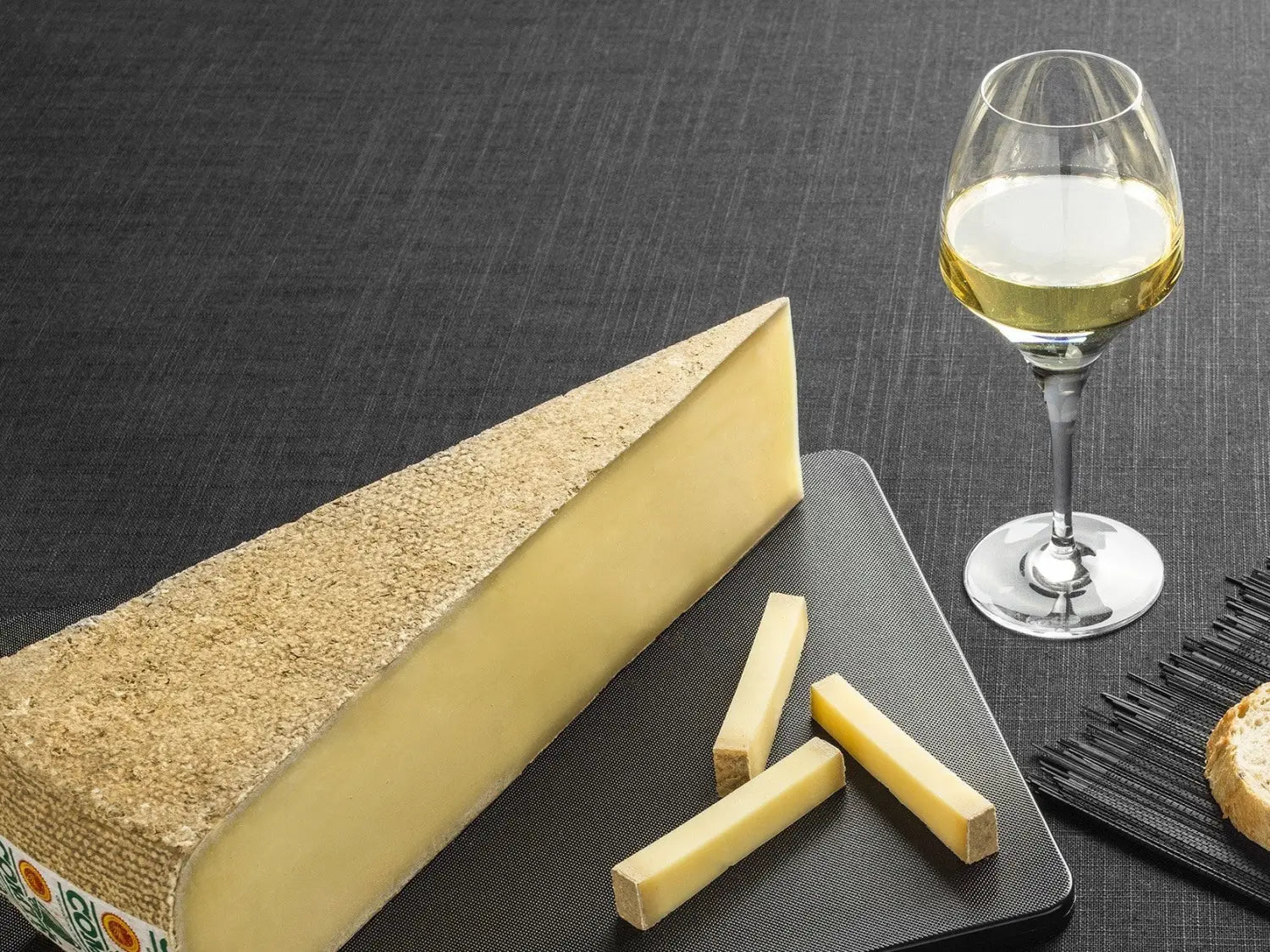 Cheese and white wine are usually a perfect match
Supple red wines
Red wine can also pair beautifully with cheese, provided you choose smooth and low-tannin. varieties. Wines with strong tannins tend to overpower the flavors and can even create a slight metallic taste with certain cheeses, especially soft-ripened, bloomy rind, or pressed cooked cheeses.
-Light-bodied, fruity and lightly oaked, wines, such as those made from Pinot Noir in Burgundy or Gamay from the Beaujolais, region, pair elegantly with soft cheeses like Brie or Reblochon, as well as mildly aged washed-rind cheeses such as Saint-Nectaire or Pont-l'Évêque.
-More structured reds, that still offer silky tannins, like certain Grenache or Syrah blends from the Rhône Valley, are particularly well-suited to cheeses with a stronger flavor, such as Cantal entre-deux, Tomme de Savoie, or aged Mimolette.
Rosé wine
Rosé wines can also pair beautifully with certain cheeses, provided you choose them carefully. A fruity and delicate rosé from Côtes-de-Provence, for example, will create wonderful combinations with the most refined cheeses. Its fruitiness and liveliness bring a pleasant sensation of freshness, especially enjoyable in summer or as an aperitif.
Discover the rosé selection from Figuière or Château Sainte-Marguerite, you won't be disappointed!
Sweet wines
Dessert wines can create some of the finest pairings between wine and cheese. While it may seem surprising, the residual sugar in the wine actually balances the saltiness and bold flavors of blue cheeses, for a truly remarkable harmony on the palate.
This is especially true with blue cheeses like Fourme d'Ambert or Bleu d'Auvergne. A Sauternes, a Coteaux du Layon or a Monbazillac then provide a superb balance of sweetness, freshness, and aromatic intensity. An essential pairing for lovers of exceptional food and wine combinations.
Enthusiasts may also opt for a Port (Vintage or Tawny), whose richness and dried fruit notes pair wonderfully with the most robust cheeses.
Sparkling wines
Sparkling wines can also create interesting pairings with certain cheeses, even if they are less common. However, their freshness, liveliness, and fine bubbles refresh the palate and work especially well with creamy cheeses.
A Champagne or a Crémant will, for example, pair beautifully with soft cheeses with a bloomy rind such as Brie de Meaux or Chaource, as well as certain fresh cheeses. On the other hand, very mature cheeses or blue cheeses generally do not pair well with sparkling wines.
Which wine should you choose for each type of cheese?
Now, let's take a closer look at some of the most classic pairings.
| Type of cheese | Wine style | Examples |
|---|---|---|
| Goat cheese | Crisp, mineral-driven whites | Sancerre • Pouilly-Fumé • Alsace Riesling |
| Brie, Camembert | Round whites or smooth reds | Loire Chenin • Burgundy Chardonnay • Pinot Noir |
| Young Comté | Fresh and indulgent whites | Jura Chardonnay • Burgundy white |
| Aged Comté 24-36 months | Complex whites or Vin Jaune | Jura Vin Jaune • Characterful Chardonnay |
| Raclette | Crisp whites or light reds | Sauvignon • Chasselas • Riesling • Gamay • Pinot Noir |
| Blue, Roquefort Fourme d’Ambert | Sweet or semi-sweet wines | Sauternes • Monbazillac • Port |
| Munster, Époisses | Aromatic and expressive whites | Riesling • Pinot Gris • Burgundy Chardonnay |
| Cheese platter | Versatile whites, rosés, or smooth reds | Chenin • Pinot Noir • Gamay • Côtes-de-Provence Rosé |
With goat cheese
Goat or sheep cheese pairs especially well with a crisp, vibrant, and mineral-driven white wine. Its natural acidity will balance the creamy texture of the cheese, while highlighting its freshness and delicate milky notes.
A fine Sauvignon Blanc from Loire is always a reliable choice. An Alsace Riesling also offers wonderful pairing options, especially with aged varieties.
We highly recommend the Sancerre wines from Bernard Fleuriet et Fils or Pascal et Nicolas Reverdy. The cuvées from domaine Delobel, located in Touraine, are also excellent choices.
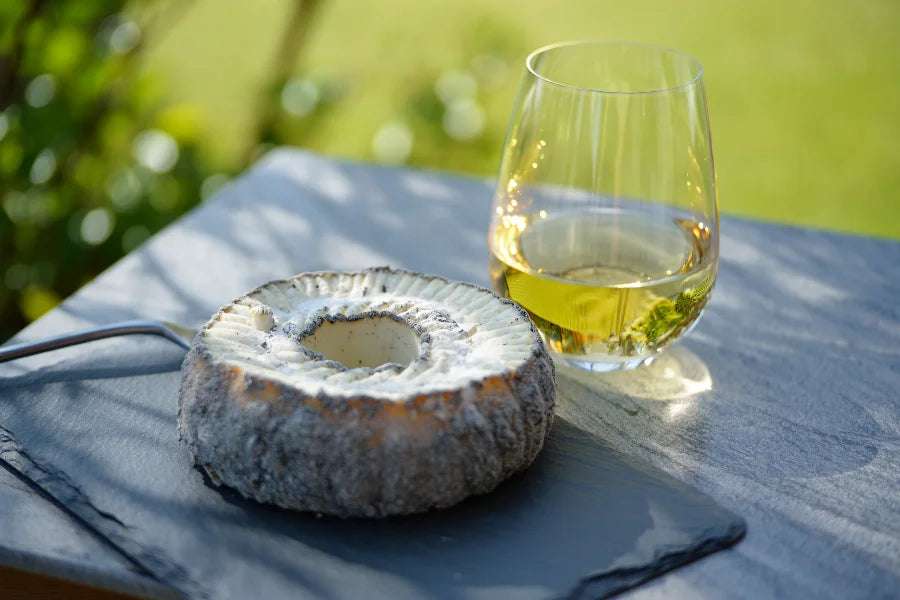
Goat cheese and Loire Valley Sauvignon: an essential pairing
With Brie or Camembert
Brie and Camembert develop a creamy texture and aromas that call for white wines with good body, but not too much intensity.
A Chardonnay with minimal oak will perfectly complement their smoothness. A fine Chenin (dry or sparkling) is also an excellent choice. For red wine lovers, a soft, low-tannin Pinot Noir will create a much more harmonious pairing than a powerful red. Finally, a Brut cider can echo the rustic notes of these cheeses.
We recommend here the dry or sparkling Vouvrays from François and Julien Pinon as well as the outstanding range from Domaine des Gandines, located in the Mâcon and Viré-Clessé appellations in Burgundy.
With a Comté cheese
Comté is one of the cooked pressed cheeses that offers the widest variety of pairings thanks to its aging process. The older it gets, the more intense and complex its flavors become.
A young Comté pairs perfectly with a fresh and indulgent Chardonnay from Burgundy or Jura, such as those from Domaine Decelle & Fils (Hautes-Côtes de Beaune, Savigny-Lès-Beaune, etc.).
After 24 to 36 months of aging, a fuller and more complex white wine, or the renowned Vin Jaune from Jura, will create some of the most celebrated pairings in French gastronomy. We recommend the outstanding Jura vintages from Jérôme Arnoux (Cellier des Tiercelines).
With raclette
The melted cheese in raclette calls for wines that bring freshness without overpowering its richness.
While Savoie white wine is always a reliable choice, an Alsace Riesling, a Chasselas, or a lightly oaked Chardonnay will work just as well. If you prefer red wine, opt for a Pinot Noir or a Gamay, whose soft tannins will not clash with the milk proteins.
Try a Riesling from the domaines Schlumberger or a lovely Gamay from Christophe Pacalet (Saint-Amour, Moulin-à-Vent, etc.)
With a Roquefort
Blue cheeses are among the most intense. To balance their salty character and aromatic strength, sweet wines remain the most convincing partners.
A Sauternes from Château Haut-Bergeron or an aged Pineau des Charentes from Guy Lhéraud will, for example, create a wonderful contrast with Roquefort, Fourme d'Ambert, or Bleu d'Auvergne. Enthusiasts may also opt for a Tawny Port from KOPKE or a sweet fortified wine from Banyuls AOC by Mas Amiel.
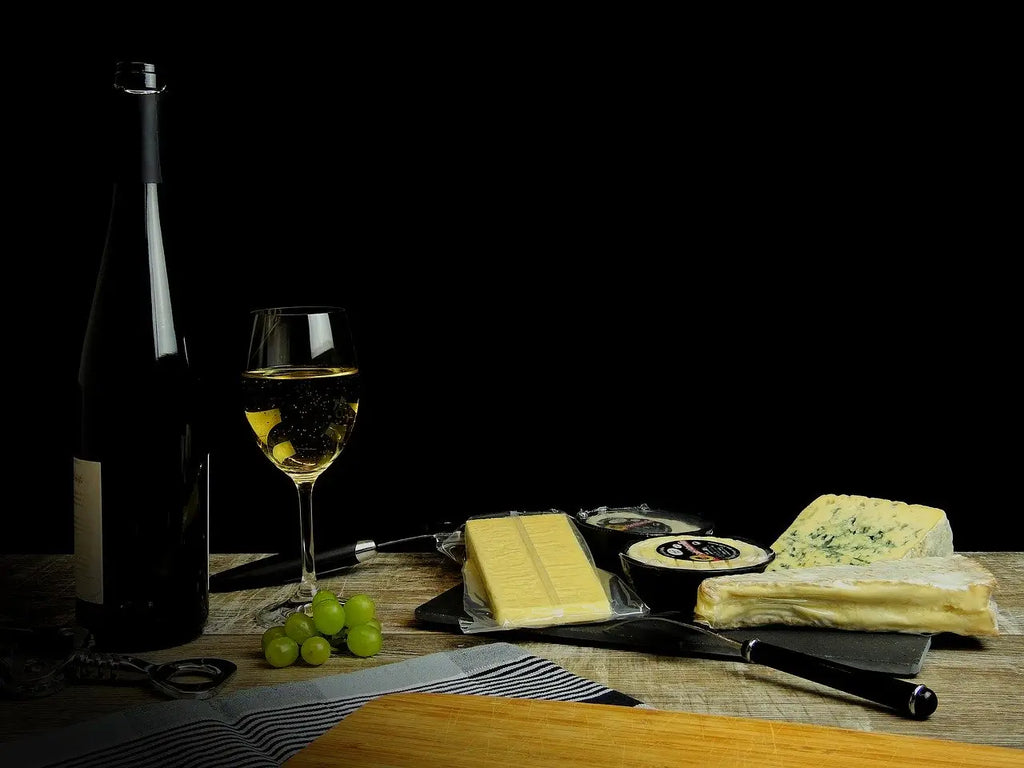
For Roquefort, the ultimate secret lies in pairing it with a fine sweet wine
With Munster or Époisses
Washed-rind cheeses like Munster or Époisses develop intense aromas that call for expressive wines, yet ones that can maintain freshness.
Munster pairs especially well with the great white wines of Alsace, such as Pinot Gris, Riesling, or Sylvaner, whose lively character balances the richness of the cheese.
With its bold character, Époisses unveils its full complexity alongside a generous Burgundy Chardonnay with subtle oak notes, able to match its intensity without overpowering it.
For example, try Chardonnays from Jaeger-Defaix in Rully (Burgundy) or the delicious Saint-Véran from Vignobles Bodillard.
Mistakes to Avoid
There is no universal rule for pairing wine and cheese successfully. However, a few simple guidelines can help you avoid the most disappointing combinations.
Choose:
- Fresh, well-balanced white wines.
- Supple, low-tannin red wines.
- Sweet wines with blue cheeses.
- Regional pairings (Sancerre with Crottin de Chavignol, Vin Jaune with Comté, Gewurztraminer or Pinot Gris with Munster, etc.).
Avoid:
- Highly tannic red wines, which are often not well-suited to cheese.
- Overly oaky profiles, which can overpower the cheese’s aromas.
- Unbalanced pairings between a strong cheese and a wine that's too light, or vice versa.
- Serving a white wine that's too cold or cheese straight from the fridge, which can dull their flavors.
- Assuming that a great Bordeaux or a very powerful wine is automatically the best choice for a cheese platter.
In summary
As you can see, there isn't one perfect wine to pair with every cheese. The best match depends above all on the type of cheese, its level of aging, and its aromatic intensity.
While smooth red wines pair perfectly with certain specialties, white wines often provide the most harmonious combinations thanks to their freshness. Sweet wines, on the other hand, are ideal for enhancing blue cheeses, while some Champagnes or Crémants can also offer delightful surprises.
At La Cave Éclairée, we carefully select wines that bring out the full richness of a cheese platter. Explore our curated selection of wines for cheese and feel free to contact us for personalized advice: we would be delighted to help you find the perfect bottle to match the cheeses you wish to enjoy!


