





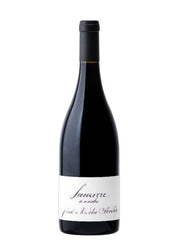


The Saint-Joseph appellation is certainly one of the most beautiful wine regions in the Rhône Valley and in France. Its vineyard, made up of steep hillsides nestled on the right bank of the majestic Rhône River, boasts a rich and complex history, marked by centuries of dedication to wine.
This article invites you to explore this winegrowing gem. From its history to its terroirs, including its grape varieties and its ties to gastronomy, you will know everything about Saint-Joseph and its wines after reading this.
History of the Saint-Joseph AOC
The history of the Saint-Joseph appellation dates back to Antiquity, illustrating the millennia-old connection between man and vine in this region. The first traces of the vineyard actually go back to the 1st and 2nd centuries BC. As early as that time, the Romans recognized the exceptional potential of this steeply sloped terroir, allowing for the production of ripe and aromatically rich grapes.
In the Middle Ages, a few centuries later, the regional wine was then called "Vin de Mauves", named after the town now located in the south of the appellation. From the 8th century onwards, the region's cuvées appeared on several royal tables, from Russia to the France of Charlemagne.
In the 17th century, the Jesuit monks of Tournon renamed the vineyard Saint-Joseph, a name taken from a plot of a few hectares that belonged to them.
At the end of the 19th century, phylloxera, a parasite related to the aphid, decimated the European vineyard. The Rhône Valley was also affected and many producers were driven to bankruptcy.
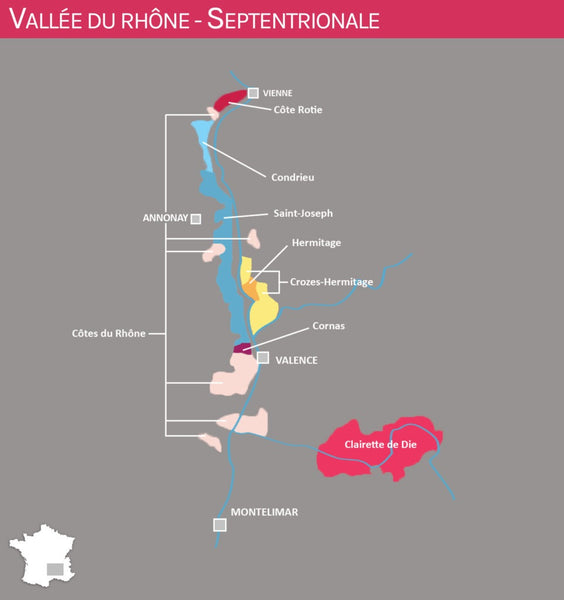
In 1956, the appellation was officially created. At that time, it covered only 90 hectares and 6 towns. Today, the vineyard has expanded considerably, covering 1,330 hectares across 26 towns and starting from Chavanay in the north and ending at Chateaubourg and Guilherand-Granges further south, near Valence.
Grape Varieties and Wines of Saint-Joseph
Now that you are more familiar with the history of Saint-Joseph, let us now look at its composition.
Stretching 60 km from north to south, 85% of the 1,330 hectares of the appellation are dedicated to the Syrah grape variety, producing delicious red wines. The remaining 201 hectares are planted with the Marsanne (136 hectares) and Roussanne (65 hectares) varieties, allowing for the production of very charming white wines.
Syrah is therefore the very embodiment of the vineyard. It allows for the production of wines with seductive aromas combining notes of red and black fruits (cherry, blackberry) with a floral touch (violet) and a hint of spice (notably pepper). Oak barrel vinification is also common in the region, bringing an extra layer of complexity (woody, vanilla, sweet spices, etc.). Finally, the tannins of Syrah are often present during tasting but always smooth and delicate.
Depending on the cuvées, the red wines of Saint-Joseph generally have an ageing potential ranging from 8 to 15 years.
If you want to know everything about this variety, feel free to read our dedicated article entitled The Syrah Grape Variety Guide !
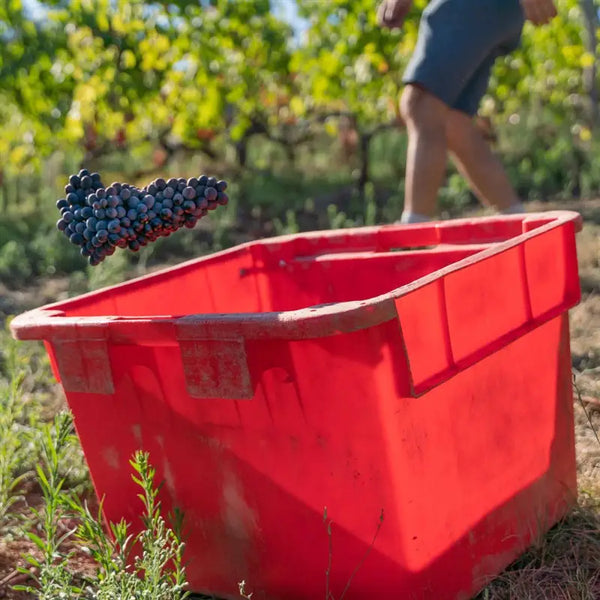
A bunch of Syrah grapes harvested in Saint-Joseph
Although the white wines of the appellation represent only a very small part of the production, they are still well worth discovering. Marsanne and Roussanne indeed blend brilliantly by combining their respective qualities and aromas.
Indeed, the white wines of Saint-Joseph also delight tasters thanks to their aromas of white and stone fruits (peach, apricot, pear, etc.), white flowers (honeysuckle, hawthorn, etc.) and almonds. Here too, barrel ageing can bring extra complexity and roundness to the wines produced.
Although some top-end cuvées can improve for more than one or even two decades, most Saint-Joseph whites are best enjoyed in their youth (1 to 5 years).
Climate and Terroirs of Saint-Joseph
Bordering Côte Rôtie to the north and the Cornas appellation to the south, Saint-Joseph is located on the right bank of the Rhône and stretches for 60 km in length, offering exceptional viewpoints.
The appellation experiences a moderate semi-continental climate, meaning it generally has hot, dry summers as well as rather cool winters. Rainfall is also average, around 870mm per year, with a strong concentration in autumn, from September to November.
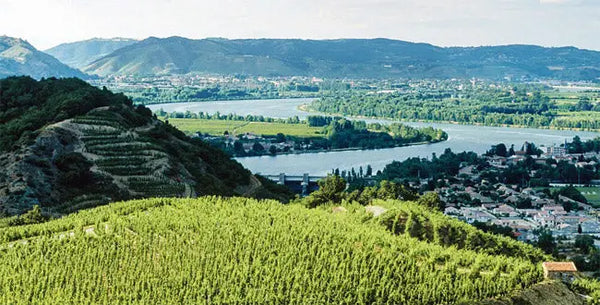
A demanding vineyard organized in terraces, Saint-Joseph consists of steep hillsides rising up to 350m in altitude. Plots with more southern exposure are currently considered the most qualitative as they allow for the harvest of grapes with better ripeness.
Nevertheless, global warming climate change is reshuffling the deck. In search of freshness in their wines and to contain alcohol levels, winegrowers are now betting on terroirs exposed further north which are less affected by the heat. In any case, all these differences contribute to the great diversity of wines produced here!
Finally, the appellation is mainly found on granitic soils, sometimes mixed with clay-limestone enclaves. Composed of quartz, mica or even feldspars, granite allows ideal heat regulation, retaining it during the day but cooling quickly at night. This results in wines with beautiful acidity while remaining warm.
What to eat with a Saint-Joseph ?
With a red Saint-Joseph, and depending on the power of the wine chosen, white and red meats will make superb pairings. Lamb chops, beef rib steak, but also roast chicken and pork ribs are all examples of successful matches. Finally, duck, pigeon, or partridge can also be very interesting to combine.
Conclusion
As you will have understood from this reading, the Saint-Joseph appellation is a true gem of the Rhône Valley with an exceptional terroir and passionate winegrowers.
The wines produced here are indeed among the best in France and can suit many palates. From powerful, long-ageing reds to a delicate Syrah offering beautiful aromatic complexity, there is something for everyone in Saint-Joseph! Not to mention, of course, the delicious whites made from Marsanne and Roussanne.
All that remains is for you to discover this wonderful vineyard by opening a bottle (always in moderation 😉). And if you need advice, La Cave Éclairée is at your complete disposal!


