

Among the treasures of Mediterranean viticulture, Cinsault holds a unique place. Too often overlooked despite its rich history and unique character, this appealing variety, used both as a single varietal and in blends, is highly valued by winemakers for its ability to produce supple, aromatic, and refreshing red and rosé wines.
In this article, we will set out to discover this ancient grape, exploring its history, main characteristics, and the regions where it thrives. We will also detail possible food and wine pairings to fully appreciate all the finesse of this grape variety .
Let yourself be guided on a journey to the heart of the Mediterranean basin…enjoy your reading !
Summary
History and origins of Cinsault
The history of Cinsault is marked by a discreet progression through the ages and is rooted in the Mediterranean basin. Its exact origins are lost in Antiquity, a period during which it is highly likely that related vine varieties were already growing in Provence, Languedoc, and the Rhône Valley. This grape variety is believed to have thrived in these regions under the influence of Phoenician and Roman cultures, the first civilizations to introduce the vine to French territory.
In the Middle Ages, although wine gained economic and cultural importance, grape varieties were often classified by wine type or region rather than by botanical variety. The winemakers and monk cultivators of the time did not yet rigorously distinguish grape varieties as we do today. Nevertheless, it is highly probable that our variety continued to develop during this period.
It was especially the winegrowers of Languedoc and Provence who, in the 18th century, began to recognize and value the specific qualities of Cinsault, gradually incorporating it into their wines. However, the systematic recognition of this variety as a unique entity was truly formalized in the 19th century, thanks to the work of figures such as Victor Rendu.
It was also during this latter period that Cinsault was planted in North Africa (Algeria, Morocco, Tunisia) during colonization. It then became one of the main grape varieties for wine production in these countries.
Also at the end of the 19th century, the phylloxera crisis struck European vineyards and devastated its vines. In the following decades, Cinsault proved to be a key grape variety for replanting vineyards thanks to its high yield and adaptability to hot climates.
In 1925, Cinsault, which had also arrived in the 19th century in South Africa, was crossed with Pinot Noir by Professor Abraham Izak Perold. This gave birth to the iconic South African native variety : the Pinotage.
At the end of the 20th century, Cinsault lost popularity in some regions due to the growing demand for international varieties such as Merlot, Cabernet Sauvignon, and Syrah.
However, it is now experiencing a renewed interest, particularly in France, where winemakers are rediscovering its ability to produce light, elegant, and fresh wines, meeting the desires of consumers during this period when climate change is disrupting the drinkability and freshness of wines.

Pinotage: iconic South African variety resulting from a cross between Cinsault and Pinot Noir
Where is the Cinsault grape grown?
Today, with around 7 000 hectares planted in its vineyards, France remains the kingdom of Cinsault. Most of the vines are located in Provence, Languedoc-Roussillon and Rhône Valley.
South Africa comes second, with just under 3 000 hectares of vines planted with our variety.
Finally, other countries such as Morocco, Lebanon, Australia, and the United States (California) also have a few hectares of Cinsault, but it remains very minor there.
The characteristics of Cinsault
Cinsault is a late-ripening grape variety and therefore resistant to spring frosts. Its main advantage also lies in its resilience to drought, making it a grape variety suited to Mediterranean climates. However, it is sensitive to certain diseases such as esca. Grape worms can also affect its production, requiring increased vigilance in the vineyards.
Its bunches, large and well-filled, offer juicy berries with thin skins. This grape is suitable both for vinification as red and rosé and for consumption as a table grape. In the latter case, it is sometimes nicknamed "œillade".
Cinsault stands out for its ability to produce light, fruity, low-alcohol, and pleasantly supple wines. Wines made from this grape generally display red fruit notes (raspberry, cherry, strawberry, etc.) as well as floral flavors. The tannins are also not very pronounced and the bottles are generally not suitable for long aging. These are mainly intended to be enjoyed young to appreciate all the freshness of the aromas.

Cinsault: a grape variety with fruity, fresh, and elegant aromas
Which dishes to pair with Cinsault?
Wondering what to pair with a good Cinsault? With its light structure and fruity aromas, it’s a true chameleon at the table! Here are some ideas to make the most of it. Note that we are talking here about single-varietal Cinsault wines or blends where it plays a major role.
- Appetizers and tapas : for an aperitif with friends, a Cinsault rosé or red is a dream choice. Its light and fruity side pairs perfectly with olives, charcuterie, or Mediterranean tapas. The perfect combo for a friendly moment that brings back holiday memories!
- Grilled meats : for barbecue lovers, a 100% Cinsault red will bring delicious freshness to meats. With chicken skewers, its fruity notes will perfectly balance the flavors without ever overpowering the dish.
- Mediterranean cuisine : craving southern flavors? Cinsault will pair wonderfully with pizzas or spicy couscous. Its lightness and supple tannins will harmonize perfectly with these generous dishes.
- Fish and seafood : for seafood or paella, a chilled Cinsault rosé will work wonders. Simple, refreshing, and indulgent !
So, ready to open a nice bottle? For optimal service, serve your rosé between 8-10°C and your Cinsault red around 14-16°C so that its aromas can fully express themselves.
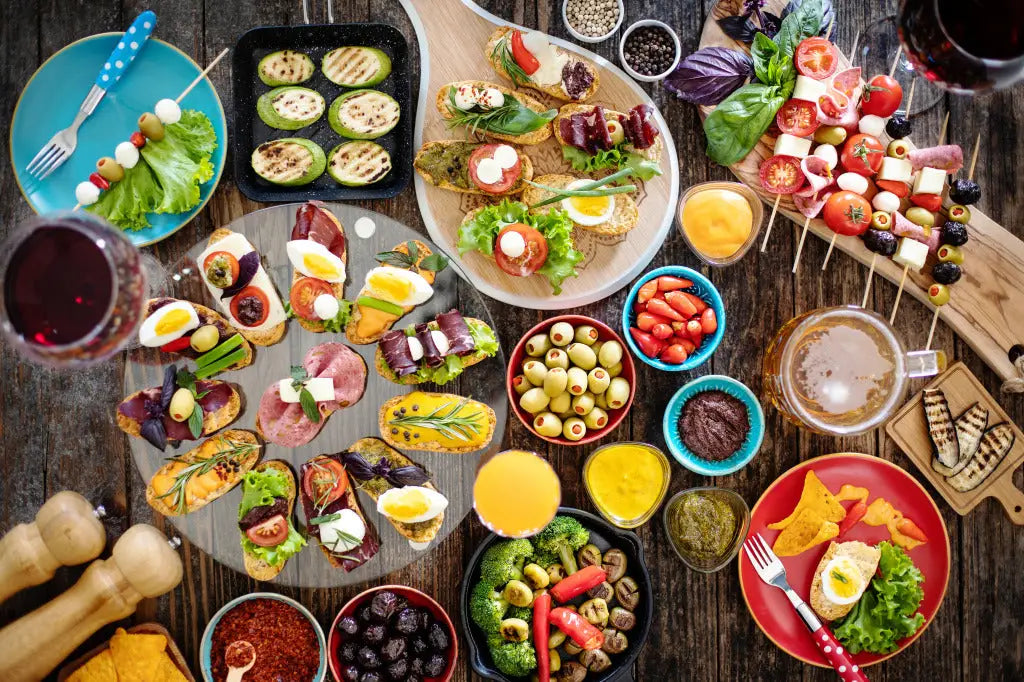
What could be better than a refreshing Cinsault to enhance your Mediterranean tapas?
The best wines made from Cinsault
Although Cinsault is rarely vinified alone, it shines in the blends of rosés and reds from southern France. Here are some must-visit estates to discover quality wines highlighting this unique grape variety.
- Domaine La Navicelle : located in the heart of Provence, this estate offers elegant wines, perfect for summer tasting. The rosés from La Navicelle are renowned for their freshness and delicate notes of red fruits and citrus. The freshness of Cinsault plays an important role here.
- Château de la Selve : based in the Rhône Valley, Château de la Selve combines Cinsault with other local grape varieties to produce blended red wines of great finesse, appreciated for their balance and elegance. The range is very comprehensive, from well-made easy-drinking wines to more structured wines for aging. We highly recommend all their bottles !
- Figuière : This superb estate based in the Côtes-de-Provence is run by the Combard family. The siblings use Cinsault in most of their rosés. These are always marked by beautiful minerality as well as fruity and floral notes. Perfect to accompany summer cuisine !
- Domaine Tempier : famous for its powerful reds, Domaine Tempier is an iconic property of the Bandol appellation, in Provence. The Peyraud family and Daniel Ravier, the estate’s director, combine Cinsault with other Mediterranean grape varieties to produce full-bodied and robust wines, whether red or rosé. Deliciously complex and indulgentise !
As you can see, Cinsault is a true jewel of the vineyards of southern France. With its indulgents aromas, its freshness, and its ability to enhance blends, it deserves a place of choice in your cellar!
Want to know more about the grape varieties of Provence and Languedoc? Feel free to browse our selection on La Cave Éclairée! Over 350 gems are waiting for you…


