







Malbec, Tannat, Négrette, Fer Servadou, Duras… The South-West boasts a diversity of red grape varieties that is hard to find elsewhere in France. From Cahors to Madiran, from Fronton to Gaillac, the red wines of the South-West can be fruity and smooth, spicy, powerful, or crafted for long aging.
This richness is due to the vastness of the vineyards, the variety of its terroirs, and the presence of many historic grape varieties. In this article, we focus specifically on the red wines of the region : their history, main grape varieties, appellations, and the best pairings. For a broader overview including whites, sweet wines, and other styles, explore our selection of South-West wines.
Contents
A long winemaking history
The South-West vineyard has ancient roots. The cultivation of vines developed here especially during Roman times before expanding further in the Middle Ages. Abbeys and monasteries played a key role in shaping many vineyards, while the routes leading to Santiago de Compostela encouraged exchanges and the movement of people as well as grape varieties.
This history partly explains the region’s extraordinary plant heritage. The South-West is home to many local or historically established varieties, some of which have become iconic, such as Malbec, Tannat, Négrette, Duras, and Fer Servadou.
Like all French vineyards, the region was deeply affected by phylloxera at the end of the 19th century. The vines were then gradually replanted and the vineyard rebuilt.
Today, the South-West fully asserts its own winegrowing identity, which long remained in the shadow of Bordeaux.Its unique grape varieties and the very distinct character of its appellations are precisely what make it so appealing.
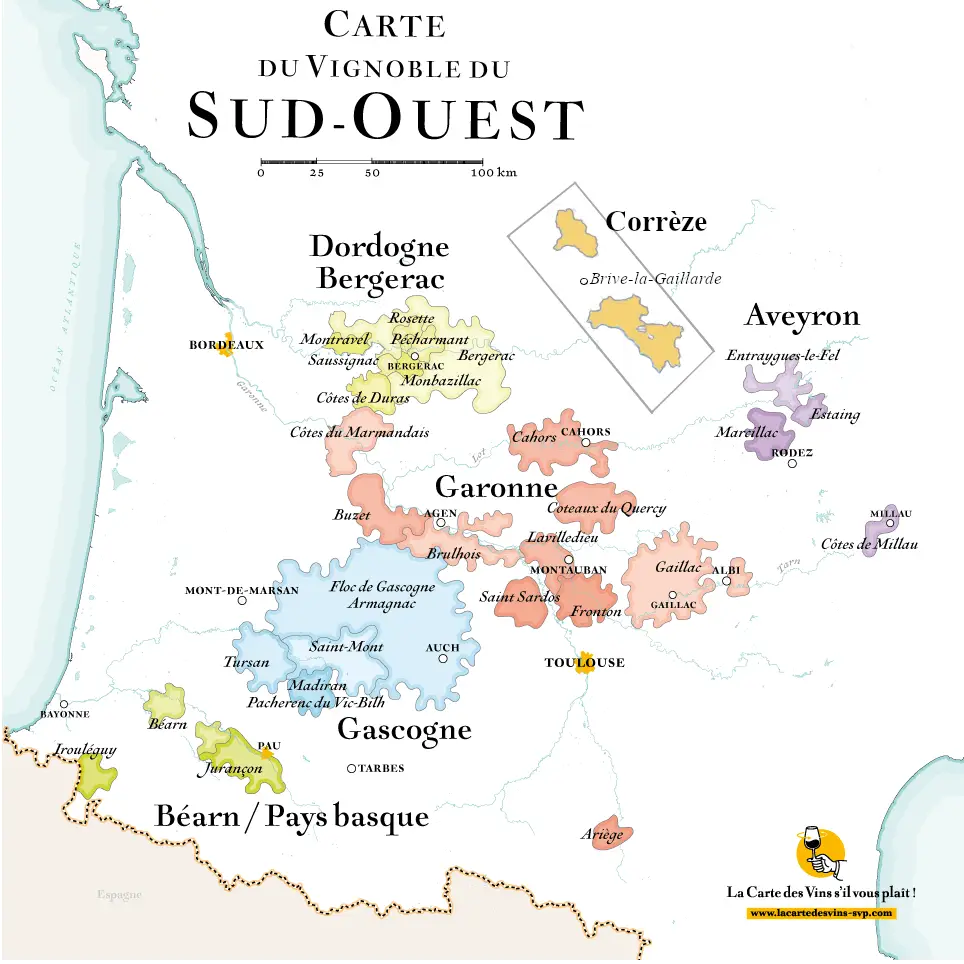
General view of the South-West vineyard
The main wine regions of the South-West
Referring to the South-West vineyard as a single entity is almost misleading, given the vastness of its territory. Between the Massif Central, the Garonne basin, Atlantic influence, and the Pyrenean foothills, the climates, soils, and grape varieties change dramatically.
The Bergeracois
Extending from the Bordeaux vineyard, the Bergeracois shares several major grape varieties with its neighbor, notably Merlot, Cabernet Sauvignon, Cabernet Franc and Malbec.
The reds are mainly produced under the appellations Bergerac, Côtes de Bergerac, Pécharmant, or Montravel. The styles range from approachable, fruity wines to more structured cuvées capable of aging for several years.
The Garonne Basin
Around the Garonne and its tributaries, several vineyards with distinct identities follow one another. Buzet, Brulhois or Côtes du Marmandais notably combine Bordeaux-influenced grape varieties with more local ones.
Côtes du Marmandais particularly illustrates this diversity thanks to Abouriou, a local grape variety that can be blended with Merlot, Cabernet Franc, Cabernet Sauvignon or Malbec.
Cahors, Fronton and Gaillac
Further east, the character of the wines changes significantly.
In Cahors, Malbec, also known as Côt, is the main grape variety of the appellation. It produces deep red wines, often marked by black fruits, spices and a pronounced tannic structure.
In Fronton, Négrette is the local signature. It produces particularly aromatic wines, with notes of black fruits, flowers and spices.
Gaillac boasts a particularly unique heritage of grape varieties, including Duras, Fer Servadou, locally known as Braucol, and Prunelart, to which Syrah.
The Pyrenean foothills
As you approach the Pyrenees, Tannat plays a key role. It is at the heart of the Madiran appellation and is also important in Irouléguy.
Naturally rich in body and tannins, this grape variety can produce powerful, deep reds, but modern winemaking techniques also allow for more supple and approachable expressions in their youth.
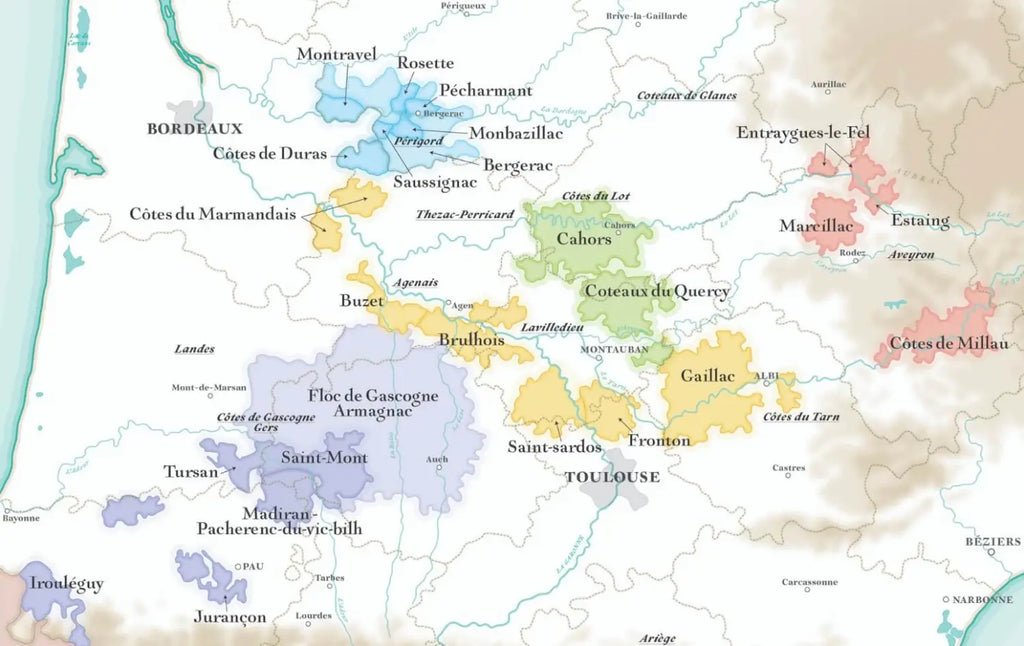
Map of the appellations of the South-West vineyard
The main red grape varieties of the South-West
One of the region’s key features lies in the diversity of its grape varieties. In addition to those also found in Bordeaux, many grapes are historically linked to the South-West.
Malbec is inseparable from Cahors. Deeply colored and structured, it often develops aromas of blackberry, plum, violet, and spices. Depending on the terroir and winemaking, it can produce both fruit-forward, approachable wines and great age-worthy cuvées.
Tannat is the flagship red grape of Madiran. Its richness in tannins naturally produces robust and deep wines, often associated with black fruits, spices, and more complex notes as they age.
Négrette is particularly linked to Fronton. Highly expressive, it can bring aromas of violet, black fruits, and spices while maintaining a generous character.
Fer Servadou, also known as Braucol in Gaillac or Mansois in Marcillac, generally brings freshness, spice, and character. It plays a significant role in the identity of several South-West vineyards.
Duras, mainly associated with Gaillac, produces colorful and spicy reds. Prunelart, another historic variety of the region, is also experiencing renewed interest among some producers.
Finally, depending on the appellation, Cabernet Franc, Cabernet Sauvignon, Merlot, Syrah, or even Gamay complete this mosaic of grape varieties.
What styles of red wines can be found in the South-West?
There is not a single style of South-West red wine. The vastness of the region and the diversity of grape varieties actually allow for the production of extremely varied profiles.
Bergerac and Côtes de Bergerac often offer reds dominated by Merlot and the Cabernets. Some cuvées focus on fruit and suppleness, while others display more structure and depth.
Fronton stands out thanks to Négrette. The wines generally have a particularly recognizable fruity, floral, and spicy character.
Cahors showcases the full diversity of Malbec. While the traditionally powerful and structured styles still exist, many estates now also produce more refined, fresh, and easy-drinking cuvées. You can find both generous and approachable reds as well as wines meant for long aging.
Gaillac offers a wide range of local grape varieties. Duras, Braucol, and Prunelart, in particular, are used to craft fruity, spicy reds with a distinctly regional character.
Madiran generally produces the most robust wines of the group. Tannat gives them color, structure, and aging potential. However, modern cuvées now preserve more fruit and freshness than in the past.
Finally, appellations such as Irouléguy, Marcillac, Buzet, Brulhois, or Côtes du Marmandais each offer their own interpretation of local grape varieties and terroirs.
What to eat with a red wine from Southwest France?
The diversity of wines from the region naturally allows for a wide variety of pairings.
A smooth and fruity red from Bergerac, Fronton, or Gaillac can be served with roast poultry, cured meats, grilled dishes, or certain cheeses. The freshest cuvées can also be slightly chilled before serving.
A more structured Cahors or a Madiran will naturally pair well with more generous cuisine: duck confit, cassoulet, lamb, grilled beef, slow-cooked dishes, or game.
Regional pairings work particularly well because the richness of these dishes matches the structure and tannins of the most powerful red wines.
For serving, a temperature of around 16 to 18°C is generally suitable for the most structured reds. Lighter, fruitier cuvées can be enjoyed slightly cooler.
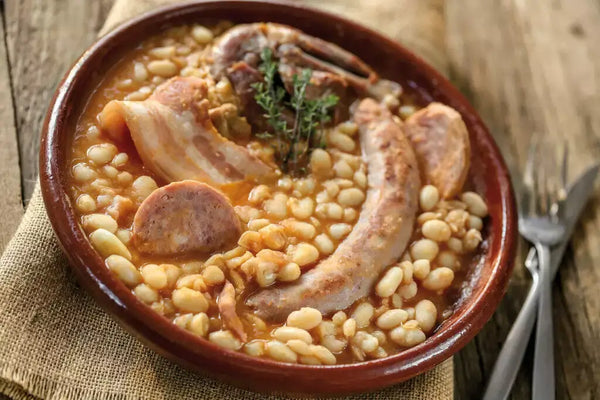
Cassoulet pairs especially well with the powerful, structured reds of the region
A region to discover
The red wines of the South-West therefore offer a particularly diverse universe.Between the Malbec from Cahors, the Tannat from Madiran, the Négrette from Fronton, the historic grape varieties of Gaillac, or the blends from Bergerac, there is a wide range of styles and personalities.
This diversity is what makes the region so interesting: you can find both fresh, immediately approachable reds and powerful, complex wines capable of aging for many years.
To discover our currently available bottles, visit our Southwest wine collection. And if you’d like to explore the white wines of the region, check out our article Discovering the white wines of Southwest France.


