The
Beaujolais is often reduced to a production of
simple, fruity, and light wines made from the Gamay grape variety. Moreover, Beaujolais Nouveau is often mentioned in discussions and, for many people, tarnishes the reputation of the vineyard. Nevertheless, the region is also truly
capable of producing rich, complex, and age-worthy cuvées thanks to superb terroirs and passionate winemakers!
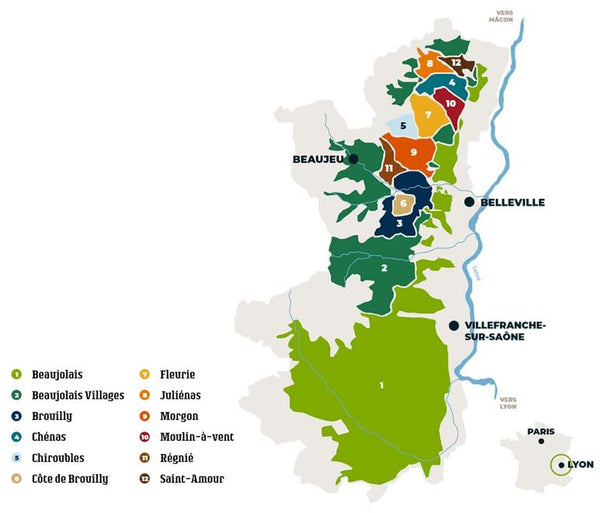
In this article, we will explore the geography of the Beaujolais vineyard as well as its different appellations, while focusing on the 10 regional crus.
After reading this, you will have changed your mind about Beaujolais! Follow the guide...
Climates, terroirs, and grape varieties of Beaujolais
Nestled between Burgundy (south of Mâcon) and the Rhône Valley (north of Lyon), Beaujolais benefits from a temperate semi-continental climate with oceanic and Mediterranean influences.
Furthermore, while 97% of production is reserved for red wines made from the Gamay grape variety, the varied terroirs of granite, schist, clay, and limestone give the produced cuvées a great diversity of profiles.
The remaining 3% is dedicated to the small production of white wines made from the Chardonnay grape variety.
What are the appellations of Beaujolais ?
At the base of the hierarchy of Beaujolais appellations, there are first of all 4 regional AOCs.
The AOC Beaujolais
It is the largest in the region and, although covering the entire vineyard, it is mainly located in the south of the latter. Furthermore, while the vast majority of production is made from the Gamay grape variety, 300 hectares are also dedicated to the production of white wine from Chardonnay. Whether white or red, the wines from this appellation generally express a light, fresh, and fruity character.
The AOC Beaujolais Villages
It is located in the northern part of the region and covers 38 communes. The vines in
AOC Beaujolais Villages are on average at more than 300m altitude and thrive on the best slopes of the region. Here too, the wines are known for their
fruity character and indulgent and can be enjoyed in their youth or after a few years in the cellar.
The AOC Beaujolais Nouveau
It is perhaps the best known of the vineyard and is in any case the most important in terms of production. Indeed, Beaujolais Nouveau represents nearly a third of the entire vineyard's production ! Geographically, it overlaps with the Beaujolais and Beaujolais Villages appellations.
Each year, on the third Thursday of November, Beaujolais Nouveau is the first wine of the current vintage to be released for sale. As you can imagine, it is a light, fresh, and very fruity wine intended to be enjoyed as an aperitif.
The AOC Coteaux Bourguignons
As its name suggests, the AOC Coteaux Bourguignons is mainly present in Burgundy, but it also exists in Beaujolais and allows the production of red and rosé wines from the Pinot Noir and Gamay grape varieties. These can be vinified alone or blended. White wine production is also possible from the Aligoté, Chardonnay, Pinot Blanc, Pinot Gris, and Melon de Bourgogne varieties.
The wines here are clearly made to be enjoyed as an aperitif and offer a very pleasant fruity character but little complexity.
In addition to these 4 regional appellations, Beaujolais also has 10 crus (or appellations), which make up the vineyard's entire reputation. Let's now discover them !
What are the 10 crus of Beaujolais ?
Located in the northern part of Beaujolais, 10 crus coexist within the region, each with unique characteristics. From north to south, here is their exhaustive list.
Juliénas
The Juliénas appellation covers 4 villages and 575 hectares. Its vines grow on very varied soils : you will find blue stones (volcanic rocks so called because of their bluish reflections), granitic terroirs, piedmonts (alluvial soils composed of gravel, sand and clay), and also schist. The altitude here varies between 230 and 430m.
Juliénas wines are wines of medium body often expressing notes of red fruits (strawberry, raspberry), a floral touch (violet, peony), and a slight spicy thread (cinnamon).
Saint-Amour
A cru with a name that cannot leave one indifferent ! If
Saint-Amour indeed has the good fortune to instinctively evoke
romance and passion, the quality of its wines is also very interesting.
Extending over 315 hectares within the single village of Saint-Amour-Bellevue, the soils here are composed of piedmonts, granites, blue stones, as well as clay and limestone.
The wines produced can be
light and indulgents (red fruits, floral notes) but can also express more
power and aromatic depth (black fruits, slight tannic structure, spices). The Villa Violettes cuvée from Domaine Cheveau sits exactly between these two types of wine!
Chénas
With its 250 hectares spread over 2 villages, Chénas is the smallest of the crus of Beaujolais. Its name comes from the former oak plantations that were present here during the Gallo-Roman era.
The appellation offers generous, silky wines with soft tannins, evoking black fruits, spices, and some floral notes.
Moulin-à-Vent
The appellation takes its name from the windmill nestled among its vines, dating from the 15th century. Composed of 640 hectares, this cru is spread over two villages. It is also the only one not to bear the name of a commune ! It is considered the "King of Beaujolais" because of the power and structure of its wines. The manganese-rich soils contribute to the robustness and density of the cuvées produced.
Aromas of black fruits, spices, violet, a mineral touch, as well as a
great aging potential are the main characteristics of Moulin-à-Vent wines.
Fleurie
With
840 hectares growing almost exclusively on
pink granite soils,
Fleurie is an appellation with a unique geography. It is indeed
backed by a chain of ridges and, with the hill of La Madone, offers a magnificent panorama over the entire vineyard. It is very likely thanks to these beautiful landscapes that the town of Fleurie was so named.
The Cru is renowned for producing
delicate and elegant wines, considered
the most feminine of Beaujolais. The
Cuvée Tardive from Clos de la Roilette perfectly expresses all this sensuality and delicacy!
Chiroubles
With its 315 hectares, Chiroubles is one of the smallest crus in the region. The vines are planted here on pink granite terroirs and exclusively within the eponymous village. Moreover, the vineyard is located between 270m and 600m altitude, allowing the wines produced to retain freshness. Many plots also have steep slopes (regularly exceeding 30% !), requiring manual harvesting and very meticulous work.
Thanks to all these factors, the appellation offers fresh, indulgents and delicate wines with a silky and indulgente texture on the palate.
Morgon
Morgon is one of the most renowned appellations of Beaujolais and the largest of its crus. Its
1090 hectares are located exclusively in the commune of Villié-Morgon, on
terroirs composed of granite, blue stones, and alluvium. The vines are around 310m altitude.
The cuvées from the 250 winemakers of the appellation generally express
remarkable aromatic intensity and complexity. Morgon wines present aromas of black fruits (cherry, blackberry), violet, as well as a marked tannic structure, giving them
good aging potential. The various AOC Morgon cuvées from
Vignobles Bodillard illustrate very well all the richness and power of the region's wines.
Régnié
Régnié is the most recent of the Beaujolais appellations. Created in 1988, it now covers 550 hectares located in two villages around 350m altitude. The soils here are mainly granitic and alluvial.
Régnié wines are characterized by
their suppleness and fruitiness. They are
elegant and refined, expressing aromas of red and black fruits (raspberry, strawberry, cherry, blackberry) as well as spicy and
mineral notes.
Brouilly
Brouilly is one of the largest appellations in Beaujolais. With its
1200 hectares located around 290m altitude and its
very varied terroirs (pink granite, piedmonts, clay-limestone, blue stones, etc.), it is recognized for its production of
light, fruity and supple wines, which pair divinely well with appetizers and white meats. The
Brouilly cuvée from Domaine Coudert (belonging to
Clos de la Roilette) perfectly illustrates the characteristics of this appellation.
It should also be noted that while the AOC Brouilly starts further north than its neighbor Côte de Brouilly, it is the southernmost appellation of Beaujolais.
Côte de Brouilly
Located on the slopes of Mont Brouilly, this 310-hectare appellation surrounds its neighbor Brouilly. The soils here are composed of blue stones, granites, piedmonts, and scree.
Unlike Brouilly, the wines here are full-bodied and intense, often requiring a few years of aging to reach their peak. Among the aromatic markers present, you often find slightly liqueur-like black fruits (especially cherry), spicy notes (pepper), as well as a certain minerality giving very fine balance to the whole
Conclusion
As you have understood through reading this article,
the Beaujolais vineyard is therefore not limited to its Beaujolais Nouveau and is a fascinating wine region. It indeed offers
a great diversity of wines ranging from fruity and light cuvées to
powerful crus, rich and intense, capable of aging for many years.
With its regional appellations and its 10 crus that you now know inside out, the region offers tasters
a rich and varied tasting experience that can be paired with many dishes. So, dive into the world of Beaujolais and let yourself be seduced by its authentic and charming wines. Cheers from
La Cave Éclairée !
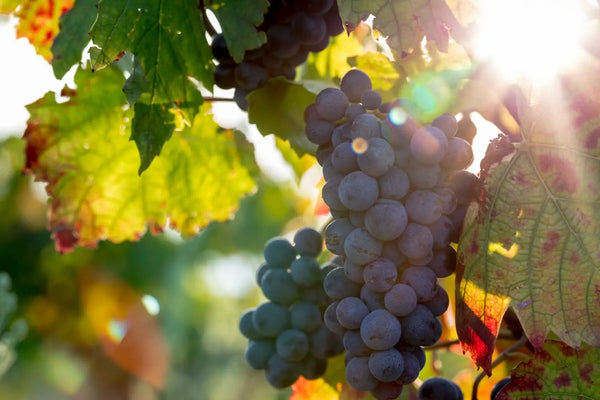
The Gamay grape variety