

Being invited to friends' homes often raises the same question when choosing a bottle: which wine should you bring to please without making a mistake? Should you go for a well-known appellation? Choose an original cuvée? Opt for a more prestigious bottle to mark the occasion?
The answer mainly depends on the context: the planned meal, your hosts' or friends' preferences, the occasion, and your budget are all criteria to consider. And when you lack information, a few simple guidelines can help you choose a bottle that is relevant, enjoyable to give, and easy to appreciate!
In this guide, we review the main situations to help you find the most suitable wine, whether it is meant to accompany the meal or simply to be offered to your hosts.
Contents
Is it always necessary to bring wine when visiting friends?
Bringing a bottle when invited is never an obligation. Above all, it’s a thoughtful gesture to thank your hosts and show your appreciation for being invited. It is also important to distinguish two situations : offering a bottle, or bringing a wine intended to be enjoyed.
In the first case, your hosts are free to keep it for another occasion, especially if they have already planned their own pairings. So, you should not expect it to necessarily be opened that same evening.
If, on the other hand, you wish to contribute to the dinner, the simplest way is to ask what is on the menu. A few details are enough to help you choose a wine that truly matches the dish.
Finally, there is no need to always look for prestige. A well-chosen reference, consistent with the recipient's tastes, will often bring more joy than an expensive bottle purchased solely for its name or label!
Which wine should you bring when you don't know your hosts' preferences?
When you are not familiar with your hosts' preferences, it is best to choose balanced, versatile and easy to enjoy wines.
Powerful, heavily oaked, excessively tannic or sweet wines can indeed be more divisive. On the other hand, a bottle offering fruit, freshness, and good harmony will generally have a better chance of pleasing both at the table and as an aperitif.
In red: prioritize suppleness, fruit, and balance
For red wines, look first and foremost for a fruity, supple wine with measured tannins. The idea is to choose a bottle that is expressive enough to have character, but balanced enough not to impose an overly pronounced style.
Pinot Noirs from Burgundy can be a great option thanks to their finesse and generally delicate texture. Depending on your budget, a regional Burgundy, a Givry, or a Mercurey can offer accessible and elegant profiles.
Red wines from the Loire, such as Chinon or Bourgueil are also interesting for their freshness and fruit.
For something more generous, certain wines from the Rhône Valley, such as a Côtes-du-Rhône or a Crozes-Hermitage, can be a great choice as long as you select a balanced and not too powerful vintage.
As for Bordeaux, again, it is better to focus on the style of the wine rather than just the prestige of the appellation. A vintage that is already approachable, with softened tannins and a good fruit presence, will often be easier to gift than a great wine that is still closed in its youth.
The wine regions of Languedoc-Roussillon (Pic Saint-Loup, Côtes-du-Roussillon, Terrasses du Larzac) and Southwest France (Cahors, Bergerac, etc.) can also offer interesting profiles at reasonable prices.
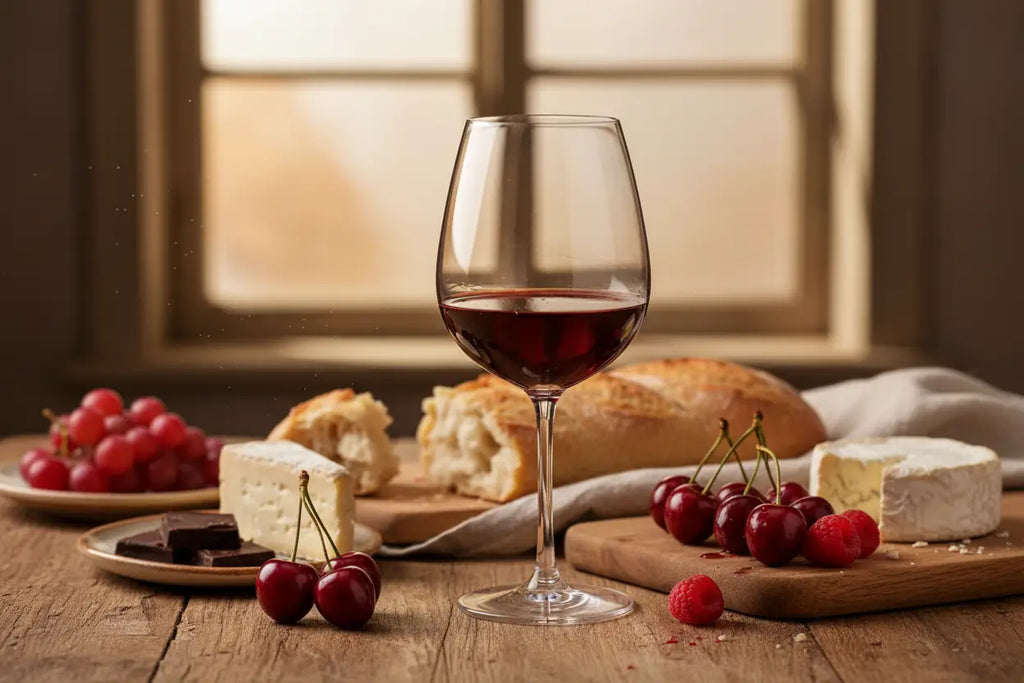 A smooth, generous, and fruity red wine, a great idea to delight someone
For white: focus on freshness and versatility
White wine is often an excellent choice when the menu is unknown. To minimize risks, opt for a dry wine (no sugar), fresh and well-balanced.
In Burgundy, appellations such as Chablis, Saint-Véran or Mâcon-Villages can offer a good balance between freshness, finesse, and ease of tasting.
The Loire valley also offers many interesting white wines such as Sancerre, Pouilly-Fumé, Menetou-Salon, or Vouvray, depending on whether you are looking for more tension, fruit, or body.
In Alsace, Riesling will be more suitable for those who enjoy crisp and fresh wines, while Pinot Blanc often offers a softer and more approachable profile.
Finally, some white wines from the Rhône valley, such as Saint-Péray or Côtes-du-Rhône blanc, can be great options if you know your guests appreciate fuller and more generous wines.
Champagne: a safe bet to mark the occasion
When you want to offer a bottle without knowing your hosts’ exact preferences, Champagne remains one of the simplest and most elegant choices.
A well-balanced brut Champagne is perfect for an aperitif, a birthday, a housewarming, or any celebration. It can be opened as an aperitif, or simply kept for another occasion if the wines for the meal have already been chosen.
Which wines to bring depending on the type of meal?
When you know the menu, choosing the wine naturally becomes easier. The key is not to aim for a prestigious appellation at all costs to impress, but to find a wine style that matches the intensity, texture, and flavors of the dishes being served.
For the aperitif
For the aperitif, choose fresh, light, and easy-drinking wines, that stimulate the appetite without overwhelming the palate.
An elegant Crémant, a mineral Chablis, an aromatic Sancerre, or more broadly a dry and lively white will easily find their place.
If you prefer red, opt for a smooth and fruity wine, such as a Pinot Noir from Alsace, a Cabernet Franc from the Loire, or a Gamay from Beaujolais with generous fruit, served slightly chilled if needed.
 Fresh and light wines to share a friendly aperitif with friends
For a barbecue
With a barbecue, the choice mainly depends on what’s on the grill.
With red meats, sausages or skewers, it’s best to choose a generous and well-structured red to complement the grilled flavors, without being overly powerful. A Côtes-du-Rhône, a Crozes-hermitage, or some spicy reds from Languedoc (Terrasses du Larzac, Pic Saint-Loup) will be perfect.
If the meal highlights fish, vegetables or grilled poultry, a fresh white wine with a bit of body will often be the best choice. A Viré-Clessé, a Mâcon, a Saint-Joseph white, or a beautiful Chenin from the Loire, for example, will offer a perfect balance.
Rosé is also an ideal option for this kind of occasion, as it is very versatile! A fruity and mineral Côtes-de-Provence, for example, can pair with many dishes (grilled vegetables, white meats, etc.).
 Friendly and generous wines to pair with barbecues and summer meals
For an elegant dinner
For a special occasion, the pairing deserves more precision. Rather than choosing a bottle solely for the prestige of its appellation, it is better to look for a wine that is both refined, complex and suited to the main course.
Red wines, a characterful Burgundy (Nuits-Saint-Georges, Pommard, Chambolle-Musigny), a mature Bordeaux from Saint-Julien or Margaux, or a wine from the Northern Rhône (Saint-Joseph, Côte Rôtie) can all be excellent options depending on the menu.
In white, a Chablis Premier Cru, a Pouilly-Fuissé, a Condrieu, or a great white wine with freshness and complexity will add an extra dimension to the meal.
In this context, knowing the dish is particularly useful: a prestigious wine that is poorly paired will often be less convincing than a simpler cuvée chosen wisely.
For a family meal
For a large table, it's better to focus on friendliness and versatility. Wines that are too powerful or too austere are not the most suitable here.
A smooth and fruity red like a Beaujolais (Morgon, Brouilly, Fleurie), an elegant Syrah from the Rhône Valley (Côtes-du-Rhône-Villages, Crozes-hermitage, Saint-Joseph), or some approachable Bordeaux wines will easily pair with many dishes. For whites, a Pouilly-Fumé or another fresh and balanced cuvée is always a safe choice.
And if the occasion calls for a bit more celebration, Champagne or Crémant will always make an impression!
For a festive evening
When wine is above all about sharing a moment, look for generous, approachable, and easy-to-enjoy bottles.
A Crémant, a Beaujolais, a Côtes-du-Rhône, or a fresh and aromatic white wine will be perfect choices. Here, there’s no need to look for the perfect pairing or to opt for an expensive wine: what matters most is to select a pleasant bottle from the moment it’s opened, easy to serve, and likely to please the greatest number of guests.
 Accessible and generous wines to make evenings with friends sparkle
What budget should you plan for?
There’s absolutely no need to spend a fortune to offer a good bottle. What matters most is to choose a wine that matches the occasion and your hosts’ preferences. The budget can then help refine the level of prestige you’re looking for.
Less than 15€
With a budget under 15€, it is entirely possible to find simple wines, well-made and enjoyable to share, as long as you choose carefully.
A Côtes-du-Rhône, a Loire red, a Mâcon or even some Bordeaux can be great options for a friendly gathering or a casual invitation.
Between 15€ and 30€
This price range already offers a very wide selection of quality cuvées and renowned appellations. It is perfectly suited for most invitations and often allows access to more complex wines or those from renowned estates.
For example, you might choose a Chablis, a Sancerre, a Mercurey, a Saint-Émilion, or some outstanding Rhône and Mâconnais vintages, depending on the style you are looking for.
Between 30€ and 50€
Starting at around thirty euros, the bottle more easily takes on a gift dimension. This budget gives you access to more ambitious vintages, certain premier crus, or more sought-after estates.
This price range is particularly suitable for a birthday, a housewarming, or a dinner where you want to make a special impression.
More than 50€
Beyond 50€, it is ideally best to know at least a little about the tastes of the person receiving the bottle. The price goes up, but that does not guarantee the wine will better match their preferences.
This budget is mainly justified for a major occasion, a knowledgeable enthusiast or when you have found a specific bottle that your hosts will appreciate.
Mistakes to avoid
A few simple habits can help you avoid the main missteps when bringing wine to friends.
- Choosing a wine based on the label or appellation alone
A renowned appellation or a high price does not guarantee that your hosts will enjoy the bottle. It’s better to choose a wine that matches their tastes and the occasion.
- Assuming the bottle will definitely be opened during the meal
If you are giving wine to your hosts, let them decide if they want to save it for another occasion.They may have already planned their own pairings!
- Seeking originality at all costs
An unusual bottle can be an excellent idea if you know the recipient's tastes. Otherwise, a balanced and approachable wine is generally a safer choice.
- Bringing a wine that's hard to pair without knowing the menu
Very powerful wines, strongly tannic, heavily oaked or sweet can be difficult to match with the meal. When the menu is unknown, it's best to opt for a versatile bottle.
- Neglecting the serving temperature
If you know the bottle will be opened quickly, make sure to bring it at the right temperature. A white wine that's too warm or a red served at an excessive temperature can lose much of its balance.
In summary
As you can see, there is no single ideal bottle to bring to friends. The best choice depends above all on the occasion, the planned meal, the tastes of your hosts and your budget.
If you have little information, opt for a balanced, versatile bottle that's easy to enjoy. And if the bottle is primarily intended as a gift, there’s no need to insist on finding the perfect pairing: your hosts can easily save it for another occasion!
To go further, discover our selection of wines on La Cave Éclairée, with bottles suited to different styles, budgets, and moments to share. Do you have a question or need assistance? Please don’t hesitate to contact us!


