

Orange wine intrigues. Its golden color with amber highlights catches the eye, its name raises questions, and its tasting challenges expectations. Neither truly white nor really red, it escapes the usual categories and is now reappearing on the finest tables.
Long forgotten, this type of wine has indeed made a comeback in recent years in France and Europe, where many estates are exploring this ancestral heritage.
So, why this renewed interest? What makes it so special? Let’s dive into the unique world of this extraordinary wine… Enjoy your discovery!
Summary
History and origins of orange wine
Far from being a recent trend, orange wine has its roots in Antiquity. Its history began around 8,000 years ago, in Georgia, the cradle of viticulture. At that time, winemakers used large clay amphorae, called qvevris, to ferment and preserve their precious beverage. They would then leave the juice of white grapes in prolonged contact with the skins, a practice that gave the wine an amber hue and a pronounced tannic structure.
This method then spread to several countries, notably Slovenia and Northern Italy, where it remained rooted in local traditions. However, with the industrialization of viticulture and the rise of modern techniques, orange wine gradually fell into oblivion in favor of simpler, fresher, and clearer white wines.
It was only at the end of the 20th century that passionate Slovenian and Italian winemakers, eager to reconnect with ancestral practices, began to reproduce this unique wine. Then, the movement gradually spread to other countries, including France, attracting curious enthusiasts as well as sommeliers in search of discoveries and new tasting experiences to offer. The term "orange wine" is said to have been popularized in 2004 by a British wine importer, David A. Harvey.
Today, orange wine is experiencing a real craze, especially in France, where winemakers from the Jura, the Loire, Languedoc and even Savoie are exploring it brilliantly.
Its influence extends far beyond Europe. South Africa, Australia, and the United States have also embraced this millennia-old tradition, giving orange wine a new lease on life and well-deserved international recognition.
How is orange wine made?
Although its name may be confusing, orange wine has nothing to do with citrus fruits. It is actually made from white grapes, but vinified using a method similar to that of red wines.
Indeed, unlike classic white wines where the grapes are pressed immediately after harvest to separate the juice from the solids, orange wine relies on prolonged maceration of the juice with the berries as well as the seeds, and sometimes even the stems. This maceration is what gives the wine its distinctive color, ranging from intense gold to deep amber.
However, this maceration is not just a visual effect: it also influences the structure of the wine, giving it an unusual tannic richness for a white wine, as well as a complex aromatic palette.
The duration of this maceration varies according to tradition and the winemaker’s choices. It can last a few days, or even several months in some cases, especially in Georgia, where vinification in qvevri (buried amphorae) remains a common practice. In Italy (notably in Friuli) and Slovenia, some producers extend the maceration toenhance the aromatic concentration of the wine.
As for grape varieties, orange wine can be made from a wide range of varieties, depending on the traditions of each region and the styles sought. Among the most emblematic, Muscat holds a special place. Known for its floral and fruity aromas, maceration suits it well and it then develops spicy notes and a fuller texture.
Other grape varieties such as Sauvignon Blanc, Chardonnay, Pinot Gris or even Grenache Blanc also lend themselves very well to this winemaking technique, each bringing its own aromatic nuances.

From white to orange: maceration in progress
What are the aromas of orange wine?
The aromas of orange wine depend largely on the length of maceration and the grape variety used. The lighter versions will reveal citrus notes such as lemon, orange (of course), or mandarin, accompanied by a lovely freshness.
When the maceration is extended, the aromatic profile becomes more intense, then offering dried fruit notes (walnut, hazelnut), apricot, fig, or quince. Sometimes, even more surprising touches of honey, spices, and mushroom may also appear. Muscat, for example, often brings floral and musky scents, enhanced by maceration.
On the palate, orange wine breaks the mold. Unlike classic whites, it has tannins that give it a more pronounced structure. Yet, it is a nectar that retains a lovely freshness and marked minerality, creating a unique balance between power and liveliness. A wine apart, perfect for those seeking new sensations.
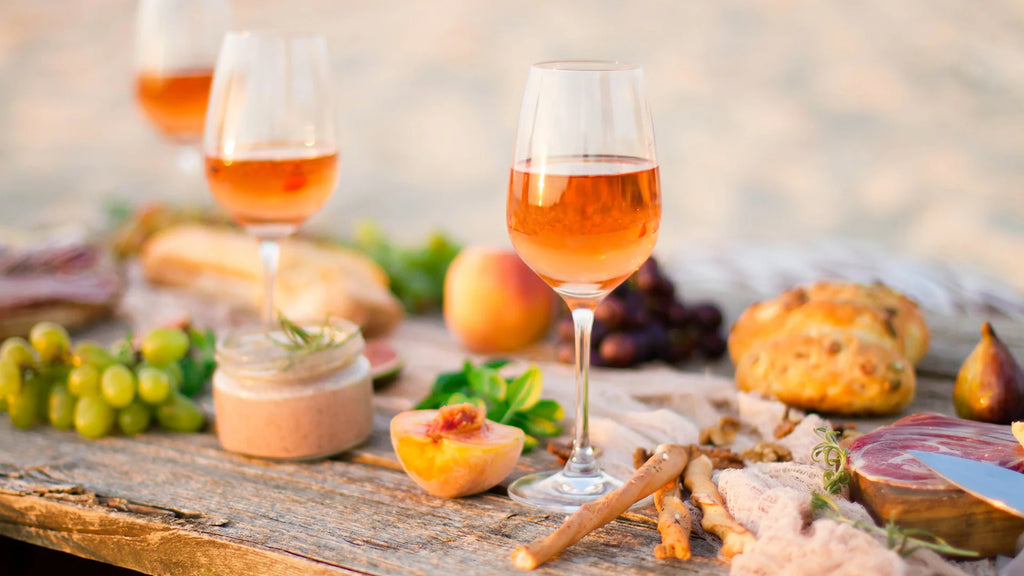
Orange wine: the boldness of tannins and the brilliance of aromas
What to eat with orange wine?
It’s not always easy to find the perfect pairing for such an atypical wine! With its tannic structure and complex aromas, orange wine nevertheless adapts to a wide variety of dishes. Here are a few ideas to delight your taste buds.
-Cheeses : Orange wine loves strong cheeses. Aged Comté, aged Gouda, Roquefort… it balances their intensity and brings a touch of freshness that prevents excess fat on the palate. A surprising combination, perfect for an original aperitif!
-Seafood : the tangy notes of orange wine will enhance oysters, grilled shrimp or even a zesty ceviche. With a sauced fish, the balance is also impressive, between richness and freshness.
-Asian dishes: sushi, Thai curry, spicy dishes… orange wine slips perfectly between sweet, salty, and spicy flavors. Its citrus and spice aromas echo exotic dishes, and its tannic structure softens the heat.
-Cured meats: Orange wine, with its light and finely oxidative flavors, also pairs very well with products like cured ham, dry sausage or even chorizo. Its smooth texture balances the fatty and smoky side of these cured meats. A pairing that always pleases, especially when well accompanied!
-Vegetarian dishes: far from being limited to meats and cheeses, orange wine also goes well with veggie dishes such as mushroom risotto, grilled vegetables, or a tagine with mild spices. Its structured side enhances earthy flavors and envelops melting textures.
-Desserts : and yes, orange wine can also be enjoyed at the end of a meal! A walnut tart, a spiced cake, a pear compote… it extends the sweet aromas with elegance and balance. Try it for an original and indulgente.
Serving tip : serve your orange wine between 12 and 14°C, just cool enough to keep its liveliness, while allowing its aromas to fully express themselves. If served too cold, the tannins can indeed leave an unpleasant sensation.

Grilled vegetables and orange wine: a colorful pairing
Orange wine recommendation
If you are looking for an orange wine that perfectly embodies the qualities of this style, La Cave Éclairée recommends tasting the VO (Vin Orange) cuvée from Domaine des Schistes.
Located in Estagel, northwest of Perpignan, this family estate run by Mickaël Sire and his parents covers 48 hectares of vines managed under Organic Farming since 2010. The schist marl soils, characteristic of the region, give the wines a particular minerality and aromatic complexity.
Beyond the reds, whites, and rosés produced by the family, their orange wine VO, made from the Muscat grape, is a wonderful example of what can be expected from this type of cuvée: freshness, fruity aromas, light tannins… and a lot of pleasure!
As you can see, orange wine is a unique sensory experience that you simply must try! With its subtle aromas and ancestral winemaking method, it both challenges and reaffirms the codes of traditional wine.
To find out more about this fascinating wine and discover the best cuvées, feel free to visit our website La Cave Éclairée. And you, have you ever tasted orange wine? Share your opinions and discoveries in the comments!


