

Is the identification of wine by an Appellation d'Origine Contrôlée a guarantee of quality? Well... not really! Let's first review a few definitions.
The differences between labels
-The AOC is the recognition that all stages of production of a product are carried out according to a recognized know-how within the same geographical area (terroir). It legally protects these elements within French territory.
In wine, an AOC also defines production rules. Among them, limits on yields, ways of managing the vineyard, a minimum ripeness of the grapes required at harvest, the use of one or specific grape varieties , a minimum aging period or even a typical taste profile that consumers are supposed to expect from the product.
For example, a white wine with the Sancerre AOC must meet a certain number of criteria to be able to display this name on its bottle. First of all, the grapes used for its production must come from a very specific geographical area (here, 14 possible communes in a single department, Le Cher). It is defined in the appellation's specifications that a Sancerre white must be made 100% from the Sauvignon grape variety and must, as stated in the appellation's specifications, "have a certain freshness and its aromas may range from citrus to floral notes, including exotic fruits".
-The AOP (Protected Designation ofOrigin P) is the European equivalent of the AOC. It therefore guarantees the same thing as the AOC but throughout the European Union.
-The IGP (Protected Geographical Indication) is also a European label like the AOP, but its criteria are less strict.
For example, the IGP Val-de-Loire covers 14 departments and a white wine from this IGP can be made from the Sauvignon grape variety but also from Chardonnay, Chenin, Melon de Bourgogne, Pinot Blanc, Folle Blanche, etc. These grape varieties can be blended to produce a single wine if desired, which is absolutely not allowed for a wine with Sancerre AOC or Pouilly-Fumé!
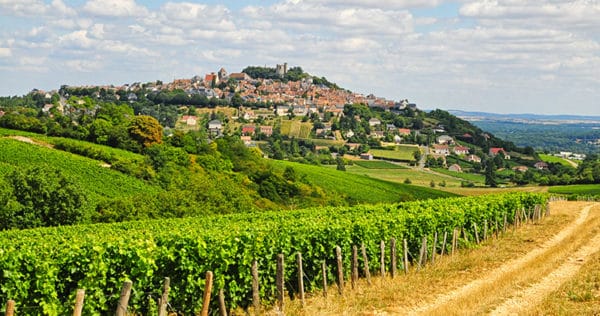
Vines in Sancerre
Stop the generalizations!
Now that the definitions are clearer, let's get back to the point. In 1935, the year the AOC system was created, the aim was to protect the consumer by guaranteeing a certain quality and legally preventing certain types of fraud at a time when there were very few regulations.
Today, the AOC remains (mainly) useful for promoting a geographical origin and not a level of quality. Indeed, with the hygienic and scientific advances made over the last century, almost all winemakers with vineyards in the right place are able to meet the standards established by an AOC.
Another limiting aspect of the AOC: the standardization of taste. As explained above, wines from the same AOC must meet certain common taste criteria. Wines from an estate in Châteauneuf-du-Pape are therefore tasted by professionals (a tasting committee) to ensure that they fit within the expected profile for wines from this region (power, depth, richness, etc.). While this can obviously be positive in order not to promote wines unworthy of the "Châteauneuf" brand, it can also eliminate more original, high-quality wines that do not meet the established tasting criteria. This issue leads several winemakers every year, tired of these limiting taste barriers, to permanently leave their AOC and label their bottles simply as "Vin de France" (which can be excellent)!
So, the AOC system can also be seen as a brake on creativity in a world where tradition reigns.
The scale of qualitative truth: the estate
As you will have understood, the scale of truth is therefore that of the estate and not that of the AOC. You may prefer the wines of one region over another, but to say "wines from Haut-Médoc are excellent while those from Muscadet are bad" makes no sense. In each of these AOCs, there are demanding and passionate producers, while others turn to making more common and soulless wines.
Therefore, taste, share, be curious, and do not make the only criterion for your purchases the sole notion of appellation! And if you have any questions, do not hesitate to contact La Cave Éclairée!


