Sancerre: a name that resonates as one of the most familiar to the ears of all wine enthusiasts. The appellation from the Centre-Val de Loire indeed enjoys a great reputation due to its long history as well as its qualitative but also quantitative production of white wines as well as red and rosé wines.
So, what are the origins of the Sancerre AOC? What are the two key grape varieties of the appellation? Which terroirs characterize this vineyard? What can you expect during a tasting? You will have all the answers to your questions after these few minutes of reading.
Follow the guide...
The origins of the Sancerre AOC
Terroirs and climate of Sancerre
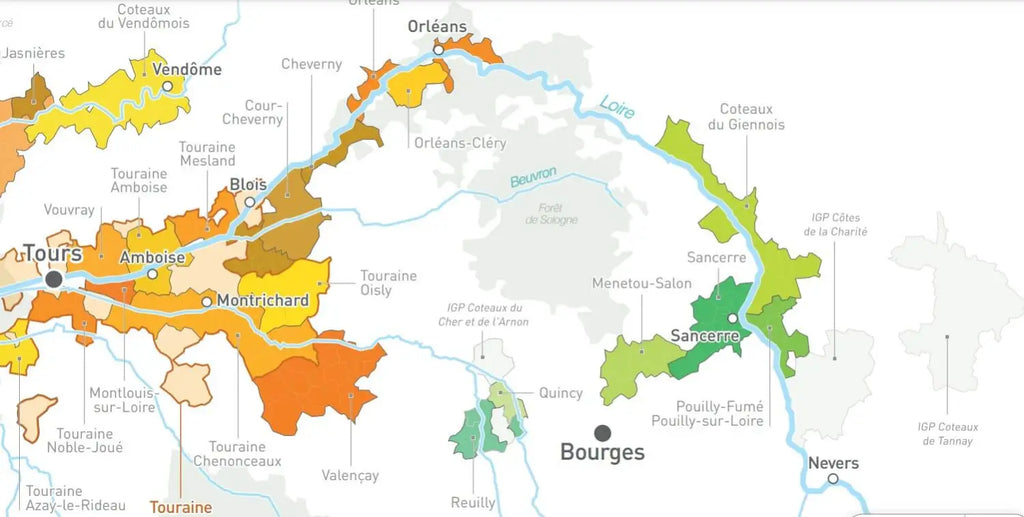
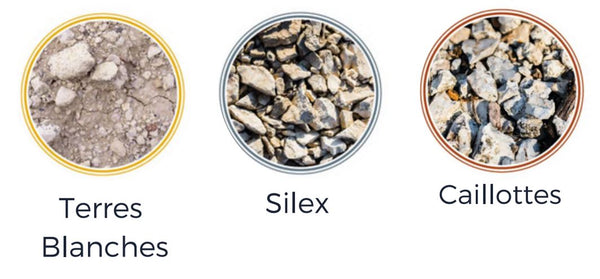
Located at the far east of the Loire Valley, the Sancerre AOC today covers more than 3,000 hectares divided among 300 winegrowers and spread over 14 communes. With such an expanse, it is clear that several terroirs coexist here. Here are the 3 main soil types found in the Sancerre AOC:
- Les Terres Blanches: covering 40% of the vineyard, these are clay-limestone soils located to the west of the vineyard. Clay (70%) is predominant over limestone (30%). Very rich in fossilized shells, their name comes from their tendency to whiten in the sun. Les Terres Blanches give the wines a beautiful aromatic concentration.
- Les Caillottes: representing 45% of the vineyard, Les Caillottes are mainly small limestone pebbles mixed with clay. These chalky soils bring finesse, lightness, and freshness to the wines.
- Les Silex: these clay-siliceous soils are the rarest in Sancerre but still cover 15% of the vineyard. They are found mainly along the Loire and to the east of Sancerrois. They give great minerality to the wines of the appellation.
From a climatic point of view, the vineyard benefits from a degraded oceanic climate, meaning that compared to other appellations in the Loire region, Sancerrois is less influenced by the humid winds from the Atlantic Ocean. Rainfall is therefore lower here and temperature variations are greater (cold winters and hot summers, as well as temperature differences between day and night). These conditions therefore favor optimal ripening of the grapes while allowing a beautiful tension in the wines.
Grape varieties and wines of Sancerre
The Sancerre AOC is mainly renowned for its white wines made from the Sauvignon grape variety. The latter now represents 82% of the local plantings .
While white wine is the flagship product of the appellation, reds and rosés are also worth discovering and are produced from the Pinot Noir grape variety, representing the remaining 18% of the vines.
In terms of production, white wines account for 83% of the 23 million bottles produced each year, while red wines make up 11% and rosés 6%. The appellation is also highly regarded internationally where it exports more than 65% of its wines. The United States, the United Kingdom, Belgium, and Canada are the main clients.
From a tasting perspective, and although it is always risky to summarize the wines of an appellation, the most common profiles are as follows:
- White wine: Sauvignon being a very aromatic grape variety with high acidity, Sancerre white wines all benefit from great liveliness on the palate as well as a certain minerality. In addition, the grape expresses exuberant fruity notes of citrus, peach, pear, apricot, and sometimes even an exotic touch (mango, pineapple, etc.). On the coolest terroirs, you can also find a vegetal character (boxwood) as an aromatic marker.
- Red wine: Sancerre red wines generally display notes of red and black fruits indulgents (cherry, blackberry, strawberry, raspberry) as well as light and supple tannins. Depending on the terroirs and vinification, more concentrated and complex profiles may be presented to the taster.
- Rosé wine: Sancerre rosés are fresh, indulgents and delicate. They develop notes of fleshy red fruits (strawberry, raspberry, cherry) and have a certain body compared to rosés from Côtes-de-Provence.
Pairings and serving Sancerre wines
With cuvées of all colors, Sancerre wines could almost pair with the entire world's gastronomy! Here are some ideas to whet your appetite, as well as a reminder of the best serving conditions to follow to showcase your Sancerres.
The liveliness and freshness of Sancerre white wines allow them to pair perfectly with a multitude of dishes. Of course, one thinks of seafood, grilled fish, summer salads but also various goat cheeses (such as the local Crottin de Chavignol, a delight), as well as Emmental or Abondance. For more powerful and voluptuous whites, poultry will make a sublime pairing.
In terms of serving temperature, a range of between 8-10°C will be perfect for "classic" whites, while for more intense and characterful cuvées, opening between 11-13°C will be suitable to enjoy the maximum aromas.
For red wines, their finesse and beautiful fruitiness will pair superbly as an aperitif but also during a meal with chicken, turkey, or duck. For the more structured reds of the appellation, red meat will be the best choice. We recommend serving all these wines between 14-16°C to enjoy their finesse.
Finally, rosés from the appellation can also be enjoyed as an aperitif, but also with summer salads, grilled fish, or goat cheeses. A serving temperature between 8-10°C is recommended here.
What are the best Sancerre wines?
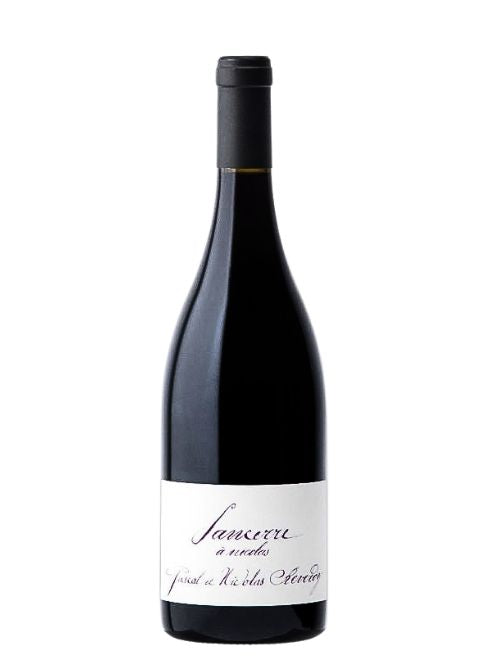
Although it is difficult to provide an exhaustive list of the best Sancerre wines, La Cave Éclairée has selected for you choice cuvées from the Bernard Fleuriet & Fils estates and Pascal & Nicolas Reverdy, thus bringing together all the styles of the appellation: lively and mineral white wine, voluptuous and oaky white, fresh and fruity red, or even characterful, racy red—there is something for every taste and budget!
There you have it, you now know almost everything about the Sancerre appellation and its wines! All that's left is to pour yourself a glass of these delicious Sauvignon and Pinot Noir wines. And above all, do not hesitate to contact La Cave Éclairée if you need advice!