

“Champagne !” , we say when it’s time to celebrate good news. These little bubbles are now so deeply rooted in our culture that they have become synonymous for all of us with celebration and prestige.
But how did this wine reach the pinnacle of French and global gastronomic culture? What is its history ? How is it made? What sets it apart from other sparkling wines? These are just some of the questions I invite you to explore in this two-part article series.
Champagne: A Royal History
The history of wine in Champagne begins with the Romans, who were the first to plant vines in the region in the 3rd century. After the fall of the Empire, Clovis was the first king to make it a wine region of interest. Thus, in 496, during the festivities crowning him King of the Franks in Reims, Champagne wines (which were not sparkling at the time) flowed freely. This was the first association of the famous beverage with royalty.
During the Middle Ages, it was the Church that mainly took care of the vines : the wine was consecrated and consumed during mass, and so the monks maintained the French vineyards. During this period and up until the early 19th century, numerous French kings were crowned in Reims, each time with festivities celebrating the local wines. Over the centuries, Champagne’s image became permanently associated with celebration and prestige, to the point of being recognized in 1654 under the reign of Louis XIV as the official wine of coronations.
At the Revolution and in the following decades, the vineyards left religious control to become the property of wealthy merchants and traders. Thus, while some houses such as Gosset (1584), Ruinart (1729), or Moët & Chandon (1743) already existed, other great houses emerged such as Billecart-Salmon (1818), Mumm (1827), Deutz (1838), and Charles Heidsieck (1851). This was the time of international expansion.
Although the reputation of Champagne wines had already crossed borders in the 12th century, it was in the 18th and 19th centuries that exports grew rapidly, especially to England and the United States, which remain today the leading foreign markets for Champagne.
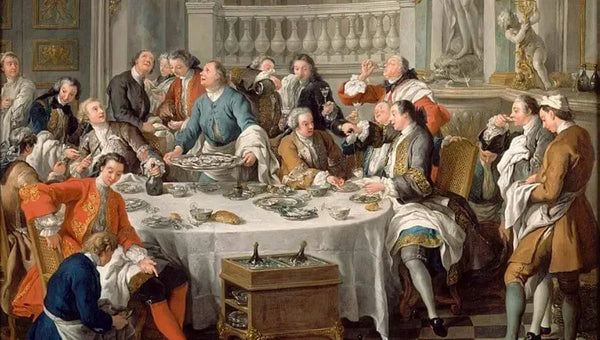
The Birth of Effervescence
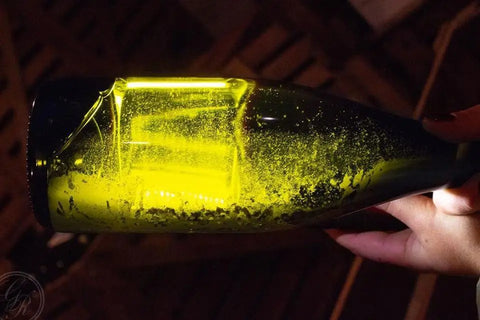
“Prise de mousse” in progress in a bottle: the second fermentation
Champagne Today
Still a symbol of celebration and luxury, Champagne has now become widely popular around the world. The official AOC was created in 1936 and the industry is now present in over 190 countries. Each year, nearly 320 million bottles are put on the market (with more than half exported). This is a far cry from the 8 million bottles produced in 1850 or even the 100 million bottles in 1970 !
The market has also become highly concentrated. While there are over 300 Champagne houses, some major groups have a considerable presence in the region, such as Pernod Ricard (Mumm, Perrier-Jouët), Vranken-Pommery (Vranken, Pommery, Heidsieck & Co Monopole etc.), but especially LVMH (Dom Pérignon, Ruinart, Moët & Chandon, Veuve Clicquot etc.). While these major houses are the main image of Champagne in France, this is even more the case abroad : nearly 75% of Champagne volumes destined for export come from these renowned brands.
Thus, as you know, La Cave Éclairée aims to highlight small producers (such as Champagnes Veuve Fourny, Franck Bonville or Pertois-Moriset), it should not be forgotten that the international resonance of Champagne owes much to these prestigious names and their impressive marketing power.
Conclusion
Stay tuned! Next week, we will reveal the mysteries of Champagne production, the reasons behind its often high price, and we will see how to best enjoy it.
To celebrate all your new knowledge, all you have to do is open a fine bottle... and you know which region to turn to !


1 comment
Très bon article, merci ! Je ne savais pas que les bulles étaient finalement si “récentes”…Hâte de lire la suite.