

Chablis and Sancerre are among the flagship appellations of French white wine. Both are highly regarded for the freshness, elegance, and excellent pairing potential of their cuvées, which explains their regular presence on restaurant wine lists and their popularity with enthusiasts.
However, the wines from these two AOCs have very distinct identities. Chablis, in Burgundy, and Sancerre, in the Loire Valley, are based on different grape varieties and terroirs, offering unique expressions of winemaking.
So, Chablis or Sancerre: what are the similarities, the differences, and most importantly, which should you choose?
In this guide, we will compare the terroirs, grape varieties, aromas, styles, food and wine pairings, and price ranges of these two wine icons to understand what truly sets these two appellations apart.
Contents
- Chablis and Sancerre: the differences at a glance
- The differences in terroir between Chablis and Sancerre
- What aromas can be found in each wine?
- Which wine should you choose based on your preferences?
- What budget should you plan for a Chablis or a Sancerre?
- What food and wine pairings with Chablis and Sancerre?
- In summary
Chablis and Sancerre: the differences at a glance
Here is an overview of the main differences between Chablis and Sancerre.
Note : the Sancerre appellation produces white wines but also reds and rosés made from Pinot Noir. To remain consistent, this table will therefore focus only on white wines from both AOCs (as Chablis only produces white wine).
| Criteria | Chablis | Sancerre |
|---|---|---|
| Region | Burgundy | Loire Valley |
| Vineyard size | +4,000 hectares | +3,000 hectares |
| Grape variety | Chardonnay | Sauvignon blanc |
| General style | Taut, precise, elegant | Lively, expressive, aromatic |
| Aromas | Citrus, apple, white flowers, chalky notes or a hint of salinity | Citrus, white fruits, flowers, vegetal or smoky nuances depending on the terroir |
| Palate | Straightforward, mineral, fresh, sometimes fuller | Lively, fresh, more expressive |
| Distinctive terroirs | Limestone and marl, especially Kimmeridgian | White soils, caillottes, and flint |
| Acidity | High | High |
| Aging potential | From a few years to over 15-20 years for the top cuvées | From a few years to 8-15 years for the most ambitious cuvées |
| Classification | Village, Premier Cru, and Grand Cru | None |
| Price | Wide range, with a significant increase for Premier Cru and Grand Cru | Wide range, with single-vineyard cuvées that can reach high prices |
| Food and wine pairings | Oysters, seafood, fish, shellfish, poultry | Fish, shellfish, goat cheese, asparagus, plant-based or lightly exotic cuisine |
The differences in terroir between Chablis and Sancerre
Terroir is one of the main keys to understanding the differences between Chablis and Sancerre. Despite a certain geographical proximity and relatively cool climates, the two vineyards have different soils and landscapes, to which is added the decisive role of their respective grape varieties.
The Chablis terroir
Located in the north of Burgundy, in the Yonne department, the Chablis vineyard covers around 4,000 hectares of vines and develops under a predominantly continental climate. Here, winters can be cold and spring frosts have long been one of the main risks for the vines. The relatively cool temperatures encourage a gradual ripening of Chardonnay and help preserve pronounced acidity in the wines.
Geology is one of the key features of the vineyard. A large part of the Chablis terroirs is indeed based on Kimmeridgian marl and limestone, formed around 150 million years ago and notably containing tiny oyster fossils. These geological formations are particularly emblematic of the Premier Crus and Grand Crus of the appellation.
Combined with the cool climate and Chardonnay, this unique geology contributes to the identity of the Chablis vineyard and its wines, which are often sought after for their tension, precision, and the mineral sensation frequently found on the palate.Depending on the exposure of the slopes, the exact nature of the soils, the vintage, and the work of each estate, the style can, however, range from a lively, precise wine to a much fuller and deeper cuvée.
This diversity is also reflected in the vineyard hierarchy, from the Petit Chablis and Chablis appellations up to Premiers Crus and Grands Crus, the latter being particularly sought after for their aromatic complexity and excellent aging potential.
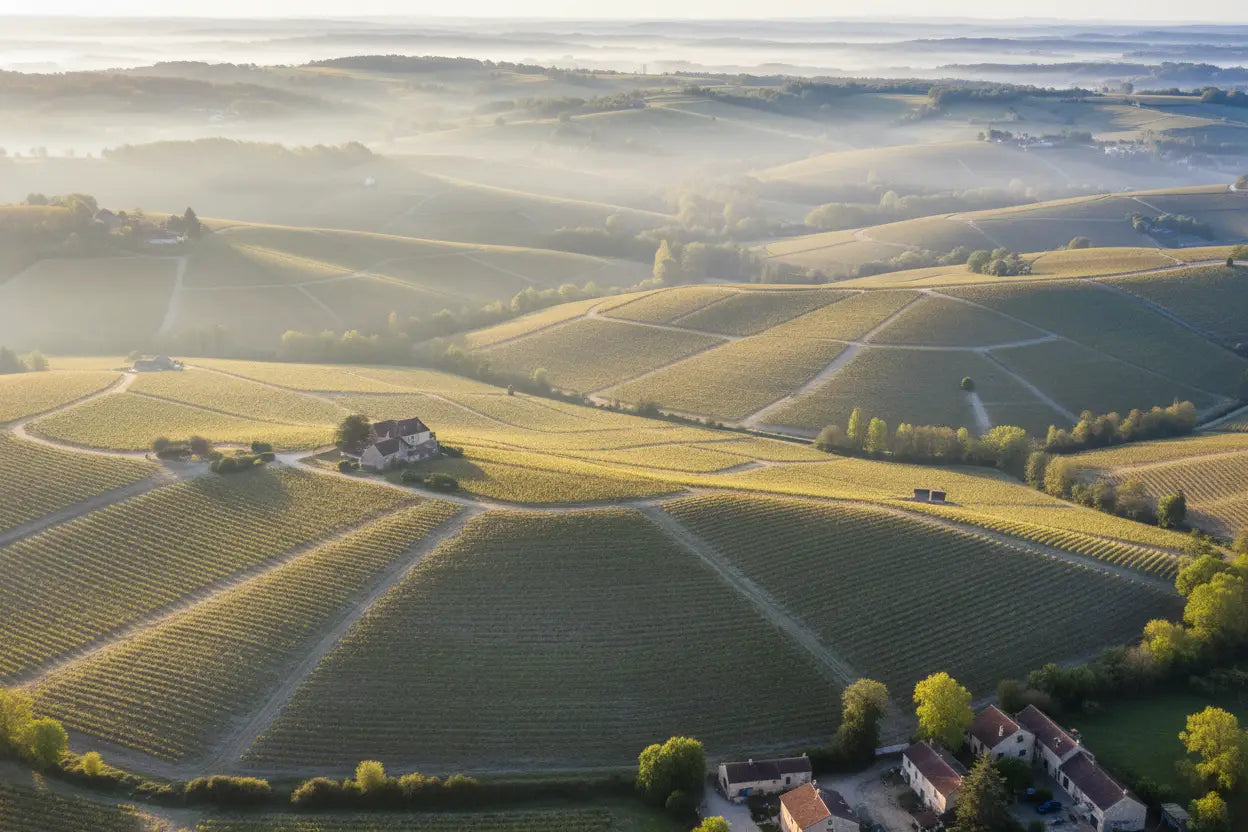 Chablis: a cool, limestone terroir, characterized by Kimmeridgian marl and remarkable acidity in the wines
The Sancerre terroir
Located slightly southwest of Chablis, just under a hundred kilometers away, Sancerre is part of the Loire Valley. The vineyards of this AOC cover around 3,000 hectares of vines spread across hills and slopes surrounding the village of Sancerre. The diversity of landscapes and soils is one of the great strengths of the Sancerre terroir.
Three main types of terroirs are traditionally distinguished:
- The "terres blanches", made up of clay-limestone marl,
- The "caillottes", stony, shallow, well-drained limestone soils,
- The flint soils, found especially near the Loire.
This mosaic contributes to the diversity of the wines produced: some emphasize fruit and freshness, while others display greater depth, minerality, or even smoky notes, particularly in certain flint-rich areas.
So, it is less a single profile that defines Sancerre than a diversity of terroirs built around Sauvignon blanc.
What aromas can be found in each wine?
While the white wines of Chablis and Sancerre share a lovely freshness and generally pronounced acidity, their aromatic expression is distinctly different. The grape variety obviously plays a central role, but the terroir, vintage, aging, and each estate’s choices also strongly influence the wine’s final profile.
The aromas of a Chablis
Chablis is generally characterized by a relatively subtle profile, precise and elegant. In its youth, one often finds citrus notes, of apple and white flowers, accompanied, depending on the cuvée, by chalky or stony nuances.
On tasting, freshness and tension play an important role, sometimes with a saline sensation on the palate. This combination contributes to the precision and length on the palate that are characteristic of many Chablis. The most ambitious expressions, especially among certain Premiers Crus and Grands Crus, can however offer more volume, depth, and complexity.
Cuvées aged in oak barrels can also display a lovely roundness and develop gourmet nuances.
After a few years of aging, the aromatic profile of Chablis wines can develop notes of ripe fruit, honey, dried fruit, or hazelnut, once again depending on the vintage and the type of maturation used.
The aromas of a Sancerre
Made from Sauvignon, Sancerre white is generally more expressive. Its aromatic range can suggest citrus fruits, white and exotic fruits, or even flowers, with sometimes more vegetal nuances reminiscent of blackcurrant bud or certain fresh herbs.
The profile, however, varies significantly depending on the terroir. Caillottes, for example, are often associated with refined and approachable wines, while terres blanches can provide them with more structure and depth. Flint plots, on the other hand, are regularly sought after for the tension, minerality, and smoky notes they allow to be expressed, giving Sauvignon Blanc a very precise character.
In general, pronounced oak barrel aging is rarely used for Sancerre white wines, so that they can express the intrinsic qualities of their grape variety and terroir.
Over time, certain prestigious Sancerre cuvées can gain in complexity and develop aromas of ripe fruit, honey, or sweet spices, while retaining the characteristic freshness of Sauvignon.
In summary, the difference can be described as follows: Chablis generally focuses more on tension, finesse, and subtle aromas, while Sancerre often offers a more immediately aromatic and varied expression.
It is also important to remember that Sancerre is not limited to its white wines. The appellation also produces red and rosé wines from Pinot Noir, which together account for about 15% of production. More exclusive, they often offer fresh, fruity, and elegant profiles, generally in a more delicate than powerful style.
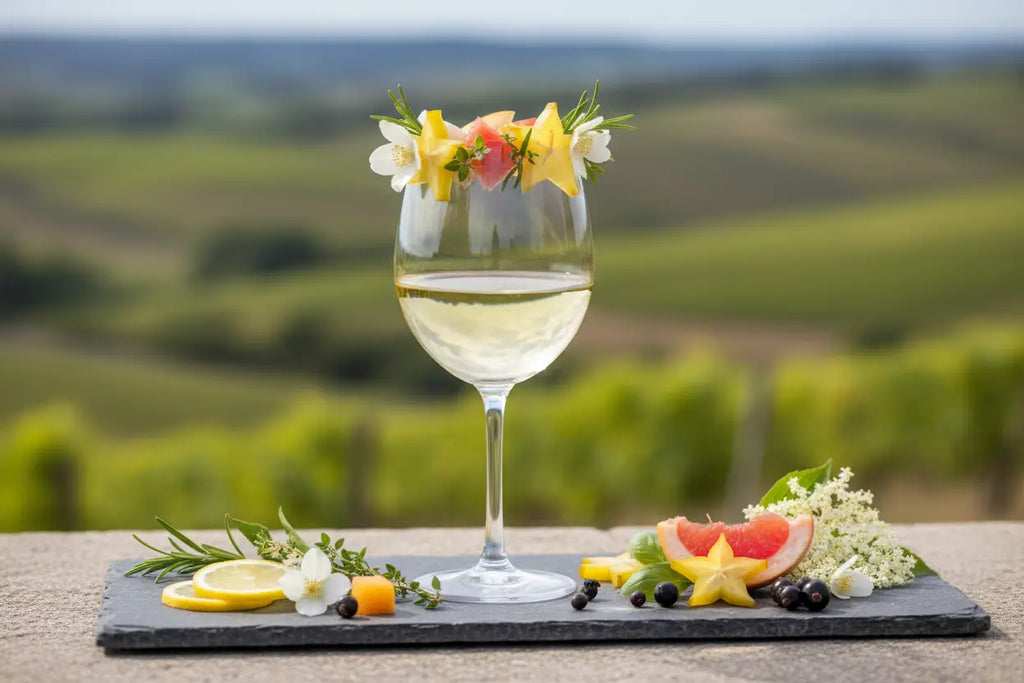 Sancerre: a lively, expressive, floral, and mineral wine
Which wine should you choose based on your preferences?
When it comes to Chablis or white Sancerre, the choice mainly depends on the style of wine you enjoy. Both share freshness and elegance, but their mouthfeel and aromatic profiles are distinctly different.
Do you prefer crisp, precise white wines? Choose a Chablis
If you enjoy white wines that are pure, fresh, and sharply defined, Chablis is a safe bet. Chardonnay here typically offers a restrained expression, driven by tension, precision, and chalky or saline nuances.
The most accessible cuvées are particularly enjoyable in their youth, while the Premiers Crus and Grands Crus gain depth, volume, and aging potential. Chablis will therefore appeal both to lovers of lively, pure whites and to those seeking more complex, evolving wines.
To discover the appellation, Domaine Garnier & Fils is an excellent reference, offering wines that highlight the freshness and precision of Chablis Chardonnay.
Do you prefer more expressive white wines? Choose a Sancerre
If you are looking for greater aromatic intensity, Sancerre will probably suit your tastes better. Sauvignon Blanc can express notes of citrus, white fruits, flowers, and sometimes vegetal or smoky nuances depending on the soils and the cuvées.
Among the estates to discover, Domaine Pascal et Nicolas Reverdy and Domaine Bernard Fleuriet & & Sons offer different interpretations of Sauvignon Blanc and the terroirs of the appellation.
What budget should you plan for a Chablis or a Sancerre?
Although the differences can be significant depending on the estate, vintage, and cuvée chosen, for similar ranges, Chablis and white Sancerre are often found at fairly similar price levels.
In Chablis, you should generally expect to pay around 15 to 35€ for a standard bottle from a good independent producer. The hierarchy between Petit Chablis, Chablis, Premiers Crus, and Grands Crus then leads to a marked price increase: Premiers Crus are often between 35 and 60€, while Grands Crus can easily exceed 80 to 100€, or much more at speculative estates.
In Sancerre, a fine bottle is also generally around 15 to 35€. However, there is no official classification comparable to Chablis: the price increase depends more on the reputation of the estate, the terroir, the age of the vines, or the single-vineyard character of certain cuvées. The most ambitious Sancerres can thus reach 40 to 60€, or even far exceed this level for certain sought-after cuvées.
In practice, the price alone is therefore not enough to distinguish between the two appellations. With a similar budget, the choice will mainly depend on the desired style: a Chablis that is more taut and discreet in terms of aroma, or a white Sancerre that is more expressive.
What food and wine pairings with Chablis and Sancerre?
Both Chablis and white Sancerre are among the most versatile white wines at the table. Their freshness and acidity indeed allow them to pair with a wide variety of dishes.
Chablis: a natural partner for seafood
Thanks to its tension and precise profile, Chablis easily finds its place alongside seafood. Oysters, shellfish, crustaceans, grilled or steamed fish are all classic and particularly successful pairings.
This fine white Burgundy also pairs beautifully with delicate dishes such as fish tartare, scallop carpaccio, or sole meunière.
When it comes to cheese, Chablis is especially well-suited to soft and creamy cheeses, such as Brillat-Savarin, Chaource, or certain aged goat cheeses, whose freshness brings a lovely balance.
The Premiers Crus and Grands Crus, often broader and more complex, pair well with richer dishes: such as turbot, monkfish, poultry in cream sauce, or mushroom risotto. Here, the wine’s extra body complements the texture of the dish while maintaining enough freshness.
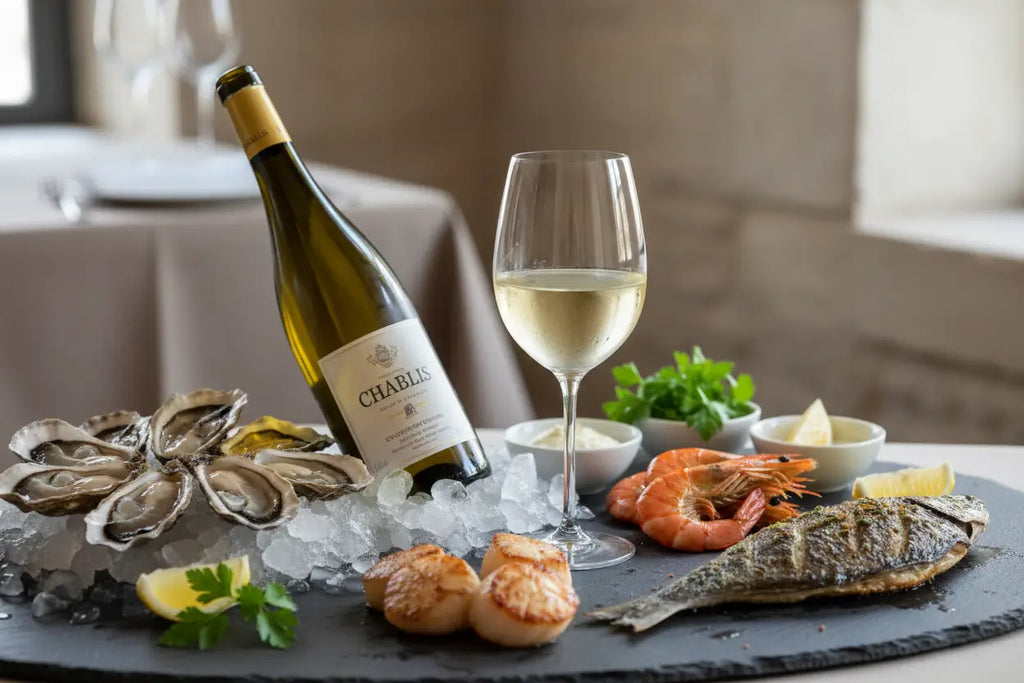 Chablis pairs with seafood with freshness, precision, and elegance
Sancerre white wines : vibrancy and versatility
More expressive and aromatic, Sancerre whites also pairs particularly well with fish, shellfish and sushi. The liveliness of Sauvignon Blanc also pairs very well with certain vegetable dishes, especially asparagus or dishes with fresh herbs.
The most iconic pairing, however, remains with goat cheeses, and especially Crottin de Chavignol, produced in the heart of the Sancerre vineyards.
In a similar style, Sauvignon Blanc lovers can also turn to wines from the neighboring appellation Pouilly-Fumé, while some dry whites from Alsace also offer an interesting alternative with fish and vegetable dishes.
The more structured cuvées, especially some from terres blanches or silex, can, for their part, pair well with fish in sauce, roast poultry or dishes with more substance.
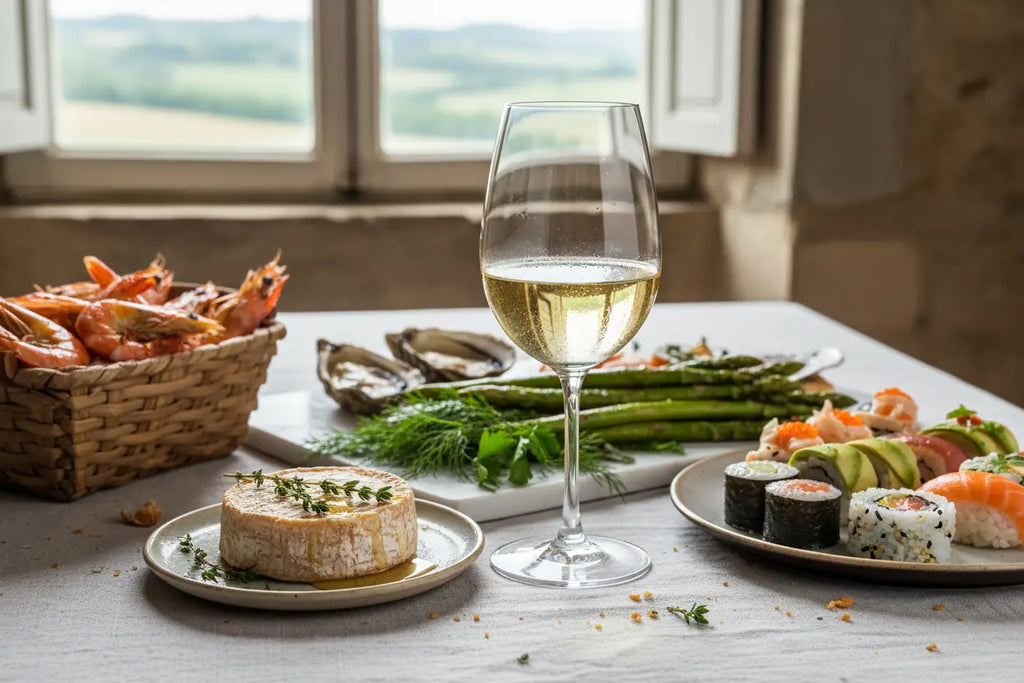 A white Sancerre reveals all its qualities with fish, goat cheeses, or asparagus
In summary
As you will have understood, Chablis and Sancerre are among the great French references for white wine, but offer very different tasting experiences.
Made from Chardonnay, Chablis generally stands out for its tension, precision, and chalky or saline character. The most ambitious cuvées can significantly gain in body and complexity over time.
Made from the Sauvignon Blanc variety, Sancerre whites offer a more aromatic profile, driven by citrus and white fruits, while also delivering a lovely freshness on the palate. Depending on the terroir, such as terres blanches, caillottes, or flints, the style of the wine can, however, vary noticeably.
Ultimately, the choice mainly depends on your preferences: Chablis for a taut, precise, and often saline palate, Sancerre for freshness and a more aromatic expression.
If you would now like to put this into practice, discover the selection of Sancerre and Chablis from La Cave Éclairée to pair with your appetizers and meals! And if you are hesitating between several cuvées, feel free to contact us: we will be delighted to advise you!


