

If you are a lover of white wine, you have surely already heard of Riesling! A symbol of Alsace, it is indeed one of the 4 noble grape varieties of the region along with Gewurztraminer, Pinot Gris, and Muscat. Nevertheless, its presence around the world is much more widespread than one might imagine, and it can display very varied characteristics depending on its terroir of origin.
If you want to learn more about Riesling, you are in the right place! Thanks to this article, you will discover its history and its growing regions, explore its tasting characteristics as well as learn some tips for enjoying it in the best conditions.
Follow the guide!
History and growing regions of Riesling
While ampelographers almost all agree in recognizing Germany and the Rhine Valley as the very likely birthplace of Riesling, several hypotheses still exist regarding its date of appearance.
The most probable of these would be that Riesling is in fact the grape variety Argitis minor, a variety present since Antiquity (1st century BC in the Rhenish vineyard. The word "Rieslingen" (Riesling in German) only appeared in 1435, the term coming from "riesen", meaning to flow. This name would come from the grape's sensitivity to coulure, a phenomenon causing the vine's flowers to fall and consequently leading to a significant decrease in yields.
Recent DNA tests have identified that Riesling is the result of the crossing of two other grape varieties: Gouais Blanc (now extinct) and Traminer, better known as Savagnin and still well established in the Jura.
It was only from the 15th century that Riesling finally appeared in Alsace and it was not until the 20th century and the 1960s that it became the region's leading grape variety.
Today, nearly 60,000 hectares of Riesling are planted worldwide in many countries such as Austria, the United States, Australia, and even South Africa.
With 24,000 hectares, Germany represents 40% of the world's Riesling vineyards, with Riesling accounting for a quarter of the national vineyard.
In France, 4,000 hectares are planted in Alsace (over 20% of the vineyard)...and that's about it, as it is present in almost no other region of our beautiful country.
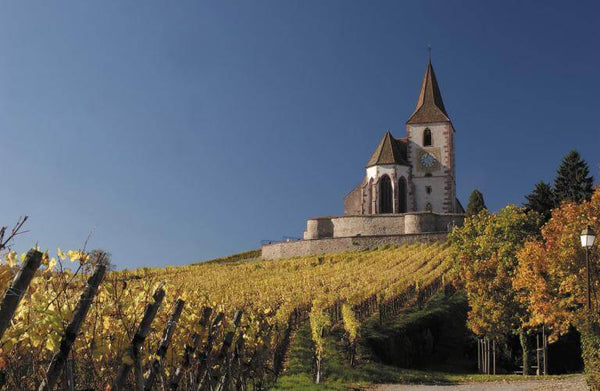
Types of wine and aromas of Riesling
While Riesling is, in the overwhelming majority of cases, intended for the production of dry white wines, note that it is also often used in the blend of certain sparkling wines such as Crémants d'Alsace. It is then regularly blended with Pinot Blanc, Pinot Auxerrois, or even Chardonnay. Also, some Rieslings can display a certain sweetness on the palate and be off-dry, or even sweet !
While this is rarely the case in Alsace, Germany has indeed made it a specialty. In fact, as the German vineyard is particularly northern, winemakers here often choose to retain some of the naturally present sugars in the grapes to achieve balanced indulgents in the wines.
Therefore, if you come across a bottle of German Riesling with one of the following mentions: Kabinett, Spätlese, Auslese, Beerenauslese (BA) or Trockenbeerenauslese (TBA), note that these terms indicate the sugar concentration present in the grapes at harvest, from the lowest to the highest.
Returning to France (and thus to Alsace), Riesling is used in the overwhelming majority of cases to produce dry white wines with a lovely acidity and great minerality. In terms of aromas, citrus fruits (lemon, grapefruit) and green apple are the most common markers. On great terroirs, aromas of peach, apricot, beeswax and even hydrocarbons (petrol) can also emerge!
Finally, Riesling is also known for being able to offer wines with a wonderful aging potential. Indeed, although most of the cuvées produced are intended for consumption within the first three to five years, some Rieslings from the best terroirs can evolve positively for 20 or even 30 years! Incredible aromas of beeswax, undergrowth, and an intensified minerality then appear.
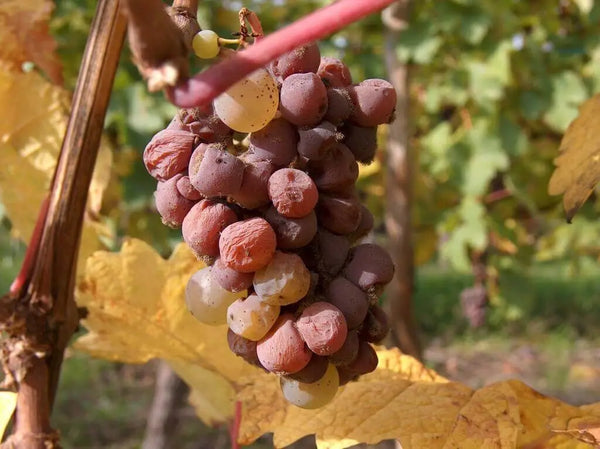
Food and wine pairings and serving temperature
With its acidity, lovely minerality, and rich bouquet of aromas, Riesling is definitely a partner of choice at the table.
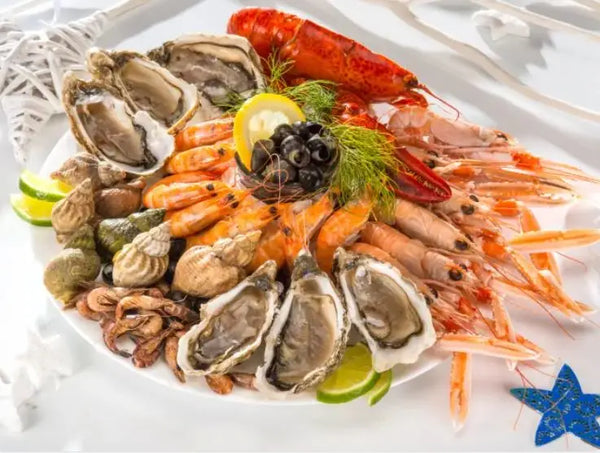
Thus, with dry Rieslings, sublime pairings are possible with seafood and shellfish (oysters, shrimp, crab, sea urchins, etc.) as well as grilled fish (cod, sea bass, sea bream, etc.).
With complex Rieslings, especially those from certain Alsatian Grands Crus, lobster or scallops will also be divine. Finally, Riesling is a grape variety that also pairs very well with goat or sheep cheeses.
If you opt for an off-dry or sweet Riesling, spicy cuisines (Chinese, Thai, Vietnamese, etc.) as well as certain sweet and savory dishes will be excellent companions. Some blue cheeses such as Roquefort will also be interesting to pair.
From a serving temperature perspective, Riesling is ideally enjoyed between 8 and 10°C. Colder, you might not detect certain aromas. Warmer, it would lose its delightful freshness.
So, as you can see, depending on its style and terroir, Riesling can meet many of your culinary expectations!
The best Rieslings
Although it is difficult to provide an exhaustive list of the best Rieslings, La Cave Éclairée offers you here a fine selection exclusively from Alsace. From Rieslings for pure pleasure to great wines for aging, there is something for every taste and budget !
- Domaine Mittnacht Frères - Riesling Muehlforst
- Domaine Mittnacht Frères - Riesling Grand Cru Rosacker
- Domaine Boehler - Riesling Holderhurst
- Domaine Barmès-Buecher - Riesling Grand Cru Hengst
You are now an expert on Riesling! All that remains is for you to take the plunge and make your choice from the lovely selection of La Cave Éclairée. We promise, you won't be disappointed... cheers!


2 comments
Bonjour Marina et merci pour votre commentaire ! Vous avez tout à fait raison, cela était mal exprimé dans l’article et je viens donc de corriger cet aspect. Merci pour votre vigilance !
À bientôt.
Bonjour,
Merci pour cet intéressant article, néanmoins, je vous recommande de vous pencher un peu plus sur les catégories de Riesling des vins allemands du Qmp ou du VDP- en effet, il ne s’agit pas du taux de sucre dans le vin, mais le taux potentiel dans le raisin: ce qui affecte le potentiel sucre résiduel, ainsi que les degrés d’alcool finaux. Vous pouvez en théorie trouver des Spätlese plus secs que des Kabinetts, selon les choix de vinification.
Belle journée.