

Mainly found in Italy, the Sangiovese is renowned for its ability to produce exceptional red wines. This variety indeed offers a range of flavors and styles that appeal to red wine enthusiasts around the world.
To better understand this magnificent grape variety, let's dive into its fascinating history and discover together its unique characteristics. At the end of this reading, you will know everything about Sangiovese!
Summary
History of the Sangiovese grape variety
Sangiovese has its origins in Italy, and more specifically in Tuscany, where it was already cultivated during the time of the Etruscans, throughout the first millennium BC.
Genetic analyses also show that the variety is the result of a natural cross between Calabrese di Montenuovo and Ciliegiolo, two other Italian grape varieties originating from Campania.
Recent studies also make it possible to distinguish two types of Sangiovese: the Sangiovese grosso (large) and the Sangiovese piccolo (small), which share a common genetic base but also have certain differentiating characteristics.
Finally, Sangiovese has numerous synonyms in Italy as well as in France : Brunello, Montepulciano (not to be confused with Montepulciano d'Abruzzo), Prugnolo and of course, Nielluccio (or Niellucciu in Corsica).
Where is Sangiovese grown?
Sangiovese is now mainly grown in Italy. In fact, it is the number one grape variety in the country, covering about 10% of its vineyard area, or more than 70,000 hectares. Tuscany, with its famous appellations Chianti and Brunello di Montalcino, remains the region where the grape variety is most widely found in the world.
However, Italy is not the only playground for Sangiovese. Thanks to its adaptability, this fine grape variety can also be found in other vineyards around the world. It is also well established in Corsica, under the name Nielliccio or Niellucciu.It is believed to have been imported in the 12th century by the Pisans and today covers more than 2,000 hectares, mainly in the northern part of the island, particularly within the famous AOC Patrimonio.
Finally, Nielluccio can also be found in small quantities in Provence and Hérault, as well as in countries with warm climates such as the United States, Australia, and Argentina.
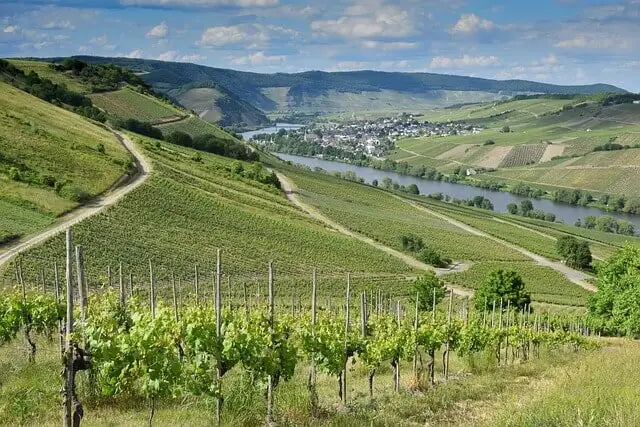
Sangiovese vines
The characteristics of the Sangiovese grape variety
Sangiovese is distinguished by its elongated clusters and its berries with an elliptical shape, taking on a beautiful bluish-black color when ripe. This grape variety thrives in poor and clay-limestone soils as well as in warm and sunny climates.
One of Sangiovese's strengths lies in its drought resistance, although it is nevertheless susceptible to certain diseases such as flavescence dorée and powdery mildew. The variety produces red and rosé wines with varied aromas, ranging from red and black fruits (plum, cherry, blackberry, etc.) to spicy and herbal notes. Its red wines are often full-bodied, with powerful tannins, high acidity, as well as good aging potential.
In terms of yield, Sangiovese can be very productive. Nevertheless, excessively high production will harm the quality of the wines produced.Therefore, winegrowers must carefully manage the pruning and care of the vines of this grape variety.
In Corsica, the variety is often vinified as a single varietal, resulting in powerful wines, expressive and aromatic.
In Italy, Sangiovese is frequently blended with other varieties to create harmonious and complex cuvées. Within the Chianti DOCG, for example, it must represent at least 70% of the blends and can be blended with Merlot, Canaiola, or Colorino. Nevertheless, in other appellations such as Brunello di Montalcino DOCG, it is the only authorized grape variety.
What to eat with a wine made from Sangiovese?
Thanks to its versatility, Sangiovese pairs well with a wide variety of dishes.Red wines made from this grape variety pair particularly well with hearty and flavorful dishes. Whether you choose a powerful red wine or a fruity rosé from this variety, there are therefore many possible culinary pairings.
A charcuterie board
There’s nothing like a friendly aperitif gathering around a good charcuterie board to enjoy a Sangiovese-based rosé wine. Its freshness and fruity notes will perfectly balance the salty flavors and richness of the charcuterie.Your dry sausages, cured hams, terrines, and pâtés will be enhanced!
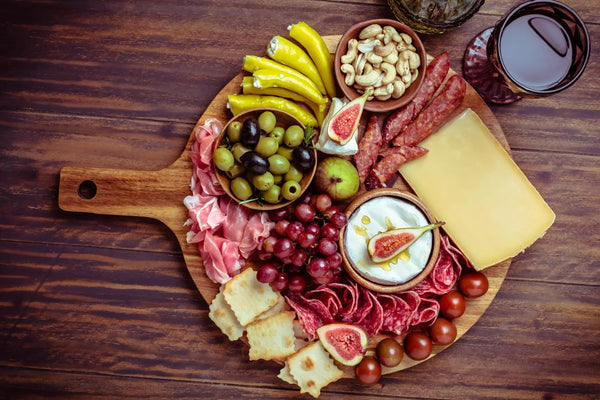
Charcuterie platter and Nielluccio: an irresistible pairing!
Roast meats and stews
Italian Sangiovese wines are excellent for pairing with hearty dishes. So think of roast meats such as pork, beef, or lamb. The powerful tannins and aromas of dark fruits and dried herbs in this grape variety complement these dishes beautifully.
Moreover, tomato-based recipes, such as a good ratatouille or Bolognese pasta, will also find an ideal partner with wines made from Sangiovese.
For optimal tasting, we recommend serving your glass of red Sangiovese between 16 and 18°C, and rosé wines between 8 and 10°C.
The best Sangiovese wines
Let's explore some renowned estates producing exceptional Sangiovese or Nielluccio wines !
Ruffino
Founded in Tuscany in 1877, the Ruffino estate is a true benchmark for Sangiovese enthusiasts. Located in the heart of the greatest Chianti terroirs, it embodies the history and traditional know-how of the region. The house produces fine, balanced, and expressive wines, faithfully reflecting the typicality of Tuscan soils.The estate’s emblematic cuvées reflect a constant pursuit of quality, with a growing commitment to sustainable viticultural practices.
An essential Italian wine that you absolutely must discover!
Domaine Yves Leccia
Located in Poggio-d'Oletta, in the north of Corsica, the Domaine Yves Leccia is a must for lovers of Nielluccio. The winemaker himself is a true emblem of the Island of Beauty’s vineyards. He produces elegant, powerful, and expressive wines that capture the very essence of the Patrimonio terroirs. All the estate’s cuvées are produced using organic farming.
Clos Canarelli
Located in Tarabucetta, the Clos Canarelli is among the most iconic estates in southern Corsica. Managed by Yves Canarelli, this visionary winemaker and passionate advocate of indigenous grape varieties is dedicated to purely expressing the richness of the granite and windswept terroirs of Figari. The wines, certified in organic and biodynamic farming, combine strength, elegance, and authenticity, offering a masterful interpretation of the Mediterranean and wild character of the Isle of Beauty. A must-try !
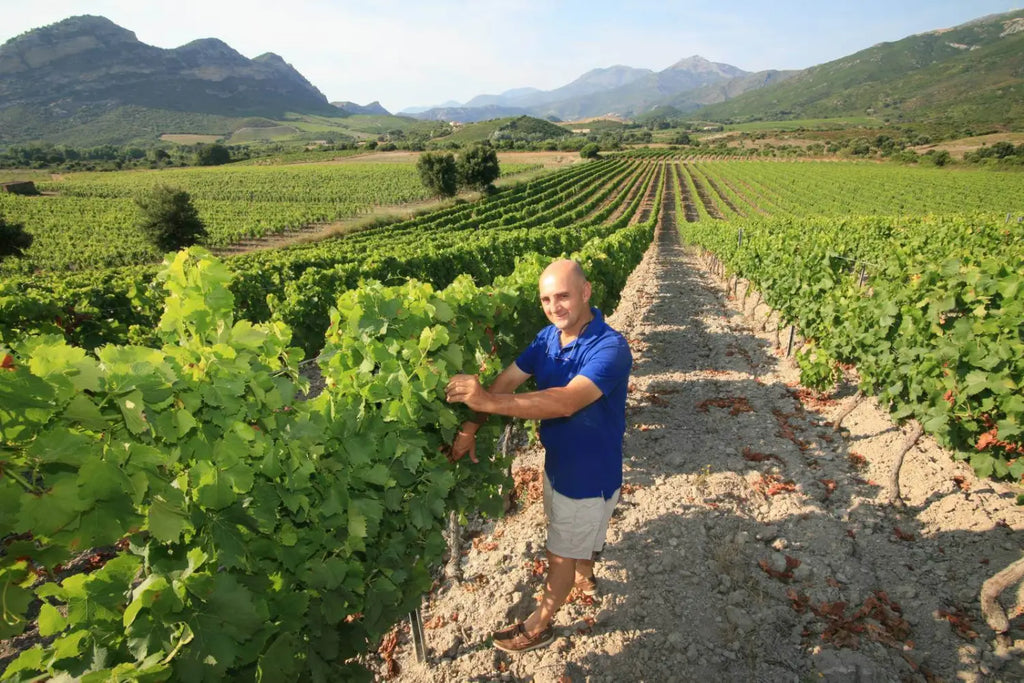
Yves Leccia in his vineyards
You now know almost everything about Sangiovese! For a more in-depth exploration, please feel free to contact La Cave Éclairée, we will be delighted to guide you and suggest the cuvées best suited to your tastes and needs. Contact us today to enrich your cellar !


