

It is impossible to talk about Italy without mentioning wine ! And when it comes to Tuscany, one name stands out as an obvious choice for enthusiasts around the world: Brunello di Montalcino. Considered as one of the greatest red wine terroirs on the planet, this appellation brilliantly expresses the nobility of the Sangiovese grape variety, here called "Brunello".
Born on the sun-drenched hills surrounding the medieval village of Montalcino, this wine embodies both the strength of the terroir, the refinement of tradition, and the passion of the winemakers. Each bottle tells a story of patience, cultivation, and Tuscan identity.
Ready to travel to the heart of this unique landscape ? Follow the guide, the adventure is just beginning !
Summary
History of Brunello di Montalcino
Viticulture in Montalcino dates back to Antiquity. The Etruscans and then the Romans were already cultivating vines here, taking advantage of limestone soils and an ideal Mediterranean climate. In the Middle Ages, the monks and the great families of the region maintained this heritage, producing wines appreciated even in the neighboring city of Siena. At that time, of course, these were not yet modern Brunello wines, but rather a variety of red and white wines.
The real turning point came in the 19th century. At that time, the wines produced locally were often light, sometimes a little sweet, or intended for quick consumption, and each producer had their own method. There were also sweet white wines, such as the famous Moscadello di Montalcino, which was highly prized from the Renaissance until the 19th century.
The major change occurred in the mid-19th century, when Ferruccio Biondi Santi, inspired by the work of his grandfather Clemente Santi, isolated a local strain of the Sangiovese grape variety: Sangiovese Grosso (or "Brunello"). The Biondi Santi family then produced a dry, powerful, and tannic red wine that underwent a long aging period in oak barrels. It was this approach that gave birth to Brunello as we know it today.
Until the mid-20th century, however, this wine remained a rarity and was produced almost exclusively by the Biondi-Santi family and a few other winemakers.
Nevertheless, in the 1960s, brothers John and Harry Mariani, two Americans of Italian origin based in New York and specialized in wine importation, took an interest in Tuscany. Convinced of Brunello's commercial potential, they then invested heavily in Montalcino and created Tenuta Banfi in 1978. In the meantime, Brunello obtained its DOC (Denominazione di Origine Controllata) in 1966, then its DOCG (Denominazione di Origine Controllata e Garantita) in 1980.
The strategy of Tenuta Banfi is very different from that of traditional producers: the Mariani brothers have indeed developed a vast estate and produce larger volumes than Biondi-Santi, while maintaining good quality. Above all, they introduce Brunello to Americans thanks to their network of importers in the United States.
As a result, Brunello becomes a cult wine in the United States in the 1980s and 1990s, driven by Banfi’s marketing power. International critics (notably Wine Spectator and Robert Parker) amplified the phenomenon by praising several vintages.
Today, Brunello is one of the most prestigious wines in Italy and the world, and the hills of Montalcino are planted with over 3,500 hectares of Sangiovese. The Brunello di Montalcino DOCG itself covers around 2,100 hectares and more than 200 winegrowers.
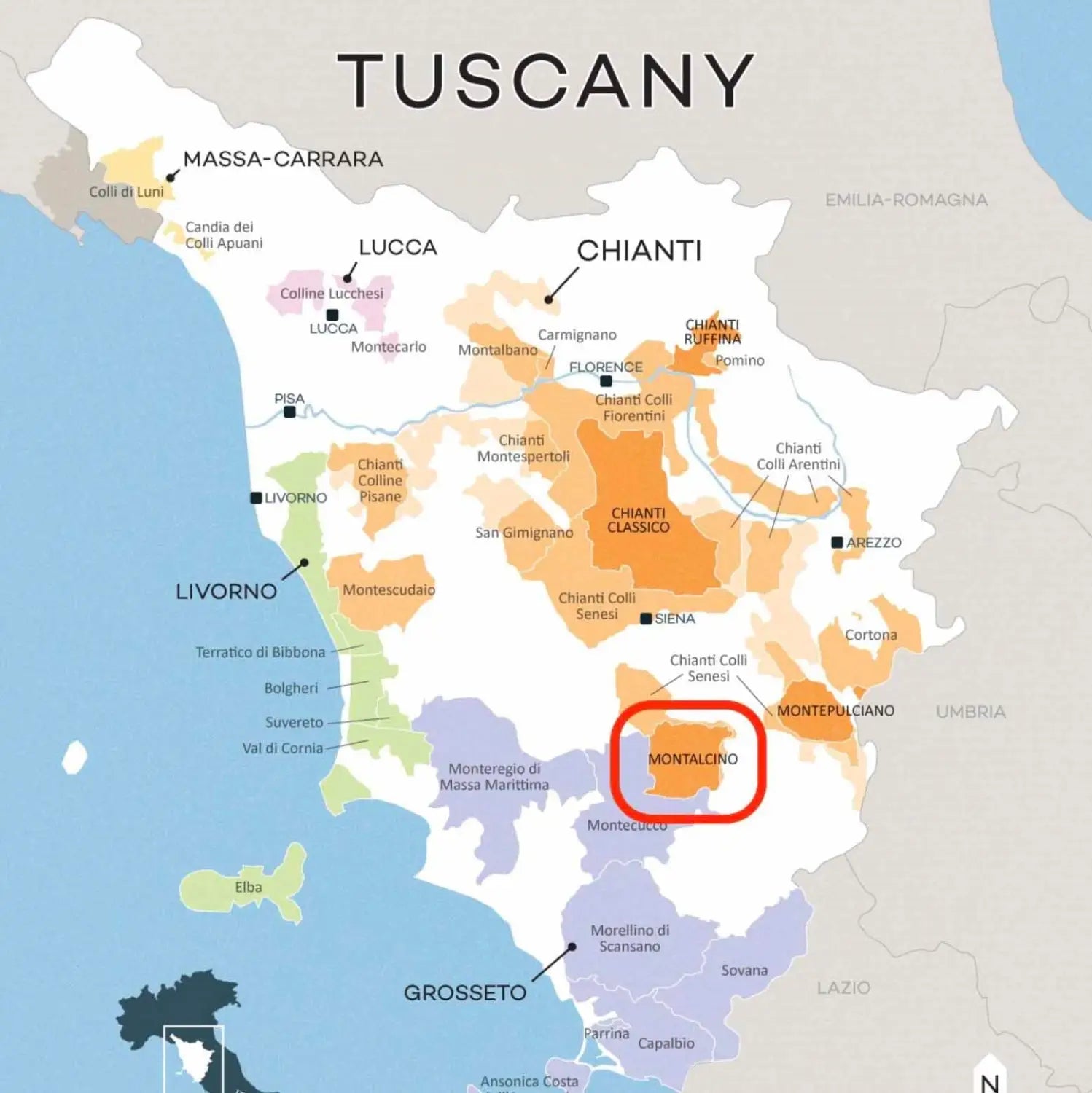
Map of Tuscany, with the Brunello di Montalcino DOCG
Soils and climate of the Brunello di Montalcino DOCG
To understand the magic of Brunello di Montalcino, one must delve into its unique terroir. Located south of Siena, in the heart of Tuscany, the Montalcino region is home to some of Italy’s most prestigious vineyards.
The vines here stretch between 120 and 600 meters above sea level and grow on a fascinating mosaic of soils: clay, limestone, pebbles, marl, and schist. This geological diversity gives the wines remarkable aromatic complexity and structure. Depending on the altitude and the nature of the soil, the profiles indeed vary, ranging from powerful and full-bodied wines from the lower, clay-rich areas to more refined, elegant, and aromatic expressions from the higher hillside vineyards.
Furthermore, the local climate plays an equally essential role. The hot, dry summers ensure optimal ripeness of the Sangiovese, while the cold but moderate winters preserve the balance of the vine. The influence of the Tyrrhenian Sea brings a regular breeze, which prevents over-ripening of the grapes and maintains essential freshness. This subtle balance between warmth, ventilation, and temperature variations gives Montalcino wines exceptional intensity and longevity.
With this perfect alchemy between soils, climate, and expertise, each bottle of Brunello becomes much more than a great wine: a true signature of Tuscany and Italy, recognized and celebrated worldwide.
The Mediterranean climate, tempered by altitude and both continental and maritime influences, also plays an essential role. The hot, dry summers ensure optimal ripening of the Sangiovese grape variety, while the cold but moderate winters preserve the balance of the vine. The influence of the Tyrrhenian Sea brings a regular breeze, preventing overripeness and preserving freshness. This balance makes the Brunello di Montalcino DOCG one of the greatest expressions of Italian red wine, surpassing for many the prestigious Chianti Classico from the same region.
Thanks to this alchemy blending soils, climate, and expertise, each bottle of Brunello then becomes much more than just a simple wine, but a true signature of Tuscany and Italy, recognized and celebrated worldwide.
The style of Brunello di Montalcino wines
Brunello di Montalcino is not a wine like any other. Made from a single grape variety, Sangiovese Grosso, a local variety of Sangiovese, it owes much of its identity to this exclusive choice. This grape, widely present in Tuscany and in Chianti, generally produces deep, fruity, and lively wines. In Montalcino, thanks to the unique combination of climate, soils, and the know-how of the winemakers, it reaches a higher dimension: more concentrated, of great complexity, and endowed with an exceptional aging potential.
A Brunello therefore immediately stands out for its depth and intensity. In the glass, it displays a brilliant ruby red color that will evolve towards garnet over time. On the nose, it successively reveals aromas of black cherry, plum, and violet, then, with age, more developed notes of leather, tobacco, licorice, and sometimes even a subtle touch of truffle. It is a wine that tells a different story at each stage of its aging.
On the palate, Brunello combines power and elegance.Its tannins, firm in youth, become more refined over the years to offer a velvety and harmonious texture. Its natural acidity, typical of Sangiovese, brings freshness and balance, ensuring the legendary longevity of its bottles.
The appellation regulations reinforce this identity. In fact, a Brunello di Montalcino must age for at least 5 years before being released for sale, including 2 years in oak barrels and 4 months in bottle. For the Riserva version, it requires 6 years of aging, with at least 2 years in barrels and 6 months in bottle. Far from being constraints, these requirements ensure consistency and excellence in every vintage.
The result is indisputable: Brunello is among the most sought-after wines in Italy and the world, and is able to compete with (if not surpass) the greatest reds of Bordeaux or Burgundy. This discipline and respect for time have made Brunello the king of Tuscan reds, alongside Chianti Classico and Vino Nobile di Montepulciano. For many enthusiasts, opening a bottle of Brunello at the perfect moment remains an unforgettable experience.
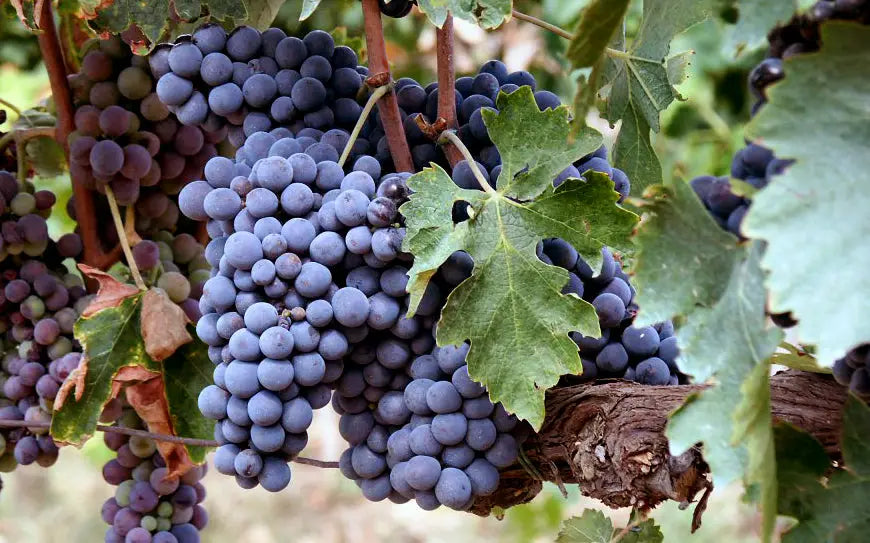
Sangiovese, the grape variety that shapes the identity of Brunello di Montalcino
What to eat with a wine from the Brunello di Montalcino appellation?
A red wine as intense and refined as Brunello di Montalcino deserves generous cuisine as well as dishes rich in flavor.
Red meat lovers will naturally find the perfect pairing to highlight the structure of this wine in a beautiful grilled ribeye, a roast leg of lamb with herbs, or slow-cooked beef. Brunello also expresses its full greatness with game meats: wild boar, venison, or wild duck echo its power and reveal its aromatic complexity.
The Tuscan tradition is not left behind: a homemade ragù slowly simmered, fresh pasta coated with sauce, or even a fragrant osso buco all find in this powerful red wine a perfect ally. To finish the meal, nothing beats aged cheeses such as a robust Tuscan pecorino, aged parmesan, or even some blue cheeses with a strong character.
To fully enjoy all the nuances of this great Italian wine, we recommend serving it between 16-18°C. Furthermore, do not hesitate to decant your bottle one to three hours in advance if you open it while it is still young (under 8 years old). This breathing time will allow this delicious Tuscan wine to blossom and reveal the elegance for which it is renowned worldwide.
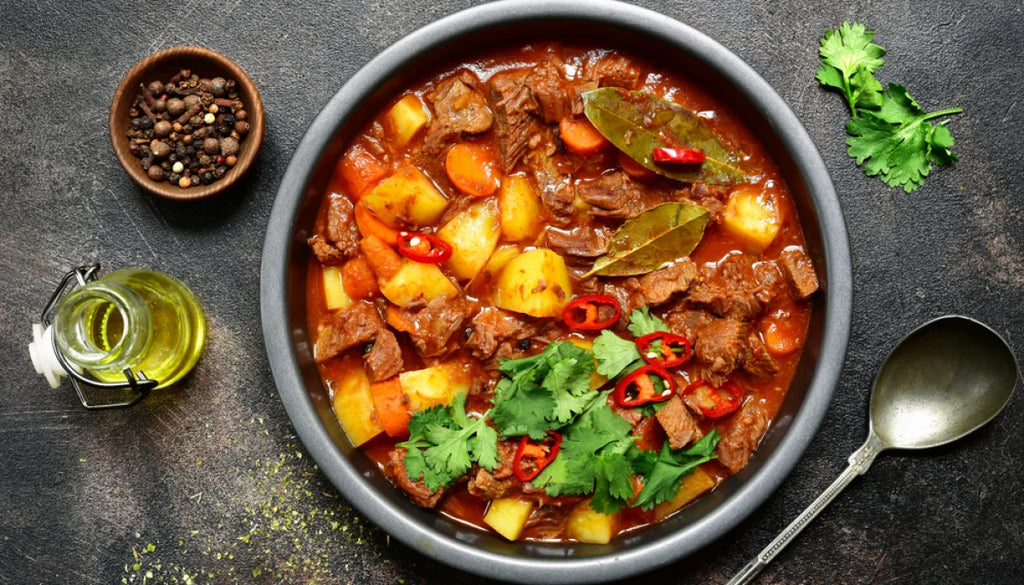
Beef stewed with tomatoes, perfect to reveal the structure of Brunello
The best wines of Brunello di Montalcino DOCG
When we mention Brunello di Montalcino, several prestigious names immediately come to mind. Among the historic references, Biondi-Santi remains essential: as seen, it is the pioneering estate that shaped the classic style of Brunello. Then come Casanova di Neri, known for its powerful and refined wines, Poggio Antico, which combines elegance and concentration, and also Altesino, renowned for its ability to produce balanced and highly expressive Brunello. Each of these estates brings its own interpretation of Sangiovese Grosso, combining finesse, complexity, and exceptional aging potential.
In this context, the Fattoi estate also stands out for its commitment to tradition and its ability to translate the unique terroir of Montalcino into exceptional wines. Located in the southwest of the commune, the 9-hectare vineyard benefits from clay-limestone soils, allowing the production of a Brunello di Montalcino that develops intense aromas of dark fruits (plum, fresh blackberry), spices (licorice, pepper, cinnamon, coffee, etc.), as well as a perfectly balanced oak character. A beautiful, perfectly measured tannic structure is also present, making this great wine a cuvée with long aging potential.
Do not hesitate to open this wonderful bottle a few hours before tasting (especially when it is young) in order to enjoy it at its best. Pairings with red meats, stews, and truffle pasta are guaranteed successes here!
As you will have understood, Brunello di Montalcino embodies a true emotion in a bottle. Between centuries-old history, complex soils, ideal climate, and the know-how of the winemakers, each bottle tells the story of the sublime Tuscan terroir as well as the patient work of the families who produce it. This wine does not simply accompany a meal: it offers a complete sensory experience, capable of rivaling the greatest red wines in the world.
To extend the journey and discover Fattoi's Brunello or the other Italian gems we have in stock, visit your favorite your favorite online wine shop : La Cave Éclairée, your portal for indulgent and inspiring experiences. See you soon and enjoy your tastings !


