

Today, La Cave Éclairée invites you on a true taste journey to the heart of Beaujolais, where we will explore the Saint-Amour AOC in all its aspects.
Thanks to its diversity of soils, the winemakers of the appellation are able to offer wines in a variety of styles, ranging from sensual and fruity cuvées to more structured wines that will only reach their peak after a few years of aging.
So, without further delay, let’s dive together into the history, terroirs, and wine treasures that make this appellation a true gem you must have in your cellar.Happy reading !
Summary
History of the Saint-Amour AOC
The winegrowing history of Saint-Amour began at the beginning of our era with the Romans. At that time, Beaujolais was indeed part of Roman Gaul, and vine cultivation was encouraged for economic and religious reasons.
The name of the appellation is said to date back to this same period, during which a Roman legionary named Amor retired from the military and settled in the region. Upon his death, the village of Saint-Amour was then named in his honor.
After the fall of the Roman Empire, vine cultivation continued to develop in the region under the influence of the monks. In the Middle Ages, Cistercian and Benedictine monks indeed played a key role in preserving and improving viticultural techniques. For example, they had already understood the importance of terroir and selected the best plots of land to dedicate to viticulture.
During the Renaissance, the wines of Saint-Amour began to be structured into true wine estates.The proximity to Burgundy, and especially to the major cities of Lyon and Mâcon, also facilitates the marketing of the region's wines.
In the 17th and 18th centuries, the wines of Saint-Amour were highly prized by royal courts and the French nobility. However, despite their growing reputation, the wines from the vineyard were often blended with those from other Beaujolais terroirs.
In the 19th century, like many other vineyards in France, that of Saint-Amour was devastated by the phylloxera crisis. This parasite, which attacks the roots of the vine, then endangered the entirety of local viticulture. The winegrowers of Saint-Amour, like elsewhere, had to uproot their vines and replant grafted plants on American rootstocks resistant to the disease.
Finally, the 20th century marks a crucial stage in the history of Saint-Amour. In 1946, the AOC (Appellation d'Origine Contrôlée) was officially created, thus highlighting the uniqueness of the region's terroir and winemaking practices. In the decades that followed, Saint-Amour continued to gain recognition, notably thanks to its romantic name, which still makes it today a particularly sought-after wine for Valentine's Day.
Today, Saint-Amour is one of the 10 Beaujolais crus and remains one of the region's emblematic appellations. With an area of approximately 320 hectares, its terroirs allow the production of cuvées distinguished by their finesse but also by their diversity of styles.
Let us now set out to discover the terroirs of this magnificent appellation!
Climate and Terroirs of the Saint-Amour AOC
Although relatively small in size, the Saint-Amour AOC is home to an impressive diversity of terroirs.
Located between 250 and 350 meters above sea level, the vineyards of the appellation benefit from an ideal exposure, often facing east and southeast, thus ensuring optimal sunlight. The harvesting of the grapes, vinification, and wine production are all carried out within the territory of the single commune of Saint-Amour-Bellevue.
The soils of the appellation are predominantly clay-siliceous with a granite subsoil, a combination that allows Gamay noir à jus blanc, the emblematic grape variety of Beaujolais, to express all its finesse. On these lands, the variety indeed takes on a particular dimension, offering wines that are sometimes light and fruity, sometimes more structured.
Finally, the Saint-Amour vineyard benefits from a semi-continental climate with Mediterranean and oceanic influences, characteristic of the northern part of Beaujolais. The seasonal contrasts thus allow for the production of wines combining freshness, fruitiness, and structure. The hot summers ensure good phenolic ripeness of the grapes, while the cold winters and temperature variations help preserve acidity.
Let us now tackle the heart of the matter : the wines of the appellation !
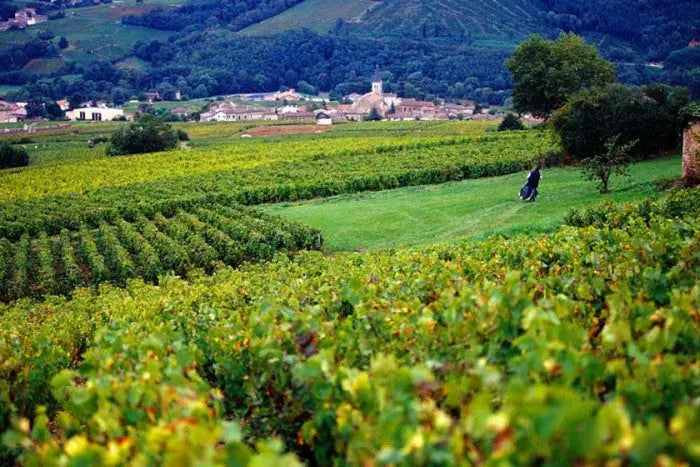
Gamay vines on the Saint-Amour AOC
The wines of the Saint-Amour AOC
Although exclusively made from the Gamay grape variety, the wines of Saint-Amour display a beautiful diversity of styles. This variety is due, as we have seen, to the richness of the terroirs, but also to the practices of the winemakers. Thus, two main types of wine generally stand out within the appellation.
On one hand, you have wines with a light and fruity profile, full of freshness. These crus, with aromas of raspberry and cherry, often also reveal a floral touch of peony, all in a brilliant ruby robe.These cuvées are to be enjoyed in their youth and pair wonderfully with an aperitif or a light meal.
On the other hand, you have more structured and tannic wines. These wines display an intense color with purple highlights and may express aromas of kirsch and spices. For this type of wine, it is necessary to wait a few years if you wish to enjoy them at their peak.
In short, Saint-Amour can therefore be a wine that is just as accessible in its youth as after a few years of aging; this will primarily depend on its terroir of origin as well as the choices made by the winemaker !
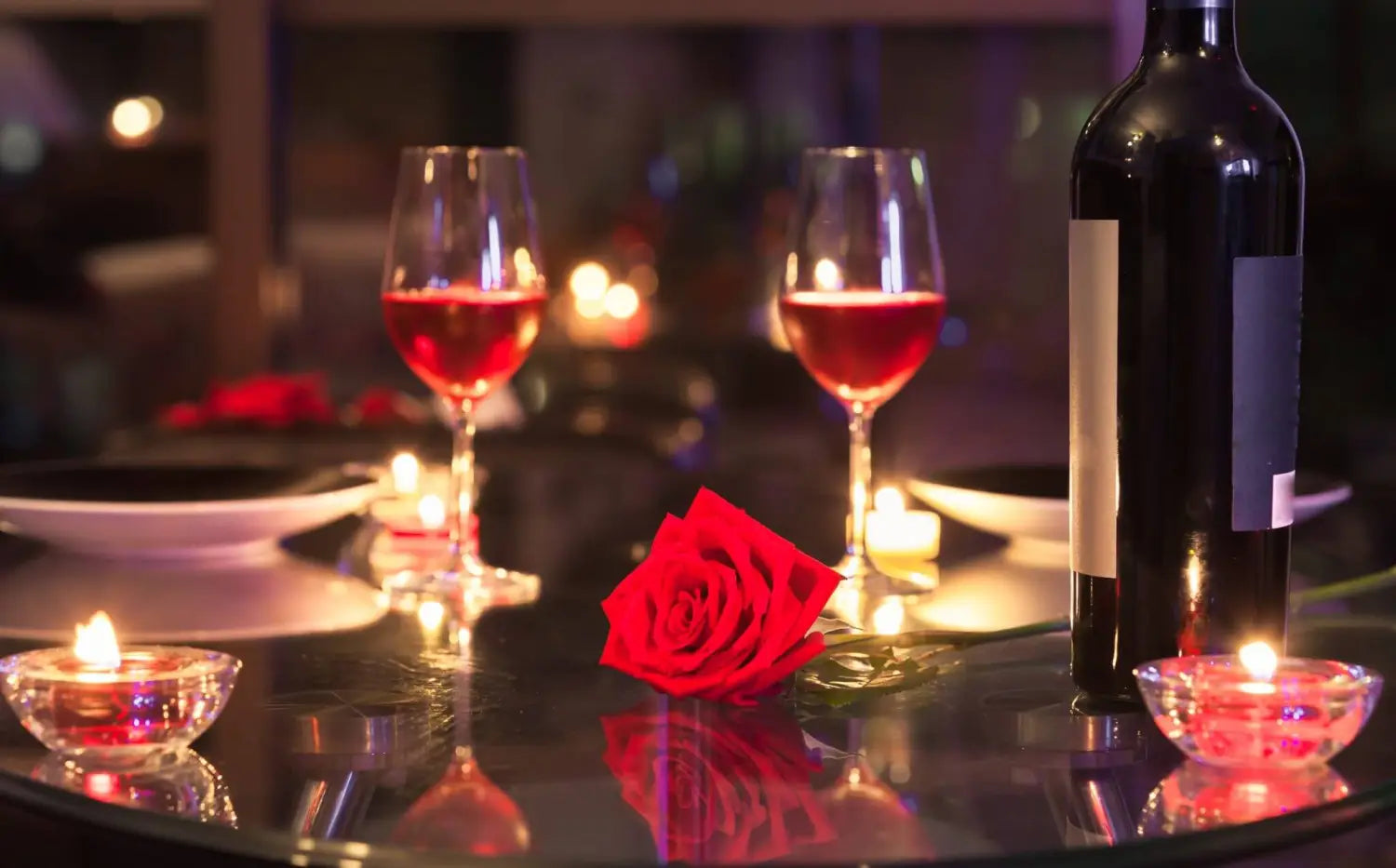
Saint-Amour: a name symbolic of romance
What to eat with a Saint-Amour?
So, what should you pair with the delicious wines of Saint-Amour? Thanks to their fruity aromas and beautiful acidity, the cuvées of the appellation actually pair with a wide variety of dishes.
Here are some ideas to enhance your Saint-Amour throughout your meal !
As an aperitif
Start your evening with appetizers that will perfectly complement a Saint-Amour with fruity and fresh notes. Imagine here a homemade terrine or a delicately seasoned pâté en croûte. Crispy ham croquettes also add a touch of indulgentise that pairs perfectly with the freshness of the wine. An onion tart, with its sweet and savory notes, can also create a delicious contrast with the flavors of Saint-Amour.
Of course, a beautiful charcuterie board (sausage, cured ham, rillette, etc.) will also be a must.
Main courses
Let’s now move on to the main course.Here, roast poultry is an excellent option to pair with a more structured Saint-Amour. Braised pork cheeks, with their melt-in-the-mouth texture, or a pork tenderloin with shallots, also pair wonderfully with the finesse and structure of this type of wine.
You can also try pairing with slow-cooked dishes such as beef bourguignon or mushroom risotto…a delight !
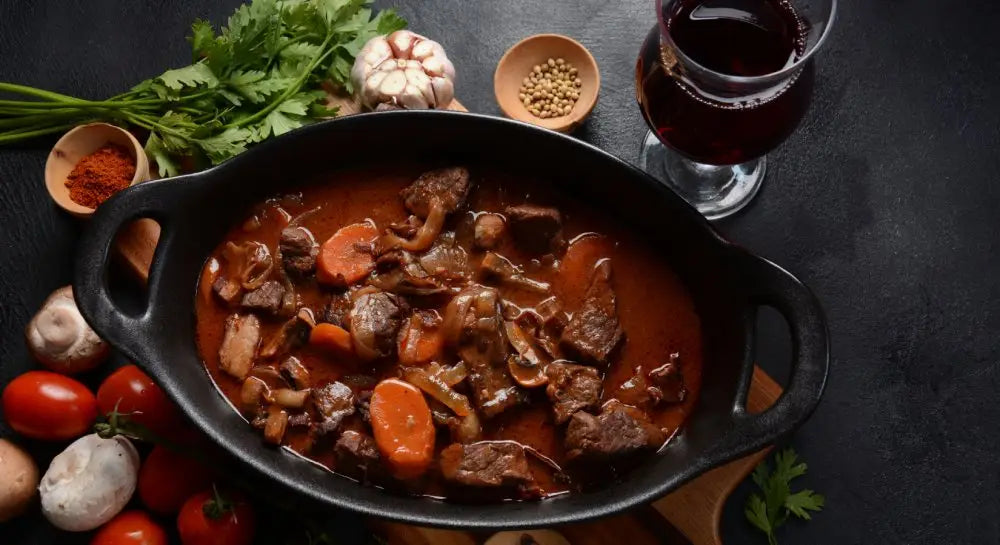
Wine from the Saint-Amour AOC and beef bourguignon: a perfect harmony indulgente
Cheeses
Although it is generally preferable to pair cheeses with white wine (tannins do not react well with milk proteins), some pairings are nevertheless possible.For this, opt for supple and young cuvées or older crus with polished tannins.
For example, try pairing with aged Comté, Saint-Nectaire, Reblochon, or even Époisses !
To fully appreciate all these potential pairings, we recommend serving your Saint-Amour slightly chilled, between 14 and 16°C. This temperature will reveal the complexity as well as the refinement of your wine, while preserving its freshness.
What are the best wines of the Saint-Amour AOC?
Among the many producers of the appellation, some stand out for their expertise and the quality of their wines.
One of the estates not to be missed is without a doubt the Cheveau estate. This family-owned property, although located in Burgundy within the Pouilly-Fuissé AOC, produces a delicious Saint-Amour balancing finesse and structure. It can certainly be enjoyed in its youth, but a few years of aging will give it even more depth at the time of tasting. In any case, we highly recommend it !
We hope this article has captivated you as much as it did us while writing it, and that you now have an in-depth knowledge of the Saint-Amour AOC ! So, ready to expand your cellar? Visit our website La Cave Éclairée to explore our selection of the best estates ! See you soon for more discoveries…


