

Ribera del Duero is a name that resonates with all lovers of Spanish wines. The appellation is indeed one of the most renowned in the entire country and impresses with its ability to produce very great red wines.
But then, what is the story of this Iberian wine gem? What are its grape varieties ? What are the terroirs of this great appellation and above all, what can you expect during a tasting?
Follow the guide and by the end of this reading, you will know everything about the wines of Ribera del Duero!
Summary
History of the Ribera del Duero Appellation
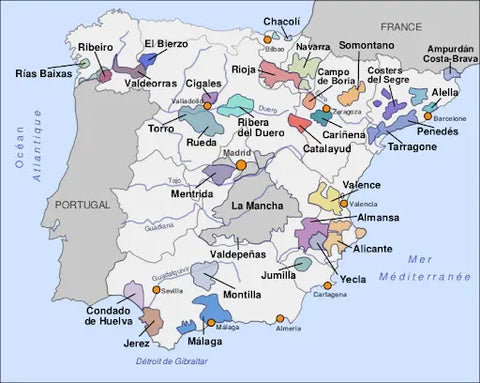
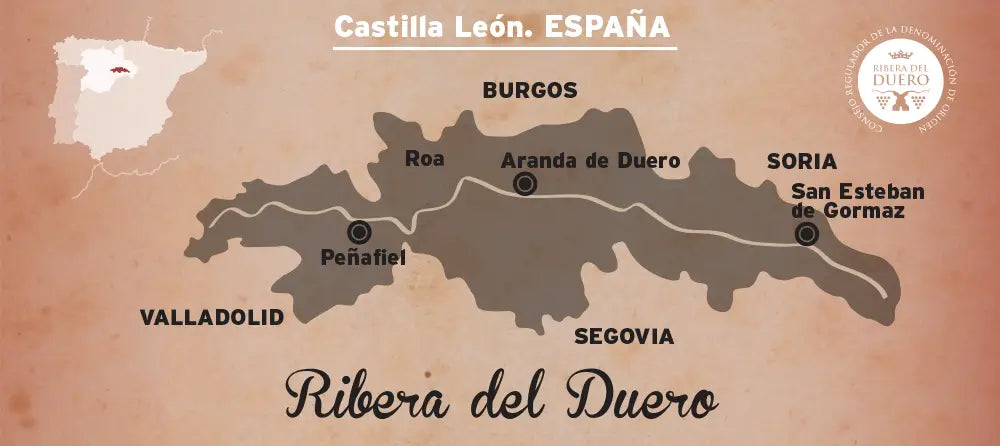
The winegrowing history of Ribera del Duero dates back to Antiquity, a period during which Roman settlers planted the very first vines along the banks of the Duero River.Wine residues dating back to more than 2,500 years have indeed been identified within the municipality of Peñafiel (to the west of the appellation), at the archaeological site of Pintia.
Furthermore, a large Roman mosaic depicting wine consumption was also discovered in 1972 in the town of Baños de Valdearados, thus confirming that the region's winemaking history dates back several millennia.
Nevertheless, it was only in the Middle Ages that regional viticulture truly began to flourish thanks to the influence of the Cistercian and Benedictine monks. They were the ones who developed the first vineyards around their monasteries.
In the 13th century, the first cellars appeared. Wine and the vine then become increasingly important elements in the economic and cultural development of the Ribera del Duero.
In the 15th century, certain laws, notably the Castilian Ordinances, were created in order to better control wine production.
Over the centuries, vine cultivation continued to take root in the region, shaping its landscape and identity.
The official creation of the Ribera Del Duero designation is much more recent. In fact, it was only in 1982, following the initiative of a group of winegrowers, that the Ministry of Agriculture officially recognized the DO Ribera del Duero (Denominación de Originen).
Since then, the vineyard has continued to develop, growing from 7,000 hectares at the time of its creation to more than 26,000 hectares in 2024. The quality of the wines has also improved considerably over the past decades, fostering remarkable economic growth and global recognition.
Today, the quality of Ribera del Duero wines is indeed recognized worldwide and the reputation of the appellation and its more than 300 estates is well established among enthusiasts.
Wines from the Ribera del Duero appellation
Let’s say it right away, Ribera del Duero is above all an appellation of red wines. Indeed, while whites and rosés are also produced, it is in very small quantities, and it is truly the reds that forge the region's worldwide reputation. The latter indeed display remarkable power and elegance.
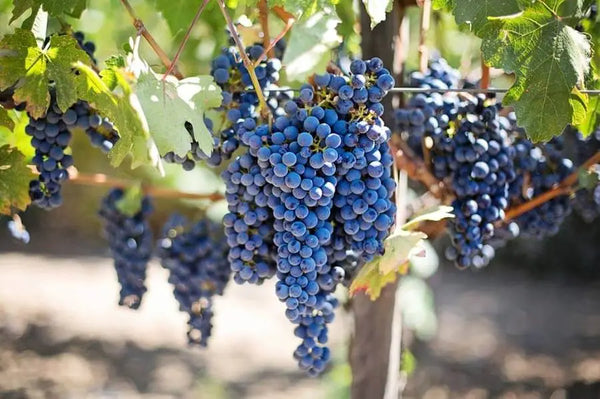
The red wines of Ribera del Duero are mainly made from the Tempranillo grape variety, locally known as Tinto fino and Tinta del país. This variety actually represents 75% of the vineyard and defines the typicity of the cuvées.
With a thick skin and medium acidity on tasting, Tempranillo allows the production of powerful wines, colorful and tannic. Its most common markers are aromas of ripe red and black fruits as well as spicy notes.
Other red grape varieties are also planted in Ribera del Duero, such as Cabernet Sauvignon, Merlot, Malbec and Grenache. Nevertheless, Tempranillo must make up at least 75% of the red wines of the DO, and the other varieties are therefore very much in the minority.
Regarding the rosés of the region, these must be produced from the 5 red grape varieties mentioned above. These are fresh wines and indulgentgenerally displaying pleasant fruity notes focused on strawberry and raspberry.
Finally, as for white wine, the variety to remember is Albillo Mayor. This variety allows the production of rather aromatic wines expressing notes of peach, citrus, apple, and apricot, with a medium acidity.
The aging of wines in the Ribera del Duero
But let's get back to the red wines of Ribera del Duero! Powerful and with great aging potential, these wines are regularly aged in oak barrels, thus allowing to temper their tannic strength but also to add an extra layer of aromatic complexity.
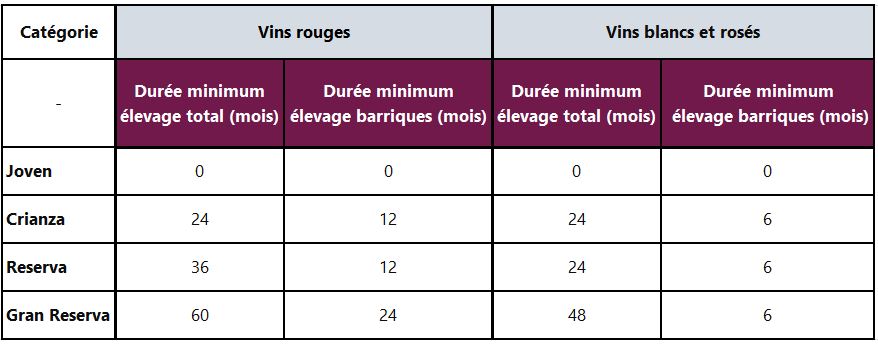
The length of this aging process is also subject to control by the Spanish authorities and allows the use of the following designations: Joven, Crianza, Reserva, and Gran Reserva. Here is a quick description of what you can expect during tasting for each of these indications.
- Wines bearing the mention « Joven » are wines that are little or not aged in barrels and mainly highlight fruity notes. No minimum aging period in barrel or bottle is required here.
- Wines bearing the mention « Crianza » must be aged for at least two years , including a minimum of one year in oak barrels. "Crianza" wines therefore generally present fruity aromas but also woody notes (oak, vanilla, clove, licorice, etc.).
- Wines bearing the designation « Reserva » must undergo a minimum total aging in barrel and bottle of three years. Of these three years, at least one year must be spent in barrels, complemented by 6 months in bottle. Bottles in this category are age-worthy wines with complex profiles offering a great aromatic richness (fruity, oaky notes as well as tertiary aromas such as leather, tobacco, or truffle).
- Finally, red wines « Gran Reserva » represent the elite of the region’s winemaking and are produced only in the best vintages.These exceptional bottles must undergo a total minimum aging of 5 years, including 2 years in barrels and 2 years in bottle. The "Gran Reserva" are great wines for aging, offering an incredible aromatic richness.
Summary table of aging designations in Spain
Climate and terroirs of Ribera del Duero
The climate in Ribera del Duero is characterized by a strong continentality as well as significant temperature variations. Winters are therefore very cold (down to -20°C) while summers are particularly hot and dry (40°C and above). The annual rainfall is also very low (less than 400mm per year).
Another important point, the vineyards of the region are located at high altitudes: between 720m and sometimes more than 1000m above sea level. Ribera del Duero is indeed one of the highest vineyards in the northern hemisphere!
From a terroir perspective, the soils are mainly clay-limestone, offering ideal conditions for vine cultivation.
All these combined factors allow slow and steady ripening of the grapes, thus preserving their freshness and acidity.
What to eat with Ribera del Duero wines ?
The red wines of Ribera del Duero being powerful, tannic, and rich in flavor, they generally pair well with red meat.
The region's cuvées indeed pair particularly well with grilled or roasted meats, such as lamb, beef, and game. Traditional Spanish dishes such as cochinillo (roast suckling pig) and cordero asado (roast lamb) are, for example, excellent pairings.
As for cheeses, aged Manchegos and Cheddars or aged Pecorino can pair well with Ribera del Duero red wines due to their intensity and character.However, it is always wise to experiment and find what works best for your palate!
The best wines of Ribera del Duero
In conclusion, the Ribera del Duero appellation, with its deep and expressive red wines, is a flagship of Spanish viticulture.
Among the most renowned estates in the region, we especially recommend Bodegas Protos which stand out for their history as well as the quality of their wines. Their cuvées are indeed an excellent way to discover the regional wine pleasures.
Health, and above all, do not hesitate to contact La Cave Éclairée if you need advice!


