

Have you ever tasted a warm red wine made from the Tempranillo grape variety? If not yet, you are about to discover one of the most iconic varieties in the wine world. This grape is indeed the basis of some of the best Spanish wines !
Thanks to this article, we will explore its history together, the appellations associated with it, and discover the best food and wine pairings for this variety. Ready to learn more? Enjoy your reading!
History and Origins of Tempranillo
The Tempranillo grape has its roots in the Iberian Peninsula, where it holds an essential place in the history of viticulture. Its name, derived from the Spanish “ temprano ” meaning “ early ”, refers to the earliness of its ripening.
Although the exact origins of Tempranillo are still debated among historians and ampelographers, modern genetic research would confirm that it comes from a cross between the Albillo Mayor and Benedicto varieties.
Furthermore, while some theories suggest that this grape originated in the Rioja region, other evidence suggests that Tempranillo actually comes from Castilla e León, a vast region located in the northwest of Spain.
From a historical perspective, writings dating back to the 12th century prove that the grape was known as early as the Middle Ages. Nevertheless, the reputation of Tempranillo was greatly solidified from the 19th century onwards, especially in Rioja, where it quickly stood out as the dominant grape variety. At this time, the wine region underwent a true revolution, with the adoption of new winemaking techniques, notably aging in oak barrels, a technique borrowed from Bordeaux.
Soon after, the wine region of Ribera del Duero followed suit and made Tempranillo its flagship grape, producing structured and intense wines, renowned for their ability to age well.
Gradually, other Spanish regions such as Navarre and Catalonia also began to cultivate the grape.
Today, Tempranillo accounts for nearly 20% of the vineyards in Spain, or more than 200 000 hectares ! After Airén, Tempranillo is the most planted grape in the country. Outside of Spain, the variety can be found in Portugal, California, Australia, and even Argentina.
It should be noted that many synonyms exist for this grape, such as Tinta Roriz (Portugal), Cencibel (Mancha), Tinta del País (Ribera del Duero), or Tinta de Toro (Toro region).
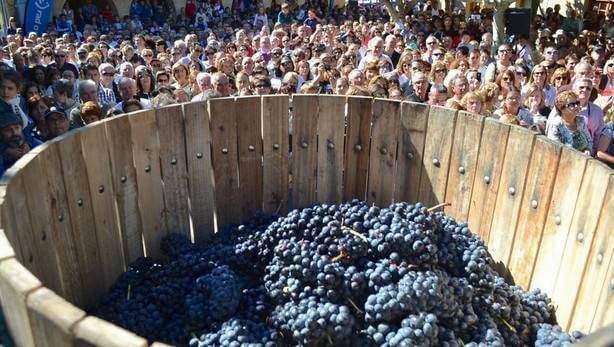
Traditions and Celebrations: The Harvest Festival in Rioja
Where is Tempranillo grown?
As mentioned, Tempranillo is the king grape in Spain. However, its presence does not stop at the Iberian borders. Let’s take a closer look at the different vineyards where it is found.
Rioja
The Rioja region, located in northern Spain, is certainly the most famous for Tempranillo cultivation. With its distinct sub-regions (Rioja Alta, Rioja Alavesa, and Rioja Baja), this great vineyard offers a diversity of climates and soils producing a range of wines, from young and fruity cuvées to complex, long-aging wines matured in oak barrels.
Here, Tempranillo covers 78% of the local vineyard area and must represent at least 85% of blends, which can be complemented with Grenache Noir (Garnacha tinta), Carignan (locally called Mazuelo), or Graciano.

Ribera del Duero
About 200 kilometers west of Rioja, Tempranillo also thrives in the Ribera del Duero. The Tinto Fino, as it is called here, prospers under a very pronounced continental climate with hot, dry summers and harsh winters.
As in Rioja, the wines here are often aged in oak barrels, which gives them complex aromas of black fruits, leather, and tobacco. Some of Spain’s most prestigious wines come from this region.
For a red wine from Ribera del Duero, the Tempranillo grape must represent at least 75% of the blend. The rest can be completed by Cabernet Sauvignon, Merlot, and Malbec. Other varieties such as Albillo or Grenache Noir may also be used.
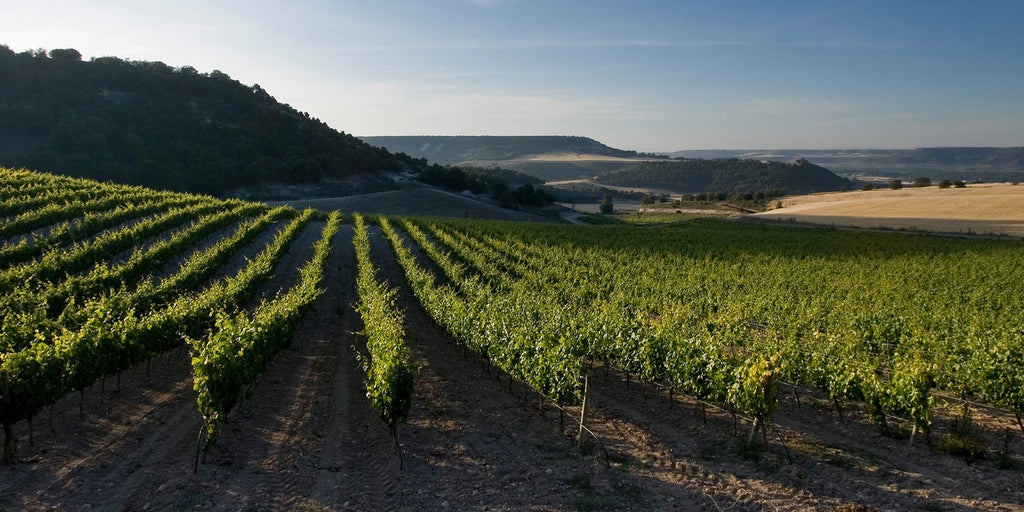
Vineyard within the DO Ribera del Duero
In the rest of the world
Finally, Tempranillo is not limited to Spain. In Portugal, Tinta Roriz, as it is called here, is for example widely used in Port wines.
The variety has also been very successfully exported to Argentina and to California. Finally, other countries such as Australia or Mexico are also experimenting with Tempranillo.
The characteristics of the Tempranillo grape variety
Tempranillo grapes are compact and medium-sized with thick skins, offering good resistance to disease. This skin, rich in tannins, also contributes to the structure of the wine, giving well-structured wines with balanced acidity.
Let’s now break down the other characteristics of our beautiful variety.
Aromas and Flavors
Tempranillo is renowned for its aromas of red and black fruits such as cherry, strawberry, and sometimes plum. With age, notes of fig, coffee, and leather appear, further enriching its aromatic palette. Younger wines are fruity and refreshing, while those aged in oak barrels acquire woody nuances of vanilla, tobacco, and even chocolate.
In summary, it is a grape variety that can be enjoyed in simple and pleasant cuvées but is also capable of producing great complex and intense age-worthy wines.
Terroir and Climate
Tempranillo thrives particularly in continental climates, where summers are hot and winters are cold.
Clay and limestone soils are also ideal for optimal ripening of the variety’s grapes. Furthermore, although it is naturally early-ripening, it adapts perfectly to regions with shorter seasons, making it a versatile grape, capable of thriving in diverse conditions.
What to eat with Tempranillo?
Wines made from Tempranillo can be paired with a multitude of dishes. Here are some ideas to whet your appetite !
Red meats and grilled dishes
Tempranillo wines pair perfectly with grilled red meats such as a juicy steak, lamb chops, or a delicious rib of beef.
Powerful tannins and spicy aromas of the variety brilliantly highlight the richness of these dishes.

Grilled rib of beef and Tempranillo: a pairing that is self-evident
Tapas and charcuterie
When you think of Spain, you think of tapas! Younger Tempranillo wines are indeed ideal companions for plates of charcuterie, aged cheeses, and olives.
The fruitiness and moderate tannins of these cuvées pair wonderfully with these appetizers.
Paella
And why not a paella ? A glass of Tempranillo will perfectly complement this iconic Spanish dish.
However, be sure to choose the version with chicken and chorizo rather than seafood ! Tempranillo will then deliciously balance the spicy and saffron flavors of this generous dish.
We hope these pairings will inspire you to enhance your meals ! And don’t forget, to enjoy all the subtleties of Tempranillo, remember to serve your wine between 16 and 18°C.

Paella indulgente and Tempranillo: the harmony of Iberian traditions
The best wines made from the Tempranillo grape variety
After exploring its origins and pairings, it is now time to introduce you to some of the best wines made from this noble grape. And how can we not mention here two of the most important estates in all of Spain : Bodegas Protos and Bodegas Muga.
Founded in 1927, the Protos house is one of the iconic producers of the Ribera del Duero region. The vineyard was established at the time by a group of winemakers seeking to create quality wines, highlighting the Tempranillo grape. Try their wines, they are magnificent timeless classics !
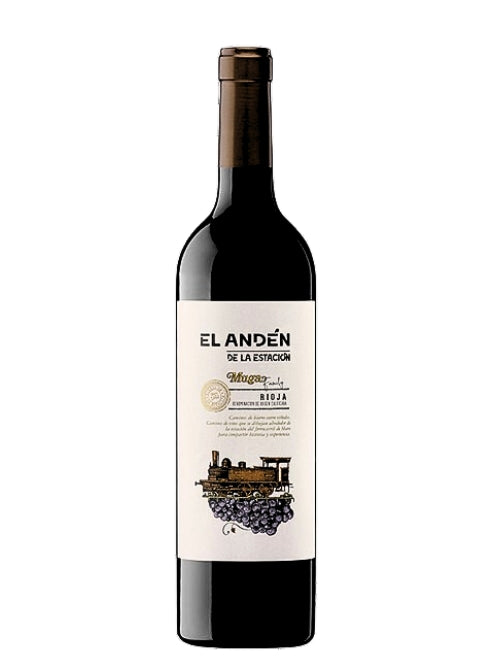
The Muga house, on the other hand, was founded in 1932 and is also a prestigious and iconic winery, but this time in the Rioja region. Known for its traditional Tempranillo-based wines, this very large estate is an absolute must for discovering the charm of Iberian wines. Their wines are very fine classics that are well worth discovering.


1 comment
Grand merci pour votre exposé sur le tempranillo. cependant, étant habitant des pyrénées et malgré des conversations nombreuses avec des vignerons et cavistes Espagnols, je n’ai pu établir de filiation ou de correspondance avec un cépage Français (il n’y en a d’ailleurs peut-être pas) Pourriez-vous éclairer ma lanterne ?
D’avance merci.
Ch. G.