

If there is one that does not complain about global warming, it is definitely this one! Every year, it reappears with the first rays of sunshine when the urge to cool off becomes pressing. But does rosé not deserve better than this label of a frivolous but refreshing wine? (spoiler: yes!).
Overview of common misconceptions and production methods of rosé.
Common misconceptions about rosé
1) Rosé is a blend of red and white wine: NO! This is strictly forbidden everywhere in France, with the sole exception of Champagne where a small percentage of red wine from the AOC can be added to white wines for the purpose of producing rosé Champagne.
2) Pale rosé is lighter than dark rosé : FALSE! The color of rosé does not in any way indicate its aromas, strength, or sugar content. It depends primarily on the grape varieties used and is mainly a visual code depending on the length of contact between the grape juice and their skins. Winemakers can control it, although its precision and consistency require good technical mastery.
3) Rosé, a wine with no history : FALSE! This is quite ironic because rosé is actually one of the very first wines in history! In fact, during Antiquity, the wines produced were likely lightly colored and could be similar to what we now call "rosé." It was only around the 12th century that most vineyards (except Provence) turned to the production of so-called "red" wines.
4) Rosé should only be drunk in the latest vintage : FALSE! While the majority of rosés produced today are indeed not meant for aging, this does not at all prevent you from keeping them for at least 2 to 3 years (in good conditions) and enjoying them at their full potential... not to mention certain characterful, vinous rosés capable of aging for 5 to 10 years or more, such as that from Château Simone! After these few years of evolution, your wines will develop aromas that are a little less varietal (fresh fruit) and the spices will generally stand out more in the overall aromatic profile.
5) Rosé, an aperitif wine to be drunk only in summer: AGAIN FALSE! As seen, some rosés are capable of long aging and are perfect companions for gastronomy! Moreover, more and more people are joining the ranks of rosé enthusiasts all year round.
Now that you have (perhaps) overcome some of your prejudices, let's look at the different production methods.
The 3 methods of making rosé
-Maceration rosé: It is made from black grapes (like all rosés) that are crushed (the berries are burst) so that the juice comes into contact with the grape skins. It is indeed the skins that contain the coloring pigments (anthocyanins) that will give the wine its color. This maceration (juice-skin contact) can last from a few hours up to 3 days in the most extended cases. Afterwards, the grapes are pressed to keep only the juice, which will then go into fermentation and aging. This method produces wines with a deeper color than average and gives the wine fruitier aromas as well as light tannins, generally allowing for longer aging.
-Saignée rosé : The method is similar to maceration rosé, with the only difference being that the tank used to make rosé is intended to produce a red wine. So, the juice is also left to macerate with the skins and seeds for the desired time before "bleeding" the tank to collect only the juice needed to make the rosé.
-Press rosé: This is THE most common method. It represents the vast majority of volumes produced each year in France and worldwide. After harvesting, the grapes are pressed directly without being left in contact with their skins. The resulting shades are therefore very pale and inspire freshness and delicacy to consumers.
The rosé market
While rosé was long neglected due to a lack of consideration and its relatively recent historical revival, times have changed! It is now produced all over the world: from France (Loire, Bordeaux, Languedoc-Roussillon, Provence, etc.) to Spain and the United States, and this is not about to stop! In fact, it is the only wine to have increased its sales during the lockdown. From 2002 to 2018, sales simply jumped by 40%! This boom is mainly explained by changing attitudes: the older generations who sometimes disparaged rosé have given way to younger ones, allowing for its complete democratization. It must be said that it has serious advantages: light, fresh, easy to drink, and often inexpensive…
Winegrowers have been able to ride the trend and make France the world's leading producer, consumer, and exporter with Provence at the forefront (and its main AOC Côtes-de-Provence), representing 40% of French AOC rosés and producing nearly 90% of rosé wines in the region (with more than 1/3 exported, the United States being the top client).
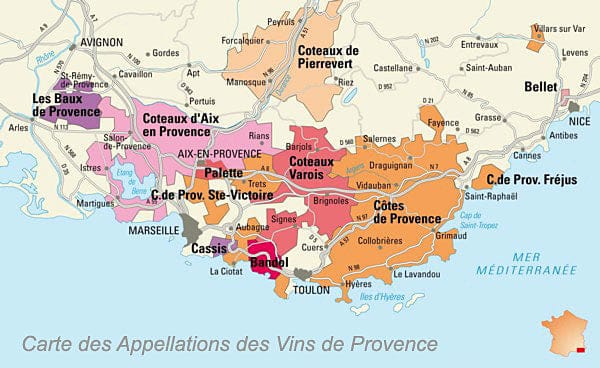
Nevertheless, while this market boom has allowed many estates to develop in quality and improve their understanding of the terroir, many others have turned to mass production to meet demand. Let's hope that consumers will know how to choose the right properties...
So, forget about grapefruit rosés and discover rosé wines, whether they are easy-drinking or full of character. Feel free to contact La Cave Éclairée to guide you in your choices!




1 comment
Bonjour ; Voilà je suis voisin de Mr Jean Marie Rogiez . Il nous a offert un bib de 5 litres de rosé de Touraine demi sec et nous aimerions pouvoir nous en approvisionner et voir autres vins.
Il y a deux ans que nous avons quitté le Var et le rosé de Provence. Serait il souhaitable que nous venions avec lui ?
Nous aimerions connaître les tarifs de vos vins en BiB. Nous sommes à La Croix en Touraine.
5 Rue du Christ 37150