

Pouilly-Fumé and Sancerre are among the most iconic appellations of the Loire Valley and the French vineyard. Located on either side of the river and separated by only a few kilometers, the wines from both AOCs share many similarities, which explains why they are often compared.
Thus, although some Sancerre and Pouilly-Fumé wines can be quite similar during tasting, differences do exist, even if they are sometimes subtle. The nature of the soils, the exposure of the plots, winemaking choices, as well as the style and quality of work at each estate, can influence the expression from one cuvée to another or from one appellation to another.
So, Pouilly-Fumé or Sancerre: which should you choose? What trends truly set them apart, and how can you determine which appellation best suits your tastes, your budget, or your planned meal?
Contents
- Pouilly-Fumé and Sancerre: differences and similarities
- Two neighboring terroirs sharing the same grape variety: Sauvignon Blanc
- What styles of white wine in Pouilly-Fumé and Sancerre?
- How to choose between a Pouilly-Fumé and a Sancerre white wine?
- Food and wine pairings: what to serve with a Pouilly-Fumé or a Sancerre white?
- In summary
Pouilly-Fumé and Sancerre: differences and similarities
Pouilly-Fumé and Sancerre share Sauvignon Blanc as their common grape variety. However, the aromatic expressions of this variety vary depending on the terroirs and the choices of each estate. The table below summarizes the main trends, allowing you to compare the white wines of both appellations.
Note: while the Pouilly-Fumé AOC produces exclusively dry white wines, Sancerre also makes a small proportion (about 15%) of red and rosé wines. To make the comparison easier, we will focus here only on white wines.
| Criteria | Pouilly-Fumé | Sancerre |
|---|---|---|
| Region | Loire Valley | Loire Valley |
| Location | Right bank of the Loire | Left bank of the Loire |
| Vineyard size | 1,400 hectares | +3,000 hectares |
| Grape variety | Sauvignon Blanc | Sauvignon Blanc |
| Wine type | Dry white wine | Dry white wine |
Style | Fresh, lively, mineral, expressive (similar to Sancerre, with variations depending on terroir and producer) | Fresh, lively, expressive (similar to Pouilly-Fumé, with variations depending on terroir and producer) |
| Terroir | Limestone, marl, clay, flint | Caillottes, white soils, flint |
| Dominant aromas | Citrus, white fruits, flowers, smoky or stony notes | Citrus, white fruits, flowers, vegetal or mineral notes |
| Aging potential | From a few years to over 10 years for the top cuvées | From a few years to over 10 years for the top cuvées |
| Price range | 20 to 40€, with significant variations depending on the estate and the cuvée | 20 to 40€, with significant variations depending on the estate and the cuvée |
Two neighboring terroirs around the same grape variety: Sauvignon Blanc
The Pouilly-Fumé terroir
Located on the right bank of the Loire, the Pouilly-Fumé vineyard lies on a mosaic of soils, notably alternating limestone, marl, clay and flint. This diversity explains why there is not just one style of Pouilly-Fumé, but several possible expressions of Sauvignon blanc depending on the areas and plots.
Flint remains, however, one of the most iconic elements of the appellation. In certain terroirs, it can be accompanied by a strong sensation of minerality, often associated with the identity of Pouilly-Fumé. However, the appellation should not be reduced to this single characteristic: marls and limestones also play an important role in the diversity of wines produced.
The term "fumé" does not refer to any particular aging process. It simply refers historically to the Sauvignon Blanc grape variety, formerly known as "Blanc fumé" in the region, and also echoes the smoky or mineral nuances that can be found in certain cuvées.
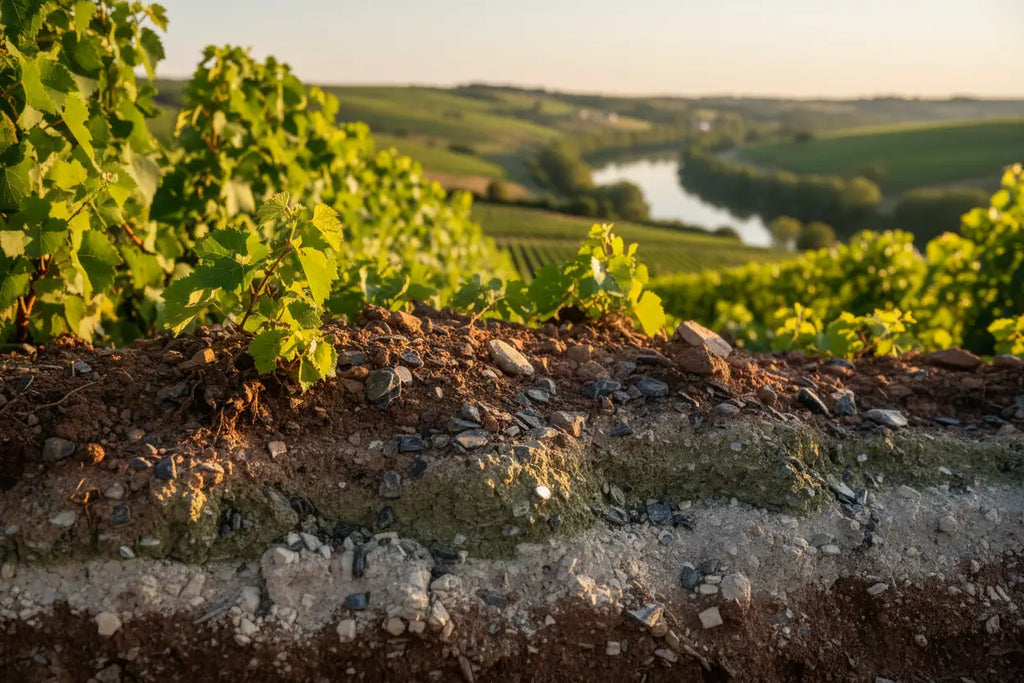
The terroir of Pouilly-Fumé is mainly shaped by flint and limestone
The terroir of Sancerre
Just a few kilometers from Pouilly-Fumé, on the opposite bank of the Loire, the Sancerre vineyard is much larger (about twice the size), and stretches across rolling hills distinguished by great geological diversity.
Three main soil types primarily make up the vineyard:
• Terres blanches, rich in clay and limestone,
• Caillottes, stony limestone soils,
• Flint terroirs, found especially in certain areas near the Loire.
For the white wines of the appellation, as in Pouilly-Fumé, Sauvignon Blanc is the only authorized grape variety. Here too, its expression varies greatly depending on the nature of the soils, the exposure of the plots, the vintage, and the choices of the estate.
It is precisely this diversity that makes Sancerre impossible to sum up in a single style. Most cuvées are nonetheless lively and aromatic, but others can be more structured and rich.The flint terroirs can even give rise to profiles quite similar to certain Pouilly-Fumé wines, which reminds us that the differences between the wines of the two appellations are often more nuanced than one might imagine.
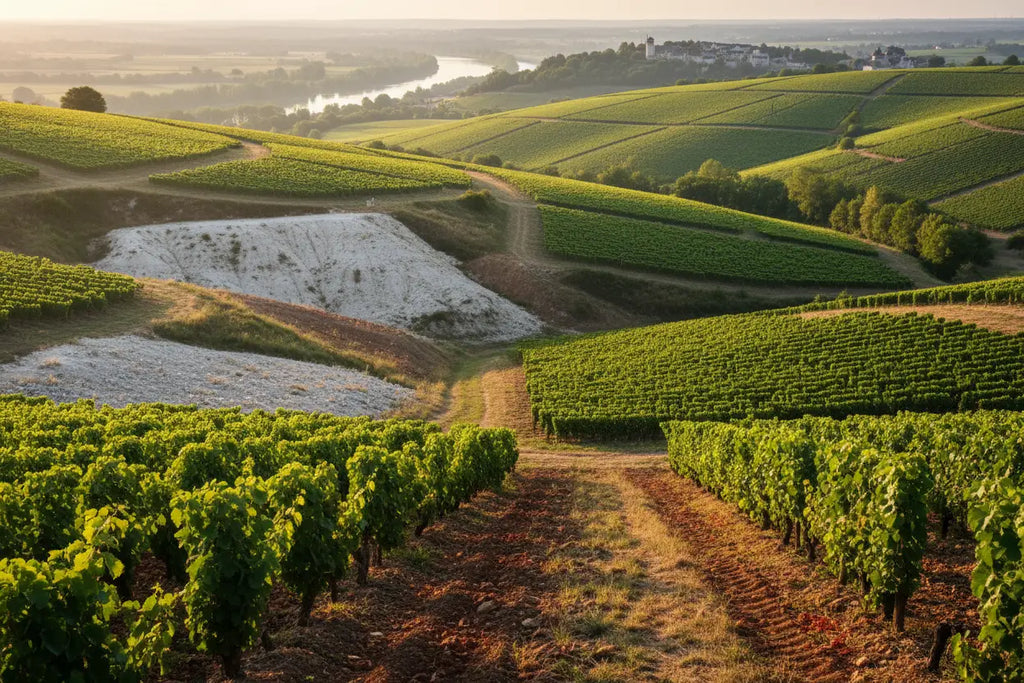 The Sancerre terroir, a mosaic of clay-limestone soils
What styles of white wine in Pouilly-Fumé and Sancerre?
White wine styles in Pouilly-Fumé
Pouilly-Fumé white wines generally offer both on the nose and palate a lovely freshness, a crisp acidity and a rather precise expression of Sauvignon blanc. Nevertheless, depending on the terroir and the choices of the estate, the wines can range from a lively, fruity profile to deeper, more structured cuvées, capable of aging for several years.
The aromas often revolve around citrus fruits, white fruits and white flowers, to which stony or smoky nuances may be added in certain cuvées. These characteristics are particularly associated with flint terroirs.
With age, the best Pouilly-Fumé wines can gain in breadth and complexity, developing aromas of ripe fruit, honey, wax, or spices while retaining their freshness.
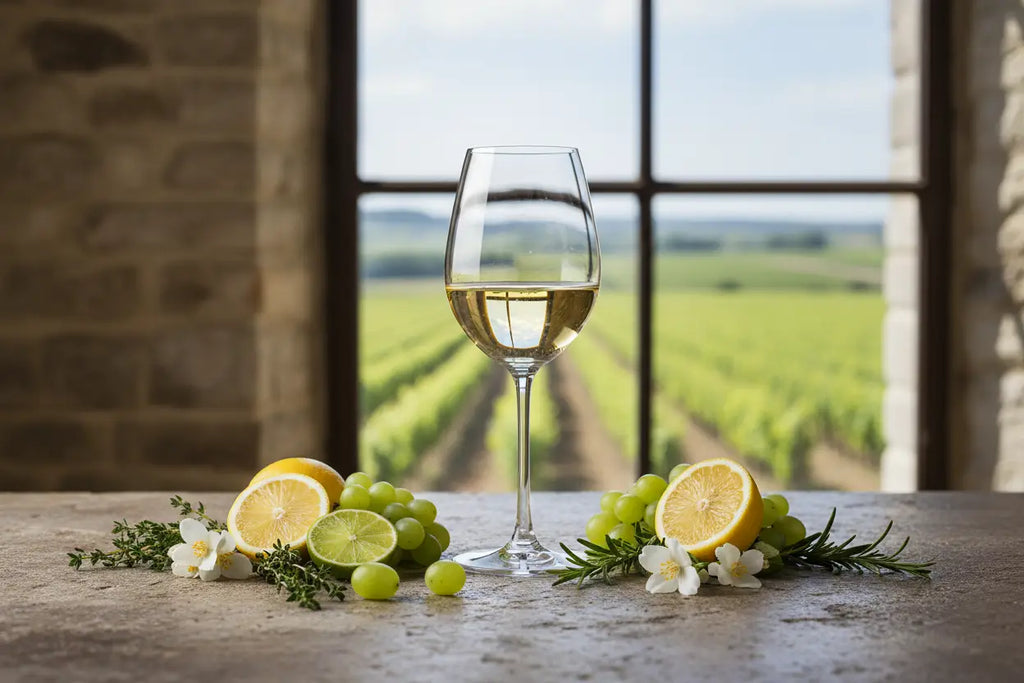 Just like Sancerre, Pouilly-Fumé showcases the Sauvignon Blanc grape variety
The styles of white wine in Sancerre
White Sancerre is also appealing and offers a wide range of expressions. Some cuvées are lively, light, and highly aromatic, while others are more structured or taut on the palate. Once again, the profiles mainly depend on the soils, vineyard exposures, and winemaking methods.
Citrus notes, white fruits and floral aromas are common, sometimes accompanied by vegetal nuances and a hint of minerality.Wines from flint terroirs can notably display profiles quite similar to certain Pouilly-Fumé.
The most ambitious cuvées can also age positively for several years in the bottle and develop more complex aromas, while still retaining the characteristic freshness of Sauvignon Blanc.
There is therefore no clear aromatic boundary between the two appellations: some characteristics are more frequently found on one side or the other, but the styles can largely overlap depending on the terroir, the vintage, and the work of the estate.
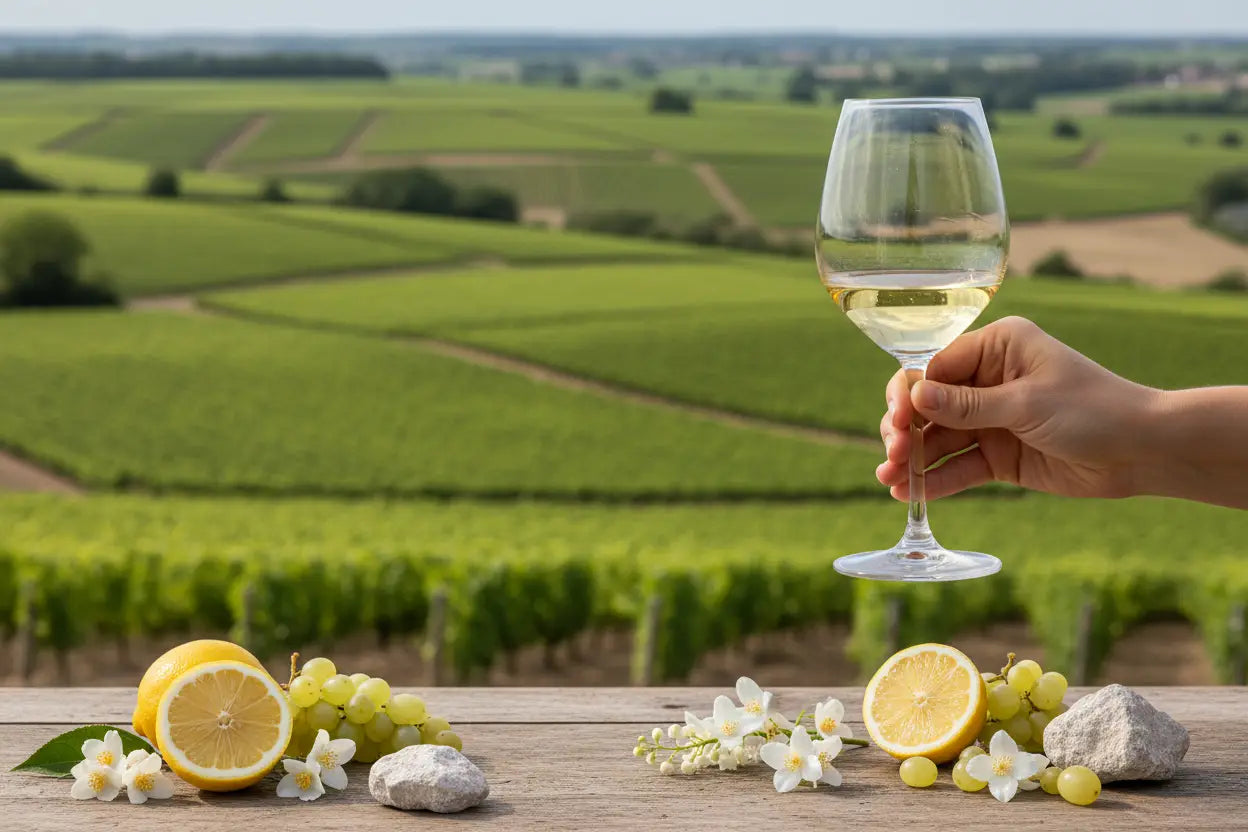 Sancerre and Pouilly-Fumé reveal fresh, precise, and aromatic white wines
How to choose between a Pouilly-Fumé and a Sancerre white wine?
Between Pouilly-Fumé and Sancerre white, the choice is not simply a matter of contrasting styles. As we have seen, both appellations can produce quite similar wines, and the terroir, vintage, estate practices, or even the aging process often influence the result as much as the name of the AOC. Here are a few tips to help you choose the right bottle.
Do not rely solely on the appellation
While there are indeed differences between Pouilly-Fumé and Sancerre white wines, these are often subtle. The terroir, vintage, and choices made by the estate have such an impact on the final style that two Sancerre wines or two Pouilly-Fumé cuvées can sometimes be more similar to each other than two bottles from the same appellation.
It is therefore best to avoid shortcuts such as “Pouilly-Fumé = minerality and Sancerre = fruitiness", which only very imperfectly reflect the diversity of wines produced here.
Learn about the terroir and style of the estate
To refine your selection, take an interest in the types of soils, the vintage, as well as the winemaking and aging methods of the estates.
A Sancerre from flint soils can indeed offer great tension and stony nuances similar to certain Pouilly-Fumé wines. Conversely, a Pouilly-Fumé from limestone or marl soils may deliver a softer, more floral and fruity expression.
The style of the estate or château also plays a major role: the pursuit of freshness, grape ripeness, work on the lees, and aging in tanks or barrels can significantly alter the wine’s final profile.
Match your choice to the occasion
For a bottle to be enjoyed young, as an aperitif or with light dishes, both appellations offer many lively, fruity, and approachable cuvées.
For a more ambitious tasting or for cellaring over several years, it is better to focus on the estate's reputation and the quality of the cuvée, rather than automatically favoring one appellation over the other out of habit.
Consider the price
The prices of Pouilly-Fumé and Sancerre wines remain generally similar, with significant differences depending on the estate, vintage, and cuvée quality.
Within both appellations, the core range is around 20 to 30€ for a good independent estate, while renowned properties and certain single-vineyard cuvées can easily exceed 50€, or more for speculative references.
Therefore, price alone does not allow for a clear distinction between the wines of the two AOCs. However, it can be useful for comparing cuvées of equivalent quality.
Food and wine pairings: what to serve with a Pouilly-Fumé or a white Sancerre?
The dry white wines of Pouilly-Fumé and Sancerre share a natural freshness and lively character on the palate, making them particularly versatile at the table. Rather than systematically opposing the two designations, it is more relevant here to adapt food and wine pairings to the style of the cuvée.
With lively, mineral, and fruity cuvées
The most vibrant and immediate wines pair especially well with seafood such as oysters, shellfish, crustaceans, grilled fish, ceviche, or fish tartare. Their freshness brings vibrancy and also works very well with vegetable starters, like asparagus or herb salads.
Goat cheeses are also a natural match with Sauvignon Blanc from Loire, notably Crottin de Chavignol, an emblem of Sancerre.
With more complex and structured wines
The more complex Pouilly-Fumé and Sancerre can, for their part, accompany richer meals. Pan-seared scallops, roasted sea bass or cod, poultry in cream sauce, or veal with mushrooms, for example, pair beautifully with cuvées that offer more character and length on the palate.
With mature wines
After a few years in the bottle, good Sancerre and Pouilly-Fumé develop greater complexity and can pair beautifully with more elaborate meals : sauced fish, roasted poultry, mushrooms, or aged cheeses are then divine pairings.
Ultimately, the best culinary pairing depends less on the appellation than on the wine’s specific profile. A full-bodied Sancerre may call for a richer dish than a very lively Pouilly-Fumé, and the reverse is just as true.
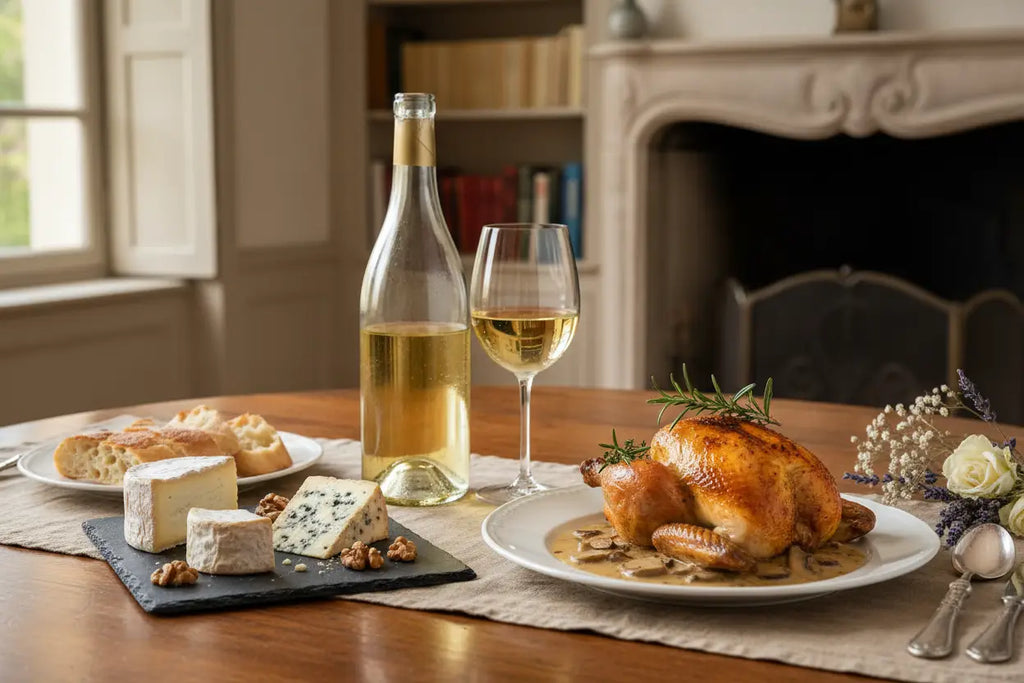
With age, Sancerre and Pouilly-Fumé white wines can offer wonderful food and wine pairing opportunities
In summary
You will have understood through this reading that Pouilly-Fumé and Sancerre share many similarities: the same grape variety for their respective white wines, close geographical proximity, and styles that can sometimes be very similar when tasting.
When making your choice, it is best not to focus solely on the AOC name and also consider the terroir, the producer, the cuvée level, the price, and the tasting occasion.


