

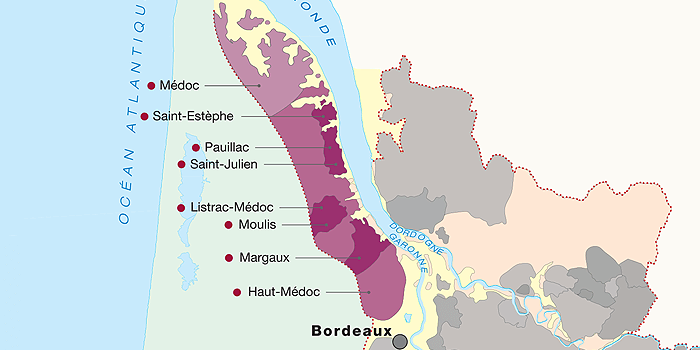
Welcome to Saint-Estèphe, a legendary appellation located in the north of the Médoc ! It is here, on these lands bordering the Gironde estuary, that some of the greatest cuvées of the Bordeaux vineyard are born.
Curious to discover what makes the local wines so special? Follow me on this magnificent wine adventure as we explore together the history of the appellation, its terroirs, the characteristics of its wines, and how best to pair them at the table. Do you enjoy robust cuvées, built for aging and marked by beautiful complexity ? The Saint-Estèphe AOC is made for you !
History of the Saint-Estèphe AOC
The history of the Saint-Estèphe AOC is closely linked to that of Bordeaux wine, an epic dating back to Roman times. At that time, a local Gallic people were already cultivating vines, no doubt under the influence of the Romans.
However, it was really from the Middle Ages onwards that viticulture truly took off in the region, notably thanks to the monks, but also to English merchants who, via the port of Bordeaux, exported the wines to their island.
In the 17th century, a major transformation took place: the drainage of the region’s marshlands was undertaken by the Dutch at the request of Henri IV. The vine then became increasingly important in the region until it became the flagship crop.
In the 18th century, the first wine estates were established, driven by wealthy Bordeaux parliamentarians. The notion of “ Cru ” also emerged. At the time, the wines produced were mostly “ clairets ”, wines at the border between today’s rosés and reds.
In the 19th century, many châteaux were created, reflecting the great prosperity of the era. In 1855, the famous Grands Crus classification initiated by Napoleon III honored 5 crus from Saint-Estèphe :
-Château Cos d’Estournel and Château Montrose (2nd Grand Cru Classé),
-Château Calon-Ségur, (3rd Grand Cru Classé),
-Château Lafon-Rochet (4th Grand Cru Classé),
-Château Cos Labory (5th Grand Cru Classé).
This is relatively few compared to other appellations such as Pauillac (18 Grands Crus Classés) or Margaux (21 Grands Crus Classés) because, despite their already solid reputation at the time, many Saint-Estèphe wines could still be perceived as virile and rustic.
Then, in 1936, the Saint-Estèphe AOC was officially created. Today, it covers more than 1 200 hectares of vines and is one of the most renowned AOCs in France and worldwide.
Climate and soils of Saint-Estèphe
If the wines of Saint-Estèphe are so distinctive, it is largely thanks to the climate and terroirs of the appellation.
Located near the Gironde, Saint-Estèphe benefits from a temperate oceanic microclimate, where extremes of heat and cold are softened by the proximity of the estuary. These conditions allow the grapes to ripen slowly, thus developing beautiful aromatic complexity.
The terroir is composed of gravelly rises (pebbles) over a clay-limestone subsoil. The appellation also features deeper, more clayey layers than other Médoc appellations, allowing the vines to better withstand water stress during hot years.
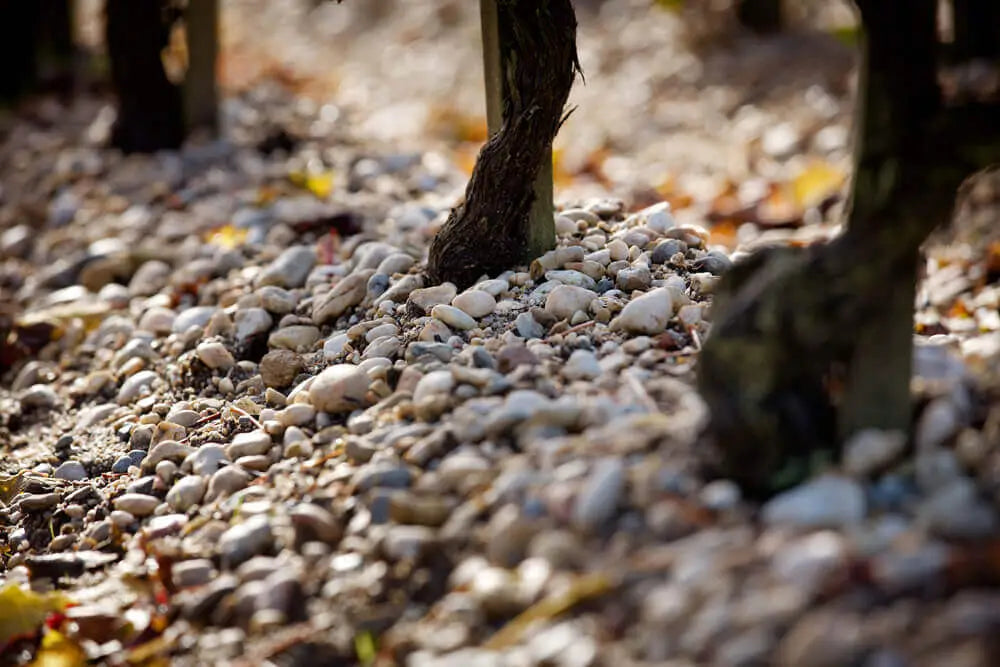
Soil composed of gravelly rises
The wines of the Saint-Estèphe AOC
The wines of the Saint-Estèphe AOC can only be red and are distinguished by their power, their structure and their aging potential.
The cuvées here are made from the grape varieties Cabernet-Sauvignon (49% of the AOC’s vineyard), Merlot (44%) and sometimes blended with a little Cabernet Franc (4%) or Petit Verdot (3%).
While the blend varies from one château to another, Cabernet-Sauvignon, with its tannic structure and acidity, remains the dominant grape. Merlot, for its part, brings roundness and suppleness, while Cabernet-Franc adds subtle floral aromas. Some estates also use rarer varieties such as Petit Verdot and Malbec to enhance the complexity of the wines.
The wines of Saint-Estèphe generally have a marked typicity and express black fruit aromas (blackcurrant, blackberry, cherry), earthy notes as well as spicy touches. The tannins are often firm in their youth, but with age reveal an incomparable elegance and smoothness. Most cuvées are aged in oak barrels for several months to bring woody and spicy aromas and to promote aging.
The crus of Saint-Estèphe are also decidedly age-worthy wines and most reach their peak after several years, or even several decades in the cellar.
What to eat with a Saint-Estèphe?
Wondering what to pair with a Saint-Estèphe? Thanks to their tannic structure and aromatic richness, the wines of the appellation pair wonderfully well with flavorful dishes.
A timeless classic remains, for example, grilled rib of beef, whose fat softens the wine’s powerful tannins. You can also opt for a roast lamb fillet or even game birds such as pheasant.
Saint-Estèphe also excels alongside slow-cooked dishes such as venison stew or beef daube.
For cheese lovers, choose wines from the appellation that have already spent a few years in the cellar so that their tannins have softened. Powerful red wines are in fact not the best friends of dairy products! If you still want to try this pairing, opt for aged hard cheeses, such as Comté or Parmigiano Reggiano.
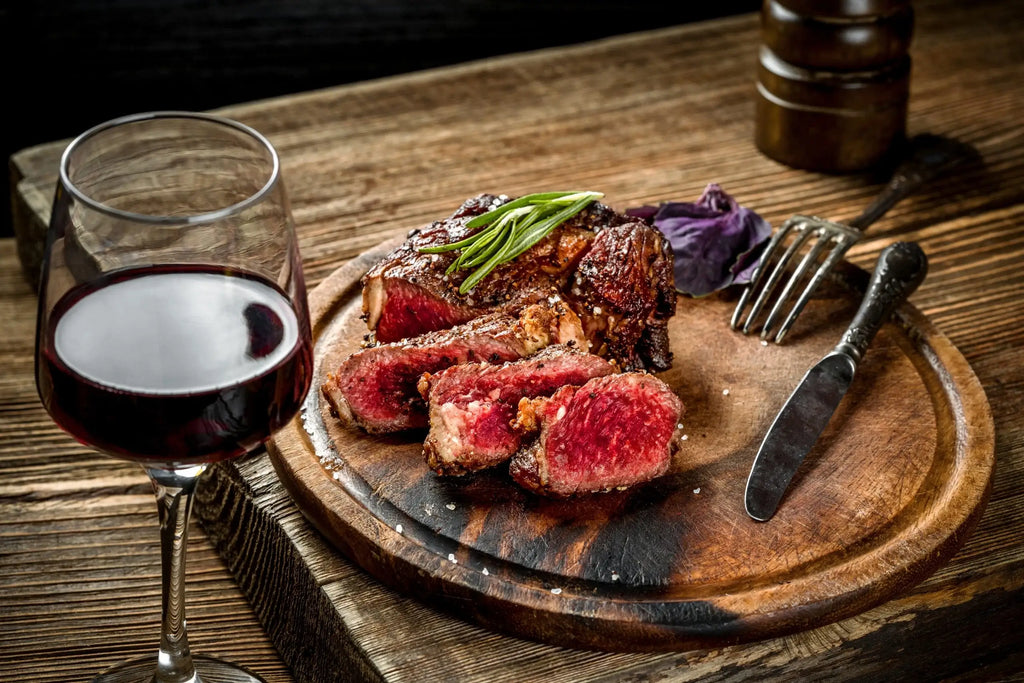
Rib of beef and Saint-Estèphe wine: the timeless classic pairing!
What are the best wines of Saint-Estèphe?
The Saint-Estèphe appellation is home to many historic estates producing exceptional wines. Here are some you can turn to with complete confidence!
Château Calon-Ségur
Château Calon-Ségur, third Grand Cru Classé, is a must in Saint-Estèphe. Dominated by Cabernet-Sauvignon, the estate’s wines are powerful, tannic, and perfect for aging. Over time, they develop notes of leather and undergrowth…a delight ! The 55 hectares of gravelly terroir here have reached new heights of finesse and elegance in recent years.
The estate’s reputation continues to grow and its bottles are highly sought after!
Château Montrose
Château Meyney
Located on the highest slopes of the appellation, Château Meyney stands out for its balanced and refined wines. Although not classified, the estate rivals the greatest thanks to its blends dominated by Cabernet-Sauvignon and complemented by Merlot and Petit Verdot.
This property bordering Château Montrose indeed offers crus with impressive longevity, to be enjoyed after a few years of aging.
Of course, all these estates are just a small selection of the treasures of Saint-Estèphe, but they perfectly embody the spirit of the appellation: robustness, finesse, and longevity.


