

Located in the south of Burgundy, the Mâcon appellation holds an important place in the world of Burgundy wines. Between rolling hills and landscapes shaped by vineyards, the Mâconnais region indeed produces wines highly appreciated for their generosity, their richness and their accessibility, both in terms of price and aromatic understanding.
Would you like to know more ? Follow the guide ! By the end of this reading, you will know everything about the Mâcon AOC and its wines. Here, we will discuss terroir, grape varieties, food pairings, estates, and wine history.
Contents
- History of the Mâcon appellation
- Mâcon's terroir
- The expertise of the estates and winemakers
- The key grape varieties of Mâcon
- The different styles of Mâcon wines
- Mâcon's appellations and geographical denominations
- What to eat with Mâcon wines ?
- How to serve AOP Mâcon wines ?
- Estates and producers to know
- In summary
History of the Mâcon appellation
The Mâcon vineyard, and more broadly that of the Mâconnais, are among the historic wine-growing lands of Burgundy. The cultivation of the vine finds its origins here as early as the Gallo-Roman period. Thanks to its relatively mild climate and the diversity of its soils, the region quickly brought together favorable conditions for the production of quality wines.
In the Middle Ages, the development of the Mâconnais vineyard experienced a decisive stage under the impetus of the religious orders, and more particularly that of the Abbey of Cluny, founded in 910 a few kilometers from Mâcon. The monks did not merely cultivate the vine: they actively participated in the organization of the vineyard by identifying the highest quality plots and perfecting viticultural practices. Their work contributed to a better understanding of the influence of soils, exposures, and terroirs, concepts that would later become essential in the development of Burgundy appellations.
During this period, the commercial development of Mâconnais wines also accelerates thanks to a favorable geographical location. The proximity of the Saône river, a major waterway connecting the south to the north of France, indeed facilitates trade and allows the region's wines to gradually gain notoriety beyond Burgundy.
From the 15th century onwards and throughout the following centuries, the Mâconnais vineyard continued its development, driven by the growth of trade and a rising demand for Burgundy wines. The planted areas gradually increased and viticulture firmly established itself as a major activity in the region.
At the end of the 19th century, the vineyard was struck by a major crisis with the appearance of phylloxera, an insect imported from America that devastated a large part of the country's and Europe's vines by attacking the roots of the vines. A large part of the Mâconnais vineyard was then destroyed and had to be completely rebuilt.
This period of reconstruction marked an important stage in the evolution of the appellation. The vines were gradually replanted on American rootstocks resistant to the parasite, while a more rigorous selection of grape varieties took place. Chardonnay then established itself as the reference variety for white wines, while Gamay and, to a lesser extent, Pinot Noir, found their place in the production of red wines.These developments are gradually helping to assert the identity of the vineyard and pave the way for better recognition of its terroirs.
Finally, a decisive milestone was reached in 1937 with the creation of the Mâcon Controlled Designation of Origin (AOC). This recognition makes it possible to regulate production, protect the origin of the wines, and enhance the specific characteristics of the region. Over the decades, the appellation has grown with the introduction of additional geographical denominations, such as Mâcon-Villages, as well as certain village mentions such as Mâcon-Fuissé, Mâcon-Lugny, and Mâcon-Vinzelles. These distinctions make it possible to highlight more precisely the particularities of the different terroirs and to offer consumers greater clarity regarding the origin of the wines.
Today, the Mâconnais vineyard goes beyond the simple Mâcon AOC and also includes other renowned appellations such as Pouilly-Fuissé, Pouilly-Vinzelles, Pouilly-Loché, and Saint-Véran. Alongside the Mâcon AOP, these appellations contribute to the reputation of this winegrowing area of the region and help to strengthen the quality image of wines from southern Burgundy.
 The Abbey of Cluny has shaped the winegrowing history of Mâconnais wines
Mâcon's terroir
The character of Mâcon wines stems from the unique combination of soils, climate and the expertise of local winemakers.
Diverse soils that shape the wines
The Mâconnais vineyard is based on a great geological diversity, explaining the richness of the aromatic profiles observed within the appellation. The main types found are:
- clay-limestone soils, very common on the hillsides and particularly suited to Chardonnay;
- limestone marls, which contribute to the structure and finesse of the wines;
- areas that are more stony or sandy depending on the sectors and villages.
This mosaic of terroirs directly influences the behavior of the vine and the expression of the wines. From one village to another, and sometimes even from one plot to another, the profiles can therefore vary significantly. Some wines will highlight freshness and tension, while others will express more roundness or fruit maturity.
This diversity is one of the great strengths of the Mâconnais and explains the multitude of styles found within the Mâcon and Mâcon-Villages appellations.
A climate with southern influence
The Mâconnais vineyard benefits from a semi-continental climate, characterized by generally hot and sunny summers as well as relatively cold winters.Its more southern location compared to the rest of Burgundy provides it with slightly milder climatic conditions, favoring a more advanced ripening of the grapes.
This climatic context is particularly well-suited to Chardonnay, the predominant variety of the appellation, as it allows for a very good aromatic concentration, while preserving essential freshness. The temperature differences between sunny days and cooler nights also play an important role in maintaining natural acidity and developing aromas.
The expertise of estates and winemakers
While the soils and climate play an essential role in the identity of Mâcon wines, they alone are not enough to explain their diversity. The work carried out by the winemakers is also a key factor, from vineyard management to vinification and wine aging.
In the vineyard, decisions related to pruning, yield control, harvest dates, and monitoring grape maturity directly influence the final profile of the wine.
In the cellar, the vinification and aging methods then make it possible to further guide the desired style: some estates favor wines marked by freshness, while others seek more fullness, texture, or aromatic complexity.
This encounter between a diversity of terroirs, climate, and producers' expertise thus gives rise here to wines with multiple expressions, capable of preserving a Burgundian identity while asserting their own nuances. It is precisely this balance between nature and human know-how that creates the richness and personality of the wines of the Mâcon AOC.
The key grape varieties of Mâcon
Beyond the terroir, the identity of the wines of the Mâcon AOC also relies largely on the grape varieties cultivated in the vineyard. While Chardonnay largely dominates production and contributes to the reputation of the appellation, other varieties such as Gamay or Pinot Noir also contribute to the diversity of Mâconnais wines.
Chardonnay, king of whites
It is impossible to discuss the white wines of the Mâcon appellation without mentioning Chardonnay, the emblematic grape variety of Burgundy and the overwhelmingly dominant variety in the white wines of the AOC. It indeed represents the vast majority of production and contributes significantly to the identity of the Mâconnais vineyard.
Originally from Burgundy, Chardonnay is recognized for its excellent adaptability. A relatively early-ripening grape variety, it buds early in the spring, making it sensitive to frost episodes. Nevertheless, it adapts very well to a wide variety of soils and climatic conditions. This ability allows it to precisely express the differences between the various villages, plots, and terroirs.
In the Mâconnais, it finds a particularly favorable environment for expression thanks to the predominantly clay-limestone soils and the milder climate of this southern part of Burgundy. Depending on the origin of the grapes, the terroirs, and the choices made by each estate, Chardonnay can give rise to wines with varied profiles: some favor freshness and tension, while others express more roundness and aromatic richness.
Unlike certain grape varieties with very pronounced aromas, Chardonnay has a more subtle expression. This characteristic is one of its great strengths: rather than imposing a dominant identity, it acts as a revealer of the terroir. In the Mâcon appellation, this ability allows the wines to finely convey the nuances of the soils, exposures, and the work carried out in the vineyards.
It is this combination of balance, freshness, and ability to reflect its environment that explains why Chardonnay has established itself as the true pillar of white wines from the Mâconnais.
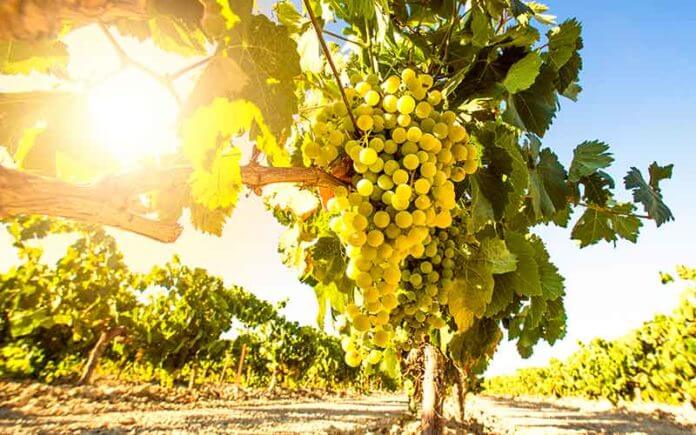 Chardonnay, the emblematic grape variety of the white wines of the Mâcon AOC
Gamay and Pinot Noir for reds and rosés
While white wines largely dominate the production of the Mâcon AOC, red and rosé wines also contribute to the diversity of the Mâconnais vineyard. They are mainly based on two grape varieties: Gamay and Pinot Noir.
-Gamay is the most widely represented grape variety in the production of red and rosé wines of the appellation. Known for its relatively early ripening and good adaptability, this iconic Beaujolais grape variety also expresses itself particularly well on certain terroirs in southern Burgundy. It generally gives rise to approachable and indulgent wines, characterized by an aromatic expression oriented towards fruit.
Wines made from Gamay usually develop a beautiful liveliness and supple tannins. This immediate and generous expression explains why the variety is particularly appreciated for the production of easy-drinking red wines as well as fresh and fruity rosés.
-Pinot Noir, the emblematic grape variety of the great red wines of Burgundy, remains more confidential within the Mâcon AOC. More demanding in its cultivation, it requires good vineyard management and particular attention to the ripeness of the grapes. In return, it generally brings greater finesse and aromatic complexity.
Depending on the terroirs and the choices of the estates, Pinot can produce more delicate wines, and its presence helps to enrich the range of red wines from the Mâconnais.
The different styles of Mâcon wines
As you will have understood, the Mâcon AOC cannot be reduced to a single wine profile. Indeed, although the white wines made from Chardonnay largely shape its identity, the appellation also produces reds and rosés that actively contribute to the richness and diversity of the vineyard. Let us discover the main characteristics of these different styles.
Mâcon's white wines
The white wines are the true signature of the Mâcon AOC. Produced almost exclusively from Chardonnay, they account for about 85% of the appellation's production.
On the nose, Mâcon whites generally reveal aromas of white-fleshed fruits such as apple, pear, or peach, as well as floral notes reminiscent of acacia or white flowers. Depending on the terroirs, the exposure of the plots, or the winemaking methods, more mineral nuances, sometimes slightly chalky, may also appear. Aging, notably in oak barrels, can also have a significant impact on the wine's aromatic profile.
On the palate, these wines are distinguished by their accessibility and their richness. Certain profiles favor liveliness and tension, while others offer more roundness and substance on the palate.
Mâcon's red wines
The red wines of the Mâcon AOC are mainly made from Gamay, sometimes complemented by Pinot Noir depending on the terroirs and the choices of the estates. Less common than the whites, they offer an accessible and indulgent expression, focused on fruit and freshness.
On the nose, they often reveal aromas of red fruits such as cherry, raspberry, or strawberry, sometimes accompanied by more tangy notes of redcurrant or subtle spicy nuances depending on the cuvées. Gamay brings an immediate and generous expression, while Pinot can contribute greater finesse and complexity.
On the palate, Mâcon's red wines are generally distinguished by their suppleness, fine tannins, and beautiful fluidity. Characterized by a light to moderate structure, they prioritize above all balance, freshness, and enjoyment during tasting.
Mâcon's rosés
Mainly made from Gamay, the rosé wines of the Mâcon AOC captivate with their freshness and their immediate aromatic expression. More confidential, they offer an accessible style and are focused on pleasure.
On the nose, they generally offer aromas of small red fruits such as strawberry, raspberry, or redcurrant, sometimes accompanied by slightly tangy notes.
On the palate, Mâcon rosés are distinguished by a light texture, a lovely liveliness and a direct fruity expression. Without seeking great complexity, they focus above all on balance, freshness, and a straightforward aromatic profile, making them particularly pleasant wines to taste.
Mâcon's geographical denominations
As mentioned, the Mâcon AOC is not limited to a single uniform appellation. In order to better reflect the diversity of the Mâconnais terroirs, it can be organized into several levels allowing for more precise identification of the origin of the wines.
First of all, we find the Mâcon designation in its generic form. Produced throughout the authorized area (over 330 hectares), these wines often serve as an excellent introduction to the wines of the Mâconnais and offer a representative expression of the general style of the appellation.
Next comes the Mâcon-Villages AOC, a designation reserved for white wines from selected communes that meet more specific criteria. This mention further highlights the origin of the grapes and generally results in more consistent wines marked by their terroir.
The Mâcon designation can also be supplemented by the name of a commune, with denominations such as Mâcon-Lugny, Mâcon-Fuissé, Mâcon-Vinzelles, Mâcon-Charnay-lès-Mâcon, or even Mâcon-Igé. These additional mentions allow for precise identification of the geographical origin of the wines and highlight the unique characteristics of each village.
In addition to the Mâcon AOC, the Mâconnais vineyard also includes other recognized appellations such as Pouilly-Fuissé, Pouilly-Vinzelles, Pouilly-Loché, or Saint-Véran. These belong to the same winegrowing area as the Mâcon AOC and also contribute to the reputation of southern Burgundy wines.
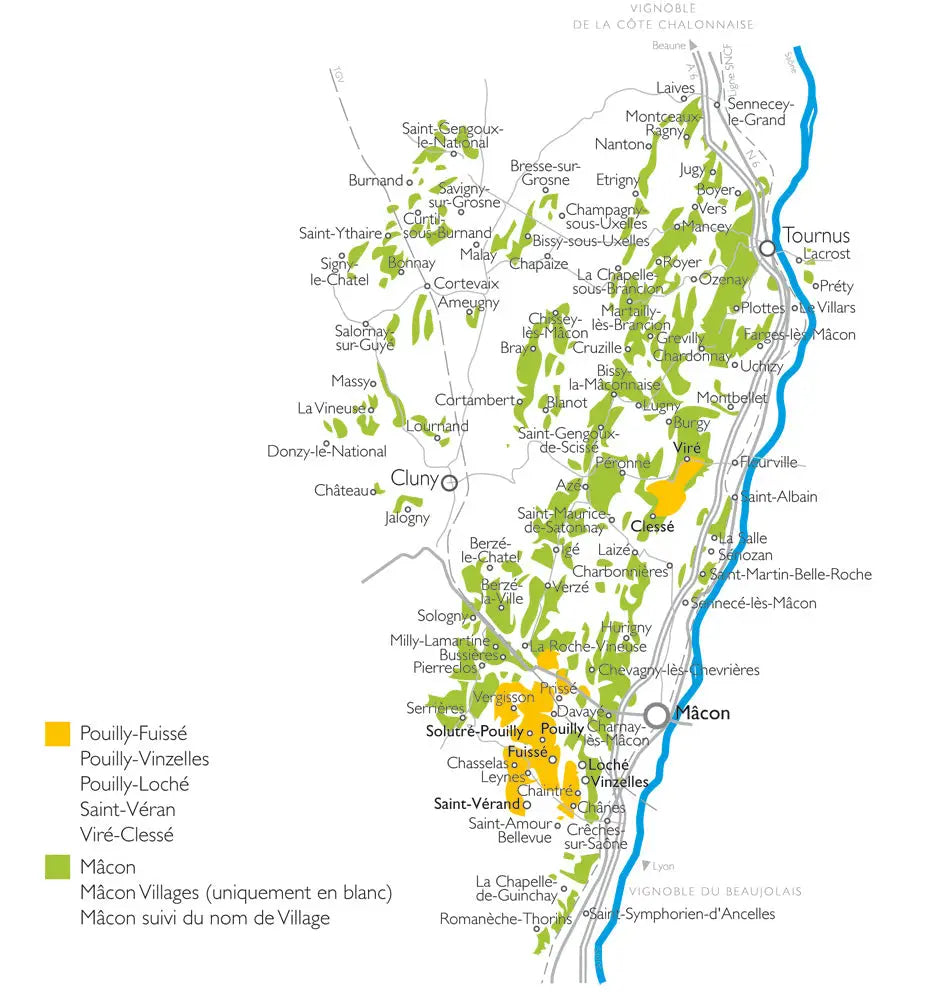
Map of the Mâcon AOC and the appellations of the Mâconnais wine region
What to eat with Mâcon wines ?
Thanks to their balance between freshness, richness and fruit expression, Mâcon wines easily lend themselves to numerous pairings at the table. Whether it is a simple everyday meal or more elaborate cuisine, their diversity allows them to accompany a wide variety of dishes.
Pairings with Mâcon whites
The white wine of the Mâcon appellation delights with its freshness and the purity of its aromatic expression. These qualities make it a partner of choice to accompany fine and delicate dishes, such as:
- grilled fish (cod, sea bream, sole)
- seafood (shrimp, oysters, scallops)
- roast poultry (chicken, guinea fowl, turkey)
- fresh goat cheeses, young Comté or Brie
Mâcon blanc pairs beautifully with these dishes and foods, enhancing the flavors without overpowering them.
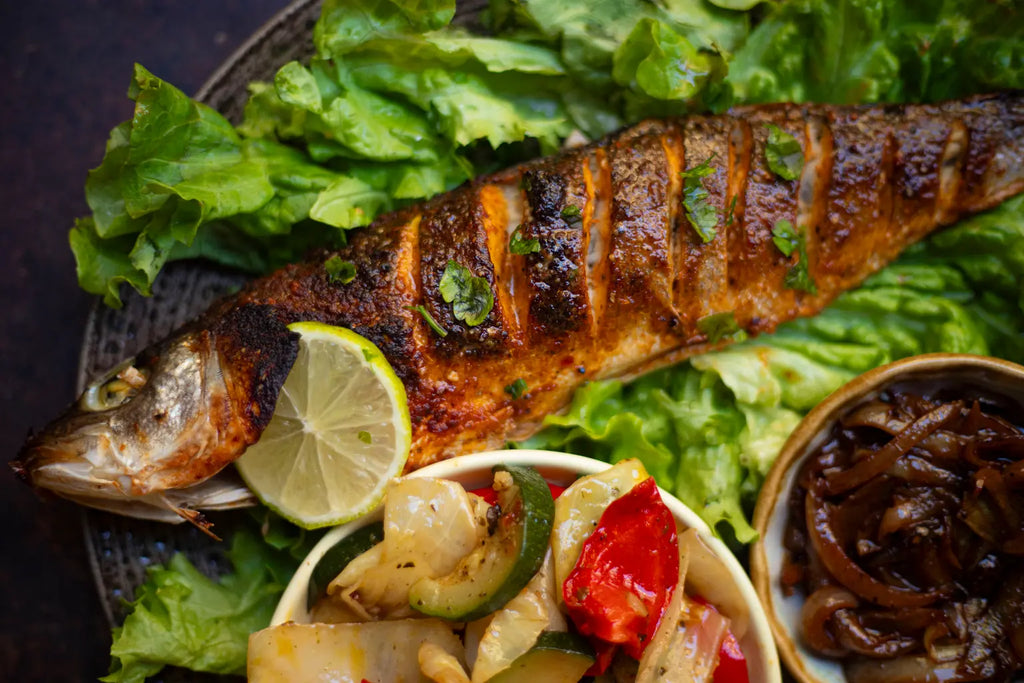
Grilled fish and white wine from Mâcon, a pairing full of freshness
Pairings with Mâcon reds
The red wines of Mâcon, mainly made from Gamay, focus on their fruity expression. On the palate, these wines indeed favor suppleness and fluidity, which makes them very approachable.They will easily accompany:
- charcuterie (sausage, cured ham, terrines)
- white meats (roast chicken, veal, pork tenderloin)
- simple everyday dishes (quiches, pasta, family-style cooking)
- grilled meats
These are red wines designed for immediate enjoyment.
Pairings with Mâcon rosés
The rosés of the Mâcon AOC are characterized by a lovely freshness and an aromatic profile focused on crisp red fruits. They will fit perfectly into simple and summer moments:
- appetizers
- mixed salads
- barbecues and summer meals
- Mediterranean cuisine
Their direct and refreshing profile makes them easy-to-enjoy wines.
How to serve AOP Mâcon wines ?
Some simple guidelines allow you to fully enjoy the aromatic qualities of AOP Mâcon wines and best express their balance:
- 8 to 10°C for white wines, to preserve their freshness, tension, and the freshness of their aromas;
- 14 to 16°C for red wines, to highlight the fruit, suppleness, and balance of the tannins;
- 8 to 10°C for rosés, to maintain their freshness and fruity expression.
The majority of wines from the Mâconnais are designed to be enjoyed relatively young, when their freshness and aromas are most expressive. Some cuvées, particularly those from renowned terroirs or high-quality estates, can, however, evolve favorably in the cellar and gain complexity after a few years of aging.
Estates and producers to know
The AOP Mâcon and its various geographical denominations bring together numerous producers located in the heart of the Mâconnais vineyard, in Saône-et-Loire.
Among the major players in the region, the Cave de Lugny, for example, holds an important place in the local wine landscape.It has contributed for several decades to the renown of Mâconnais wines, with cuvées recognized for their consistency and accessibility.
Domaine des Gandines also deserves special attention. Located in the heart of the Mâconnais, this family estate has established itself as a benchmark for enthusiasts seeking authentic wines that are true to their terroir. Cultivated using organic farming and biodynamics, the vines are carefully tended by the Dananchet family, aiming to preserve the natural balance of the soils and the identity of the plots.
The estate's wines showcase Chardonnay through precise, expressive cuvées distinguished by remarkable richness.
In summary
The Mâcon AOC perfectly illustrates the diversity and accessibility of wines from southern Burgundy. Between Chardonnay white wines with indulgent profiles, fruity reds mainly from Gamay, and convivial rosés, the appellation offers a varied range capable of appealing to both beginners and true enthusiasts. Driven by a dynamic vineyard and the work of numerous estates, Mâcon wines offer an appealing balance between pleasure, authenticity and value for money.
All you have to do now is set out to discover its villages, its producers, and its various expressions ! To do so, find on La Cave Éclairée a rigorous selection of cuvées from the Mâcon AOC as well as from Pouilly-Fuissé, Saint-Véran and also Viré-Clessé as well as many other Burgundy appellations.
Thanks to our website, also enjoy fast and careful delivery throughout France and Europe, as well as personalized advice to assist you in your choices. Our goal remains the same: to help you discover authentic wines, selected with the utmost care, while offering you a simple and intuitive experience. Cheers !


