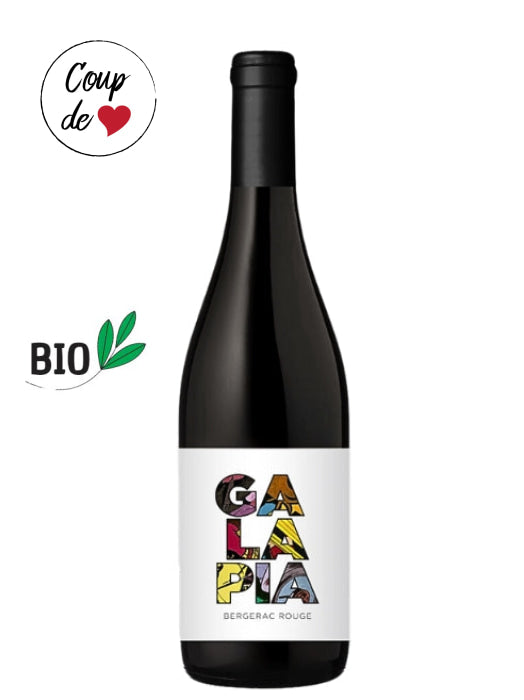
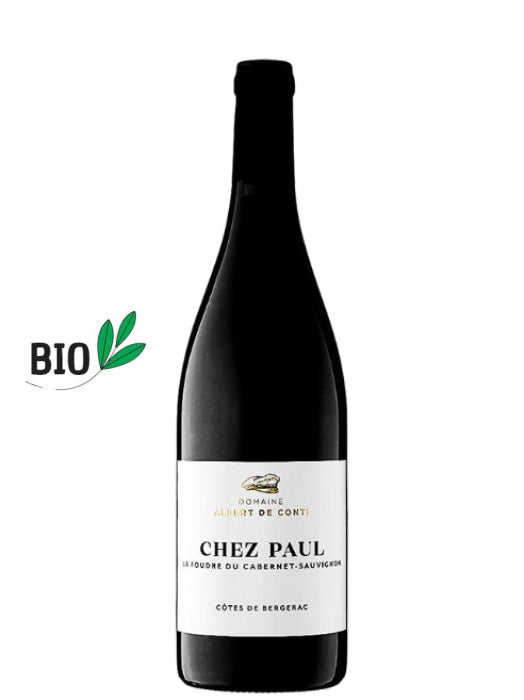
When one thinks of the South-West, the wines of Bergerac naturally come to mind. Nestled in the heart of the Dordogne, this appellation is indeed brimming with viticultural treasures just waiting for one thing : to be discovered !
Are you a fan of powerful or fruity red wines ? Do you enjoy white wines indulgents or perhaps fresh rosés ? The Bergerac AOC certainly has something to win you over ! Let’s not waste any more time and dive together into the history, terroirs, and secrets of this appellation.
History of the Bergerac AOC
As is the case for many French wine regions, the first traces of viticulture in the Bergerac area date back to the Roman era, probably around the 1st century BC
The city of Vesunna (now Périgueux), located near Bergerac, was then an important commercial crossroads. The Romans planted vines there, taking advantage of a temperate climate and varied soils. At that time, however, viticulture was not as developed as it would later become, and it coexisted with other agricultural crops.
During the Middle Ages, the vine experienced considerable growth in the region, largely thanks to the monasteries. The monks played a major role in structuring the vineyards around the abbeys and improved cultivation and wine production techniques, making wine an important part of religious and social life. At the same time, the local lords also encouraged production on their estates.
The Bergerac vineyard, thanks to its proximity to the Dordogne, already benefited at that time from easy access to river routes, allowing wines to be transported as far as Bordeaux and beyond. The Dordogne thus became an essential commercial artery for the distribution of South-Western wines, notably to England and Flanders.
The Hundred Years’ War (1337-1453) marked a turning point in the history of the Bergerac vineyard. During the English domination of the Aquitaine region, the English developed a strong taste for Bordeaux wine, which they called "claret". The wines of Bergerac, although geographically close, nevertheless struggled to compete with Bordeaux production, which already enjoyed a solid international reputation.
However, Bergerac winegrowers managed to take advantage of trade between Gascony and England, and their wine began to be exported via the port of Bordeaux. The Bordeaux authorities, however, imposed strict restrictions on the trade of their wines, which could only be shipped after the sale of Bordeaux wines. This slowed the development of the Bergerac vineyard, which remained in the shadow of its neighbor for many years.

The Hundred Years’ War had a considerable impact on the marketing of Bergerac wines
From the 16th century onwards, and despite Bordeaux’s commercial dominance, the Bergerac vineyard experienced progressive expansion. Trade with the Netherlands and England resumed more regularly, and Bergerac winegrowers began to diversify by producing red, white, and sweet wines. Thanks to their increasing quality, local cuvées then began to find a place in European courts.
During the 17th and 18th centuries, Bergerac viticulture continued to develop. However, the 19th century was marked by several major crises, namely the powdery mildew crisis in the 1850s as well as the phylloxera crisis from 1878 onwards, which destroyed much of the European vineyards, including Bergerac.
Nevertheless, each crisis brought its share of opportunities and these allowed a profound restructuring of the vineyard over several decades.
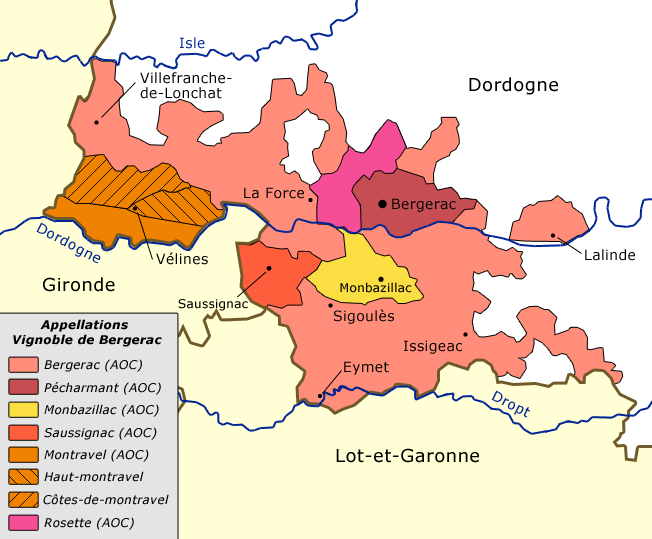
Finally, in 1936, came the crowning achievement : the Bergerac AOC was officially created, placing it among the oldest in France. The regional vineyard benefited from this enthusiasm and many other appellations such as Côtes de Bergerac (1936), Monbazillac (1937), or Pécharmant (1946) emerged in the following years.
Today, the Bergerac and Côtes de Bergerac AOCs cover 7 000 hectares across 93 communes. The entire Bergerac vineyard (including the appellations Pécharmant, Saussignac, Monbazillac, Côtes de Duras, etc.) covers more than 11 000 hectares.
Climates and Soils of the Bergerac AOC
Located in the Dordogne valley, the Bergerac vineyard benefits from a temperate oceanic climate ideal for viticulture. Winters are rather mild, summers are hot, and humidity is maintained by the Atlantic sea winds.
This combination of climatic factors allows the region’s grapes to ripen slowly, thus developing complex and balanced aromas.
As for the soils of this vast vineyard, they are even more varied than the climate ! Here you will mainly find limestone soils, but also gravelly and stony soils, clay-siliceous (sand and quartz) or even alluvial terroirs (sand, silt, clay, etc.)
Finally, from a grape variety perspective, Merlot (over 30% of the vineyard) dominates for reds, accompanied by varieties Cabernet Sauvignon, Cabernet Franc and Malbec. For whites, Sémillon and Sauvignon represent the majority of plantings, accompanied by Muscadelle as well as other minor varieties such as Chardonnay or Chenin.
The Wines of the Bergerac AOC
The Bergerac AOC stands out for its ability to produce wines with varied profiles. Indeed, reds, whites, rosés, as well as semi-sweet and sweet wines can be produced within the vineyard! This diversity, reflecting the richness of the region’s terroirs, is a godsend for enthusiasts.
Let’s discover together what each type of wine has to offer you !
The Red Wines of the Bergerac AOC
Did you know that red wines account for about 60% of the Bergerac AOC’s production ?
These wines are the result of a careful blend of at least two grape varieties, mainly Merlot, Cabernet Sauvignon, Cabernet Franc, and Malbec (Cot). Other minor varieties such as Fer Servadou or Mérille are sometimes used.
Historically, Bergerac red wines have a reputation for being tannic and powerful, but a new generation of winemakers is gradually changing the codes by producing cuvées with delicate tannins, more focused on freshness and finesse.
Thus, depending on the producer and the chosen terroir, you can find very different wines structurally at the time of tasting. Nevertheless, you will often find in the red wines of the appellation aromas of red and black fruits such as redcurrant, blackcurrant, or morello cherry, but also spicy notes like pepper and sometimes oaky profiles.
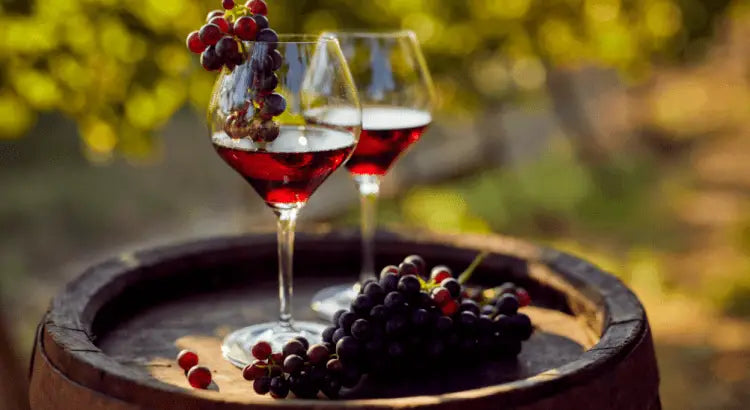
Bergerac red wines reveal intense aromas of ripe red fruits
The White Wines of the Bergerac AOC
Bergerac white wines account for about 30% of the appellation’s production and stand out for their varied aromatic profiles, ranging from dry and lively whites to semi-sweet and sweet whites.
Mainly from Sauvignon, Sémillon, and Muscadelle grapes, the dry white wines are distinguished by their liveliness and a rich aromatic palette. Citrus, white flowers, stone fruits, and even spicy touches will delight your taste buds here. Their balanced structure, their indulgentise as well as their freshness make them must-haves in the French wine landscape.
The semi-sweet or sweet wines of Bergerac are made from the same grape varieties and are either produced from a late harvest (passerillage), or thanks to the presence of noble rot (Botrytis cinerea fungus). Here, enthusiasts can enjoy aromas of yellow fruits, candied peach, butter, or even honey… quite a treat !
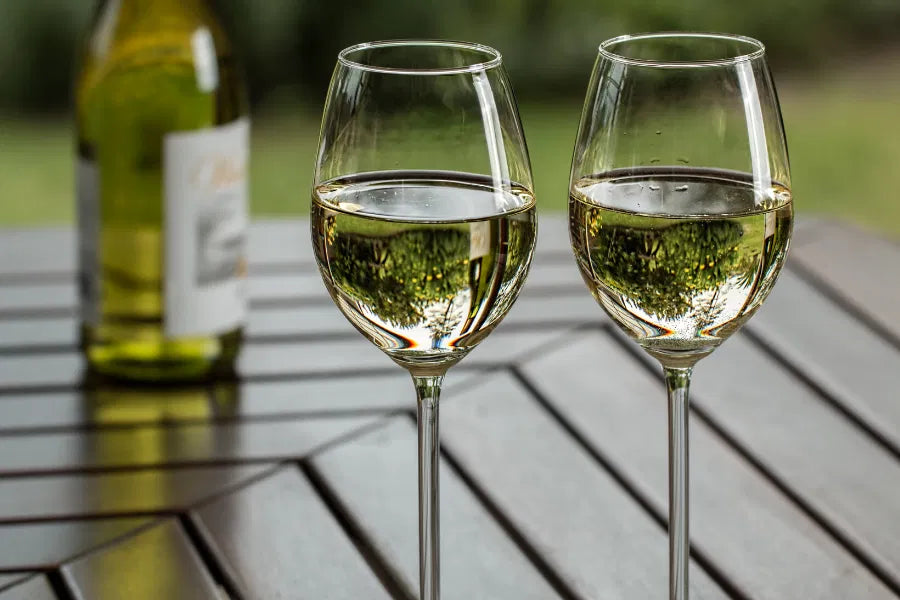
Bergerac white wine, offering delicate aromas of yellow fruits.
The Rosé Wines of the Bergerac AOC
Bergerac rosés account for about 10% of the production of the appellation. Made from the same grape varieties as the reds, they are light, fruity, and offer aromas of redcurrant, strawberry, citrus, and white-fleshed fruits, all enhanced by a delicate minerality. This is the kind of wine you love to have on hand for sunny days, to be enjoyed without moderation (or almost) !
So, what tempts you the most? Red, rosé, or white? The Bergerac AOC surely has a wine to match your desires!

Bergerac rosés are perfect for friendly and sunny moments
What to eat with a Bergerac wine?
Do you have a Bergerac wine in your cellar and wonder what to pair it with? Look no further, here are some ideas that will make your mouth water!
- The powerful reds of Bergerac are perfect to accompany grilled red meats or duck breast. Serve these robust wines at a temperature of 16-18°C to reveal all their aromatic richness.
- Looking for a lighter red? Opt for a fruity red wine from the region with notes indulgentes of red fruits. These cuvées pair perfectly with roasted poultry or a charcuterie platter. Enjoy slightly chilled, around 14-16°C, to appreciate all their delicacy.
- Do you prefer rosés? Their freshness and delicate red fruit aromas make them perfect partners for your summer barbecues, a langoustine risotto, or a mixed salad. These cuvées are also the ideal choice for aperitifs with friends ! Here, we recommend a temperature between 8 and 10°C to enhance their minerality.
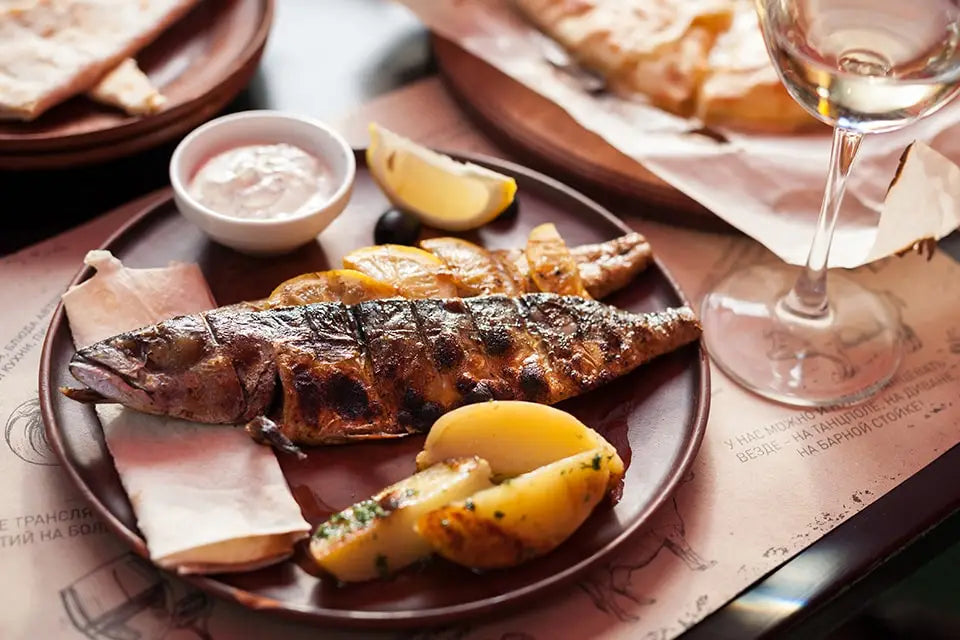
- For the dry whites of Bergerac, a pairing with seafood, grilled fish or vegetarian dishes such as an asparagus salad or avocado tartare will be ideal. Their well-balanced acidity and their indulgentise will perfectly complement these dishes. We recommend serving around 10-12°C to get the best out of them.
- Finally, with the semi-sweet and sweet wines, you can easily imagine pan-seared foie gras, blue cheeses (Roquefort), or fruit tarts (apple, apricot, pear, etc.)… a real treat in store ! To temper the perception of sweetness on the palate, serving around 8-10°C is ideal here.
What are the best wines of the Bergerac AOC?
Are you looking to discover the best of the Bergerac AOC ? The Albert de Conti estate is an essential reference and a real favorite ! Renowned for their expertise, Guillaume, Yann, and Paul make it a point of honor to produce wines evoking finesse and indulgentise.
Whether for their fruity or structured reds, their white indulgents or their delicious Pet’Nat, every bottle from the estate is a real pleasure to taste !
Did this article make you want to discover the wines of the Bergerac AOC ? Don’t wait any longer ! Visit our website La Cave Éclairée to learn more and find some gems to enjoy. See you soon and… cheers!