

Symbol of elegance and purity, vodka is much more than just a party spirit. Behind its apparent neutrality lies a spirit of great complexity shaped by the choice of raw materials, the quality of the water, as well as the precision of the distillation. From Russia to France via Poland, each expertise brings its own signature.
Today, vodka has established itself in cocktail bars as well as on the finest tables and is appreciated for its balance and freshness. Let’s discover together its origins, its production secrets, and some must-try references. Happy reading!
Contents
History of vodka
Appearing in the Middle Ages in the regions of Eastern Europe where pure water and grains were abundant, vodka remains today at the heart of a rivalry between Russia and Poland, each claiming its origin.
Historians consider that it was the Genoese merchants who, at the end of the 14th century, are believed to have introduced into Russia a first grape-based spirit. It should be noted here that distillation did not originate in Europe: rudimentary techniques already existed in Antiquity, and the foundations of modern alcohol distillation are owed to Arab scholars of the 10th century. It was only from the 11th to the 20th centuries that "modern" distillation spread in Western Europe.
In any case, this foreign grape-based beverage is said to have served as the starting point for the first local productions. According to Russian tradition, the first true vodka made from grains was produced in Moscow around 1430, at the Chudov Monastery.
At the time, vodka was nothing like the clear and pure spirit we know today: it was cloudy, barely filtered, and its alcohol content varied considerably. Gradually, however, it gained popularity in several countries of the Russian Empire. In Russia, it even became a true national symbol, served in small glasses during celebrations or daily meals.
From the 18th century onwards, production diversified, especially in Poland where producers used rye, wheat, or even potatoes as raw materials, giving rise to distinct aromatic profiles.
The 19th century marked a true revolution for vodka. Technical advances, especially continuous distillation, then made it possible to obtain spirits that were much purer and more consistent.In Russia, large families such as Smirnov, Stolichnaya or Moskovskaya transform a previously artisanal production into a structured industry. Vodka then becomes a state product, heavily taxed but omnipresent, to the point of contributing a significant share to the Russian imperial budget.
At the same time, in Poland, the use of potatoes as a raw material becomes widespread, making production more economical and more accessible. It is during this period that modern vodka is born: clear, filtered, and recognized for its precision.
In 1917, the Russian Revolution disrupts the industry. The distilleries are then nationalized and many producer families go into exile. This is, for example, the case of the Smirnov family, who revived their business in Istanbul, then in Poland, laying the foundations for the Smirnoff brand, a symbol of exporting this Russian expertise to the West.
After the Second World War, vodka established itself in American bars and became the base spirit for many iconic cocktails such as the Moscow Mule, the Bloody Mary, the Cosmopolitan, and the White Russian. Its neutrality then became its greatest strength: it adapts to all creations.
Today, vodka is one of the most consumed spirits in the world. While international brands like Smirnoff, Absolut, or Belvedere dominate the market, a new generation of producers is focusing on craftsmanship and terroir.France has also established itself as a major player with brands like Grey Goose or Cîroc, which rival the greatest vodkas of Eastern Europe.
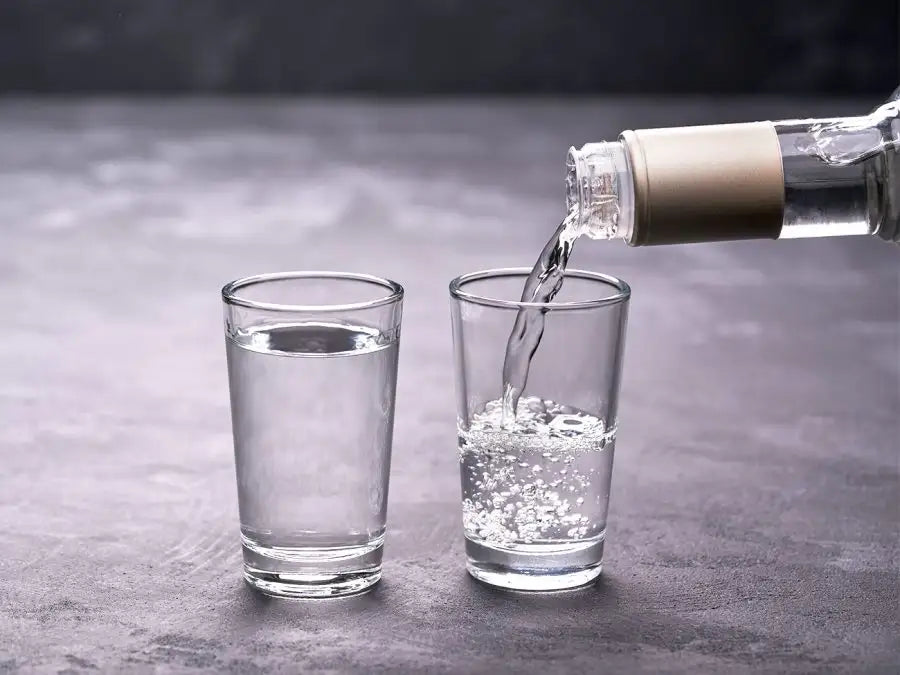
Vodka: a symbol of purity and clarity
The fundamental ingredients of vodka
Vodka is born from simple ingredients whose quality is essential. Its base relies on a fermented agricultural raw material : this can be a grain such as wheat, rye, barley, or even corn, but also potato or even fruits.
Each ingredient brings its own identity. For example, wheat tends to produce smooth and balanced vodkas. Rye brings more character and gives a slightly spicy structure. Finally, the potato usually offers a smooth texture. Of course, all this also depends greatly on the quality of the distillate!
Finally, water also plays a decisive role in the finesse of vodka. In fact, it is added after distillation to lower the alcohol content of the spirit. The purer it is, the more it will enhance the final product. Some distilleries even favor natural spring waters, filtered through mineral rocks, in order to achieve a smooth and harmonious profile.
Thus, behind its apparent neutrality, vodka always reflects the origin and nature of its ingredients, making each bottle a unique interpretation.Moreover, and unlike whisky which relies on aging and the complexity of aromas, vodka seeks above all clarity, neutrality, and precision.
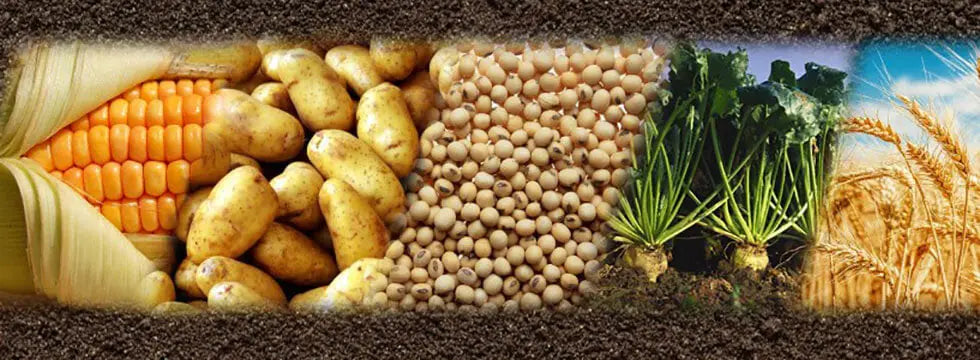
Vodka can be produced from many raw materials
Vodka production
The production of vodka is based on a rigorous process where every detail matters, from fermentation to final dilution. Here are the main steps of this process.
Fermentation
The grains or other raw materials are crushed and mixed with water in order to release their sugars or starches. Yeast is then added to transform these sugars into alcohol. You then obtain a fermented liquid containing 6 to 8% alcohol, comparable to an unhopped beer.
Distillation
This mash is then distilled in column or pot stills. The heat here allows the separation of alcohol from water and impurities. Depending on the methods, vodka can be distilled two to ten times, with multiple distillations increasing the purity of the final product, but potentially diminishing aromatic nuances.
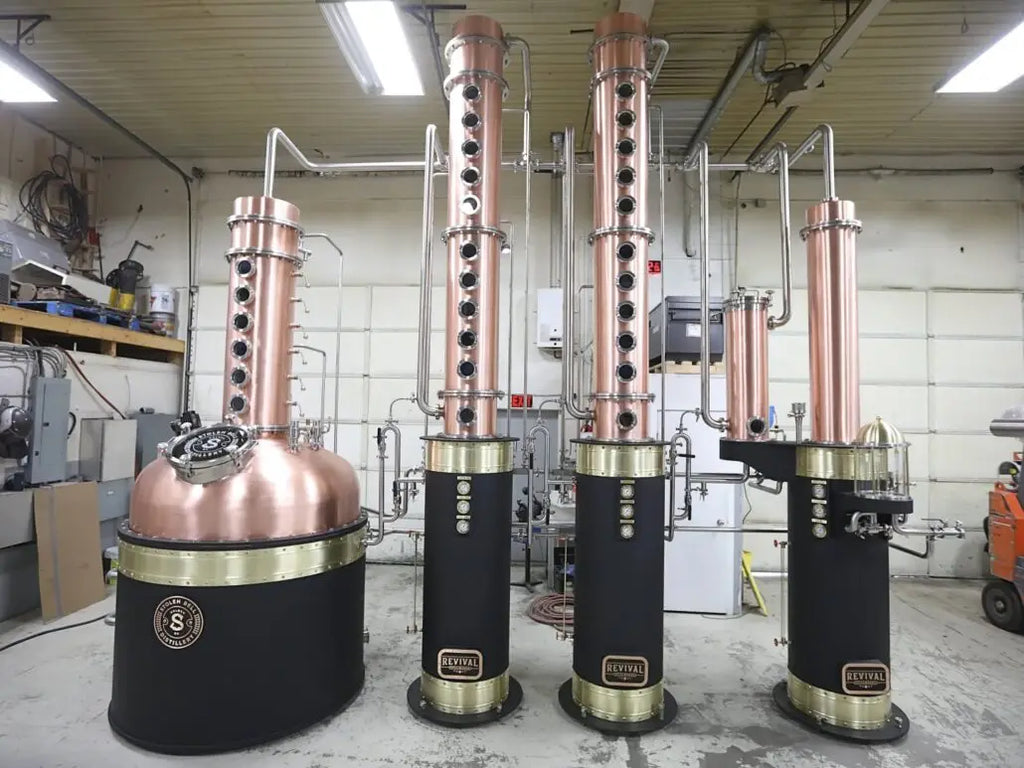
Vodka distillation in column stills
Filtration
The distillate obtained is then filtered to make it clearer and smoother. The activated charcoal is the most commonly used filter for this process, but some distilleries use rarer materials such as quartz, silica sand, or even silver.
This step removes the last impurities and softens the alcohol, making it smoother on the palate.
Dilution, resting, and bottling
Finally, the distilled alcohol (usually between 75% and 96% ABV) is diluted with pure water to reach the desired final strength (often around 40% alcohol). Then, the vodka is left to rest for several days or weeks to homogenize the flavors and stabilize the product before the final bottling.
It should be noted that each distillery or brand adapts these steps according to its expertise and requirements, resulting in vodkas that, despite their apparent neutrality, reveal subtle differences in texture, roundness, and character.
The differences between vodka and whisky
Often compared and contrasted, vodka and whisky are two bar classics that share a common image: that of strong drinks, often enjoyed neat. Nevertheless, the two spirits truly represent two opposing philosophies. Indeed, while vodka highlights qualities of neutrality and freshness, whisky, on the other hand, emphasizes barrel aging and aromatic complexity.
But then, how is it possible to produce two such different spirits from each other ? Everything starts, however, with simple ingredients: water and grains. Nevertheless, the way they are processed changes everything.
As seen, vodka can be made from a wide variety of raw materials (wheat, rye, barley, corn, potato, etc.). The goal here is to extract the sugars or starch, which are then fermented and repeatedly distilled to obtain alcohol of maximum purity. Here, the raw material mainly serves as a base: the aim is neutrality, not strength.
Whisky, on the other hand, is mainly based on malted barley (although other styles exist), whose character is meant to be preserved.Its distillation is also gentler, thus allowing many aromatic compounds (the "congeners") to pass through, which will form the signature of the spirit.
The main distinction between vodka and whisky, however, lies in the aging process. Indeed, while vodka is generally bottled quickly after distillation, whisky spends several years in oak barrels, where it develops its amber color as well as aromas of wood, fruit, and spices.
Thus, vodka evokes purity and precision, while whisky tells a story of time and transformation in wood.
The best vodkas
The global market is full of vodkas, ranging from large industrial productions to the most refined artisanal creations. Nevertheless, certain houses stand out to us for their expertise and their instantly recognizable style.
Nikka Coffey Vodka (Japan)
A benchmark in Japanese whisky, Nikka also excels in vodka production. Distilled in the famous Coffey stills, the Nikka Coffey Vodka combines corn and malted barley. The result : a silky texture, a rounded palate, and almost creamy notes that give it great elegance. Its finesse makes it a perfect base for premium cocktails, but it is just as enjoyable neat, slightly chilled.
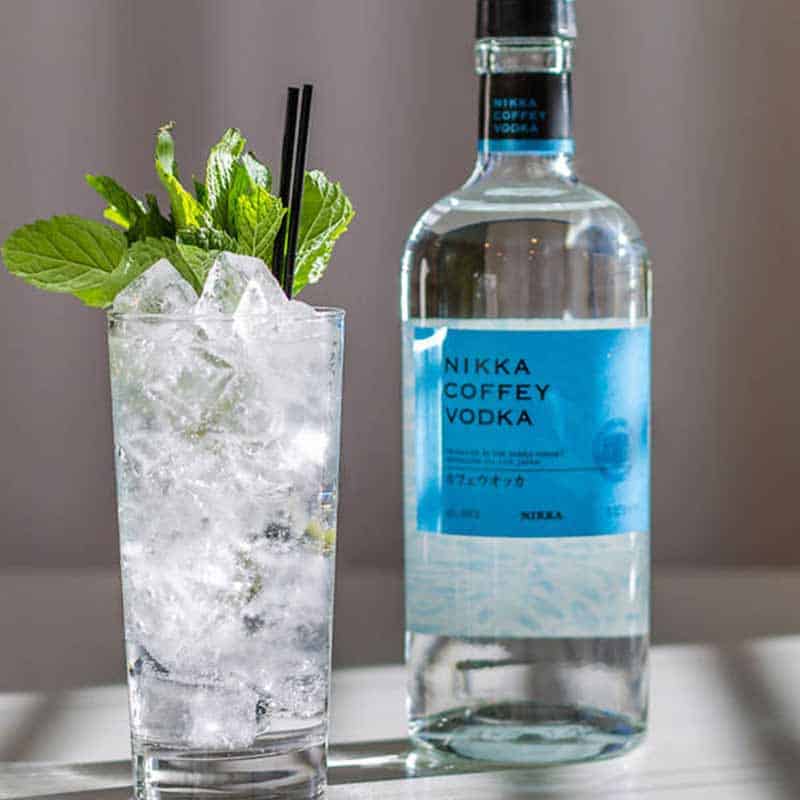
Nikka Coffey Vodka, icon of Japanese expertise
Pegasus Vodka (France)
Located in Meursault, in the heart of Burgundy, the Pegasus distillery stands out as an ambitious and rigorous young French house. It is distinguished by artisanal production focused on purity, precision, and the selection of high-quality local ingredients (underground spring water, grains, etc.).
Its vodka, crafted from carefully selected French wheat and barley, thus offers a profile of great purity, combining smoothness, balance and aromatic finesse. A modern benchmark that perfectly illustrates French expertise in the world of premium spirits!
Other benchmark vodkas
Among the premium vodkas recognized worldwide, several brands also embody the excellence and diversity of modern craftsmanship. In France, Grey Goose has established itself as an absolute reference, crafted from Picardy wheat and spring water from Gensac-la-Pallue.
In a different style, Cîroc also stands out for its spirit made from grapes, distilled five times and offering a velvety texture as well as a fruitier touch, ideal for refined cocktails. One can also think of the vodka from the brand Fair, made from quinoa.
You will have understood, behind its transparency, vodka hides meticulous craftsmanship : careful selection of ingredients, controlled distillation, and constant pursuit of precision are the key elements that define it. Whether served neat or in a cocktail, it reveals all its nobility when produced with care.
To discover a selection of exceptional vodkas and other quality spirits, visit your favorite online wine merchant : La Cave Éclairée ! Find the perfect bottle for your next tasting now, and feel free to contact us for any advice.
See you soon for new discoveries!


