

Iconic Mexican spirit, tequila now appeals far beyond its borders. Long confined to late-night shots with salt, this iconic spirit is now experiencing a true renaissance thanks to the rise of high-end artisanal batches. Behind its distinctive taste lies a rich history, ancestral expertise, and a great diversity of styles, from blanco, lively and crystalline, to añejo, a complex barrel-aged style.
In this comprehensive guide, we will dive into the fascinating origins of tequila, discover its different styles, explore its production methods, and highlight some of the best tequilas to enjoy. Curious enthusiasts or passionate spirits lovers, get ready to (re)discover the Mexican soul in all its complexity and brilliance!
Contents
History of Tequila
The history of tequila began in Mexico, long before the arrival of the Spanish colonists.The indigenous peoples of the Jalisco region then used agave to produce a fermented beverage called pulque. This drink was notably consumed during religious rites and ceremonies. Even today, the beverage is still consumed locally, although its consumption has greatly decreased since the arrival of beer.
In the 16th century, the conquistadors, in search of a stronger drink than pulque, had the idea to distill this fermented agave juice, thus giving birth to an ancestor of modern tequila. It was around the village of Tequila, founded in 1530, that this production became organized.
In the 18th century, distillation was refined thanks to the first producer families, notably the Cuervo and later the Sauza, who played a key role in the recognition and spread of the spirit. Tequila then became a Mexican national pride, closely linked to the country’s identity and traditions. During the Mexican Revolution at the beginning of the 20th century, this alcohol became a true symbol of unity and resistance.
During the 20th century, tequila experienced a real international boom. This momentum increased in the 1970s, with the creation of the Denominación de Origen Tequila, an official set of specifications imposing production standards. Techniques then gradually modernized, while preserving the artisanal heritage that makes this spirit so rich.
Today, tequila is considered a noble spirit, and is particularly appreciated on the international scene, whether for its use in cocktails or as a neat spirit. From family-run distilleries to prestigious major brands, it continues to embody unique expertise and has secured a prominent place in the spirits market, alongside the untouchable whisky and rum.
The different styles of tequila
Tequila comes in several styles, each reflecting a distinct aromatic profile. Better understanding these different categories will allow you to fully appreciate the richness and complexity of this divine Mexican spirit.
Tequila Blanco
The blanco tequila (or "plata") is a young tequila, bottled very shortly after distillation, or after a very brief rest in casks (less than two months).
This style is characterized by a transparent color, vivid aromatics, and reveals all the freshness of blue agave. The aromas are generally herbal, earthy, citrusy, and sometimes spicy (pepper, anise).
Unaged, this type of tequila is mainly used in cocktails. Nevertheless, a good blanco tequila can certainly be enjoyed neat.
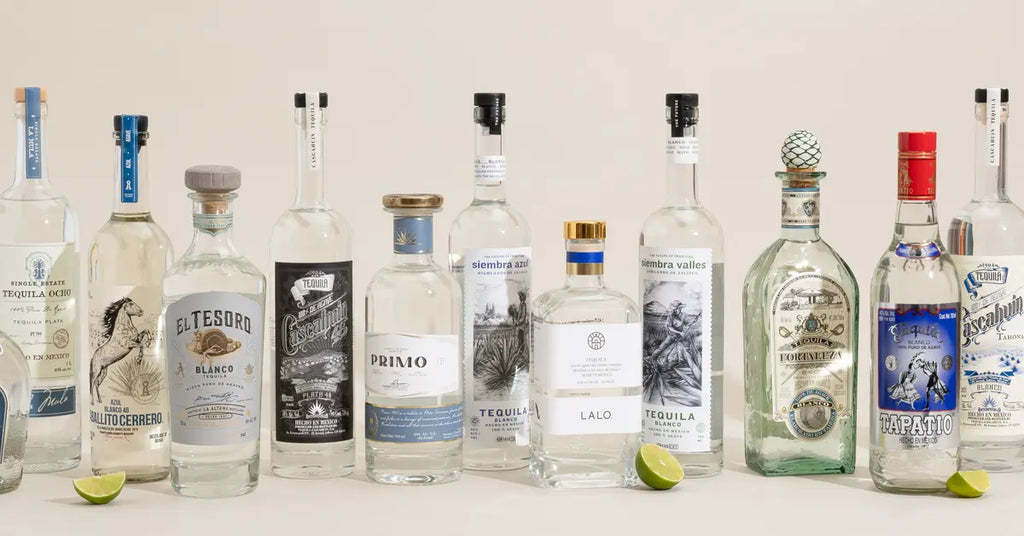
Blanco tequila, a pure and luminous expression of agave
Tequila Reposado
The term reposado literally means "rested". Aged in oak barrels for two months to one year, this type of tequila offers a slightly golden color and a rounder aromatic profile on the palate compared to blanco, combining the freshness of agave with woody, vanilla, and spicy notes.
The tasting experience is round and smooth and offers a very interesting balance. This type of tequila is equally enjoyable in cocktails or neat.
Añejo Tequila
Añejo literally means "aged". The same meaning can be found in rum of Hispanic origin. This term is used for tequilas that have been aged for 1 to 3 years in oak barrels, sometimes longer. Its taste is rich and velvety, expressing aromas of vanilla, caramel, nuts, chocolate, and sweet spices. Here, we reach a high level of aromatic complexity!
An añejo tequila is generally enjoyed neat in an appropriate glass, and ideally accompanied by a twist of lemon or a touch of chocolate to enhance its flavors.
Tequila Extra Añejo
Finally, it is also possible that you will find the mention Extra Añejo on a premium bottle. Here, the aging in barrels is at least three years in oak barrels. This long maturation in wood gives the spirit a pronounced amber color as well as aromas combining caramel, chocolate, dried fruits, and woody spices. Sometimes, notes of tobacco or leather may appear.
On the palate, this style is distinguished by its roundness, smoothness, and exceptional length, offering a very refined tasting experience. Intended to be enjoyed neat and at room temperature, Extra Añejo perfectly illustrates how time and wood can enhance tequila.
The differences between tequila and mezcal
It is common to confuse tequila and mezcal. However, these two Mexican spirits each have their own identity and a very distinct character.
The first major difference lies in the type of agave used. Tequila is indeed made exclusively from blue agave (Agave tequilana Weber), grown mainly in the states of Jalisco and Michoacán, giving it a softer, more floral and delicate profile. Mezcal, on the other hand, can be made from several varieties of agave (Espadín, Tobalá, Madrecuixe, etc.) and its production extends over many regions of Mexico (notably Oaxaca), thus offering a wider aromatic palette, often more earthy, smoky, and rustic.
The cooking and distillation methods also differ. For mezcal, the agave hearts (piñas) are traditionally wood-fired in underground ovens lined with stones and embers, which gives it its famous smoky taste. Tequila, on the other hand, is cooked in steam ovens, producing a purer spirit with more pronounced and less smoky agave aromas.
Finally, aging also distinguishes the two spirits. Mezcal is often consumed young (joven), although some aged versions may exist. Tequila, for its part, comes in blanco, reposado, añejo, and extra añejo.
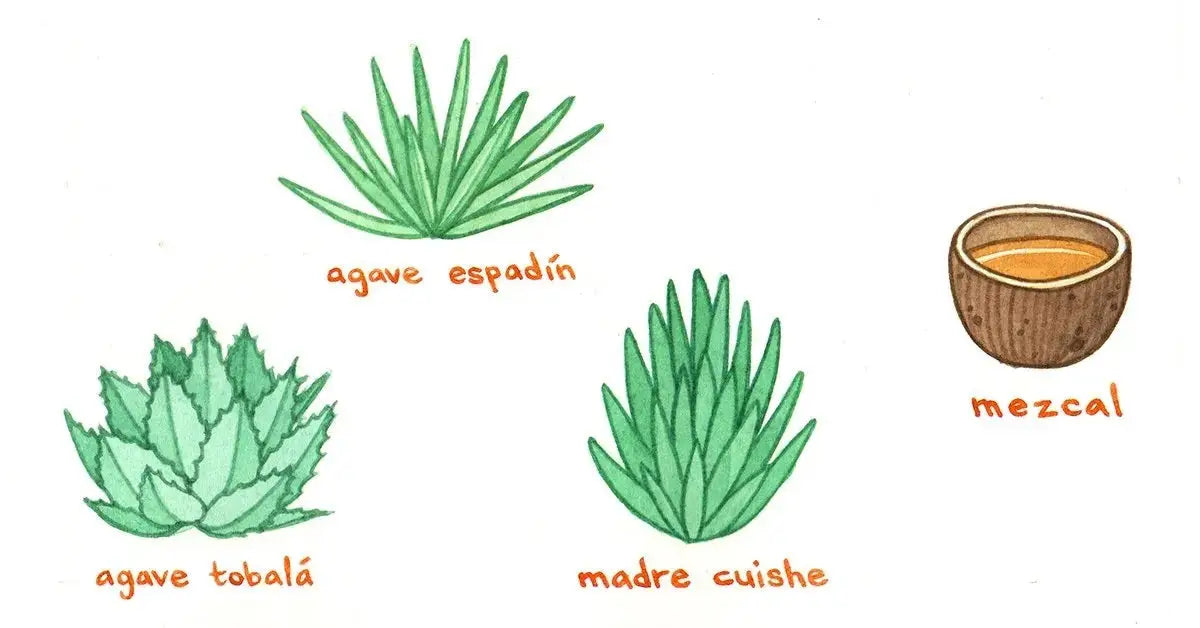
The agave varieties used are more diverse for Mezcal than for Tequila
The production of tequila
The production of tequila is a fascinating and meticulous process, where each step influences the final taste of the spirit in your glass. Let’s discover together how this delicious alcohol from Mexico comes to life, from the plant to the bottle.
Agave Harvest: the Role of the "Jimadores"
It all begins with the harvest of the blue agave, a succulent plant mainly cultivated in the states of Jalisco, Michoacan, and Tamaulipas. After several years of growth (generally between 6 and 8 years), the jimadores, specialized workers, cut the long spiny leaves of the agave to keep only the heart, called piña, because of its pineapple-like shape.
The timing of this step is essential: a mature heart contains inulin, a complex carbohydrate that will be converted into sugar during fermentation.
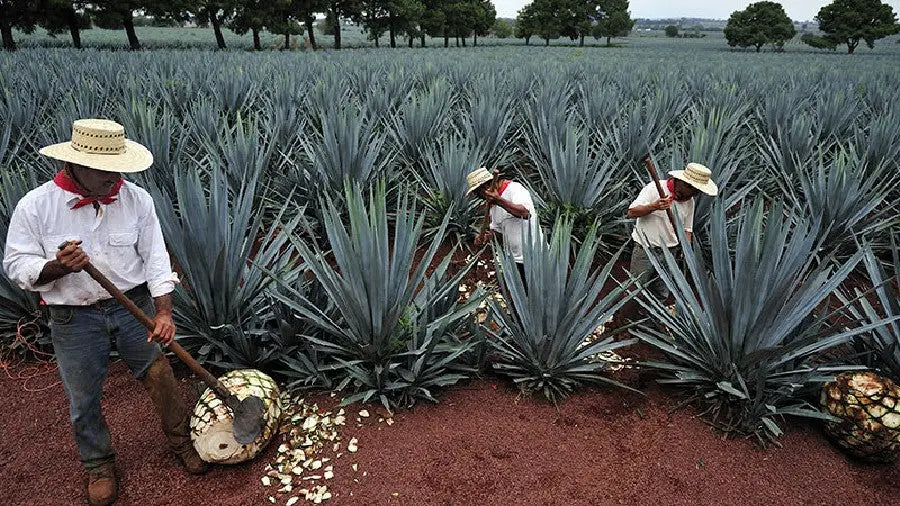
Agave Harvesting
Cooking the Piña
Once the harvest is complete, the piñas are transported to the distillery and then slowly steamed in stone ovens or autoclaves. The goal: to transform inulin into simple sugars (fructose), which are essential for fermentation.
The cooking time also directly influences the flavor. Indeed, a long cooking process can bring additional aromatic notes such as honey, caramel, roasted agave, or even cooked fruits.
Juice extraction and fermentation
Once the cooking is finished, the piñas are crushed in order to extract the sweet juice, called mosto. This juice is then placed in large tanks to be fermented naturally or with the help of yeast. This is a crucial step that transforms the sugar into alcohol.
Fermentation is also a key stage and allows for the creation of most of the tequila’s aromas, whether herbal, spicy, or fruity. The resulting liquid has a low alcohol content.
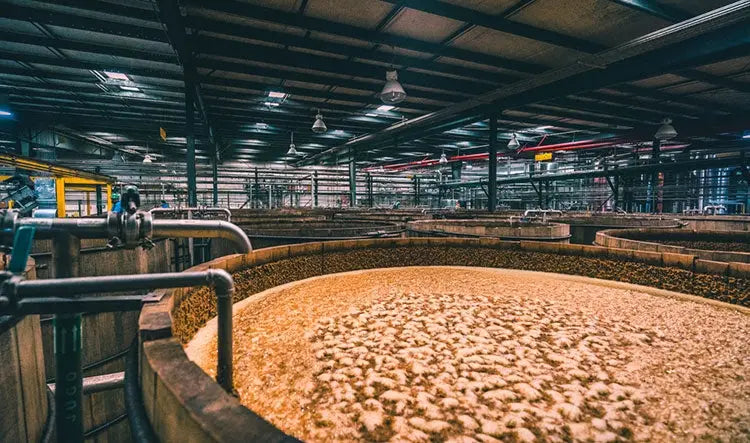
Fermentation of agave juice
Distillation
Then, the tequila undergoes two successive distillations in order to obtain a pure and concentrated alcohol. The first, called destrozamiento, separates the alcohol from the rest of the liquid. The second, known as rectificación, refines the spirit and gives it its clarity, strength, and aromatic balance. It is thanks to this double distillation that tequila reveals all its richness, whether it is a fresh blanco or a more complex añejo.
Aging
After distillation comes the maturation stage, shaping the personality of the tequila. As seen, depending on the type produced, aging can profoundly transform the character of the spirit. A blanco tequila is thus left for a few weeks in stainless steel tanks, while the reposado, añejo and extra añejo styles are aged in wood for varying periods.
This time spent in vats and barrels gives the tequila rich and complex aromas of vanilla, caramel, and spices, while softening the natural strength of the agave.
Bottling
Finally, once the aging in wood is complete, the tequila is filtered, adjusted to the desired alcohol content, and carefully bottled. Each bottle is then sealed and labeled according to the standards of the Denominación de Origen Tequila, ready to be enjoyed worldwide.
How to choose a good tequila ?
Choosing a good tequila may seem simple. However, with the wide range of brands and styles available, it is easy to get lost. Here are therefore some essential tips to help you select an authentic and high-quality spirit.
Choose 100% agave
The first golden rule: make sure your tequila is made entirely from blue agave (Agave tequilana Weber). Some entry-level bottles may in fact be mixtos, meaning bottles containing added sugars or other ingredients. A 100% agave tequila guarantees a pure, natural taste that is true to the plant, without additives.
Observe the color and clarity
Even when purchasing in-store, take the time to examine the appearance of the spirit.A well-filtered and clear tequila demonstrates controlled distillation and good production quality. Reposado and añejo tequilas often display a golden or amber hue due to contact with wood. Nevertheless, the color should remain bright and uniform, a sign of care and authenticity.
Choose according to style and aging
The color of tequila provides a good indication of its profile:
- Blanco: unaged, fresh and lively, perfect for cocktails such as the Paloma or Margarita.
- Reposado: aged in oak barrels between two months and one year, with woody and vanilla notes. Ideal for discovering the complexity of tequila, to be enjoyed neat or in a cocktail.
- Añejo: aged for more than one year, sometimes up to three years. It develops rich aromas of caramel, wood, and spices, and is generally enjoyed neat to fully appreciate its velvety texture and aromatic richness.
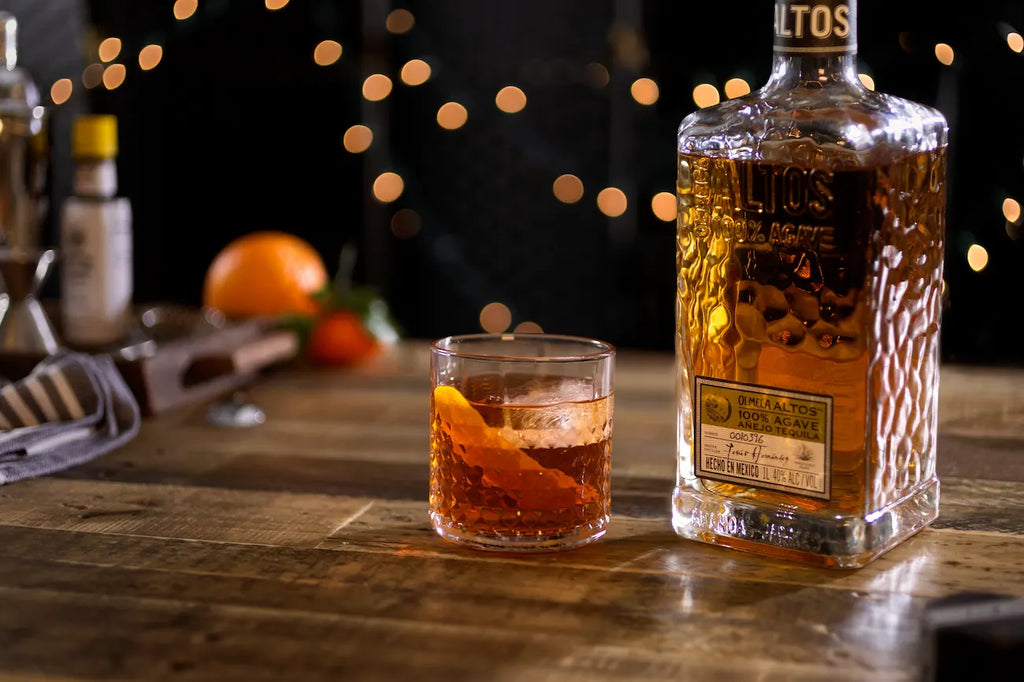
Aged in barrels and vats, the tequila Añejo reveals depth and character
Trust your palate and (informed) reviews
The reviews of connoisseurs, experienced tasters, and professionals can be helpful.Nevertheless, nothing beats a tasting! If you can, try the product before buying it; this will allow you to perceive the difference between a lively blanco tequila, a balanced reposado, or a complex añejo. Also, do not hesitate to ask us for advice!
Popular tequila-based cocktails
Tequila is the star of many must-try cocktails, each revealing a different facet of this iconic Mexican spirit. Whether fresh, tangy, or fruity, these blends highlight the aromatic richness of agave and invite you to travel.
- Margarita: 6 cl tequila, 3 cl lime juice, 1.5 cl triple sec, and 1.5 cl agave syrup.Shake with ice!
- Paloma: 5 cl tequila, 1.5 cl lime, 1.5 cl agave syrup, 6 cl grapefruit juice and a dash of sparkling water at the time of serving.
- Original Tequila Sunrise: 6 cl tequila, 1.5 cl blackcurrant liqueur, 1.5 cl grenadine, 2.25 cl lime. Mix everything in a shaker, serve and top up with sparkling water.
- Bloody Maria : A Mexican variation of the Bloody Mary with 6 cl tequila, 15 cl tomato juice, a little lemon juice, 2 drops of Tabasco, celery salt, a little Worcestershire sauce...and that's it!
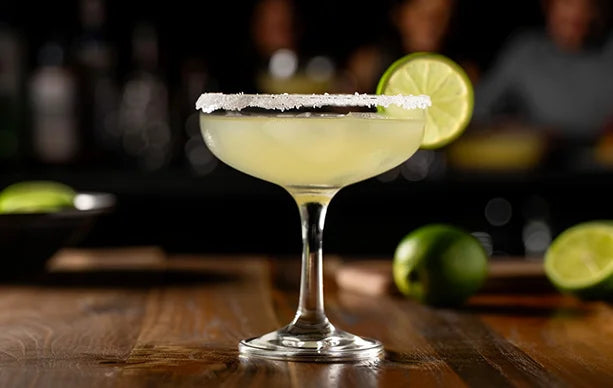
Margarita: the iconic tequila-based cocktail
The best tequilas
Among the many Mexican brands and distilleries, some certainly stand out for the quality of their production and their respect for tradition. At La Cave Éclairée, we especially recommend Don Fulano and Cimarron.
Don Fulano
Originally from the State of Jalisco, Don Fulano produces blanco, reposado, and añejo tequilas with great precision, all made from 100% blue agave. Their meticulous distillation and balanced aromatic profile make them versatile spirits, equally enjoyable in cocktails or for pure tasting in a suitable glass. Each cuvée reveals all the finesse and purity of agave, perfectly embodying traditional Mexican expertise.
Cimarron
Also produced in the state of Jalisco, Cimarron blanco tequila stands out for its authenticity and aromatic intensity. Crafted in an artisanal spirit, it retains bold notes of agave, slightly vegetal and spicy, while offering a pleasant smoothness on the palate. Its reposado version is particularly appreciated and offers roundness and complexity in the mouth.
As you will have understood, tequila is much more than just a spirit: whether it is blanco, reposado, or añejo, each glass tells the story of agave and Mexico. By mastering its origins, production methods, and different aging processes, you are now ready to choose the tequila that truly suits you.
To discover authentic and high-quality spirits, don’t hesitate to trust your favorite online wine merchant … Enjoy your tasting!


