

Located on the right bank of the Dordogne, in the Bordeaux region, Saint-Émilion is one of the vineyard appellations whose reputation extends far beyond the French borders.
Renowned for its magnificent red wines, the Libournais AOC truly symbolizes French winemaking expertise in all its splendor... and the opinions of many enthusiasts confirm it !
This controlled designation of origin therefore naturally deserved an entire article to detail its history, its terroirs, its grape varieties, and of course its cuvées, including its famous Grands Crus. After reading this, you will know everything about Saint-Émilion.
Summary
- History of the Saint-Émilion AOC
- Soils and climate of the Saint-Émilion appellation
- The wines of the Saint-Émilion AOC
- Saint-Émilion and Saint-Émilion Grand Cru appellations, what are the differences?
- The classification of Saint-Émilion Grands Crus Classés
- What to eat with a Saint-Émilion wine?
- What are the best Saint-Émilion wines?
History of the AOC Saint-Émilion
The winemaking history of Saint-Émilion began over 2,000 years ago. The first traces of winemaking in the region actually date back to 56 BC, during the Roman era.
Nevertheless, a little over a century later, it was indeed Emperor Domitius who decided to uproot many vines in Bordeaux to favor Italian wines. The expansion of the vineyard would wait and only resume from the 3rd century, thanks to another emperor: Probus.
At the fall of the Roman Empire, and as in almost all vineyards in France, it was Christianity and the monks who enabled the preservation and development of the vineyards thanks to the use of wine during masses.
At the end of the 8th century, the local village of Ascumbas took the current name of Saint-Émilion, in tribute to the Breton monk Émilion, who ended his life in the region and was known for his great charity.
In the 12th century, under the impetus of the Plantagenets (kings of England and dukes of Aquitaine during this period), the local crus were easily exported to England, thus promoting solid growth of the vineyard. In 1199, the creation of the Jurade of Saint-Émilion by John Lackland was also a key moment for the vineyard. This brotherhood would indeed ensure the regulation and promotion of the wines, thus contributing to the growing reputation of the Saint-Émilion crus.
The 18th and 19th centuries witnessed great technological advances that considerably influenced the quality of the wines.
The Saint-Émilion appellation was finally officially created in 1936 and, in 1948, the Jurade, which was dissolved during the Revolution, was reborn from its ashes to continue its primary mission: to promote the nectars of Saint-Émilion, both in France and internationally.
Another significant event, the classification of the Saint-Émilion Grands Crus was created in 1955...but we will come back to this in detail later in the article.
Covering a vast area of 5,400 hectares, the Saint-Émilion Controlled Designation of Origin is today an absolute reference, according to all lovers of great wines reds. Finesse, elegance, and complexity characterize the vintage crus of the AOC.
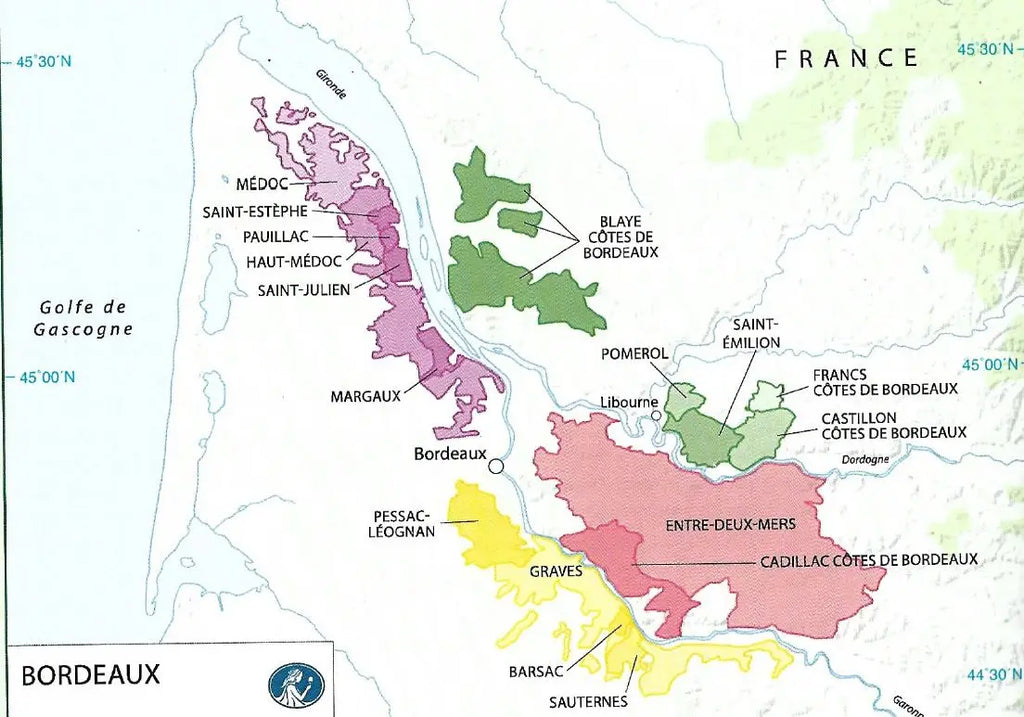
Soils and climate of the Saint-Émilion appellation
The secret of the great wines of Saint-Émilion lies in the perfect symbiosis between an exceptional terroir and a favorable climate. The vineyards here benefit from mild winters and hot summers, with the Dordogne tempering climatic extremes. This climate allows the grapes to ripen slowly, thus ensuring intense aromas and a delicious tannic balance, two essential elements in the making of great wines.
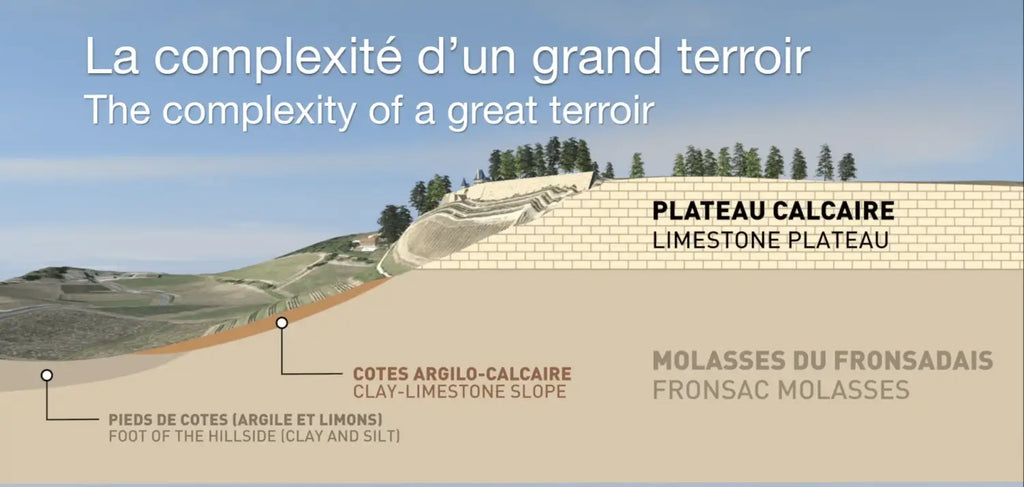
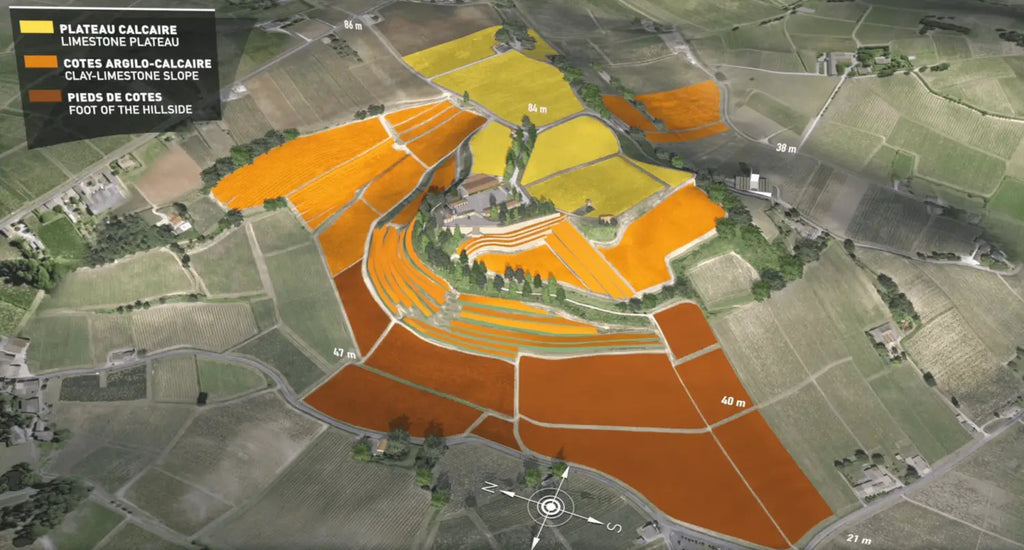
Four main types of soils are present in the appellation and bring a unique typicity to the cuvées:
- Limestone plateau: The heart of the Saint-Émilion terroir is found on a limestone plateau, around the town of Saint-Émilion itself. These limestone soils offer good drainage and adequate water retention, thus promoting ideal grape ripening. This is where some of the most prestigious estates are found.
- Slopes (hillsides): The slopes around the plateau, called "côtes", are composed of limestone and clay-limestone soils. These well-drained lands favor the production of concentrated and complex wines. These are among the most sought-after lands for the production of great wines for aging.
- Foot of the slopes: The lands located at the bottom of the slopes are often richer in clay and allow the production of rounder and fruitier cuvées, with a softer texture.
- Gravelly and sandy terraces: In the lower part of the appellation, near the Dordogne, there are gravel and sand soils. These warmer and well-drained lands allow the production of cuvées that are often more accessible and fruity in their youth, although some can also offer good aging potential.
All these conditions, whether climatic or soil-related, allow winemakers to create beautiful vintage reds with very different profiles.
The terroir of Saint-Émilion
The wines of the Saint-Émilion
Saint-Émilion produces exclusively reds and, according to experts, these are known for their ability to combine power and class.
So let's first analyze the different grape varieties of the appellation before going into more detail about the wine profiles.
The grape varieties used in the wines of the Saint-Émilion PDO
Each red wine of the Saint-Émilion controlled designation of origin is made from one or more of these main grape varieties: Merlot, Cabernet Franc, and Cabernet Sauvignon.
The Merlot, representing about 60 to 70 % of the local plantings, brings roundness, suppleness as well as aromas of ripe fruit, such as plum or black cherry. This grape variety also has rather smooth tannins, thus offering wines that are accessible in their youth.
The Cabernet Franc accounts for between 25 to 30% of the vineyard's plantings and plays a key role in the tannic structure as well as the aromatic complexity of Saint-Émilion red wine. It gives the cuvées fruity notes, a floral touch (violet), as well as delicious spicy notes.
Finally, Cabernet Sauvignon, although a minority in the appellation with less than 10 % of the plantings, brings robustness and aging potential to the wines. Its firm tannins and aromas of blackcurrant and black pepper give the region's red wine great longevity and a lovely balance.
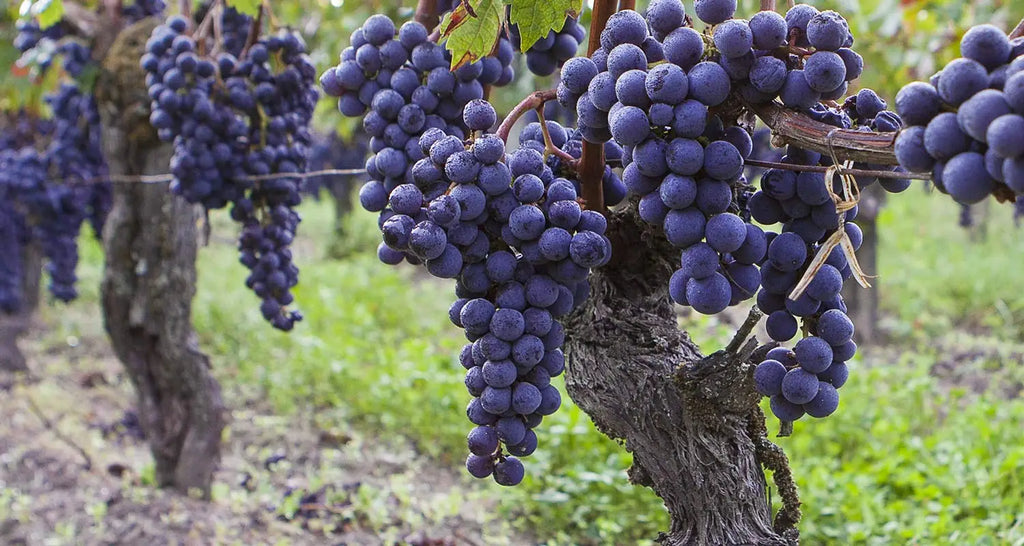
The Merlot grape variety: the backbone of Saint-Émilion wines
Styles and characteristics of Saint-Émilion wines
The wines of Saint-Émilion are renowned for their depth and aromatic complexity.
When young, they reveal intense aromas of red and black fruits such as cherry, blackcurrant, and plum. Floral nuances of violet and touches of spices like black pepper or licorice are often added to this bouquet. These wines, often based on the Merlot grape variety, are also frequently aged in oak barrels, thus giving them notes of vanilla and sweet spices.
With aging, Saint-Émilion wines gain in suppleness and class. The aromas then evolve towards tertiary notes of truffle, leather, tobacco, or undergrowth, aromas prized by lovers of old vintage wines.
Depending on their terroir, vintage, the quality of the plant material, and the winemaker's talent, Saint-Émilion wines have variable aging potential.
The less prestigious, more fruit-driven wines generally keep for between 5 and 10 years maximum, while the cuvées from the finest terroirs, such as those of the appellation's Grands Crus, can age gracefully for 10, 20, or even 30 years !
In summary, if the red wine of the Saint-Émilion appellation is renowned and distinguished in many wine guides, it is above all due to the quality of the land, its grape varieties, and the talent of its winemakers!
Saint-Émilion and Saint-Émilion Grand Cru appellations, what are the differences?
If you have a bottle bearing the label " Saint-Émilion Grand Cru ", this means that your red wine stands out due to more rigorous production criteria.
Indeed, to obtain this appellation, stricter requirements are imposed on estates in terms of yield, grape maturity, or even the winemaking process compared to the "classic" Saint-Émilion AOC. One of the essential aspects is notably a minimum aging of 12 months before the wines are marketed.
In general, wines under the Saint-Émilion Grand Cru PDO are therefore often perceived as higher quality and with greater aging potential, while wines under the "simple" AOC Saint-Émilion (without the Grand Cru mention) often offer a more immediate and accessible style.
However, be careful, the Saint-Émilion Grand Cru appellation should not be confused with the classification of Grands Crus Classés and Premiers Grands Crus Classés !
The classification of Saint-Émilion Grands Crus Classés
The classification of Saint-Émilion Grands Crus Classés (not to be confused with the previously discussed appellation concepts), is a system created to distinguish the best wines produced within the Saint-Émilion appellation.
This classification is re-evaluated every 10 years and is based on numerous criteria. Indeed, while the quality of the wines is of course taken into account during blind tastings, other elements such as reputation, wine tourism, or even environmental respect are also considered.
In the end, out of more than 800 vineyards existing within the appellation, 85 were distinguished in the 2022 classification with the following hierarchy:
- Premiers Grands Crus Classés A : 2 châteaux (Château Figeac and Château Pavie)
- Premiers Grands Crus Classés B : 12 châteaux (Château Trottevieille, Château Valandraud, Château Canon La Gaffelière etc.)
- Grands Crus Classés : 71 properties
While this classification informs consumers about the quality of the wines produced by the properties, it is nevertheless not without controversy. Thus, in 2022, two of the most emblematic estates of the appellation, the Château Cheval Blanc and Château Ausone, indeed decided to no longer participate in this classification following disagreements regarding the ranking criteria and their weighting.
Nevertheless, these properties, benefiting from a very strong international reputation as well as rave reviews in many specialized guides, it is highly likely that this will change little for them !
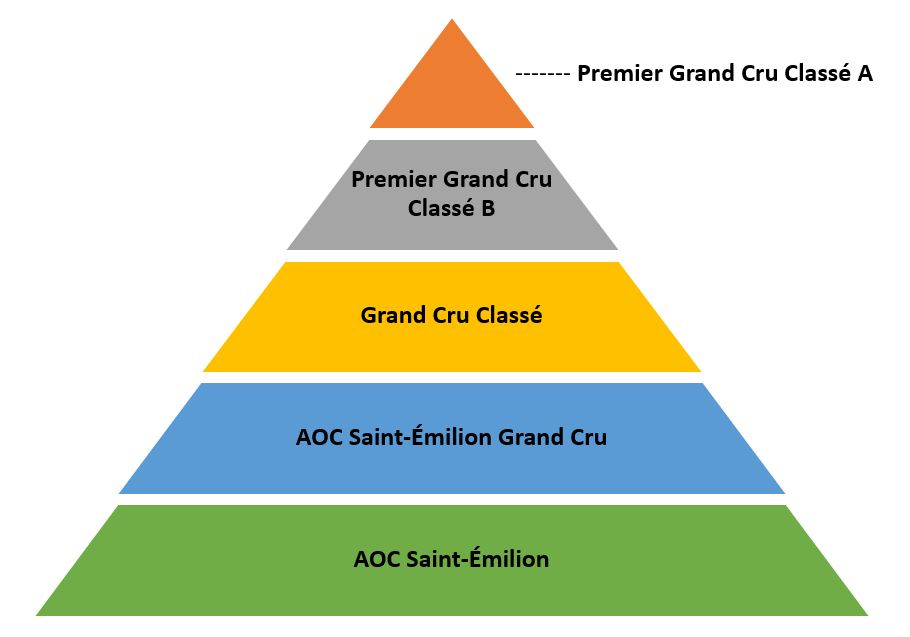
The hierarchy of the Saint-Émilion classification
What to eat with a Saint-Émilion wine?
Thanks to their structure and aromatic complexity, the wines of Saint-Émilion lend themselves to superb pairings. Here are some suggestions to enhance your meals.
- Red meats: grilled rib of beef, roast leg of lamb or duck breast are timeless classics that pair perfectly with the power and finesse of Saint-Émilion red wine. You can also easily imagine some pairings with game (pheasant, wild boar, etc.) with the most powerful wines or with old vintages !
- White meats : chicken in mushroom sauce, veal marengo, or sweetbreads with cream also pair very well with local wines.
- Cheeses : Brie de Meaux, Saint-Nectaire, aged Camembert, or old Comté will also work very well with young, fruity Saint-Émilion or old vintages.
Whatever the age of your Saint-Émilion red, we also recommend serving it around 16-18°C for optimal tasting.
So, ready to enjoy a good Saint-Émilion with one of these dishes? All you have to do is choose your favorite pairing!
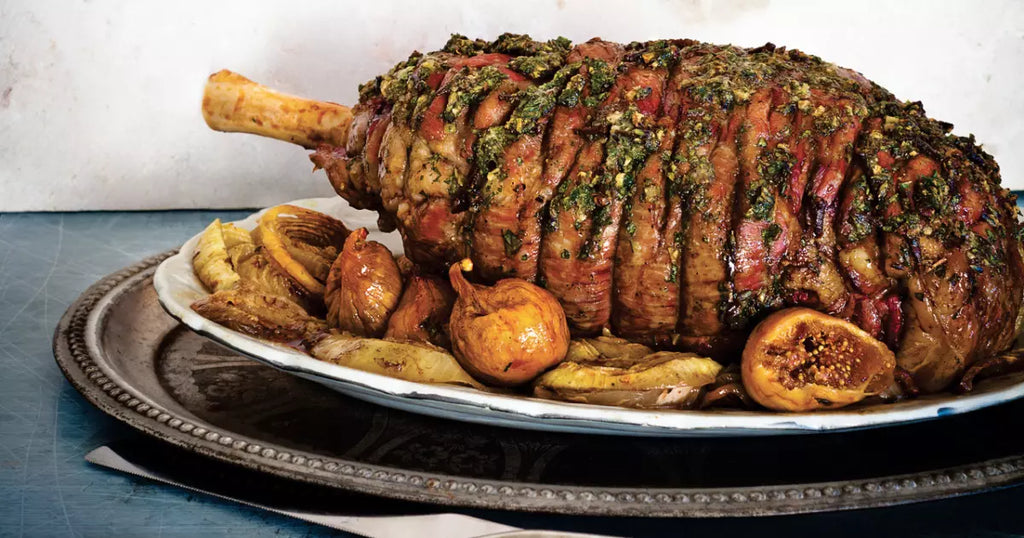
Roast leg of lamb and Saint-Émilion red wine: a timeless pairing
What are the best Saint-Émilion wines ?
With so many prestigious estates, it is difficult to choose ! Nevertheless, La Cave Éclairée has selected for you two "favorites": the Château Trotte Vieille as well as Château Leydet-Valentin.
Located just a stone's throw from the village of Saint-Émilion itself, Château Trotte Vieille is a historic estate that embodies Bordeaux elegance and tradition. Its vines, among the oldest in the appellation, produce wines of remarkable finesse and intensity. The property is thus renowned for its ability to offer powerful wines with impressive aromatic subtlety. The opinions of enthusiasts are almost unanimous and the vineyard is highlighted in many wine guides. Don't hesitate!
Château Leydet-Valentin offers a more contemporary vision of Saint-Émilion. Managed by the Leydet family, the wines here are generous, indulgents and round. Lovers of expressive and charming wines will indeed find in Leydet-Valentin's cuvées a perfect balance between richness and character, while retaining the typical elegance of Saint-Émilion wines.
You are now a true expert on the Saint-Émilion PDO and its wine wonders. If you wish to continue deepening your knowledge, visit La Cave Éclairée ! We have a selection of magnificent wines (Grand Cru or not) among which you will surely find your next favorite bottle.
See you soon and feel free to leave us a review on this article !


