Red wine lovers, welcome to the fascinating world of Malbec! Originally from the South-West of France, where it is still firmly established, this grape variety is also very present in many other international vineyards, including Argentina, where it has become the emblem of viticulture.
Today, La Cave Éclairée invites you to discover its history, its unique characteristics, as well as the best ways to enjoy it at the table. Get ready to dive into the story of a grape variety full of character !
The fascinating history of Malbec
Also known as Côt or even Auxerrois, Malbec finds its roots in Quercy, a former province of the South-West corresponding to the current department of Lot, whose capital is Cahors.
According to research by INRA Montpellier and the University of California at Davis, Malbec is the result of a cross between Magdeleine noire des Charentes and Prunelard noir, making it a close relative of Tannat but also of Négrette, another key grape variety of the South-West region.
From a historical point of view, Malbec experienced notable expansion during the Renaissance, a period when it was exported to the Loire Valley vineyards.
In Bordeaux, the variety also had its moment of glory. Present in the Aquitaine vineyard since the 17th century, it reached its peak there during the 19th century, when it represented nearly 80% of the vineyards of Bourg and Blaye… before phylloxera almost completely destroyed them.
Also in the 19th century, in 1853 to be precise, Malbec was also exported to Argentina by the agronomist Michel Aimé Pouget in order to develop the local vineyard at the request of the governor of Mendoza.
Today, it has become the flagship grape variety of Argentina and is still firmly established in France as well as in many other vineyards around the world. Despite its ups and downs, Malbec is far from having said its last word !
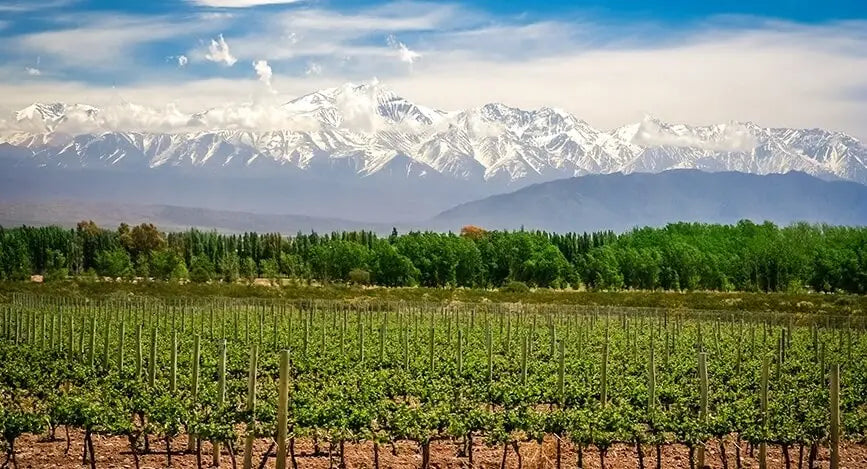
Mendoza vineyard in Argentina: the kingdom of Malbec
Where is Malbec grown?
In France, Malbec is mainly associated with the AOC Cahors vineyard in the South-West, where it must represent at least 70% of the blend of the produced cuvées. It is also very regularly vinified as a single varietal.
Although the cultivated area has generally decreased in France over the past decades, Malbec is still well present in the Loire (mainly in Touraine), Bordeaux, Languedoc-Roussillon and of course throughout the entire South-West.
However, it is in Argentina that Malbec has found a second home. As explained previously, it was introduced there as early as 1863 and quickly established itself in the Latin American vineyard thanks to favorable climatic conditions and the suitable soils of the Mendoza region.
With 26 000 hectares planted (three quarters of the world’s vineyards), Argentina is today the leading producer of Malbec. The variety is also grown in many other countries such as Chile, the United States, Italy, Australia, New Zealand, and South Africa.
The characteristics of the Malbec grape variety
The Malbec is a black grape variety with a thin but resistant skin. It produces medium-sized bunches, generally pyramid-shaped. At full maturity, the berries take on a plum-black color. Its leaves are downy at a young age, then become green with bronzed areas.
In autumn, the foliage partially turns red, offering a magnificent visual spectacle in the vineyards.
Although it is a vigorous and resistant grape variety, Malbec is nevertheless sensitive to several diseases such as grey rot, downy mildew, and leafhoppers. It also requires a lot of sunlight and heat to reach its full potential.
Clay-limestone, clay-gravel, and limestone soils are the most suitable for its cultivation.
The flavors and aromas of Malbec
Malbec is a grape variety offering a rich palette of flavors during tasting. Its fruity profile is indeed particularly appealing with notes reminiscent of plum, blackberry, or even black cherry.
In addition to this fruity aspect, Malbec can also present spicy flavors such as pepper, graphite, or even licorice.
As a general rule, Malbec cuvées display beautiful acidity, moderately powerful tannins and a intense aromatic profile. However, when grown in cool climate vineyards such as those in the Loire, Malbec can then produce wines with lighter profiles featuring slightly herbaceous flavors.
Many winemakers today choose to vinify the variety with more softness and elegance than in the past. The profiles of Cahors wines, for example, have changed significantly over the past decade, offering less extraction and structure in favor of elegance.
Moreover, if aged in wood (as is often the case), Malbec-based wines can then be marked by seductive notes of oak, vanilla, cinnamon, mocha, or vanilla.
As you will have understood, Malbec is capable of producing very diverse wines, depending above all on the terroirs and the winemaker’s choices. Some will be focused on fruit and thus intended to be enjoyed young, while others will be great powerful wines offering an outstanding aging potential.
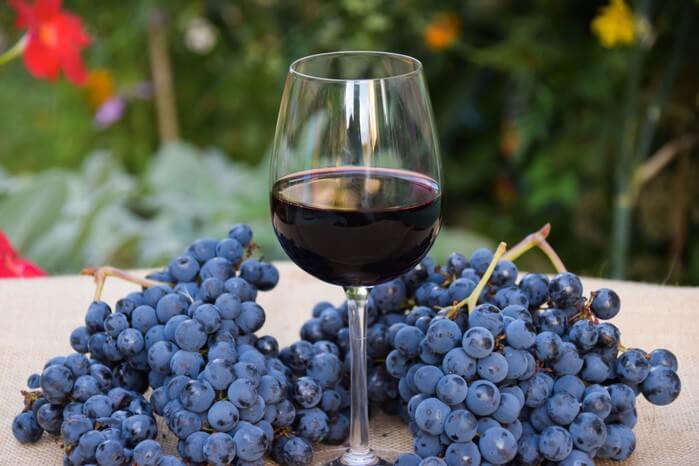
Bunches and glass of 100% Malbec wine
What to eat with Malbec?
As Malbec is a versatile grape variety, it therefore adapts to a myriad of dishes. Let’s discover together some possibilities...
Malbec and red meat dishes
Imagine yourself savoring a roasted duck, its tender and juicy flesh enhanced by the aromatic intensity of Malbec. Another possibility: enjoy a delicious piece of beef, perfectly seared, whose flavors blend harmoniously with those of the wine. The pairing is simply divine!
Malbec and saucy dishes: a perfect match
Are you a fan of saucy dishes? Malbec is particularly interesting with stews and civets. Think, for example, of beef bourguignon or coq au vin ! The robust flavors of the wine will perfectly complement the richness of the sauces.
Malbec and grilled meats: an unmissable pleasure
Finally, for barbecue lovers, how about a grilled rib of beef? The tannic structure of Malbec pairs wonderfully with the smoky and caramelized notes of grilled meat such as beef, but also lamb or pork.
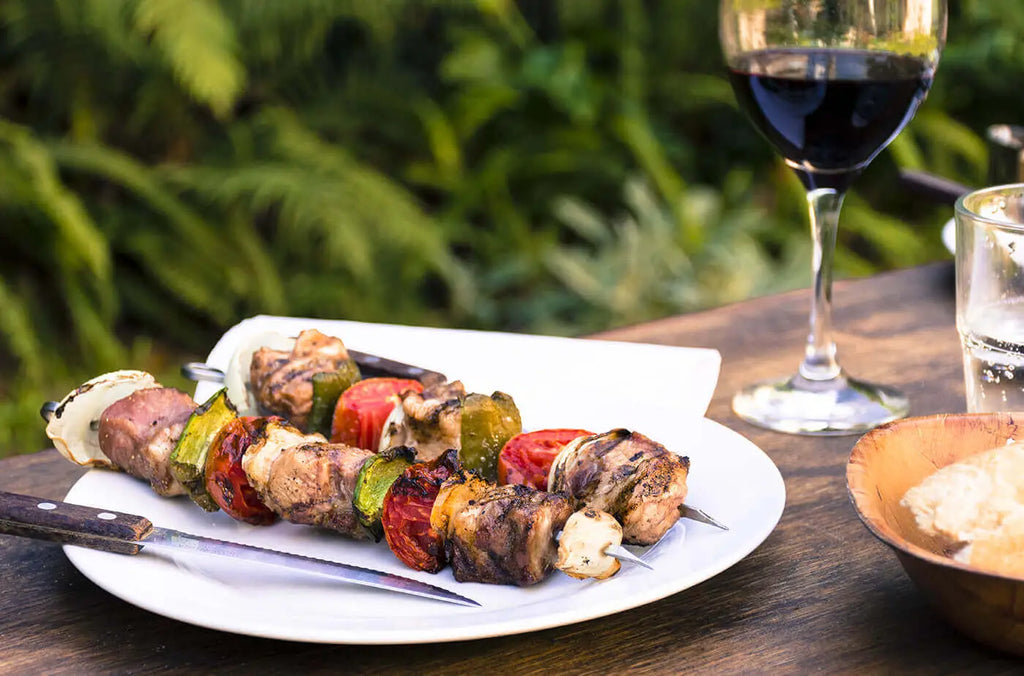
Grilled meats and Malbec: the perfect pairing for a summer evening!
Finally, in terms of serving temperature, we recommend a range between 16-18°C for your Malbec wines. This range will indeed be ideal to fully appreciate the aromas and structure of your cuvées. For Malbecs focused solely on fruit and with very light tannins, it is also possible to consider serving them slightly cooler.
With these suggestions, you are now sure to enhance your meals and do justice to this magnificent variety that is Malbec!
The best Malbec
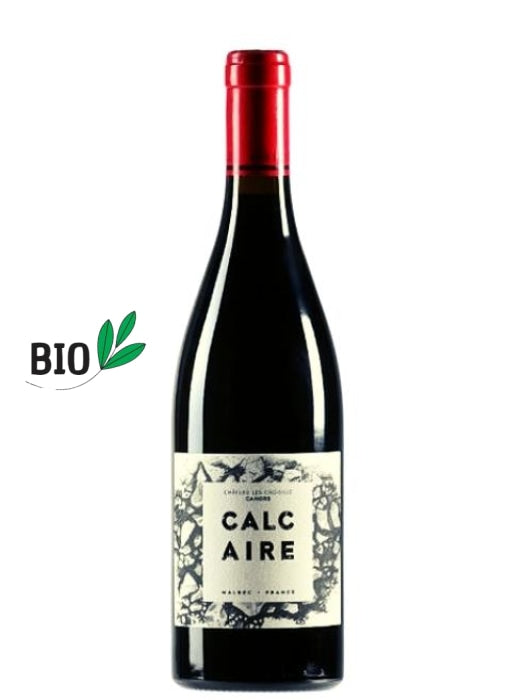
At La Cave Éclairée, we have chosen Château Les Croisille to showcase Malbec ! Located in the Cahors region, this flagship estate of the appellation takes full advantage of its superb limestone terroirs to produce elegant and refined wines. In short, truly beautiful modern Cahors wines !
Malbec is indeed vinified there with care, offering enjoyable cuvées but above all wines of great aromatic complexity with excellent aging potential.
To discover these wonders, we invite you to explore our selection on lacave-eclairee.fr. Cheers !