

French whisky has now established itself as one of the major new players on the international spirits scene. Long dominated by Scotland, Ireland, or Japan, the global whisky landscape is now seeing distilleries emerge in every region of France. This momentum enriches a scene driven by the diversity of terroirs and a longstanding expertise in distillation, allowing French whisky to develop a strong and distinctive identity.
We are pleased to offer you today a comprehensive overview of this spirit in France. Let’s explore together the history of French whisky, its producing regions, its styles, and the current market.
Contents
- History of French whisky
- The main whisky-producing regions in France
- How is whisky produced?
- Styles of French whisky
- The key role of French casks
- The French whisky market
- The types of whisky produced in France
- The differences between French whisky and Scotch whisky
- How to taste whisky?
- Food and whisky pairings
- Some iconic French whisky houses
History of French whisky
Long associated with the world of wine, Cognac or Armagnac, France did not immediately establish itself as a whisky-producing country. Yet, in just a few decades, it has become one of the most dynamic countries in Europe in this field.
Indeed, even before producing whisky, France already had all the necessary ingredients for its production: rich cereal-growing regions, a long brewing tradition in regions such as Brittany, Alsace, the North, or Lorraine, and above all, a historic expertise in distillation. However, until the end of the 20th century, whisky remained an imported product in France, and it was not until the 1980s that a true movement began.
The pioneers: Brittany leads the way
Thus, the history of French whisky began first in Brittany. Building on its tradition of beer and malt, the region took the leap thanks to the Warenghem distillery, which, in 1983, created the first French and Breton Single Malt whisky: Armorik. This launch marked a key milestone, and France realized it was entirely possible to produce its own whisky, with a unique identity.
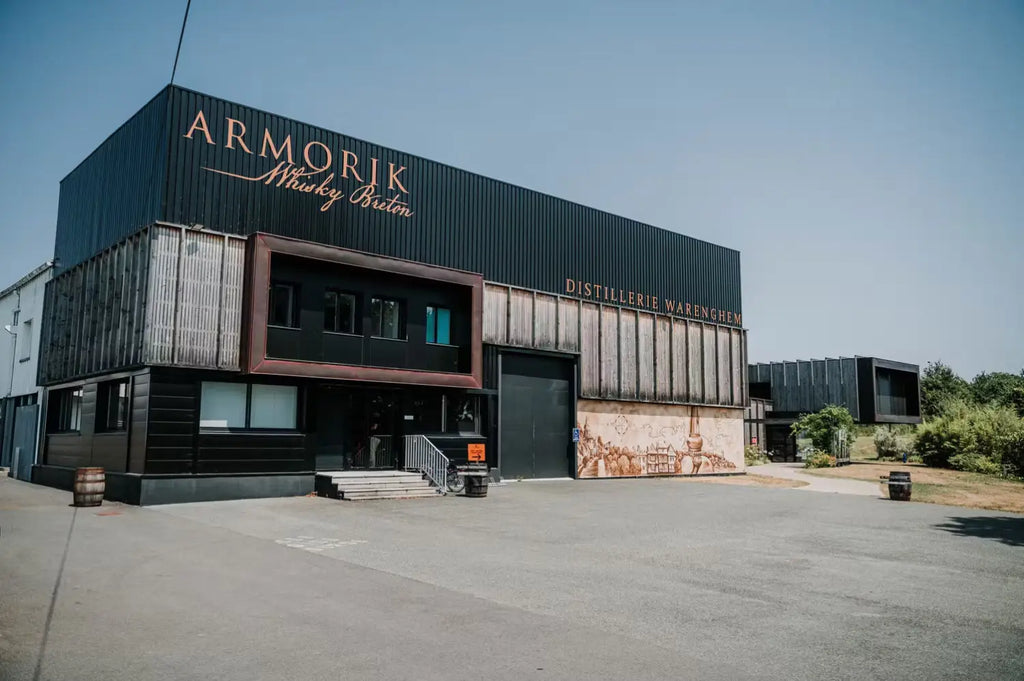 The Warenghem distillery, birthplace of the first French whisky: Armorik
Alsace follows suit
Soon, other regions joined this movement. In Alsace, the beer culture and expertise in distillation, especially of fruit brandies, naturally extended into whisky production.This is how several craft distilleries came into being and quickly adopted Single Malt whisky as their specialty.
Since the 2000s: expansion and diversity
At the turn of the 21st century, other regions and producers joined the French whisky movement. Lorraine, for example, emerged thanks to the Rozelieures distillery. In Brittany, as early as 2002, the Distillerie des Menhirs launched the Breton whisky Eddu, made from buckwheat. Other distilleries later entered the market, such as the Castan distillery in the South-West or the Glann ar Mor distillery in Brittany.
Since the 2010s, growth has been spectacular. Today, there are more than a hundred French distilleries producing whisky. Some houses are also expanding internationally, while PGIs have been created in Brittany and Alsace.
International recognition
All this dynamism has today given rise to a true mosaic of styles, making French whisky a multifaceted production, distinct from the Scottish or Irish models.
Unlike Scotland or Japan, French whisky does not rely on such an old and codified tradition: it continues to reinvent itself. This freedom is reflected in the choice of grains, distillation methods, casks, and even aging times.
The story of French whisky is therefore still being written, driven by a new generation of producers and an ever-growing diversity of approaches.

Book by Matthieu Acar recounting the history of French whisky
The main whisky-producing regions in France
Whisky production in France is experiencing real excitement. Today, distilleries are established in many regions. This diversity makes it possible to create whiskies with a distinctive identity and reflects the variety of approaches developed across France.
Brittany
Brittany remains the leading French region to have made whisky a specialty. In the 1980s, local players from a strong brewing tradition turned to distillation.
Fruity, maritime or spicy, Breton whiskies now offer a wide variety of profiles. Brittany also benefits from the PGI Brittany Whisky.
Alsace
Alsace stands out as one of the key regions for French whisky. Historically renowned for its white wines, its brewing heritage and its eaux-de-vie, it has expertise that naturally facilitates mastery of malt, fermentation, and distillation.
Alsace thus represents a meeting point between brewing tradition and innovation in spirits.
Lorraine
It is impossible to talk about French whisky without mentioning Lorraine and Christophe Dupic, the iconic figure of the Rozelieures distillery. The house develops eaux-de-vie with a strong identity, notably from locally grown barley.
Aged in a wide variety of casks, the distillery's Single Malts help make Lorraine one of the key regions for French production.
Normandy
With its rich cider-making heritage and the tradition of Calvados, Normandy has also made its mark in the world of whisky.
The Le Breuil distillery, in the heart of the Pays d’Auge, is a perfect example of this evolution. Its longstanding expertise in spirits and its work with different types of casks contribute to the diversity of Norman whisky.
Nouvelle-Aquitaine and Charente
Nouvelle-Aquitaine, and more specifically Charente, offers a prime setting for the development of French whisky. The proximity to the Cognac vineyards is a real advantage, thanks to the local expertise in distillation and maturation.
Producers can also benefit from a wide range of casks from Cognac, Pineau des Charentes, or the wine industry.
Paris
Even the capital is now contributing to the development of French whisky. Urban distilleries have set up in Paris and the surrounding region, illustrating the current diversity of projects related to French spirits.
How is whisky produced?
The production of whisky, whether French or not, relies on several key steps, from the selection of grains to bottling.
Selecting the grains
The production of whisky begins with the selection of grains. Often preferred for Single Malts, barley is germinated and then dried to obtain the malt.
Depending on the desired style, other grains such as wheat, rye or corn can also be used.
Fermentation
After preparing the grains comes fermentation, during which yeast transforms fermentable sugars into alcohol.This step also plays an important role in developing the aromatic profile.
The duration and conditions of fermentation can vary significantly depending on the distilleries and the desired style.
Distillation
After fermentation comes distillation, a central stage in whisky production.
This process concentrates the alcohol and certain aromatic compounds. The type of still, the heating, and the cut decisions made by the distiller have a major influence on the character of the future whisky.
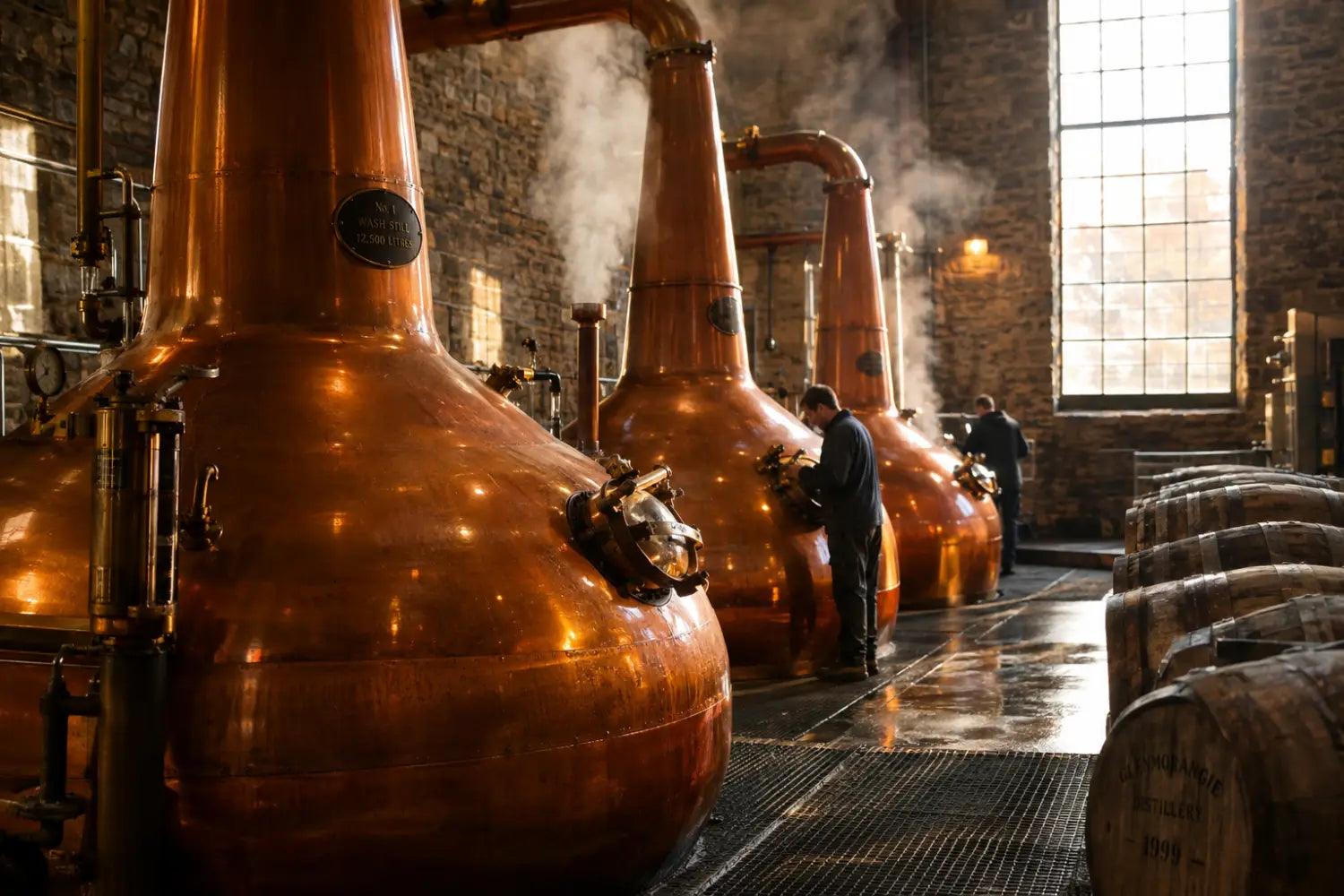 Distillation
Aging
After distillation, whisky enters a crucial phase: cask aging.
Many whiskies are aged in former Bourbon casks, but many other types of containers can be used: Sherry, Cognac, Sauternes, red wines, new casks, or other spirits.
During maturation, the spirit interacts with the wood, which helps to develop its color, texture, and aromatic profile.
After the initial aging, the producer may also choose an additional finishing, or finish, in another type of cask to modify or enhance the aromatic profile.
Bottling
The final step is bottling. Depending on the producer, the whisky may be diluted with water before bottling or offered at a higher strength.
Each stage of production thus contributes to the final style of the whisky and to the identity of the distillery.
The styles of French whisky
French whisky does not have a single style, but a multitude of faces. While Scotch, or Scottish whisky, and Irish whiskey have a particularly structured historical heritage, French production remains relatively young and diverse.
Each house crafts its whiskies based on several factors: grains, yeasts, type of still, choice of aging or finishing casks, maturation time, and even bottling strength.
Some distilleries, for example, choose red wine or Sauternes barrels, while others use ex-Cognac, Calvados, or even new oak casks.
This diversity makes French whisky a particularly vast field for exploration: fruity, cereal, woody, pastry-like, peated or unpeated profiles can all coexist.
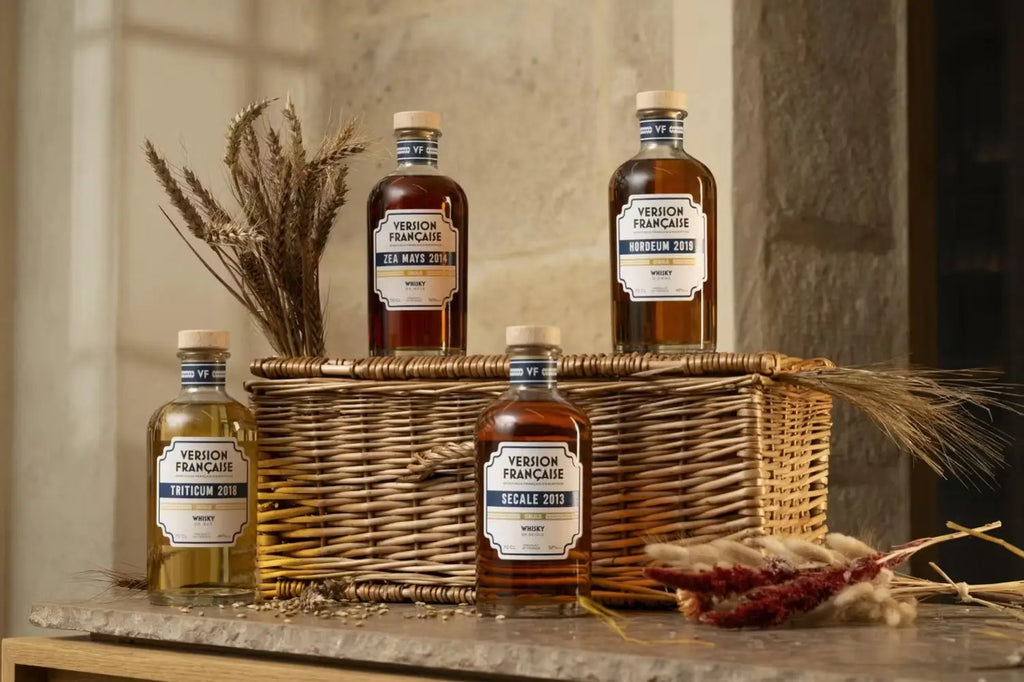 Whiskies from the Version Française brand
The decisive role of French casks
One of the strengths of French whisky lies in its heritage of barrels and its proximity to many wine and spirits-producing regions.
French distilleries can therefore work with a wide range of containers: red wine barrels, Sauternes, Cognac, Armagnac, Calvados, or various types of oak.
Casks play a central role in whisky maturation. Wood notably influences the structure and certain aromas, while an old cask that previously held wine or a spirit can also bring its own signature.
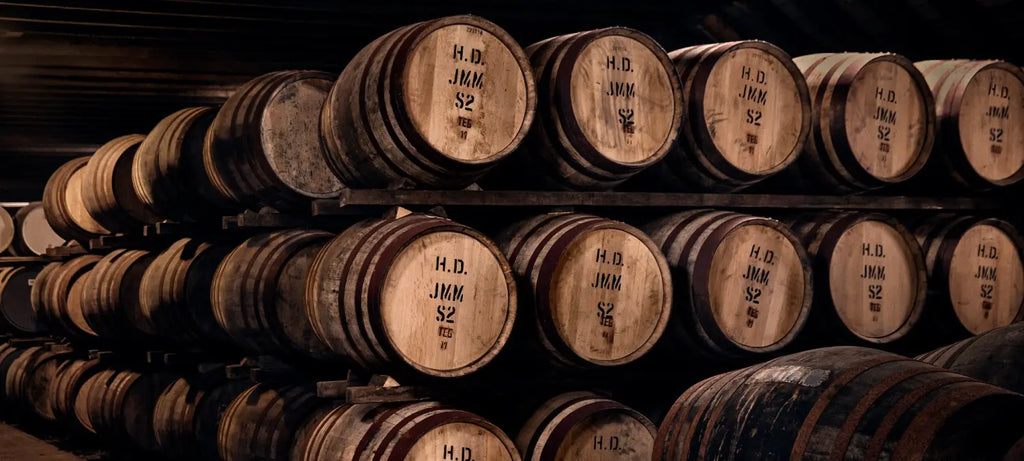 French whisky aged in Cognac casks
The French whisky market
The whisky holds a particularly important place in the French spirits market. Alongside the many imported labels, domestic production has grown significantly over the past decades.
The number of distilleries producing whisky in France has increased sharply, with projects of very different sizes and philosophies.
Some houses are positioned on the national and international markets, while others focus more on the regional scale or on small batches.
French whisky also benefits from geographical indications such as Whisky de Bretagne and Whisky d’Alsace.
The market remains relatively young compared to those of the major historic whisky nations, but its diversity and ongoing development continue to enrich the available selection.
Types of whisky produced in France
French whisky stands out for a wide variety of styles.
Among them, Single Malt holds a prominent place. It is made from malted barley within a single distillery.
Blended Malt is the result of blending several malt whiskies from different distilleries.
Some distilleries are also exploring grain whiskies, which can be made from different cereals and offer highly varied profiles.
Another important feature of many French whiskies lies in the diversity of aging or finishing casks used.
Finally, many houses offer limited editions and experimental batches, illustrating the sector’s current creativity.
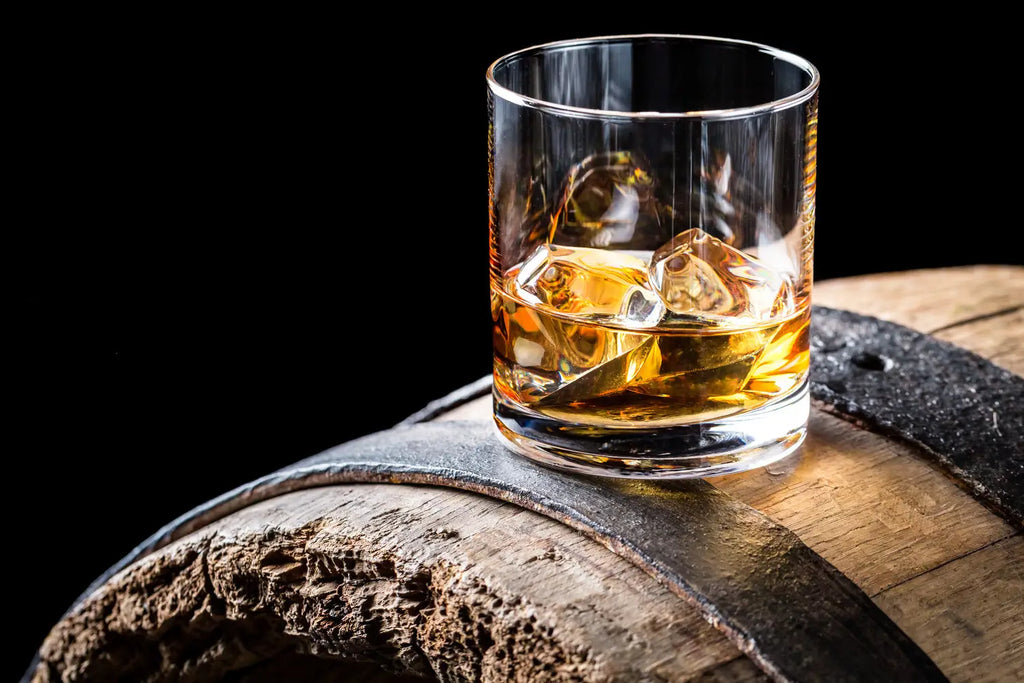
The elegance of French whisky
Differences between French whisky and Scotch whisky
While Scotch whisky is world-renowned for its centuries-old history, French whisky is based on more recent production and a wide variety of approaches.
Legal framework and tradition
Scotch Whisky is governed by strict regulations and must be produced and aged in Scotland for at least three years.
The various Scottish regions such as the Highlands, Islay, Speyside, Lowlands, and Campbeltown also contribute to the history and identity of Scotch.
In France, producers operate in a less established and less uniform environment, which explains the significant diversity of grains, stills, casks, and aromatic profiles found.
Image and market
Scottish whisky benefits from a long-standing international tradition, while French whisky is still gradually building its identity.
This youth allows French producers to explore a wide variety of methods, raw materials, and aging types.
How to taste whisky?
Tasting a whisky, whether French or not, is above all about taking the time to observe its aromas, texture, and balance.
The shape of the glass can play an important role. A tulip-shaped or Glencairn glass, for example, helps to concentrate the aromas.
Before tasting, also observe the color of the whisky, then gradually smell it to identify the main aromatic families: fruits, grains, vanilla, wood, spices, smoke, or even pastry notes.
On the palate, take small sips and let the whisky evolve. A few drops of water can also be added, especially to high-proof whiskies, to alter the aromatic and alcoholic perception.
Food and whisky pairings
Whisky can also be paired with certain dishes. Thanks to its diversity of styles, from lively and fruity Single Malts to more oaky expressions or those finished in wine, Cognac, or Calvados casks, many combinations are possible.
With cheeses, a light and floral whisky can, for example, accompany a fresh goat cheese, while a richer or more oaky profile can be paired with Comté or Beaufort.
When it comes to charcuterie, round and oaky whiskies can work well with cured hams, terrines, or rillettes.
French whisky also finds its place in the sweet register. Some fruity or pastry-like profiles can complement dark chocolate, dried fruits or certain pastries.
Other pairings are possible with dishes such as foie gras, duck, or smoked salmon, depending on the chosen whisky profile.
 French whisky and chocolate : a delicious pairing
Some iconic French whisky houses
Today, French whisky is supported by a great diversity of houses and distilleries, each developing its own vision of the spirit.
Among the historic names, Armorik holds an important place in Brittany, while Rozelieures has developed in Lorraine with a production strongly linked to barley and various whisky styles.
Eddu, crafted from buckwheat in Brittany, illustrates another side of this French creativity. Domaine des Hautes Glaces, in the Alps, for its part, develops an approach particularly focused on grains and terroir.
Houses such as Bellevoye, Le Breuil, Michel Couvreur and Version Française also showcase the diversity of today’s landscape, with blends, Single Malts, unique maturations, and finishes in various types of casks.
There is therefore not a single French whisky, but rather a multitude of interpretations, regions, grains, and production philosophies.
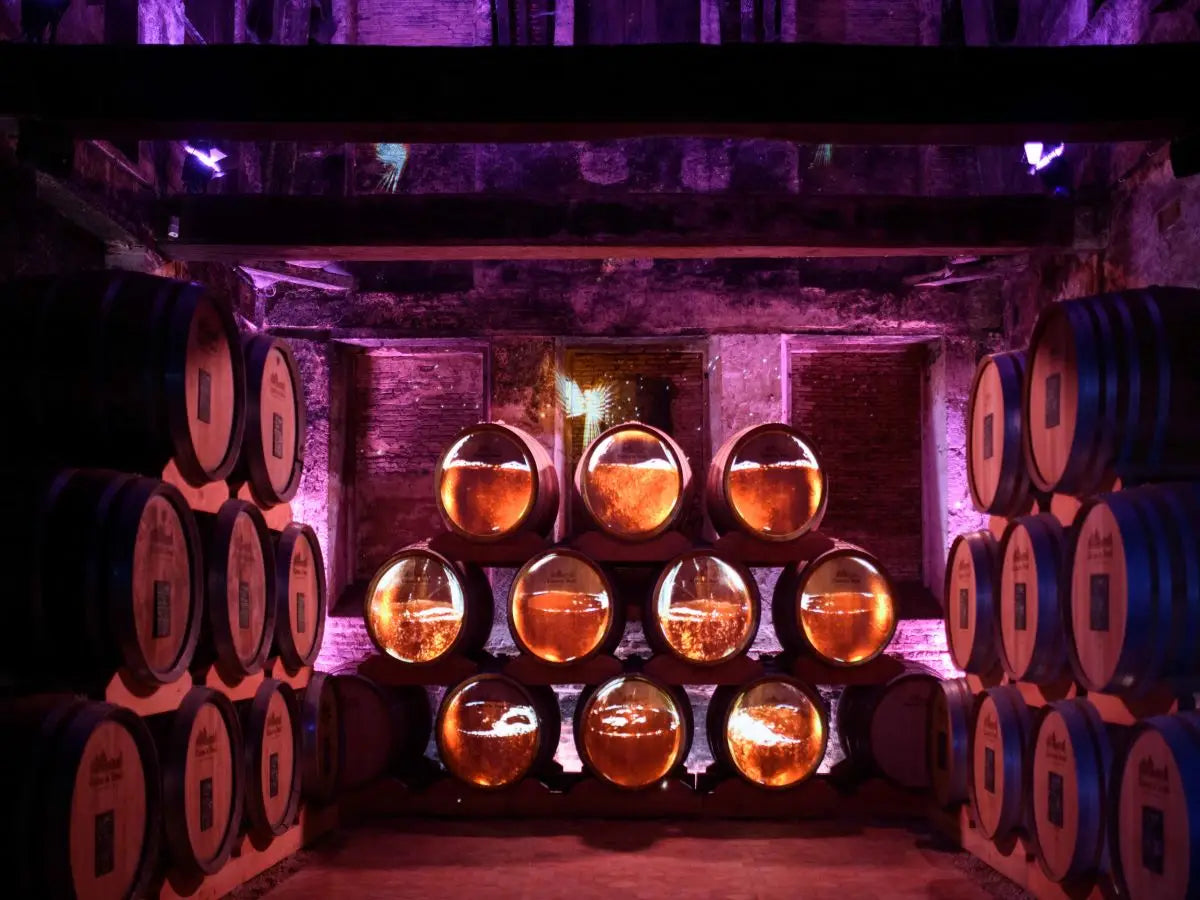
Whisky casks from the Château du Breuil distillery, Normandy
Discover our selection of French whiskies
You now have a better understanding of the history, regions, styles, and unique features of French whisky. If you’d like to move from theory to tasting, explore our selection of French whiskies.
You’ll find a variety of profiles, from fruity and generous Single Malts to more woody, peated, or original expressions, all carefully selected by La Cave Éclairée.


