

Symbol of conviviality, Irish whiskey captivates with its smoothness, roundness, and accessibility. Inheriting an age-old expertise, this spirit embodies the very soul of Ireland. Thanks to its fruity and silky aromatic profile, Irish whiskey has now conquered the world, from Dublin’s popular pubs to high-end international bars.
We now invite you to discover this iconic spirit in all its facets, so that it will hold no more secrets for you. Ready to dive into the captivating world of Irish whiskey ?
Summary
History of Irish whiskey
Ireland is one of the very first countries in Europe to master the art of distillation.As early as the 15th century, documents attest to the consumption of uisce beatha, literally "water of life" in Gaelic, the direct ancestor of modern whisky. This expertise owes much to the Irish monks, who brought back distillation techniques from their travels in the East. Quickly, barley established itself as the essential grain, giving future Irish whisky its texture and character.
From the 15th to the 19th century, Irish whisky gradually gained a reputation beyond its borders. Distilleries multiplied and prospered, while Ireland began exporting its spirits to the British Isles as well as some major European cities. Paris and London, in particular, appreciated these whiskies renowned for their smoothness and accessibility. In the 19th century, iconic houses such as Bushmills in Northern Ireland even became globally recognized benchmarks for their quality and consistency.
The 20th century however marks a difficult turning point for the industry. The First World War, American Prohibition, the Second World War, as well as various other tensions drastically reduced the number of distilleries, leaving only a few houses such as Midleton, Bushmills, and Tullamore Dew to keep the tradition alive.
It would finally take until the 1990s before Irish whiskey experienced a true revival. A new dynamic then emerged: modernization of production tools, increased quality, and the arrival of international investors. Historic houses are making a comeback, while new players are emerging. This movement marks the beginning of a spectacular renaissance that will lead Irish whiskey to once again become one of the most dynamic spirits in the world.
Long overshadowed, Irish whiskey is now establishing itself as one of the most appreciated spirits in the world. Its sales have literally soared, rising from less than 200,000 cases per year to over 12 million, while about 90% of production is now exported to the United States, Canada, or Europe.
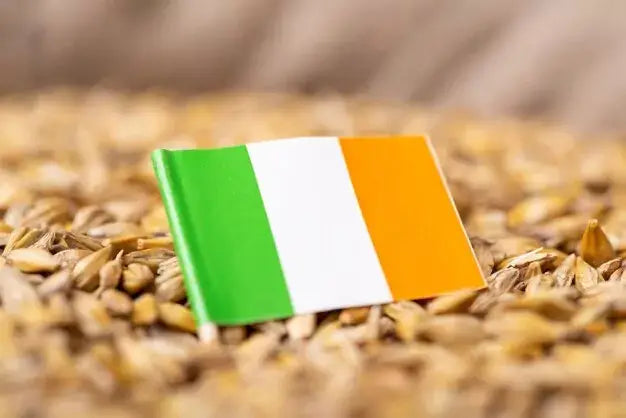
Barley, the signature ingredient that shapes Irish whiskey
Whisky or Whiskey?
Here is a question that often comes up: what is the difference between whisky and whiskey ? The answer actually lies in a nuance of origin... and a touch of national pride.
When distillation developed in Ireland and Scotland, the term used in both countries was "whisky". However, in the 19th century, the spelling "whiskey" gradually became established in Ireland, particularly to establish a distinct identity and differentiate from Scottish productions, which at the time were considered by the Irish to be rustic and of uneven quality. This distinction then becomes a characteristic sign of Irish whiskey.
At the beginning of the 20th century, this difference in spelling was confirmed. Irish and American distillers continued to use the spelling "whiskey", while Scotland kept the traditional version "whisky," which would also be adopted by Canada and Japan.
Two spellings, two histories, but the same passion!
The different types of Irish whiskey
One of the strengths of Irish whiskey lies in the diversity of its styles. Depending on the grains used or the distillation method, each type offers a distinct aromatic profile. Here are the main styles of Irish whiskeys to discover.
Blended Irish whiskey
The Blended Irish whiskey is the most widespread category in Ireland in terms of production volume. It is a blend generally combining single malt, single pot still, and single grain whiskeys.
Here, the aim is to combine the characteristics of each type in order to obtain an accessible, smooth, and aromatic whiskey, capable of appealing to both beginners and enthusiasts. This is the style adopted by iconic houses such as Jameson, Tullamore Dew, or Powers...and it is often the first Irish whiskey that one discovers before venturing into more complex expressions !
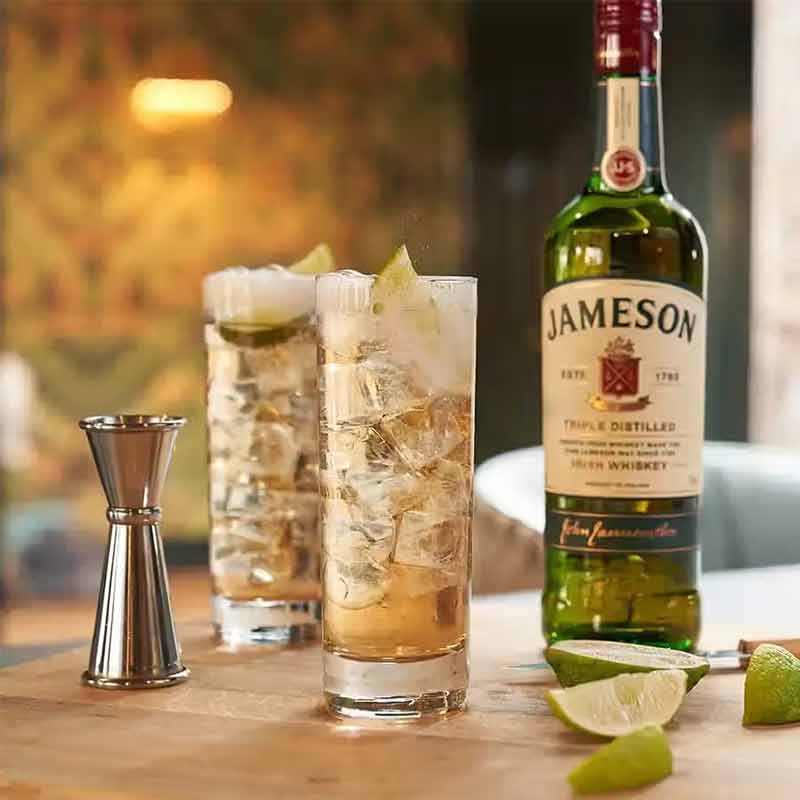
Jameson Whiskey, authenticity and Irish expertise
Single pot still whiskey
The Single pot still is the iconic style of Irish whiskey. Born in the 19th century as a reaction to a British tax on malted barley, this type of whiskey combines malted barley and unmalted barley. Distillation is carried out in a "pot still" (Charentais-type still known as "à repasse") and is performed in a single, unique distillery.
The result: a creamy, spicy, and generous whiskey, with a round and complex character.The Midleton distillery, with its famous Redbreast range, has made it a true art.
Single malt whisky
Made exclusively from malted barley and produced in a single distillery, Irish Single malt Whisky is the purest expression of barley.
This type of whisky reveals an elegant structure, often characterized by aromas of ripe fruits, honey, and vanilla, with a smooth and refined finish. The Bushmills distillery is a superb ambassador of this style.
Single Grain whisky
Less well-known, Single Grain whisky is distilled from other grains such as corn, wheat, or even rye, in a column still (Coffey Still). Light, floral, and approachable, it is often used in blends, but some producers, like Teeling, now showcase it on its own, offering smooth and delicately vanilla-flavored whiskies.
In summary, Irish whiskey stands out for its great diversity of styles: from rich and fruity Single Malt to smooth and spicy Single Pot Still, each expression tells a story of local expertise. It is this diversity that makes Irish whiskey such an exciting spirit to taste!
Irish Whiskey Production
Irish whiskey owes its smoothness, roundness, and aromatic complexity to a precise manufacturing process, the result of centuries of expertise. Each step, from the selection of raw materials to maturation, profoundly influences the final taste. Here are the main stages of its production.
Malting
Although various grains can be used by Irish distilleries, barley is usually the main raw material.In order to malt it, it is moistened to start germination, then dried to stop the process. This malting activates enzymes that convert starch into fermentable sugars, an essential base for fermentation and the development of aromas.
Mashing and Fermentation
Here, the crushed grains are mixed with hot water in order to extract the sugars. The resulting wort is then fermented by yeast, transforming these sugars into alcohol, while producing fruity, floral, or spicy aromas depending on the style and combination of raw materials. Fermentation usually lasts a few days and allows the liquid to reach about 6 to 8% alcohol.
Distillation
Distillation is one of the key stages in defining the character of Irish whiskies. Distillation is not limited to concentrating the alcohol: it defines the texture, complexity, and purity of the whisky. It is also what allows Ireland to stand out, with whiskies known for their smoothness, balance, and lingering finish.
Single malt and Single pot still whiskies are distilled in copper pot stills and often undergo triple distillation, with the aim of obtaining a round and aromatic spirit.
Single grain whiskies, on the other hand, are distilled in column stills, producing a lighter spirit, ideal for blending.
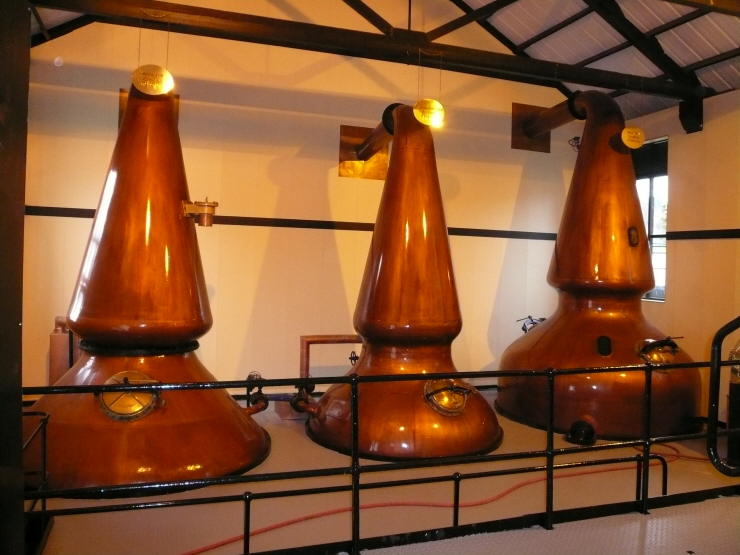 Pot still
Maturation
After distillation, the whisky must be aged in oak casks. The choice of wood is therefore crucial: new casks, former bourbon casks, Sherry (Jerez) casks, or even wine casks… the selection of barrels as well as the aging period greatly influence the aromatic profile of the whisky.
Regulations require a minimum aging of three years. Nevertheless, most premium whiskies are aged much longer in the distilleries' warehouses.
In Ireland, casks are usually stored in stone or brick warehouses with some natural ventilation. The local climate, cool and humid, thus influences the interaction between the wood and the whisky.
Finally, after the main maturation, some whiskies benefit from a "finish," a short period of aging in specific casks, for example in former Sauternes, red wine, or Pineau des Charentes barrels, intended to give them unique aromas and style. The finish is a kind of final touch and signature.
Bottling
After the whisky has matured, it is finally bottled. Some distilleries choose light filtration in order to preserve as much aroma and texture as possible, while others opt for more standardized filtration to ensure consistent color and clarity.
Each bottle is then labeled, sometimes numbered for limited editions, before being distributed to Irish and international markets. This final step, although technical and logistical, is crucial: it allows Irish whiskey to go from the still to tasting, ready to delight enthusiasts and connoisseurs.
The characteristics of Irish whiskey
Irish whiskey is distinguished by a unique combination of smoothness and aromatic complexity. One of its trademarks is notably its supple and velvety texture, inherited from the triple distillation practiced by the majority of distilleries. This process indeed softens the alcohol and allows us to appreciate a certain roundness on the palate.
In terms of aromatic profile, the flavors vary depending on the style and the distillery. Nevertheless, tasting often reveals fruity notes (citrus, apple, pear, raisin, etc.), touches of vanilla and caramel, as well as spicy or floral nuances, particularly in Single pot stills.
This great aromatic richness results mainly from the choice of grain (cereal) as well as the maturation in casks. Overall, Irish whiskey is characterized by great accessibility as even its most complex expressions remain balanced and easy to appreciate for the novice.
The best Irish whiskeys
It is impossible to talk about Irish whiskey without mentioning the distilleries and bottles that have shaped its reputation over the centuries. Some houses have become true global references, both for the quality of their production and for their influence on the history of whiskey.
Among all these references, a few names stand out and perfectly illustrate the richness and diversity of Irish whiskey.
The iconic distilleries of Irish whiskey
Among the most emblematic names, Bushmills holds a very special place. The oldest distillery in the world still in operation, it was founded in 1608, in County Antrim, Northern Ireland. Renowned for its elegant and delicate single malts, Bushmills relies mainly on malted barley as well as triple distillation in copper stills, which gives its whiskeys soft aromas of honey, ripe fruit, and vanilla. Its "Black Bush" cuvée, a blend aged in former sherry casks, has become a true benchmark and offers excellent value for money.
For its part, Jameson remains the global standard-bearer of Irish whiskey. Produced in Midleton, County Cork, this iconic distillery captivates with its silky and highly accessible whiskies.
Located in County Offaly, in the heart of Ireland, the Tullamore Dew distillery is renowned for its precise blends combining grain, malt, and single pot still whiskey, offering a balance of smoothness, fruit, and spice.
Finally, Redbreast represents the flagship of Single pot still whiskey, a typically Irish style where malted and unmalted barley unite to create rich, complex, and deeply aromatic spirits.
Powers
Founded in Dublin in 1791 by James Power, Powers distillery remains one of the great pillars of Irish whiskey. At the heart of its identity lies the traditional Single Pot Still whiskey style, distilled in large copper pot stills.
The iconic Powers Gold Label, first introduced in 1886, remains one of Ireland’s most emblematic blends, renowned for its balance of malty smoothness and spicy intensity. An outstanding value for money, perfect for both everyday enjoyment and special occasions.
Meanwhile, Powers John's Lane 12 Year Old offers a far more complex profile, aimed at more experienced whiskey enthusiasts.
Irish whiskey: an iconic spirit you absolutely must discover
A symbol of history and expertise, Irish whiskey captivates with its story, its production methods, and its great diversity of styles. Whether it's the harmonious smoothness of a Jameson or a great classic like Redbreast or Powers Gold Label, each bottle tells a fragment of this green island swept by the Atlantic wind.
Want to complete your cellar with an Irish whiskey or simply travel through the flavors of malt and barley? La Cave Éclairée is here to help you !
And you, what do you think of Irish whiskey, which one have you already tasted ? Leave us your reviews and comments !


