

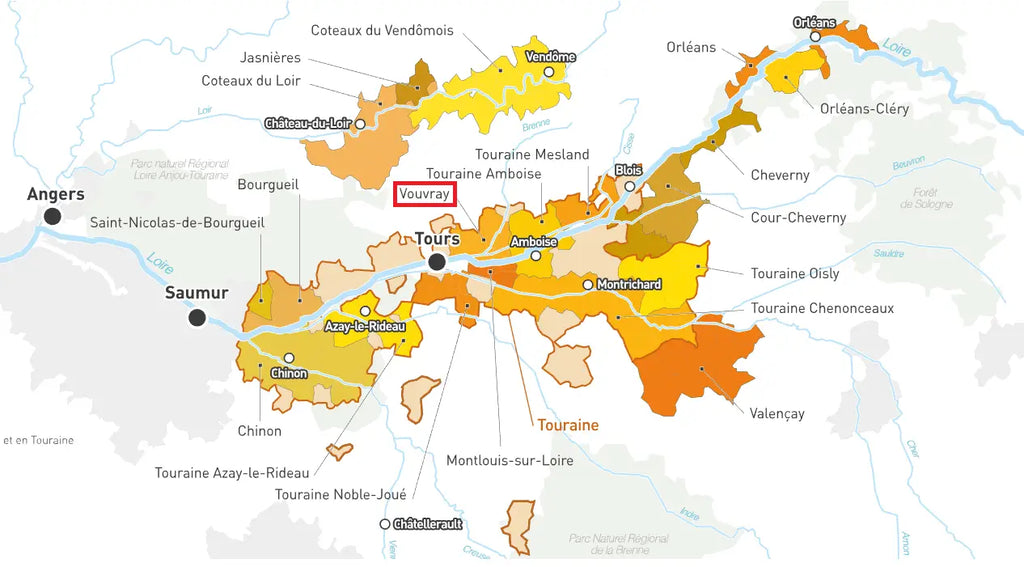
Located a few kilometers east of Tours, Vouvray is certainly one of the most beautiful wine appellations in the entire Loire.
Wonderfully showcasing the thousand and one facets of the Chenin grape variety Chenin, the vineyard indeed enjoys a rich history and varied terroirs, allowing for the production of delicious dry, sweet, and sparkling white wines.
Through this article, we invite you to embark on a fabulous journey through the Loire Valley and discover all the secrets of this remarkable appellation. Enjoy your reading!
History of the Vouvray Appellation
The creation of the Vouvray vineyard is attributed to Saint Martin. Then Bishop of Tours, he decided to settle in Vouvray in 372 to enjoy greater tranquility. He had the first vines planted there and founded the Marmoutier Monastery the same year. By the end of the 4th century, about twenty monks lived in the abbey and tended the small vineyard.
In the following centuries, the monks of Vouvray continued to develop local viticulture, gradually producing wines that gained increasing renown.
In the 13th century, various white grape varieties were planted in the Vouvray vineyard. Chenin (then called "Pineau de la Loire") was already present and considered the noblest of all. It was not until 1534 that the term "Chenin" was mentioned for the first time by the famous Rabelais, who even referred to it in his renowned novel "Gargantua".
In the 15th and 16th centuries, several kings of France even became enamored with the region's wines, thus promoting their recognition among the elite and for export, notably to northern countries thanks to Dutch merchants.
Then, during the 19th century, Vouvray faced several disasters: downy mildew, powdery mildew, and phylloxera severely affected the vines. The latter, a small parasite similar to an aphid and imported by ship from the United States, destroyed a large part of the Touraine vineyard.
Just imagine: at its peak in 1888, the Touraine region had 63,250 hectares. Phylloxera destroyed nearly half of it on its own before a solution was found. French vines were then grafted onto American rootstocks, as these were resistant to the parasite. The vineyard was gradually rebuilt, reaching 15,000 hectares by 1906.
Finally, in 1936, the Vouvray AOC was officially created. It was the first in all of Touraine.
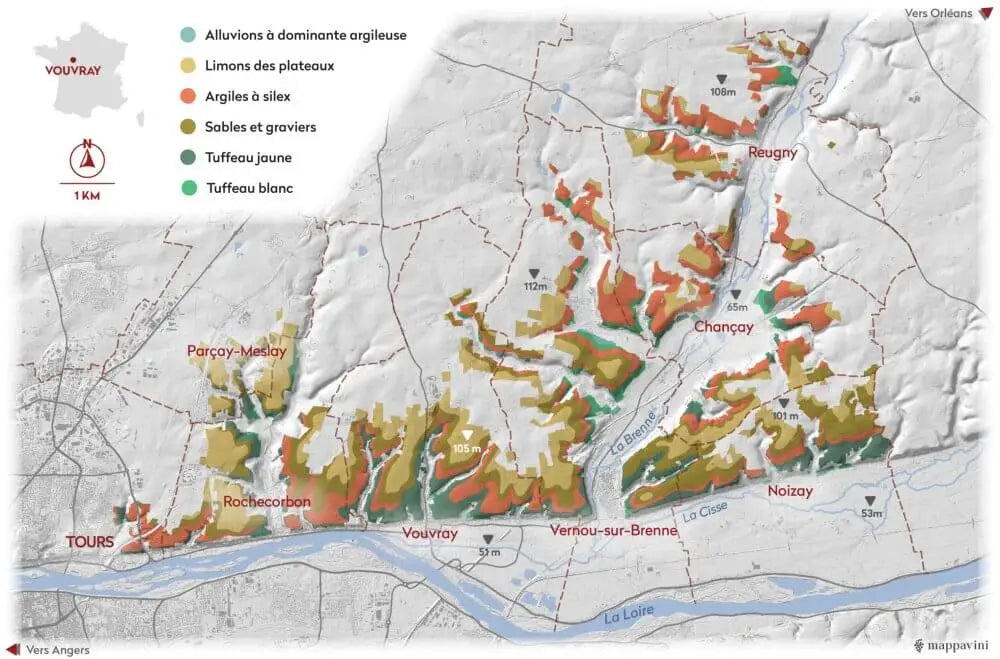
Today, the Vouvray vineyard covers 2,300 hectares, spread over 8 communes: Vouvray, Vernou-sur-Brenne, Tours, Rochecorbon, Reugny, Parçay-Meslay, Noizay, and Chançay.
Chenin and the Wines of Vouvray
As you may have gathered, Chenin is the only grape variety in the Vouvray appellation. Like many varieties, its origin remains uncertain. Nevertheless, its presence in the region has been established since the 9th century.
Now covering 9,000 hectares in the Loire, Chenin is also very present in South Africa, a country that accounts for more than half of the world's plantings. Locally, it is called "Steen".
If you want to know everything about this fabulous variety, feel free to read our article entirely dedicated to it: Chenin, the noblest white grape of the Loire.
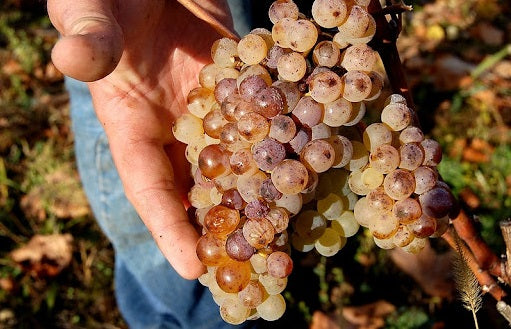
Within the Vouvray appellation, Chenin thus allows the production of 3 types of wines :
- dry white wines,
- sweet wines (off-dry, mellow, luscious),
- sparkling wines.
Dry white wines from Vouvray are lively, fresh, and express notes of citrus, quince, pear, and white flowers. The minerality is also often perceptible during tasting. Over the years, aromas of honey and hazelnut may appear. While most cuvées of this style are meant to be enjoyed young, some bottles with character can be appreciated after 10 years or more.
Off-dry wines are particularly appreciated for their indulgentise. Their slight sweetness gives them a very broad appeal. The aromatic profile of this type of wine evolves towards notes of peach, ripe quince, and apricot.
When weather conditions allow, certain vineyard plots are also able to produce mellow and luscious wines. These cuvées, with a high sugar content, are made from grapes harvested at over-ripeness. The berries are therefore picked later than average and may be affected by noble rot (Botrytis cinerea), a microscopic fungus that enhances their sugar, acidity, and aromas.
The texture of mellow and luscious wines is smooth and their aromatic profile complex and intense : exotic fruits (mango, pineapple), mirabelle plum, butter, honey, quince, sweet spices... it is hard to resist the temptation! The sweet wines of Vouvray can also often improve for several decades in the cellar and thus have great aging potential.
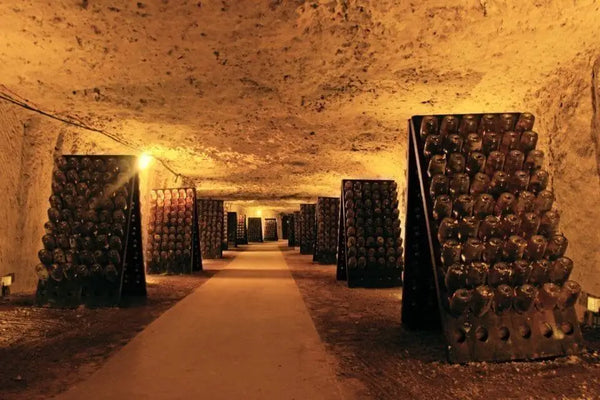
Finally, sparkling wines are also very present in the appellation. These are made using the traditional method, the same as Champagne! The only differences: the terroirs, the grape varieties, and a minimum aging on lees of 12 months compared to 15 months for a classic non-vintage Champagne. Nevertheless, many producers far exceed this period, with aging on lees reaching up to 36 months.
The aromas of these fine bubbles develop into citrus, green apple, peach, but also hazelnut, honey, or toasted bread when the aging is extended.
Climate and Terroirs of Vouvray
Located on the right bank of the Loire, the Vouvray appellation experiences a degraded oceanic climate. This is therefore relatively mild throughout the year, without major temperature fluctuations, although these are slightly more pronounced than in vineyards closer to the Atlantic Ocean.
The Loire also greatly influences the local climate. The river is indeed an excellent thermal regulator, creating ideal conditions for the ripening of Chenin.
It is generally the plots closest to the Loire, which ripen more quickly, that allow for the creation of the delicious mellow and luscious wines of the appellation. Conversely, the coldest plots are often reserved for the production of sparkling wines. However, be careful, there are no hard and fast rules! Each winemaker is master of their land.
Finally, the terroirs here are clay-limestone: tuffeau (fine-grained limestone), black flint, clay plateaus... many nuances exist and the varied topography of the plots allows for the creation of cuvées with distinct identities. There are indeed more than 615 clos and named plots in the vineyard!
The Different Terroirs of the Vouvray Appellation
What to Eat with Vouvray Wines?
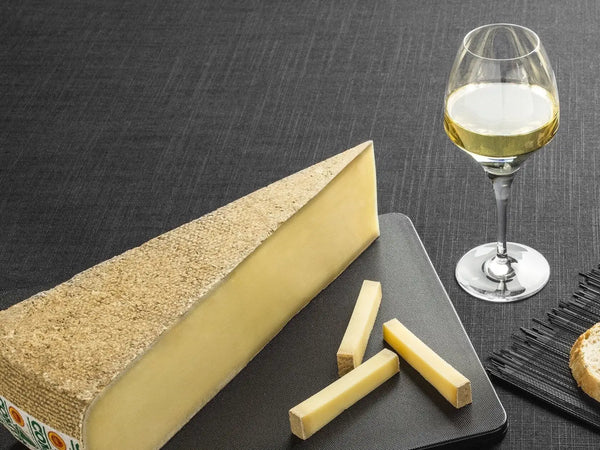
Comté and dry Vouvray: a successful pairing
Looking for the best Vouvrays?
As you can see, the richness of the Vouvray appellation and its wines is quite incredible. Chenin blanc, the hero of the region, finds here a land conducive to its flourishing and is expressed in every possible form.
If you wish to discover the very best of this appellation, La Cave Éclairée we recommend the Domaine François & Julien Pinon, a magnificent 15-hectare estate honoring local wines and offering a superb range.
Of course, if you need advice, we remain at your disposal. Cheers!


