

Welcome to the fascinating world of the Patrimonio appellation ! Located in the north of Corsica, this magnificent island vineyard transports us between captivating landscapes and exceptional wines.
In this article, we will explore the history of this beautiful appellation, the unique characteristics of the cuvées offered by local winemakers, and much more. Make yourself comfortable and get ready for some wonderful discoveries!
Summary
History and origins of the AOC Patrimonio
The first traces of viticulture in Corsica date back to the time of the Phoenicians who colonized the island. Around the 6th century BC, this people of Greek merchants actually founded the city of Aléria on the east coast of the island, and developed vine cultivation there. Viticulture thus gradually spread to other parts of Corsica, including the current Patrimonio area.
However, the Corsican vineyard truly began to flourish only under Roman occupation, starting from the 3rd century BCE. The Romans then introduced more advanced viticultural techniques and promoted the wine trade in the region and towards the mainland. With the fall of the Roman Empire in the 5th century, viticulture nevertheless suffered for several centuries.
In the Middle Ages, viticulture in Corsica also went through difficult periods. With barbarian invasions and local conflicts, wine trade and production were disrupted. Nevertheless, Benedictine monks played a crucial role in preserving the vine on the island during this period.Within the Patrimonio region, viticulture therefore persisted, but on a small scale.
In the 15th century, the influence of Genoa on the island further strengthened the role of viticulture in Corsica. Patrimonio benefited from these initiatives and the wine produced gradually became renowned for its quality.
At the beginning of the 18th century, the island came under French control after having been briefly independent under Pascal Paoli. The vineyards continued to develop, but viticulture was severely affected by the phylloxera crisis at the end of the 19th century. The vines then had to be replanted on rootstocks resistant to the insect, which allowed viticulture to gradually recover, year after year.
It was not until 1968 that the decree recognizing the Patrimonio AOC was finally signed, marking a decisive turning point for this appellation.
Today, the Patrimonio vineyard covers more than 400 hectares across the communes of Barbaggio, Farinole, Oletta, Patrimonio, Poggio-d’Oletta, Saint-Florent, and Santo-Pietro-di-Tenda. It should also be noted that, since 2022, Patrimonio is the first appellation in France to have completely banned the use of chemical herbicides in its specifications! This is a major step forward with a clear objective: to achieve 100% organic production in the coming years.

Map of the AOC Patrimonio and other Corsican vineyards
Climate and soils of Patrimonio
The terroir of the AOC Patrimonio is a rich geological ensemble allowing the vine to express itself in all its splendor. The diversity of soils, ranging from clayey schist on a limestone subsoil to granitic, limestone, sandstone, sandy, silico-clayey, and clayey soils, indeed creates a particularly favorable environment for viticulture.
Regarding the local climate, it is decidedly Mediterranean, with a strong maritime influence playing a crucial role. This proximity to the sea indeed helps to moderate extreme temperatures, offering less scorching summers and mild winters.
The Patrimonio vineyard also benefits from exceptional sunshine, with around 2,800 to 3,000 hours of sunlight per year. Rainfall in the region is low, with an annual average of 600 to 700 mm, mainly concentrated in autumn and winter.
Finally, the wind is another key factor in the climate of Patrimonio. The region is regularly swept by the Libecciu, a strong and dry wind that blows from the southwest. This wind helps to cool the vines as well as to keep the vineyard healthy by reducing ambient humidity.
The wines of the AOC Patrimonio
The wines of the AOC Patrimonio are a celebration of Corsican native grape varieties. The two main grape varieties of the appellation are the red grape Niellucciu (also known as Nielluccio or Sangiovese) as well as the white grape Rolle (Vermentino or Malvoisie de Corse). Finally, although in the minority, Sciaccarello and Grenache noir are also present as complementary varieties for red and rosé wines.
Let us now provide an overview to help you understand the different characteristics of the wines found in the appellation !
Patrimonio red
Red wines account for 40% of the appellation’s production and are distinguished by their power and their complexity. The Niellucciu here represents at least minimum 90% of the blends.
The red cuvées display an intense ruby color, almost ink-like, with violet highlights. The nose and palate offer aromas of red and black fruits (raspberry, strawberry, cherry, blackberry, etc.), accompanied by spicy notes (pepper, garrigue) as well as, sometimes, a hint of black olive.
The tannins are firm but fine and the acidity is generally pronounced, thus perfectly balancing the strength of the wines offered.
Thanks to their structure, most of the red wines from Patrimonio are made for aging and can therefore age elegantly. With time, aromas of tobacco and undergrowth notably appear.
The ideal serving temperature for reds from the appellation is around 16-18°C.
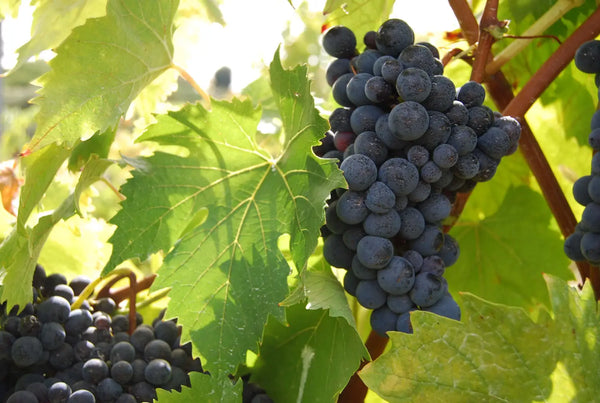
Niellucciu (or Nielluccio) grape variety: the essence of Patrimonio red wines
Patrimonio white
Exclusively vinified from the Vermentino grape variety, Patrimonio whites represent 10% of local production and display a pale yellow color with greenish highlights. Their floral bouquet, reminiscent of chamomile and hawthorn, blends with aromas of white-fleshed fruits (peach, pear, apple), tinged with beautiful saline minerality.
On the palate, the whites of the appellation are generally fresh, but also rich and persistent. Their well-integrated acidity gives them an elegant balance.
Although they are often consumed young to enjoy their freshness, some white wines from Patrimonio can age elegantly, then developing more complex aromas of honey, dried fruits, and sweet spices. Their ideal serving temperature is between 11-13°C.
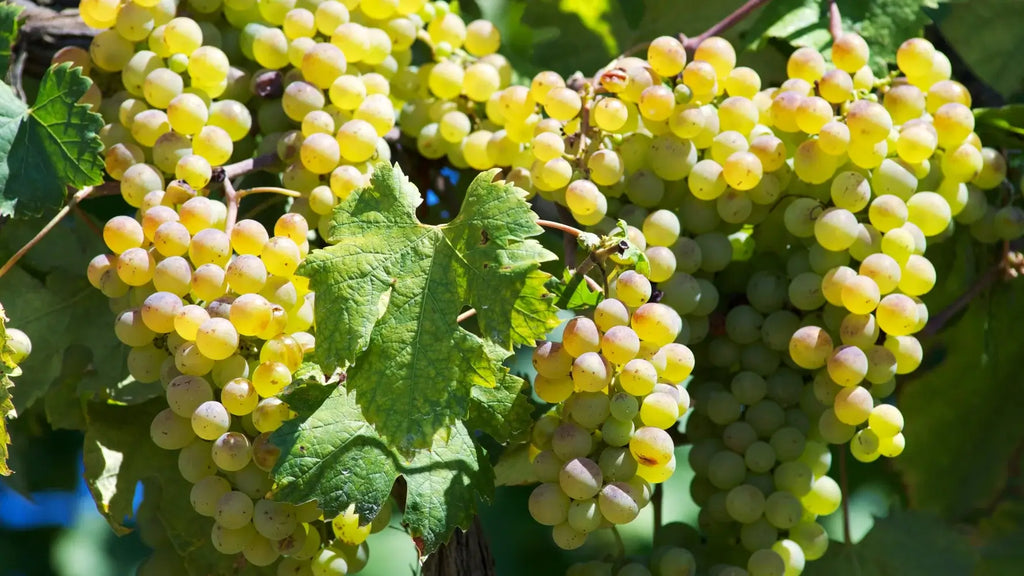
Patrimonio rosé
Finally, let us not forget the rosés of Patrimonio as they are indeed the most produced wines in Patrimonio (50% of the production) !
These delicious Corsican rosés display a deep raspberry-pink color and reveal aromas of ripe red fruits, such as strawberry and raspberry, enhanced by a subtle touch of spice. On the palate, these wines are fresh and lively, offering a beautiful harmony between roundness and acidity. The distinctive minerality of the island's terroirs is also clearly present during tasting.
The rosés of Patrimonio are meant to be enjoyed in their youth, at a temperature between 8-10°C in order to take full advantage of their aromatic brilliance.
What to eat with AOC Patrimonio wines?
The wines of AOC Patrimonio, whether red, white, or rosé, are ideal partners to accompany a wide variety of dishes. Here are some pairings that will make your mouth water!
With a red wine from Patrimonio
With their power and aromas of red and black fruits, red wines from Patrimonio are perfect for pairing with robust dishes.
Do you have a beef stew simmering or a nice game dish to prepare? The intense spicy and sometimes animal notes of these delicious Corsican reds will beautifully complement these strong-flavored dishes.
Corsican charcuterie, stews, or even grilled red meats (prime rib, lamb, etc.) will also work divinely well.

Patrimonio red wine and Corsican charcuterie: an unrivaled duo of character!
With a white wine from Patrimonio
Are you organizing a small aperitif with friends? A glass of Patrimonio white wine accompanied by some seafood, and you’re all set !
Goat cheeses, such as the local brocciu, will also be wonderful with this type of wine, as will grilled fish or mussels marinière.
Finally, you can also easily imagine a delicious asparagus risotto or a vegetable tian.Are you starting to salivate?
With a Patrimonio rosé
If you lean more towards rosé wines, you will be delighted to pair them with lighter dishes.
A beautiful Mediterranean salad, a paella, a roast chicken or even spicy dishes will perfectly complement the refreshing flavors of these characterful island rosés!
Ready to sit down to eat ?
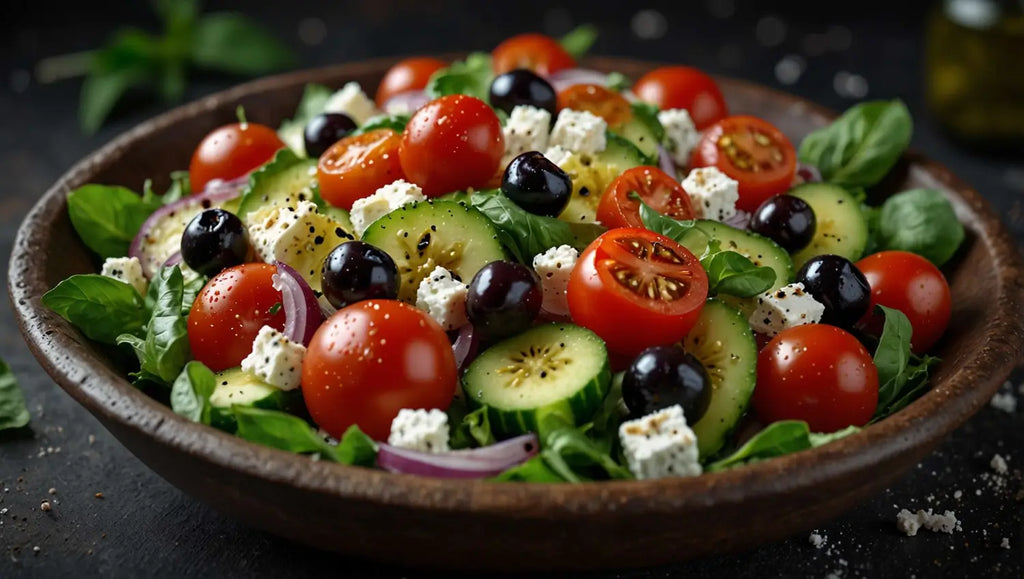
Patrimonio rosé pairs wonderfully with a Mediterranean salad.
The best wines of the AOC Patrimonio
We now invite you to discover a flagship estate of the AOC Patrimonio, distinguished by its expertise and its commitment to the terroir: the Yves Leccia estate.
The Yves Leccia estate is indeed an essential reference in Corsica and in Patrimonio. Managed since 2004 by Yves and his wife, this vineyard stands out for the finesse and quality of its wines. Committed to organic farming, the estate also makes it a point of honor to preserve local biodiversity. A range of very reliable values, without a single false note! So go ahead and choose their Patrimonio or their IGP Ile de Beauté without hesitation!
You are now very well informed about the AOC Patrimonio! Now visit our website La Cave Éclairée to explore our selection of Corsican wines, from the Yves Leccia estate to Clos Canarelli, and let yourself be charmed by these treasures. Enjoy your tasting!


