Exotic spirit, rum has now conquered the world thanks to its rich aromas and indulgents as well as its great versatility. A drink with origins rooted in Caribbean mysteries and shaped by centuries of tradition, rum transports us with every tasting on a comforting sensory journey.
In this article, we explore all its secrets together: its different types and styles, its origins, but also the different ways to enjoy it.We also provide you with some vocabulary so that you can better understand its world as a whole.
Happy reading!
Contents
The origins of rum
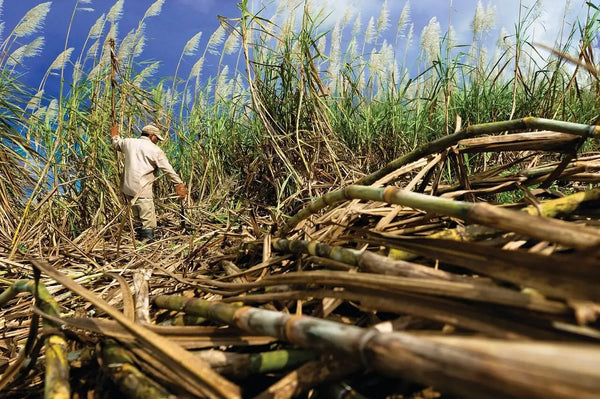
The roots of rum are closely linked to its raw material: sugar cane. Thus, to understand the emergence of rum, one must first explore the history of sugarcane!
Sugarcane is native to New Guinea as well as the surrounding islands of Southeast Asia. The first evidence of its cultivation dates back to around 8000 BC, a distant period when indigenous peoples were already using cane for its sweet properties. Over time, the cultivation of sugarcane spread throughout Asia, India, and then the Middle East, where it became a major agricultural crop.
In the Middle Ages, in the 8th and 9th centuries CE, sugarcane was introduced to Europe by the Arabs, mainly in Spain and Portugal. At that time, it was cultivated for its medicinal properties but also as an ornamental plant.
During the 16th century, it was eventually introduced to the Caribbean by European colonists, mainly Spanish and Portuguese. Christopher Columbus is often credited with bringing sugarcane to the region during his second voyage in 1493.
The cultivation of sugarcane subsequently spread rapidly throughout the region, benefiting from favorable climatic conditions as well as the available workforce, initially indigenous, and later with the importation of African slaves. The Caribbean then became one of the world's main sugar production centers, fueling a lucrative trade that had a profound impact on the history of the region and the world. The 16th and 17th centuries thus mark the golden age of sugarcane.
It was, moreover, during the 17th century that the first documented evidence of rum production appeared in the region, notably in Barbados, Jamaica, and Martinique. However, it is important to note that similar techniques for distilling sugarcane may have been used in other parts of the world, such as India and South America, well before the arrival of Europeans in the Caribbean.
The emergence of rum was mainly driven by the search for new industrial outlets on the part of the planters.These individuals, faced with a surplus of molasses (a by-product of sugar production, which we will discuss later), then sought ways to add value to this sweet residue.
Thus, after numerous experiments and the use of rudimentary distillation processes, the first stills transformed molasses into a robust and aromatic spirit, laying the foundations for what would become rum.
Over the centuries, and after many improvements, rum has finally become the iconic drink of the Caribbean islands, traveling across the oceans to conquer the entire world.Today, it is celebrated for the diversity of its styles, its complex aromas, as well as its central role in the culture and gastronomy of the regions where it is produced.
The differences between agricultural rum and molasses rum
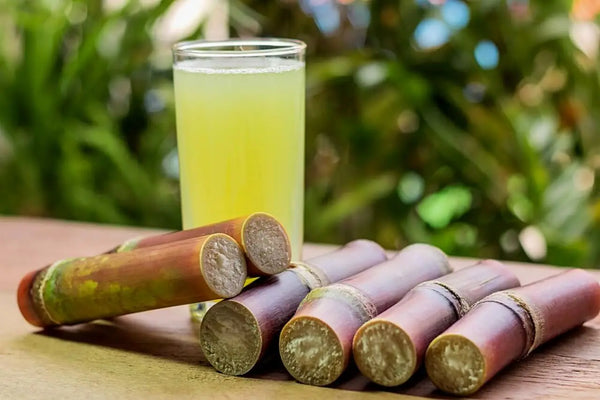
The main difference between an agricultural rum and a molasses rum (or traditional) lies in the raw material. Agricultural rum is indeed made from fresh sugarcane juice (called "vesou"), while traditional rum is produced from molasses, a by-product of the sugar industry.
This difference in raw material strongly influences the taste, texture, and character of the rums.
Molasses rum currently represents 90% of the global market. Most producing countries (Cuba, Venezuela, Guatemala, Barbados, Jamaica, Dominican Republic, etc.) create and export this type of rum. The aromas of traditional rum can be very diverse and depend on many factors.Nevertheless, roundness and indulgent smoothness emerge from the whole, and the aromatic profile features fruity notes as well as vanilla, sweet spices, and caramel for those aged in barrels.
Agricultural rum is, for its part, very much a minority (10% of global production) and is mainly produced in the French islands (Martinique, Guadeloupe, partly in Réunion, etc.). Sugarcane strongly influences the aromatic profile of these rums with herbaceous, vegetal, and fruity notes... although vanilla, sweet spices, and caramel aromas are also present for spirits aged in barrels.
Although agricultural rum is often perceived as more noble and discerning enthusiasts regularly turn to this style, it is not possible to claim that one style of rum is superior to another. This actually depends on a great many factors specific to each brand and spirit, but above all on personal tastes!
The different types of rum
Rum is a spirit that can take many forms and can be enjoyed in numerous ways. Let’s now explore its main types!
White rum
White rum is an unaged rum. This is indeed only stored in stainless steel tanks (and not in wood) for a few weeks, thus preserving its light color. White rum can be either agricultural or traditional and is mainly used in cocktails due to its freshness and lively character. Amber rum Amber rum is positioned between white rum and aged rum (see below). Generally, it undergoes aging for a few months in barrels or large wooden vats to give it a golden hue. Note that some brands use caramel to give their rums a more attractive color, thus simulating a longer aging process.
Amber rum generally features subtle woody aromas and offers a balance between the freshness of white rum and the complexity of aged rum.
Dark rum
Dark rum is a very colored amber rum that has usually undergone longer aging in wood. However, it is often the case that the dark color of dark rums is mainly due to a significant addition of caramel.
Dark rum features aromas of very ripe exotic fruits, caramel, as well as woody and spicy notes.
Aged rum
A rum is generally described as aged when it has spent several years in wood. Global rum legislation is very permissive, so there is no precise aging period that defines it, but it is commonly accepted that 3 years of aging is a minimum.
The flavors of an aged rum can be very rich and complex, ranging from sugarcane to sweet spices (vanilla, clove, pepper, caramel, etc.), with intense woody notes. Aged rums are the most expensive on the market because they are the rarest and the most demanding to produce.
Flavored rum
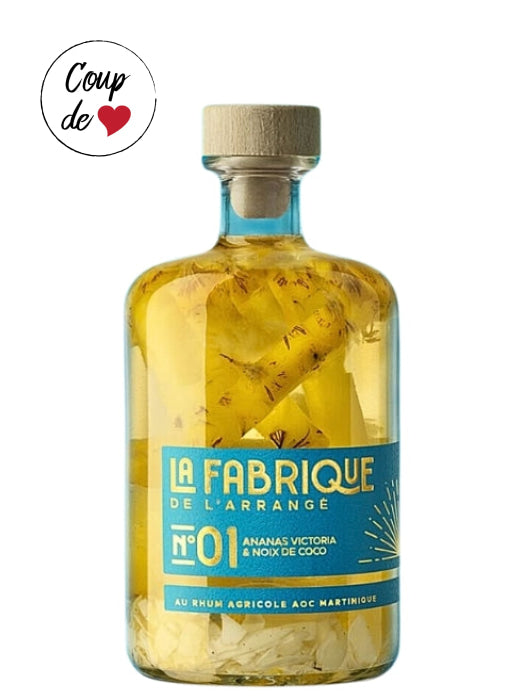
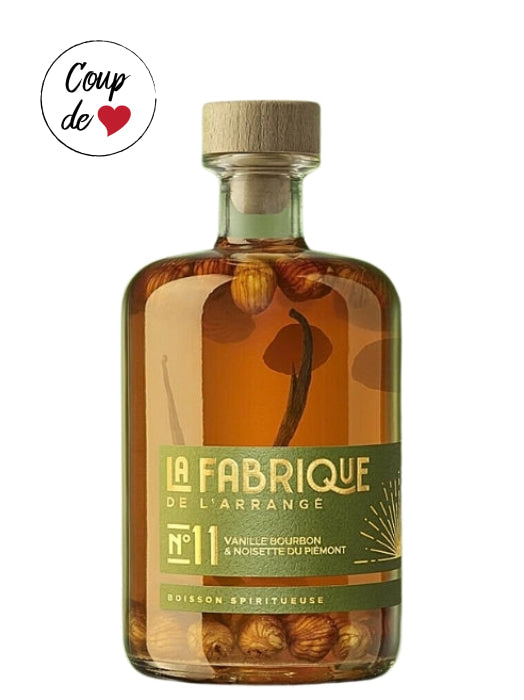
Flavored rum is an infusion of traditional or agricultural rum with fruits, spices, and herbs, thus creating unique and customizable flavor variations.
The brand La Fabrique de l'Arrangé is an excellent example of a range offering quality spiced rums.
Spiced Rhum
A spiced rum can be described as a molasses rum infused with numerous spices such as vanilla, cinnamon, or clove. This type of rum is quite sweet and very intense in flavor. It is ideal for making cocktails such as the Dark and Stormy.
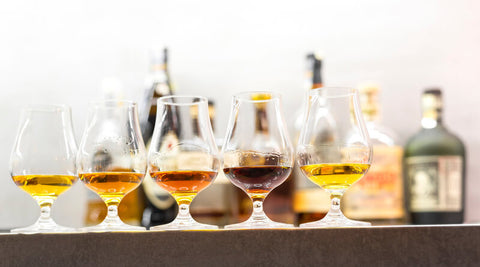
Rum can take on many colors and shades!
What are the differences between rum and Cachaça?
Although there are some differences, cachaça is a spirit that shares many similarities with agricole rum.
While both spirits are indeed made from pure sugarcane juice, Cachaça can only come from Brazil. The term "Cachaça" is also protected by the country's legislation.
Moreover, Cachaça is distilled at a lower alcohol strength: between 38% and 48% ABV, compared to often 70% for rum, which greatly influences the final aromatic profile.
Finally, Cachaça is often aged in barrels made from various types of wood and is not limited to just oak. Thus, woods such as umburana, eucalyptus, or even jequitibá can, for example, be used, also influencing the taste profile of the alcohol produced.
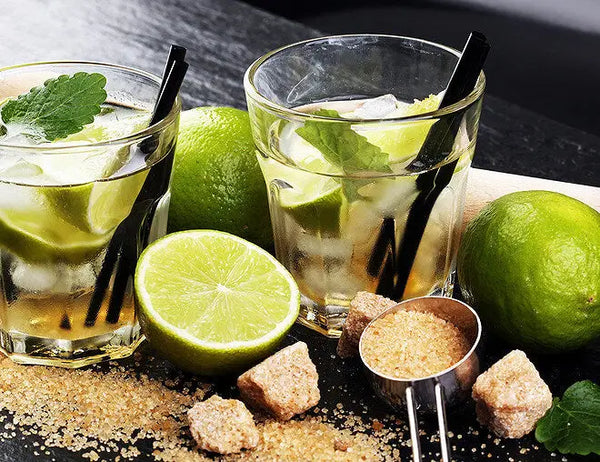
The different rum styles
Rums of Spanish influence
Rums of Spanish influence or "ron" are produced from molasses and are distinguished by their smoothness and accessibility. They are also often sweetened to enhance this indulgent and consensual aspect.
White rums of this style originate from Cuba (Barcadi, Havana, etc.) and are the most consumed rums in the world. They feature supple and light aromatic notes that are perfectly suited for making cocktails.
Amber rums of this style also aim for smoothness and indulgentbalance. They offer notes of caramel, vanilla, mild spices, and roasting.
The main countries producing rums with Spanish influence are Cuba, Venezuela, Puerto Rico, Guatemala, and the Dominican Republic. Rums from the brand Pura Vida or Planteray (formerly Plantation) are excellent representatives of this style.
Rums of English influence
The British Navy has shaped the history of English-style rum. The Navy actually selected strong rums so that sailors could dilute them with sugar, water, and lime.
Also produced from molasses, the "rums" are therefore rich, intense, and characterized by a great aromatic complexity.
Jamaican distilleries are, for example, known for producing very aromatic rums and particularly fruity ones.
In Guyana, the rums produced are intense and provide weight and texture on the palate. These are known to be among the most suitable for long aging in wood.
The main producers of English-influenced rums are Jamaica, Guyana, Trinidad, Barbados, and Trinidad and Tobago.
Rums of French influence
French-style rums are exceptional as they are the only ones mostly made from pure sugarcane juice.
These agricultural rums offer aromatic profiles different from traditional rums. Their character develops with vegetal, grassy, and fruity notes that are not found in any other style.
The white rums of this style are among the most intense and lively on the market. The amber rums retain these characteristics, but they are tempered by aging in wood, which brings a beautiful aromatic richness.
French-style rums are mainly produced in Martinique, Guadeloupe, Guyana, Haiti, and Réunion. Please note that since 1996, Martinique has been the only territory to benefit from an AOC (Appellation d'Origine Contrôlée) for rum and therefore has a very precise set of specifications. The rums from the brand Neisson are an excellent example of this type of rum.
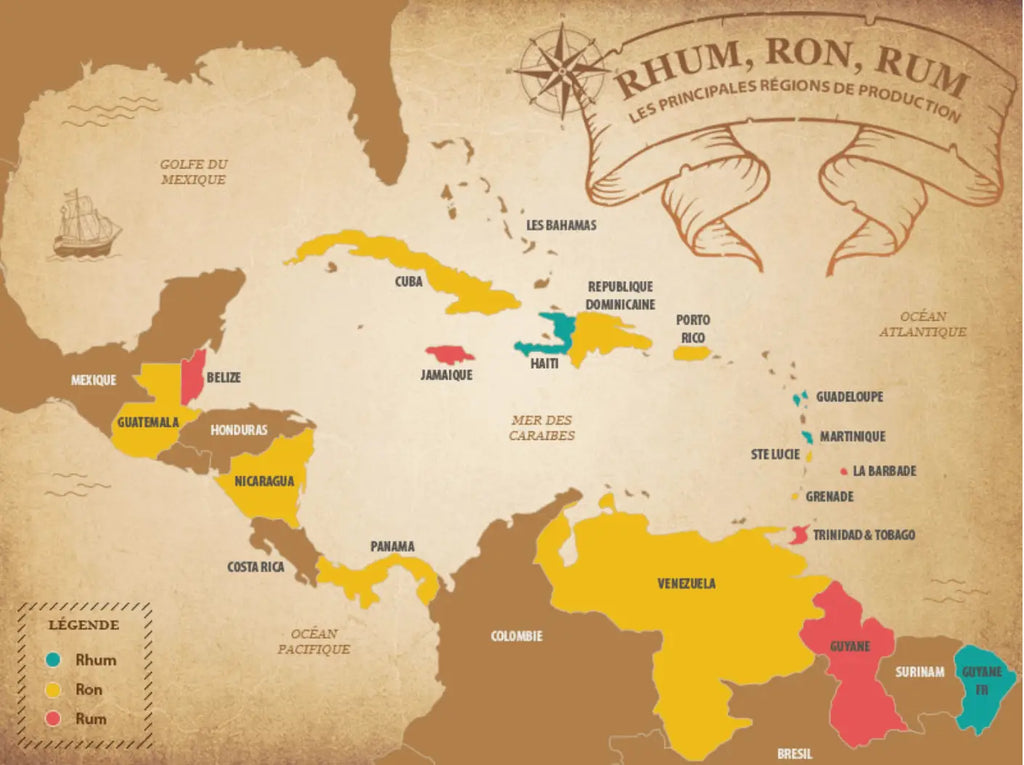
Mapping of rum according to its style: Spanish, English, or French
How is rum consumed?
Rum is a very versatile spirit that can be enjoyed at different times and in different ways.
For example, it can be perfectly suitable as an aperitif to awaken the taste buds, but also as a digestif for a moment of contemplation.
It can also be enjoyed in a cocktail. Many possibilities exist, such as the Ti' Punch, the Mojito, the Cuba Libre, the Piña Colada, or even the delicious El Presidente.
If you decide to drink it neat, we recommend consuming it at room temperature (around 20°C). If you wish, you can certainly add a few ice cubes. In this case, be careful not to dilute it too much!
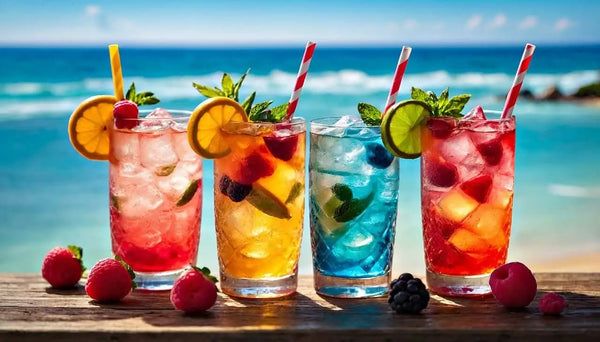
Rum: an ideal spirit for making a variety of cocktails
Age statements in rum
Let us now look at the different age statements that exist in the world of rum and that may appear on bottles. These different terms inform us about the aging period the spirit underwent before being bottled.
VO (Very Old)
The term "VO" is used to designate a rum that has been aged for a minimum period of 3 years in wood.
VSOP (Very Superior Old Pale)
The term "VSOP" means that a rum has been aged for a minimum period of 4 years in wood.
XO (Extra Old)
The term "XO", or "Extra Old", is reserved for rums that have spent a minimum period of 6 years in casks.
However, please note that as global rum legislation is not very developed or harmonized, these terms are sometimes used differently from one producer to another.
Small rum glossary
To conclude, here is some vocabulary related to rum that will help you better understand the information sometimes mentioned on your bottle!
Bagasse
Bagasse is the fibrous residue remaining after extracting the juice from sugarcane. It can be used as fuel for distillation or as a manufacturing material.
Vesou
Vesou is the freshly pressed juice from sugarcane.It is used as a raw material for the production of agricultural rum but can also be drunk as is.
Cask Strength
The term "cask strength" refers to a spirit bottled directly from the aging cask, without dilution. It thus retains all its alcoholic strength and concentration of aromas.
Full Proof
The term "full proof" indicates that the rum has undergone no modification between the time of its distillation and its bottling. The alcohol content is therefore generally very high and the aromas intense because the spirit has not undergone any addition of sugar, dilution, or finishing.
Esters
Esters are chemical compounds naturally present in rum, contributing to its aromas and its complexity.
Cane Honey
A "cane honey" rum is a rum made from a sweet syrup obtained by heating pure sugarcane juice. This syrup is then diluted and fermented before finally being distilled to produce the final spirit.
Molasses
Molasses is a by-product of the production of cane sugar. It appears as a very dark paste, a kind of very concentrated caramel with a high sugar content and presenting aromas of spices, notably licorice.It is this same molasses which, after being diluted, will be fermented and then distilled in order to produce traditional (or molasses-based) rums.
Overproof
An overproof rum is a rum with an alcohol content higher than 57.15%. In fact, it is from this alcohol volume that sailors' gunpowder would remain flammable if it came into contact with rum.
Angel's share
The angel's share refers to the portion of a spirit that evaporates, year after year, during the barrel aging process. This evaporation is mainly due to the heat and humidity of the storage location.Thus, in islands with tropical climates, the angel's share is much higher than in European cellars.
Single Cask
The term "Single Cask" refers to a spirit aged in a single, unique cask, thus giving it the unique expression of the characteristics of the chosen wood.
Small Batch
If the term "Small batch" is indicated on your bottle, it means that your spirit was produced in small volume, potentially allowing for increased quality control. However, no law regulates the use of this term.
Solera
A solera is a aging method involving a continuous blending process, where older rums are mixed with younger rums, thus creating consistency in quality and flavor.
Finishing
A finish refers to the final aging period of a spirit. This term is used when, for several months, a spirit completes its maturation in a specific cask or wood (ex-Port, Sherry casks, etc.), thus imparting certain specific flavors to the finished spirit.
You are now a rum expert! All you have to do now is choose a fine bottle at La Cave Éclairée to celebrate and put your new knowledge to the test... Cheers!