

In Mareuil-sur-Aÿ, the Philipponnat Champagne house has been writing a history intimately tied to the great terroirs of Champagne for centuries. Between historic plots, a predominance of Pinot Noir, and meticulous blending, its cuvées offer a vision of champagne where depth, maturity, and freshness find a remarkably precise balance. Among them, the legendary Clos des Goisses holds a special place, single-handedly symbolizing this pursuit of intensity and precision.
Discover the history and unique characteristics of an essential house.
Contents
Philipponnat: Champagne house since 1522
Philipponnat’s history dates back to 1522, when records first mention Apvril le Philipponnat as a vineyard owner in Aÿ, notably in the lieu-dit Le Léon. The family subsequently established deep roots in Aÿ and Mareuil-sur-Aÿ, where successive generations devoted themselves to growing grapes and making wine.
Over the centuries, the Philipponnat family developed their business as vine growers and later as wine merchants. Then, in 1910, Auguste and Pierre Philipponnat gave a new dimension to the family estate by founding their company and acquiring the cellars of the Château de Mareuil. This location remains at the very heart of the House's identity to this day.
Today, Philipponnat farms approximately 20 hectares of vineyards of its own, primarily located in Aÿ, Mareuil-sur-Aÿ, and Avenay-Val-d’Or. These are complemented by grapes from strictly selected partner growers, enabling the House to craft a diverse range combining blended cuvées, vintage champagnes, and parcel-specific selections.
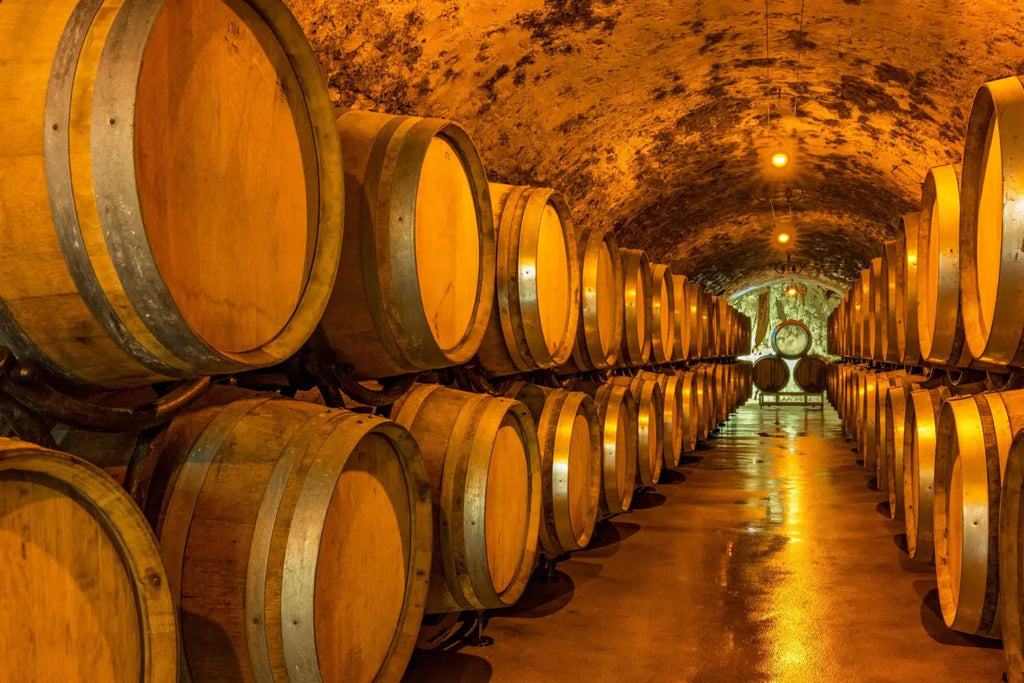
Cellars of the Champagne house Philipponnat
Terroirs dominated by Pinot Noir
The Philipponnat style relies on Pinot Noir, the House's signature grape variety. The vineyards of Aÿ and Mareuil-sur-Aÿ thus play an essential role in this identity, featuring chalky terroirs capable of producing wines that are ripe, structured, and vibrant.
The House also places special importance on its historic plots. Le Léon, located within the Grand Cru village of Aÿ, has, for example, been part of the family history since the 16th century. Exclusively planted with Pinot Noir, this single-vineyard plot gives rise to one of the house's rarest parcel-selection cuvées.
In Mareuil-sur-Aÿ, a Premier Cru village, La Rémissonne is adjacent to the Clos des Goisses. The outcropping chalk gives this terroir a particularly straight and precise expression.
Finally, Les Cintres occupy the very heart of the Clos des Goisses. These two small plots, among the steepest, best-exposed, and oldest in the clos, give rise to a particularly intense and gastronomic cuvée.
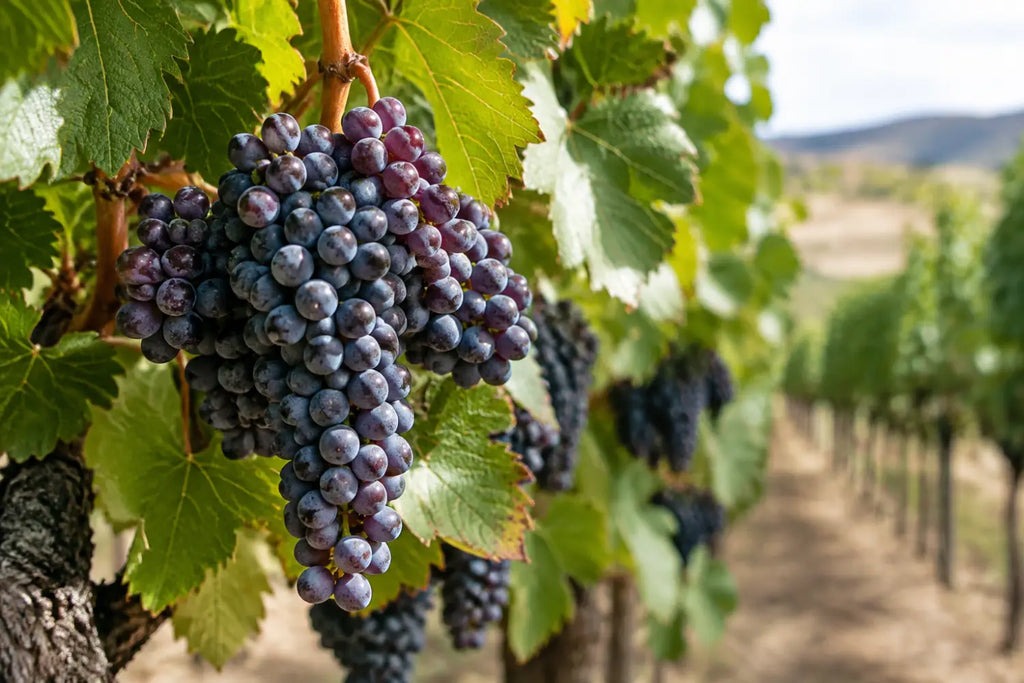
Structured and precise Pinot Noir, the signature of Philipponnat
Expertise dedicated to the terroir
At Philipponnat, winemaking is focused above all on preserving the identity of the grapes and the various terroirs. The grapes are carefully selected according to their ripeness, origin, and desired style, then vinified separately when their origin deserves to be highlighted.
The House also employs different aging methods, in both vats and oak barrels, depending on the cuvée. Oak in particular imparts texture and depth without masking the fruit, while malolactic fermentation is avoided to preserve tension and freshness.
Another historic element of the Philipponnat style is the use of reserve wines aged according to a solera. Since 1946, a portion of the reserve wines has indeed been blended each year with the new harvest. The House has thus long relied on an extensive reserve of aged wines.
Finally, time also plays an essential role at Philipponnat. Following the secondary fermentation, the bottles from the Réserve Perpétuelle range, for example, are aged on the lees for 3 years. For Clos des Goisses, this can even extend up to 8 years to gain depth and complexity!
The Philipponnat range: champagnes with diverse styles
The Philipponnat range allows you to explore multiple facets of Champagne, from blended cuvées to vintage champagnes and the most exclusive single-plot expressions.
Réserve Perpétuelle cuvées: the signature
Formerly known as "Royale Réserve", the Réserve Perpétuelle cuvées serve as the main gateway to the Philipponnat style.
These lovely bubbles are based in particular on a substantial foundation of Pinot Noir, completed with Chardonnay and a touch of Pinot Meunier. A high proportion of reserve wines is also used (hence the name of the range), aiming to combine depth, freshness, and consistency from one year to the next.
The range notably includes a Brut reference and a Non-Dosé, version, allowing you to discover two different interpretations of the same style.
The Rosé
Formerly known as "Royale Réserve Rosé", Le Rosé Brut showcases a fruitier and more generous expression of the Philipponnat style. Its construction also relies on a substantial base of reserve wines, to which a small proportion of Champagne red wine is added.
Red and black fruits take on a more prominent role in the aromatic profile here, while maintaining a structured and fresh palate, marked by Pinot Noir.
Vintage cuvées
Philipponnat's vintage champagnes showcase the character of a single harvest as well as the unique personality of the grapes from a specific year.
The House notably offers a Blanc de Noirs Extra-Brut and a Blanc de Blancs Extra-Brut, both with a low dosage to preserve the pure expression of the vintage and the terroir. The first highlights the depth and structure of Pinot Noir, while the second favors greater tension, finesse, and Chardonnay expression.
Benefiting from extended aging on the lees, these cuvées offer a more precise interpretation of the grape variety, the climate of the vintage, and the aging potential of the house's wines.
1522: a tribute to the origins
The collection 1522 is a direct reference to the year symbolizing the Philipponnat family's historical roots in Champagne.
The 1522 Blanc Extra-Brut, for example, is based on a blend from Grand Cru villages. The Pinot Noir from Léon in Aÿ is thus complemented by contributions from another Grand Cru village in the northern Montagne de Reims and another in the Côte des Blancs, generally Mailly and Le Mesnil-sur-Oger.
Furthermore, vinification is predominantly carried out in oak barrels and without malolactic fermentation. The dosage of this cuvée remains low, and the bottles generally age for six to eight years in the cellar before release.
The estate also produces 1522 Rosé Extra-Brut, which combines this same structure with a vinous and fruity expression.
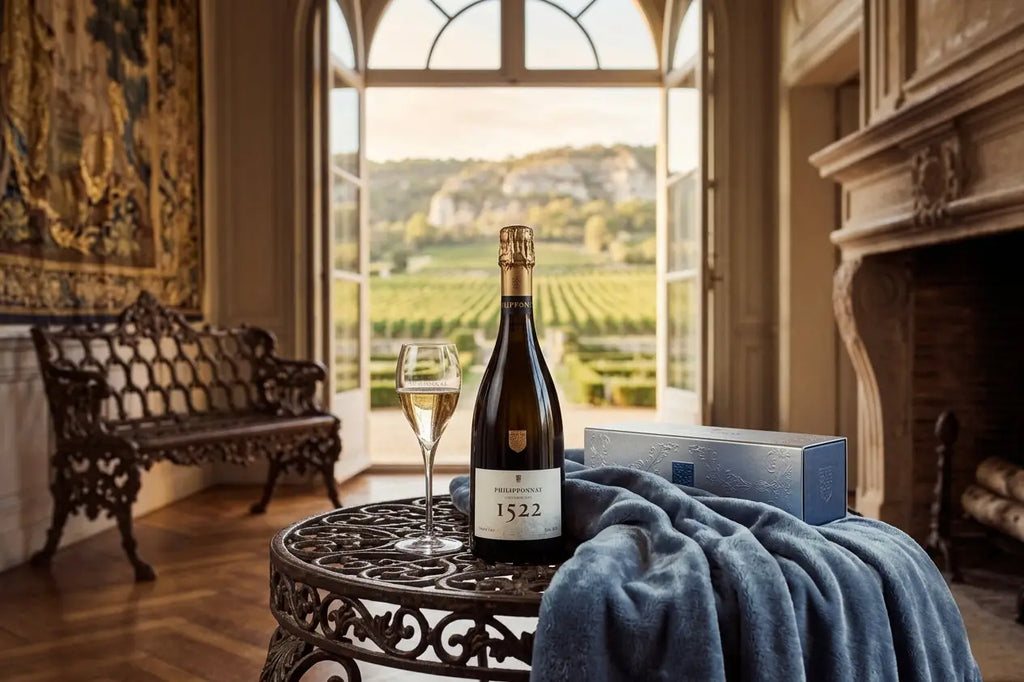
Champagne 1522, representing Philipponnat's family heritage and expertise
Clos des Goisses: the iconic terroir
Clos des Goisses is Philipponnat's most iconic terroir. Acquired by the House in 1935, this 5.83-hectare walled vineyard spans one of the steepest slopes in the entire Champagne region, with a due-south exposure and gradients of up to 45 degrees.
This exceptionally sun-drenched location ensures high ripeness in the grapes, while the near-surface chalk brings a striking mineral tension to the wines. It is precisely this contrast between power and freshness that makes this site so unique.
Always vintage-dated, Clos des Goisses Extra-Brut is predominantly vinified in oak barrels, without malolactic fermentation, and then aged for many years in the cellar before release.
The House also offers Clos des Goisses Juste Rosé Extra-Brut, a rarer interpretation of the same terroir.
Single-plot cuvées: three interpretations of Pinot Noir
Finally, Philipponnat takes its work with the terroir even further with a trilogy of single-plot cuvées 100% Pinot Noir, crafted exclusively in years deemed exceptional: Le Léon, La Rémissonne and Les Cintres.
-Le Léon, located in Aÿ and classified as Grand Cru, has been part of the family history since the 16th century. Its highly chalky terroir produces a straight, intense, and mineral Pinot Noir.
-La Rémissonne, in Mareuil-sur-Aÿ, is a Premier Cru plot located right next to Clos des Goisses. Its soil with outcropping chalk yields a precise and taut expression.
-Les Cintres are made up of two small contiguous plots, Les Petits Cintres and Les Grands Cintres, located in the heart of Clos des Goisses. Les Cintres rank among the steepest, sunniest, and oldest-planted sectors of the clos, delivering an intense and concentrated expression of Pinot Noir.
These champagnes are produced in very limited quantities and represent one of the most advanced expressions of single-plot vinification at Philipponnat.
In summary
As you will have gathered, at Philipponnat, Pinot Noir imparts its character to the house style: ripe fruit, depth, and a texture balanced by freshness. This balance gives the wines a presence that lends itself just as well to contemplation as it does to food pairings.
The family history thus extends into the glass, through blends enriched with reserve wines as well as cuvées tied to a single plot. Clos des Goisses is the emblem of this, but the personality of Philipponnat can be discovered far beyond this single walled vineyard.
Now discover our selection of Philipponnat champagnes. Looking for a cuvée to share as an aperitif, to serve during a meal, or to age in your cellar? We will guide you based on your tastes and preferences.


