

If you are looking for a red wine that combines elegance, charm, and character, you are in the right place! Welcome to the delightful world of the Fleurie appellation, a jewel of Beaujolais that continues to captivate wine enthusiasts. Here, Gamay reigns supreme, offering red cuvées that are both fruity and floral, with great finesse.
Whether you are a novice or an expert, this article will be your guide to everything you need to know about this Beaujolais Cru. So, are you ready to discover what makes Fleurie red wine so unique?
Summary
Fleurie, a history as old as Antiquity
Did you know that the wine history of Fleurie goes back more than 2,000 years? Yes, the Beaujolais region did not wait for the modern era to make a name for itself. As early as Antiquity, the Romans, great wine lovers, had already spotted the potential of the Beaujolais lands. They planted vines there, thus laying the first foundations of what would become one of the most renowned wine terroirs of the region. Of course, at that time, the name "Fleurie" was not yet used. For that, we had to wait until the 18th century.
After the fall of the Roman Empire, viticulture declined before being revived by the Benedictine monks in the 10th century. In the Middle Ages, abbeys and priories, notably those of Cluny, played an essential role in the maintenance and development of the French and Beaujolais vineyards. The wines produced, however, remained intended for local consumption by monks and lords.
From the 16th century onwards, Beaujolais wines gained popularity thanks to the rise of commercial exchanges. The Fleurie terroirs were increasingly exploited, and the winemakers of the time understood that Gamay, then often considered less noble than Pinot Noir, was indeed capable of producing wines of great finesse.
In the 18th century, Beaujolais wines became among the most prized by Lyon merchants. The name "Fleurie" also began to appear in registers and commercial correspondence.
In 1927, a decree precisely defined the wine-growing area of Fleurie, thus recognizing its own identity. This distinction led to the official creation of the Fleurie AOC in 1936, definitively consolidating the appellation as one of the Beaujolais crus.
Today, the Fleurie AOC covers 840 hectares of vines and has around 150 winegrowers. Its vineyard is also among the most sought-after and qualitative in the region, along with those of Morgon and Moulin-à-Vent.
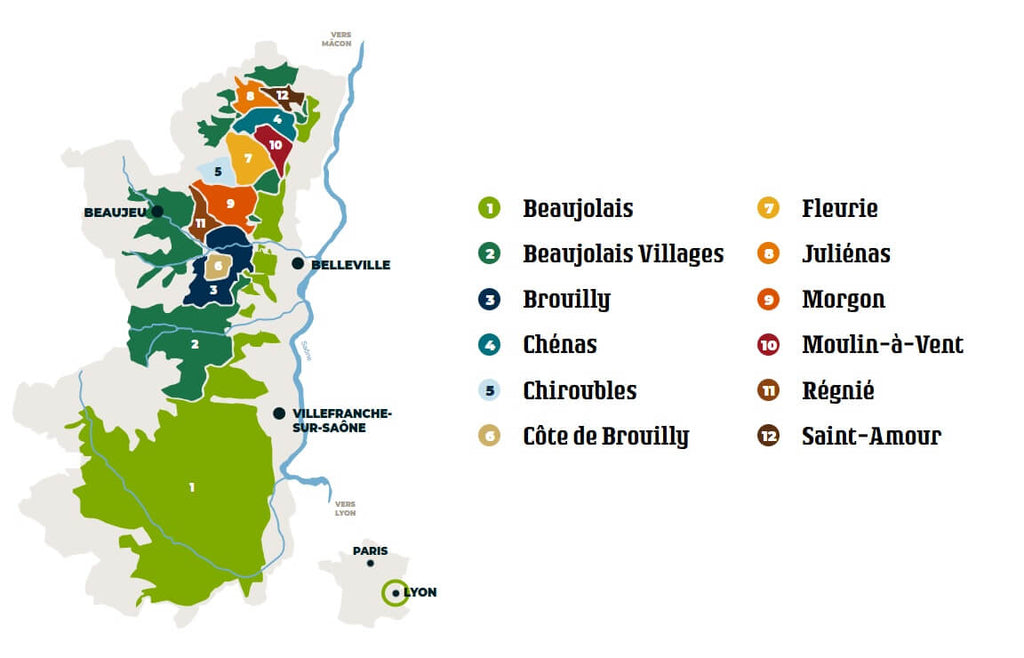
Map of the Beaujolais wine terroirs
Soils and climate of the Fleurie appellation
If Fleurie wines are so special, it is above all thanks to their terroir: 90% of the soils in the appellation are in fact composed of pink granite. Displaying a lovely colored hue under the sun, these soils also offer excellent drainage for the vines, allowing excellent water evacuation while promoting deep rooting of the vines.
10 specific lieux-dits, renowned for their soils and exposures, are also to be highlighted within the vineyard:
- La Madone (the most famous with a high altitude -400 to 500m-)
- Grille-Midi (one of the warmest sites)
- Les Labourons
- Les Moriers
- Les Garants
- La Presle
- La Chapelle des Bois
- Grand Pré
- La Roilette (famous for its powerful and velvety wines)
- Champagne
From a climatic point of view, the appellation also enjoys a semi-continental climate, offering hot and sunny summers allowing the Gamay to ripen slowly, and cold winters. This balanced seasonal rhythm is the key to obtaining grapes concentrated in aromas and flavors, while maintaining beautiful freshness.
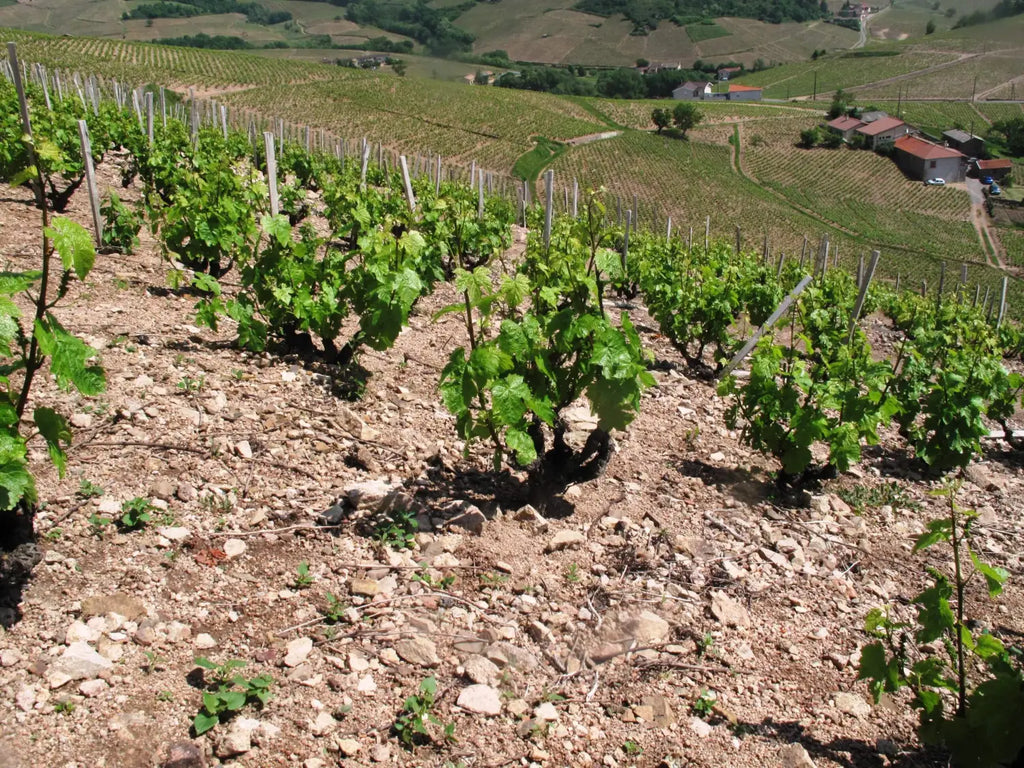
The pink granite of Fleurie: an exceptional soil for Gamay
The wines of the Fleurie appellation
As you will have understood, the Fleurie AOC produces red wines, made exclusively from Gamay. In this vineyard, this grape variety finds an ideal playground to express all its splendor.
From the very first visual impression, Fleurie seduces. Its deep ruby color, with violet highlights, is a true invitation to tasting.
On the palate, Fleurie wines are renowned for their floral aromas: think rose, violet, or even peony. But that's not all! Notes of red and black fruits, such as raspberry, cherry, blackberry, and blackcurrant, also complete the picture. A festival for the senses!
Still on the palate, the tannins are often silky and the texture is velvety. A beautiful balance, between freshness and roundness, makes the local cuvées nectars that are both accessible and complex.
Of course, this general description cannot hide the great diversity of wines within the appellation. Between a bottle from old vines in the "La Madonne" terroir and a light, easy-drinking wine from a blend of several plots, there are indeed a myriad of nuances! It's up to you to discover them…
What to eat with a Fleurie AOC wine?
Easy to pair thanks to its versatility, Fleurie can accompany both everyday dishes and more elaborate meals. Its fruity and floral profile, supported by delicate tannins, allows it to enhance a wide variety of dishes.
White meats are perfect partners in this respect. A crispy roast chicken, herb-roasted turkey or even a veal fillet in sauce highlight the suppleness and elegance of this red wine. Also try guinea fowl with mushrooms: the tenderness of the meat and the undergrowth flavors will pair wonderfully with this Beaujolais cru.
For a more festive meal, try pairing Fleurie with pink lamb leg. The fruity side of the wines from the appellation will bring a touch of freshness that balances the tenderness and richness of the meat.
Regional specialties are also not to be overlooked. A Beaujolais-style andouillette, simmered in red wine, will naturally pair with a glass of Fleurie. Its savory character and indulgent will indeed find a beautiful echo in the silky structure of this cru.
Finally, for a simple pairing, do not hesitate to serve your bottle of Fleurie with a beautiful plate of fine charcuterie or even vegetarian dishes with delicate flavors, such as a risotto with seasonal vegetables.
To best enjoy your bottle of Fleurie, we also recommend serving it slightly chilled, between 14 and 16°C, and this to fully enjoy all its aromatic richness.
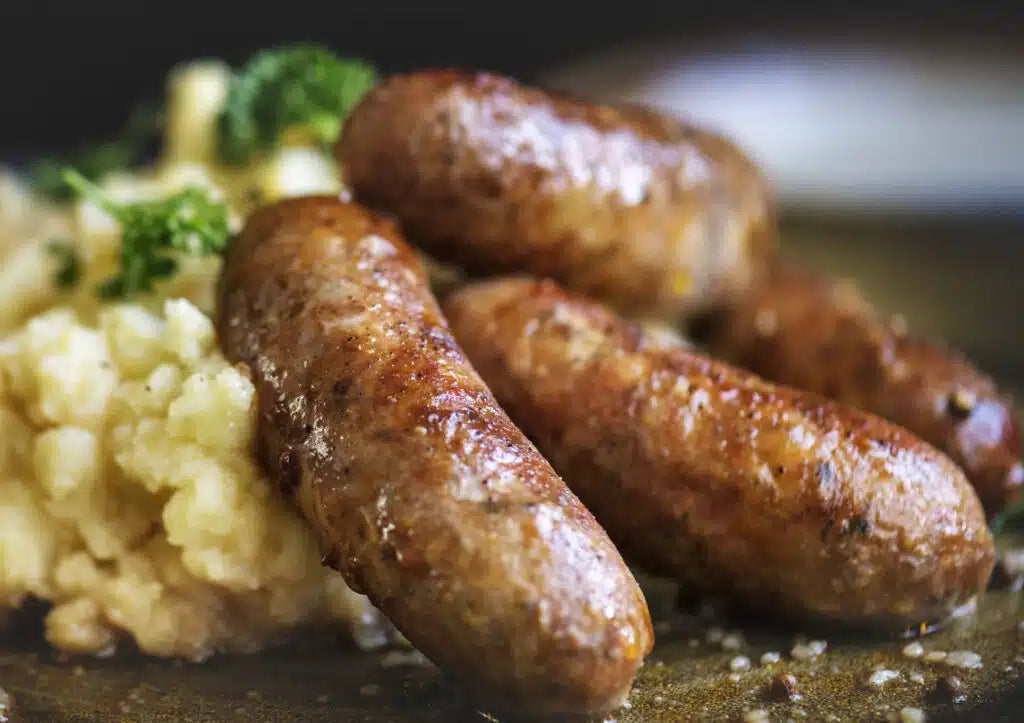
Beaujolais-style andouillette: The perfect regional specialty with a Fleurie wine
The best wines of Fleurie AOC
The Fleurie AOC is full of talented estates that showcase Gamay. Among them are iconic names such as Château de Fleurie or Domaine de la Madonne.
Nevertheless, our favorite goes without hesitation to Clos de la Roilette. Run by Alain Coudert, this 14-hectare estate has built a solid reputation thanks to its deep wines. Here, vinification is done with whole bunches and aging in oak vats gives the cuvées a silky texture. These combine structure and indulgentise, while having excellent aging potential.
If you want to discover the wines of the appellation, this is a very safe bet!
As you will have understood, the Fleurie AOC is an appellation that has everything to please: indulgents red wines, a unique terroir, and a rich history. In short, wines that definitely deserve a place in your cellar !
Ready to discover these gems? Feel free to visit our website La Cave Éclairée ! See you soon for more wine discoveries…


