

Produced from cider apples, Calvados is a traditional eau-de-vie from Normandy, born from ancestral expertise. It embodies the richness of the Norman terroir as well as a long artisanal tradition passed down from generation to generation.
Here, the apple juice (and sometimes pear) is first fermented to be transformed into cider, then distilled before finally being aged in oak barrels. This meticulous process gives rise to an elegant and complex spirit with notes of fruit, spices, and wood.
Want to know more about this delicious spirit? Discover its history, production methods, different styles, as well as all our tips for choosing it well.
Contents
History of Calvados
Normandy has been cultivating a true art of the apple for several centuries. Long before the official recognition of the Calvados AOC, the inhabitants were already producing cider as well as spirits obtained from its distillation.
According to historians, the word "Calvados" appeared in the 16th century and comes from the term "calva dorsa", meaning "bald ridges" in Medieval Latin. In other words, bare rocks or reefs, echoing the Normandy coastline.
In the 19th century, distillation developed widely, especially in the Pays d’Auge, a part of the Calvados department renowned for its orchards and ciders. The activity gradually became a true economic and cultural pillar of the entire region. It was therefore quite naturally during this period that the name of the department was eventually given to its local spirit: Calvados.
In 1942, Calvados obtained two AOCs (Appellation d’Origine Contrôlée): the Calvados AOC and the Calvados Pays d’Auge AOC. In 1997, a third appellation was even created: the Calvados Domfrontais AOC. Each of these appellations has its own characteristics.
Today, Calvados is recognized worldwide as a French spirit that is part of the noble aged eaux-de-vie of our heritage. Iconic family houses such as Christian Drouin, Adrien Camut, Père Magloire, Pierre Huet, Comte Louis de Lauriston, and Château du Breuil, perpetuate this expertise with passion and high standards.
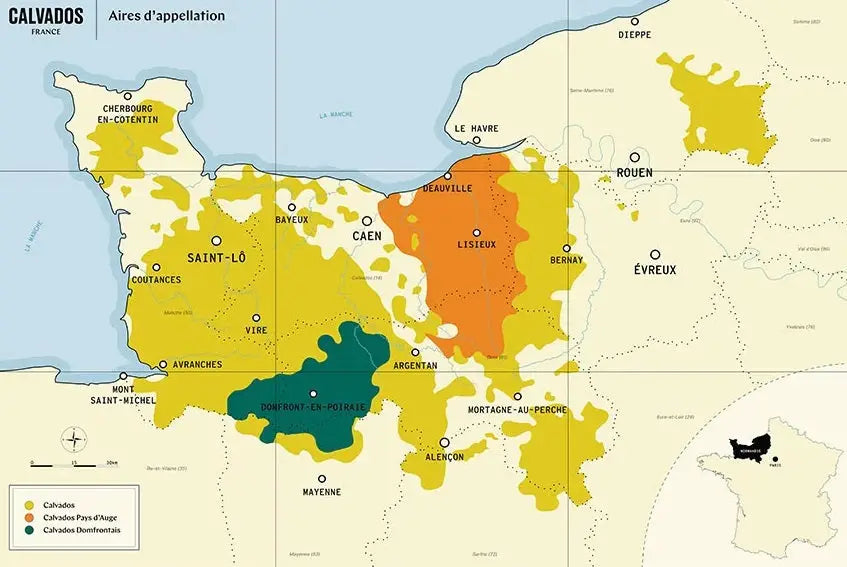
Map of Calvados appellations
The production of Calvados
Calvados owes its character to a rigorous production process, closely linked to the Norman terroir. From the selection of apples and pears to bottling, each stage depends on precise details and contributes to creating an exceptional eau-de-vie.
The controlled designation of origin labels that govern its production guarantee both authenticity, quality, and a deep connection with the Normandy region. Here is an overview of the most important criteria for its production.
Cider apples and fermentation
Everything begins in the orchards of Normandy, where cider apple trees produce a great diversity of fruits. Producers blend several families of apples: bitter apples, which provide structure, sweet apples, which add roundness, and tart apples, which bring freshness and liveliness to the tasting. Depending on the designation, a proportion of pears may also be used, adding floral notes as well as a fruity character indulgent.
Then, once harvested, the apples and pears are pressed in order to obtain a juice.
This juice is then fermented and transforms into a low-alcohol cider (about 5 to 6%). This natural fermentation is an essential step in obtaining a good Calvados: it preserves the fruit's aromas and greatly contributes to the aromatic complexity that will develop during distillation and aging.
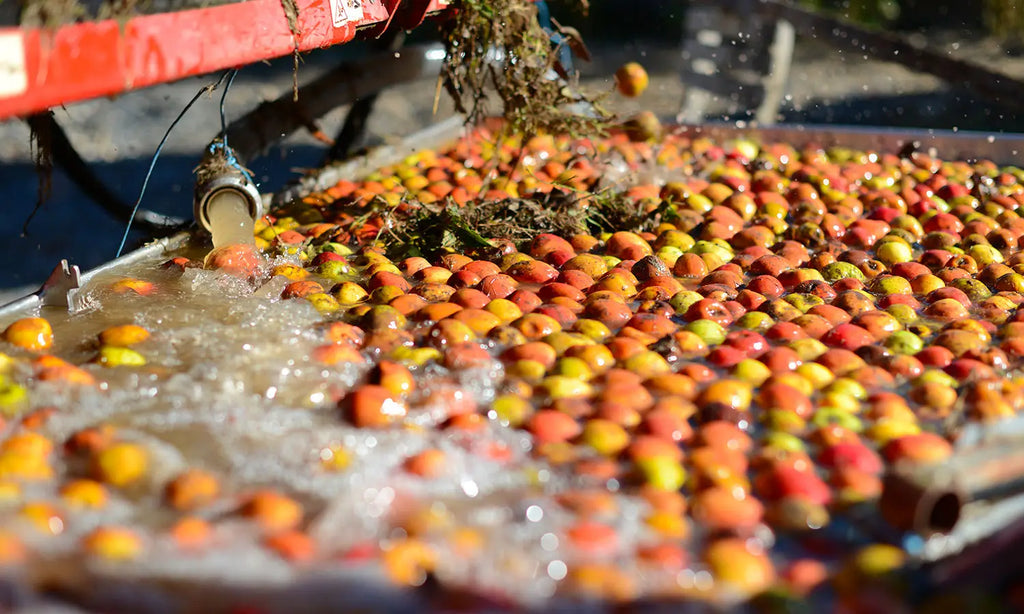
Washing of cider apples before pressing and fermentation
Distillation
Then comes the distillation stage, transforming the cider obtained after fermentation into brandy. This process then concentrates the fruit notes and reveals all the indulgentise of Calvados.
Two main methods are used, depending on traditions and appellations:
- Double distillation (or pot still distillation): this is carried out in Charentais-type copper stills and produces an elegant eau-de-vie with great aromatic complexity. This is the mandatory method in AOC Calvados Pays d’Auge.
- Single distillation: carried out in column stills, this often results in Calvados that is fruitier and more expressive. For example, this is the method used in AOC Calvados Domfrontais.
The “simple” AOC Calvados, for its part, allows both distillation methods in its specifications.
The distillate obtained usually reaches around 70% alcohol. At this stage, it does not yet have the color or roundness of the final Calvados: it is the aging in oak barrels that will give it its amber hue, texture, and aromatic depth.
Aging
After distillation, the aging stage begins, when the produced distillate is transferred into oak barrels. A long process of maturation and patience then begins, during which the Calvados will slowly evolve in contact with the wood and air. The wood imparts tannins, as well as aromas of vanilla, spices, and dried fruits, while the gradual evaporation, the famous “angel’s share”, concentrates the flavors.
The older it gets, the more complex the Calvados becomes.As an example, a Calvados XO or a Hors d’Âge will often reveal notes of candied apples, sweet spices, as well as a long finish on the palate. Producers master and refine this process vintage after vintage in order to obtain the most precise calvados possible.
Bottling
Before bottling, the calvados is slowly reduced with pure water in order to lower the alcohol content, generally between 40 and 45%. The quality of the water used and the resting time allowed after reduction are key parameters in the final balance of the spirit. The result is a spirit expressing the producer’s expertise and the identity of Normandy.
Thanks to this process, which involves numerous details and combines apple, pear, distillation, time, water, and wood, each Calvados, whether it is a young, lively spirit or a complex XO, reveals a unique personality.
An emblem of Normandy
Calvados is much more than just a spirit: it is the very expression of the Norman terroir. In this region of France, where orchards and coastal landscapes coexist, this noble alcohol truly reflects the history, expertise, and local culture. The link between Calvados and Normandy is, in fact, inseparable. The soil and temperate climate here offer ideal conditions for growing apples (bitter, sweet, or tart) or pears, which form the basis of cider or perry.
Calvados is also deeply connected to Norman culture and gastronomy. It accompanies meals, can be enjoyed as an aperitif or digestif, and is even used in local recipes (desserts, sauces, dishes, etc.). Every sip of Calvados you take reflects a land proud of its heritage, and shows why it is considered a true emblem of Normandy.
Today, a wide selection of Calvados is available on the market, ranging from young VS to refined XO. This spirit continues to win over enthusiasts in France and internationally, further strengthening its status as a Norman pride and a benchmark product. In short, Calvados embodies the perfect marriage between nature, expertise, and tradition, making each bottle a living symbol of Normandy and its gastronomic and cultural heritage.
The different types of Calvados
Calvados comes in several controlled designation of origin labels, each reflecting a unique land, style, and expertise. Here is a brief presentation of each of these AOCs.
AOC Calvados
Covering most of Normandy, the AOC Calvados is the largest and most diverse designation. It authorizes both simple column distillation and double pot still distillation, as well as the use of apple and pear depending on the production areas.
The Calvados from this generalist AOC are generally distinguished by a beautiful fruitiness, their freshness, their accessibility, as well as their direct expression of the terroir.
AOC Calvados Pays d’Auge
Considered the most prestigious of the three, the AOC Calvados Pays d'Auge covers a strictly defined area in the heart of the Pays d’Auge, a terroir famous for the richness of its orchards and the quality of its ciders.
The double distillation in a Charentais-type copper still is mandatory here, guaranteeing elegant eaux-de-vie with beautiful aromatic complexity.
After aging, Calvados from the Pays d’Auge develops fruity, floral, spicy, and vanilla notes, making it a spirit of great refinement.
AOC Calvados Domfrontais
Less well-known but just as distinctive, the Calvados Domfrontais appellation highlights not only the apple but also the pear, which must here represent at least 30% of the fruits used.
The single-column distillation, characteristic of the area, gives rise to light, floral, and refined eaux-de-vie, marked by great aromatic freshness and a smooth texture. Calvados Domfrontais thus stands out for its natural elegance and its balance between apple and pear.
Age Statements
As with Cognac or Armagnac, the age of Calvados is a key indicator of its complexity and style. Here are the main statements you will find on the labels.
- Fine / Three Stars / VS (Very Special): eau-de-vie aged for at least 2 years in oak barrels. These are young, lively, and fruity Calvados, perfect for cocktails or as an introduction.
- Vieux / Réserve: Calvados aged for a minimum of 3 years in oak barrels. They develop softer notes and an appealing roundness, while remaining accessible.
- VO / VSOP (Very Old, Very Superior Old Pale): Calvados with a minimum of 4 years of aging in wood.These spirits offer a harmonious balance between fruit and noble woody notes, for a very refined experience.
- XO / Hors d’Âge / Extra : Calvados aged at least 6 years in wood, often longer. These prestigious eaux-de-vie are distinguished by great aromatic complexity, flavors of candied apple, vanilla, honey, dried fruits, and a long finish on the palate.
The great Norman houses, such as Adrien Camut, Père Magloire, Christian Drouin, or Château du Breuil, are particularly renowned for their XO and Hors d’Âge, combining elegance, depth, and balance.
Food and Calvados Pairings
With its unique character and rich aromatic palette, Calvados lends itself to numerous culinary pairings. Thanks to its unique manufacturing process, each bottle of this magnificent eau-de-vie indeed expresses nuances that allow it to be paired with different dishes.
As an aperitif or digestif
A young Calvados available on the market, fresh and fruity, stands out well as an aperitif. Its aromatic profile evolves with lively and elegant notes, and its vivacity prepares the palate for the meal.
Calvados XO or Hors d’Âge, more complex and intense, are best enjoyed after the meal, for beautiful moments of contemplation.
In the kitchen
Calvados will also find its place very well in the kitchen, where it will bring warmth, roundness, and fragrance to your preparations. Traditionally used to flambé white meats, poultry, and fruits, it is also used in the preparation of cream sauces, rich jus, or sweet and savory reductions. Just a few drops are enough to enhance a pork tenderloin, a chicken supreme, or even a pork roast with apples.
In the kitchen, Calvados can pleasantly flavor scallops, crêpes, or even sorbets.Thanks to its aromas of apple, pear, vanilla, and spices, Calvados enhances both robust dishes and delicate recipes, while preserving the fruity signature inherent to this Norman eau-de-vie.
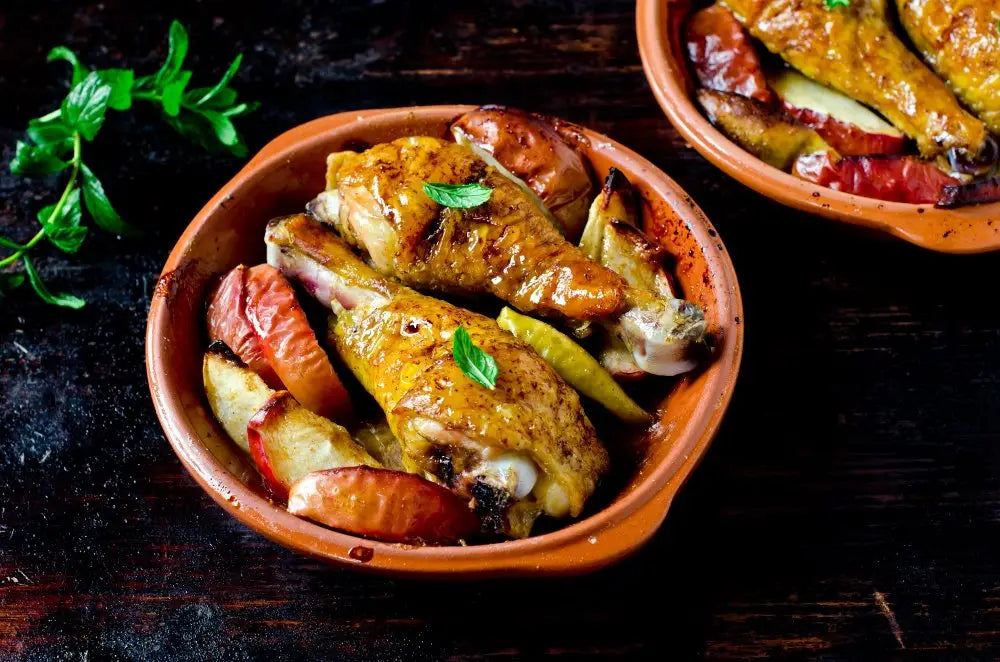
Chicken sautéed with Calvados and apples, typically Norman flavors
At the table
Served at the table, Calvados pairs surprisingly well with many savory dishes, provided you choose the appropriate style.
A young Calvados (VS or Fine), lively and fruity, will, for example, perfectly accompany starters such as pan-seared foie gras or black pudding with apples.
Older Calvados (VSOP or XO), often complex and oaky, pair ideally with white meats (roast poultry, veal with cream, etc.). Some enthusiasts even dare to pair them with game meats, sweetbreads, or even pan-seared scallops.
With cheeses
The pairing between Calvados and cheese is a gastronomic certainty. Normandy soft cheeses with bloomy rind, such as Camembert, Pont-l’Évêque, or Livarot, harmonize perfectly with the oaky and fruity roundness of Calvados VSOP, Vieux, or XO.
In general, a young Calvados, such as a VS, will bring more freshness and liveliness and will be ideal for contrasting with the richness of the cheese, while an older Calvados will develop an aromatic depth that highlights the milky and animal nuances of matured cheeses.
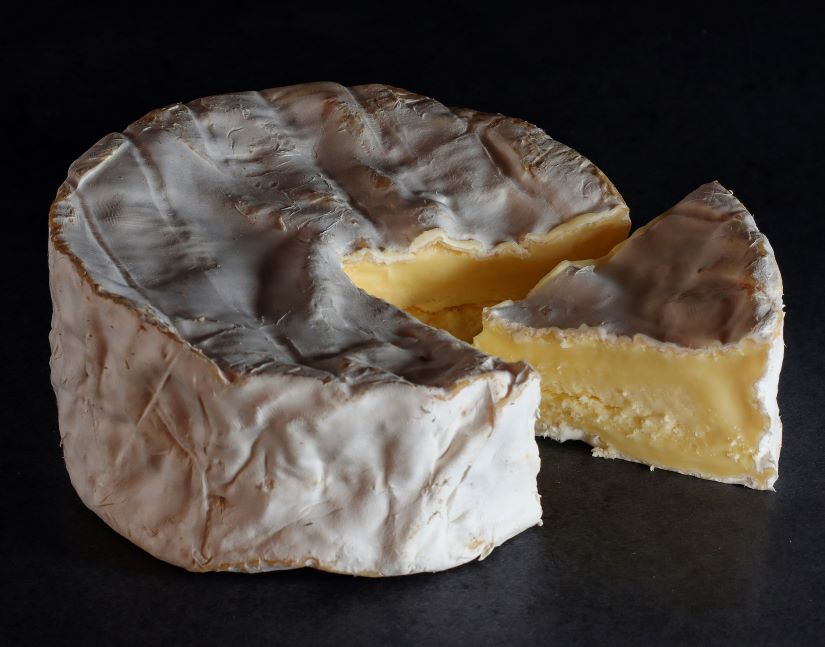 Obvious Norman pairing: Creamy Camembert and Calvados
With desserts
Calvados pairs particularly well with fruity desserts, especially those made with apple, pear, or even caramel. A tarte Tatin, flambéed crêpes, a compote, or a cake find in it a natural ally that enhances the indulgentise of both sides.
The young Calvados (VS or Fine) will highlight freshness and fruit, while the older ones (VSOP or XO), with woody, vanilla, and caramelized notes, will enhance warm desserts. A few drops of Calvados can also be used to flambé or enhance vanilla ice cream or fruit, bringing a typically Norman aromatic touch.
In summary, whether you enjoy it on its own, with a dessert, or incorporated into your recipes, Calvados is a versatile ally that will enrich your tasting experience and reflect all the gastronomic richness of Normandy.
Choosing your Calvados
A large number of Calvados options are available for purchase, and it is not always easy to know which one to choose! Here are some guidelines to help you make the right choice.
The appellation (AOC)
The AOCs guarantee respect for terroirs and traditions. Each also has its own specific characteristics
The AOC Calvados for example, usually offers eaux-de-vie that are straightforward and fruity, often characterized by fresh apple as well as a supple and expressive palate.
The AOC Calvados Pays d’Auge, considered the most prestigious, stands out for its double distillation, resulting in fine, elegant, and complex Calvados with floral, vanilla, and spicy notes after aging: this is the ultimate tasting style.
Finally, the AOC Calvados Domfrontais reveals a lighter and more airy character, thanks to the presence of at least 30% perry pears and single column distillation. The result is floral, delicate, and very fresh eaux-de-vie.
Age
The longer a Calvados ages, the more it gains in roundness, complexity and length on the palate. An XO or a Hors d’Âge will therefore naturally offer a much more nuanced aromatic palette than a young Calvados.
The producer
Some names have become benchmarks for their consistency and expertise. Houses such as Adrien Camut, Père Magloire, Lecompte, Christian Drouin, Pierre Huet, Comte Louis de Lauriston, or Château du Breuil all produce Calvados of great finesse, from carefully cultivated orchards. Don’t hesitate to try them!
Your personal tastes
If you like lively and fruity spirits, choose a Fine or a VS, perfect for an introduction. If you prefer richness, structure, and complexity, then turn to Calvados VSOP, XO, or Hors d’Âge.
Whatever happens, take the time to carefully examine the label before your purchase: it always specifies the designation, age, producer, and sometimes even the type of distillation... all valuable clues to help you understand the style of Calvados you are about to taste.
How to taste Calvados?
Tasting a Calvados deserves to be done with as much care as its production. The result of demanding expertise, this fine Norman spirit indeed deserves to be savored under optimal conditions in order to reveal the full richness of its aromas.
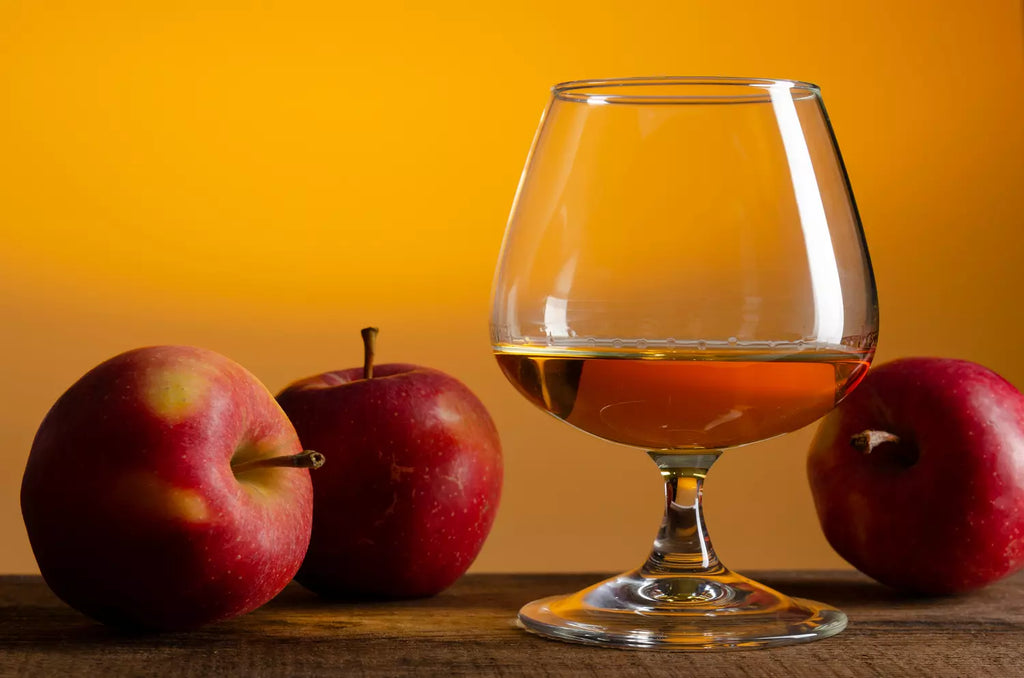
Traditionally, Calvados is tasted at room temperature, between 18 and 20°C, in a tulip glass or a small balloon glass. The narrow shape at the neck of these glasses indeed makes it easier to explore the aromas. Then, gently swirl the Calvados in your glass and observe its color, a reflection of its age and its time spent in oak barrels.
Next, bring the glass to your nose, without plunging in too deeply: first, smell from a distance to capture the volatile notes of fresh apple, then bring it slightly closer to discover deeper aromas of ripe fruit, vanilla, wood, spices, or dried fruit, depending on the age and designation. Take the time to alternate these breaths to read the different aromatic layers.
On the palate, then take a small sip and let the Calvados warm up naturally. Young Fine or VS Calvados offer a lively and fruity attack, while XO or Hors d’Âge display a full and silky body, marked by a long finish. The style also depends on the origin: a Calvados from the Pays d’Auge will often express more roundness and complexity, whereas a Domfrontais will reveal a floral and airy freshness.
To prolong the pleasure, you can also pair your tasting with a piece of dark chocolate, a slice of warm apple tart, or even a Normandy cheese. Calvados can indeed be enjoyed neat, during a meal, or slightly chilled as an aperitif. Whatever the case, the secret to a great tasting lies in patience: let the Calvados open up, breathe it in, taste it several times...each sip will tell a little more of its story!
Cocktails made with Calvados
Long considered a traditional spirit, Calvados is now making its way into bars and contemporary creations. Thanks to its aromatic richness and beautiful complexity, it brings a warm and refined touch to cocktails, capable of transforming a classic recipe into a unique experience. Here are some cocktail recipes to try at home.
Calvados Sour
A revisited classic, both lively and balanced, perfect for showcasing the richness of Calvados.
Ingredients : 5 cl of Calvados, 2.5 cl of fresh lemon juice, 2 cl of cane sugar syrup, 1 egg white for texture.
Preparation : Pour all the ingredients into a shaker and shake once without ice. Repeat the operation with ice, strain and serve in a cocktail glass or an old fashioned glass. Finally, garnish with a lemon zest or a thin slice of fresh fruit.
Jack Rose
A great classic of American mixology, elegant and tangy, where Calvados advantageously replaces stronger spirits.
Ingredients : 5 cl of Calvados, 2 cl of lemon juice, 1.5 cl of grenadine syrup.
Preparation: Shake all the ingredients with ice cubes in a shaker. Strain and pour into a well-chilled cocktail glass. Garnish with a lemon zest or a thin slice of fresh fruit.
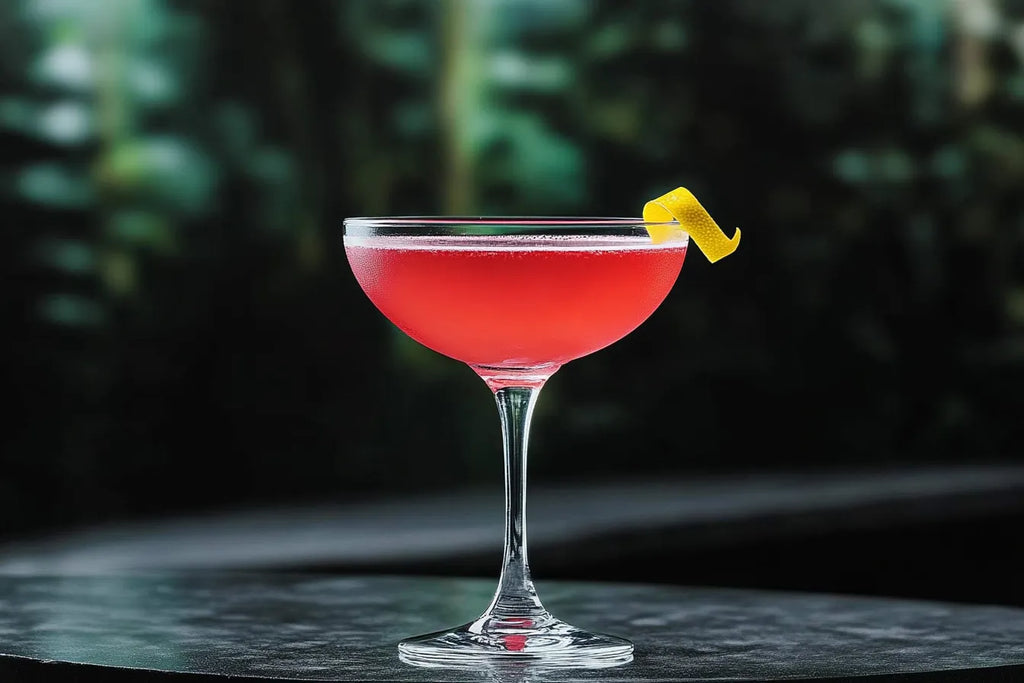
Refined calvados cocktail, here is the famous Jack Rose
Normandy Mule
A French twist on the famous Moscow Mule, refreshing and slightly spicy.
Ingredients : 5 cl Calvados, 1 cl lime juice, 10 cl ginger beer, a few mint leaves
Preparation: Pour the Calvados and lime juice into a large glass filled with ice cubes.Add the ginger beer, then stir gently to mix the flavors without breaking the bubbles. Garnish with a few fresh mint leaves and serve immediately to preserve all the freshness of the cocktail.
The Calvados of Château du Breuil
In the world of Calvados, certain houses stand out for the consistency and nobility of their expertise. Among them, the Château du Breuil, located in the heart of the Pays d’Auge, is considered an absolute reference and is one of the most awarded producers.
This historic estate indeed produces a wide range of Calvados covering all expressions of the spirit: from young and fruity cuvées, marked by the freshness of the apple, to old Calvados with remarkable depth and complexity.
Each stage of production, from the selection of apples to aging in barrels, is carried out here with particular care, ensuring consistent quality. The Calvados from Château du Breuil captivate with their balance between intensity and elegance, as well as their harmonious texture.
Available for both the curious and connoisseurs, the range from Château du Breuil reflects the very essence of the Pays d’Auge terroir as well as the artisanal expertise of a house that has become a pillar in the world of Calvados.
Other safe values
In addition to Château du Breuil, estates such as Adrien Camut, Père Magloire, Pierre Huet, or Christian Drouin all offer Calvados among the very best, respecting the details and meticulous craftsmanship that have made great Calvados renowned.
As you will have understood, Calvados is far from being an outdated drink and appeals as much in France as internationally. Whether in a cocktail, as a digestif, or even to accompany a meal, this sublime Norman eau-de-vie finds its place in every private cellar as well as in the trendiest bars and restaurants.
Whether you choose a fruity Fine or a prestigious XO, you are holding a piece of French culture in your hands! So, why not explore this magnificent spirit at your next tasting? Discover our beautiful selection of Calvados, available in just a few clicks on our website La Cave Éclairée, with all the details and information about each bottle. Enjoy your tasting and long live the apple!


