

Ah, Beaujolais… While its iconic Beaujolais Nouveau and renowned crus such as Brouilly and Morgon are well known, its small Régnié appellation unfortunately often remains in the shadows. And yet, this discreet cru truly deserves our attention! Mainly nestled on hillsides, the Gamay vines here produce red wines that are both crisp, charming, and full of character.
So take your time, settle in, and let yourself be surprised by this cru with a bold character, as endearing as it is unexpected. Happy discovery!
Summary
History of the Régnié appellation
Although Régnié is a small village (Régnié-Durette) nestled in the heart of Beaujolais, it is above all a quality appellation tucked between Brouilly and Morgon, two emblematic crus of the region.Here, the vine has been growing since Antiquity, a period when the Romans had already recognized the potential of these well-exposed hillsides. Moreover, the name Régnié is said to come from the remains of a Gallo-Roman villa that belonged to a certain Reginus.
In the Middle Ages, the torch was passed to the monks, true pioneers of viticultural knowledge. They observed, experimented, and recorded: a true code of the vine ahead of its time.
During the Renaissance, the Régnié vineyard, like the whole of Beaujolais, was still primarily focused on local consumption. The city of Lyon was then the main outlet for the region's wines.
It was not until the 17th century that the wine trade truly expanded, notably thanks to the improvement of transport routes and the opening of the Briare Canal linking the Loire to the Seine. This new connection then allowed Beaujolais wines to gradually reach Paris as well as other markets in northern France. Although the name "Régnié" did not yet benefit from official recognition, the wines from the area began to be appreciated for their freshness, suppleness, and indulgentease, characteristics that are still found today in the cuvées of this cru.
Finally, in 1988, after decades of collective efforts, the Régnié Appellation d’Origine Contrôlée (AOC) was created. It then officially became the 10th cru of Beaujolais.A late but well-deserved recognition, crowning centuries of work and expertise passed down from generation to generation.
Today, the appellation covers approximately 380 hectares and includes nearly 120 winegrowers.
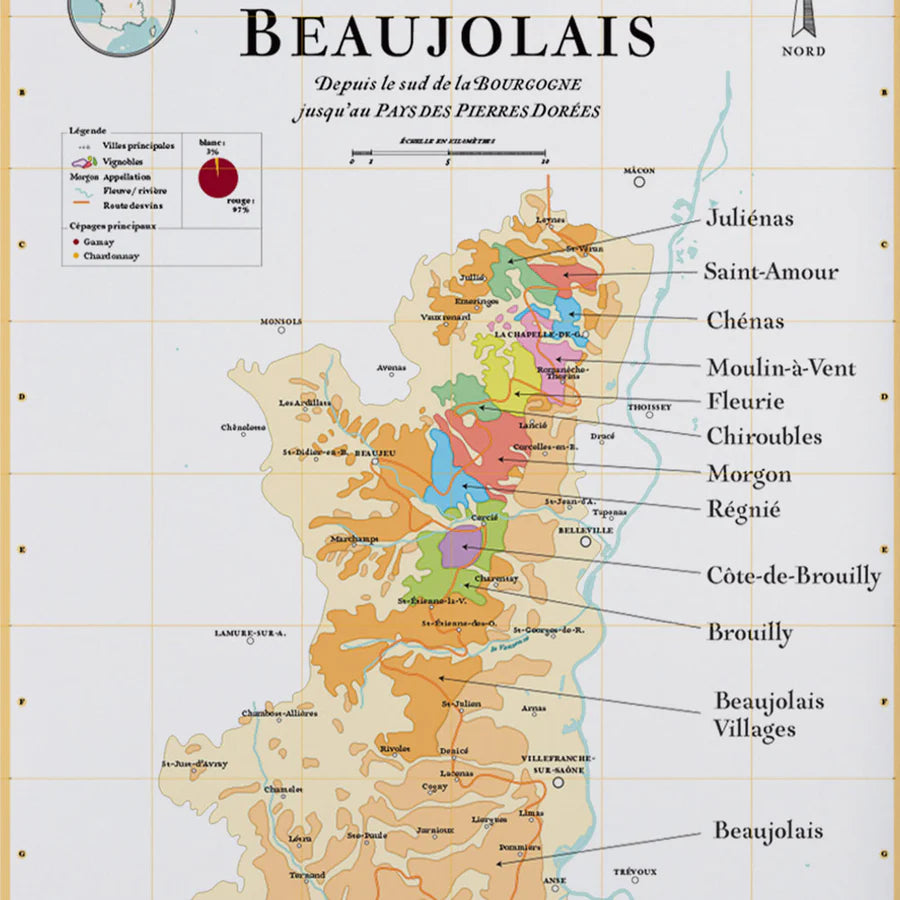
Beaujolais Map: Régnié is located between Morgon to the north, and Brouilly further south
Soils and climate of the Régnié appellation
Located between the Beaujolais hills and the Saône valley, the Régnié appellation benefits from soils mainly composed of decomposed pink granite, an iconic rock of the region that gives the local red wines a delicate minerality and a very pure expression of the fruit.In addition, there are pebble beds, pockets of clay, and even sandy areas.
In terms of climate, the appellation benefits from a marked continental influence: summers are hot and sunny, while winters remain rather cool. This thermal dynamic is moderated by the altitude, which reaches up to 400 meters on some hillside vineyards. This climatic factor helps to preserve a beautiful freshness in the wines, an essential factor for achieving balanced, dynamic, and elegant reds.
Régnié is therefore, in a way, a bridge between the fruity generosity of Brouilly wines and the more pronounced structure of crus such as Morgon or Moulin-à-Vent.
The wine styles of the Régnié appellation
So, what should you expect from a Régnié cuvée? First of all, as you may have understood, it is a red wine made from the emblematic grape variety of Beaujolais, the Gamay.
Furthermore, Régnié wines are usually distinguished by a ruby color as well as intense aromas of fresh red fruits (cherry, redcurrant, raspberry), enhanced by subtle floral notes (peony or violet). On the palate, the wines offer freshness and indulgence, with pleasant liveliness, fine tannins, and an elegant, juicy, and charming finish.
This aromatic palette makes Régnié an ideal gateway to discover the red wines of Beaujolais. However, some estates do not hesitate to go further, offering cuvées aged in oak barrels, highly structured and capable of aging harmoniously. These wines then gain in complexity while retaining the freshness characteristic of Beaujolais, a signature also specific to Régnié.
In the landscape of Beaujolais crus, Régnié thus stands out for its generosity, halfway between the power of a Morgon and the finesse of a Brouilly. Recommended in numerous guides for its excellent value for money, we confirm that Régnié will appeal to both novices and experienced enthusiasts alike!
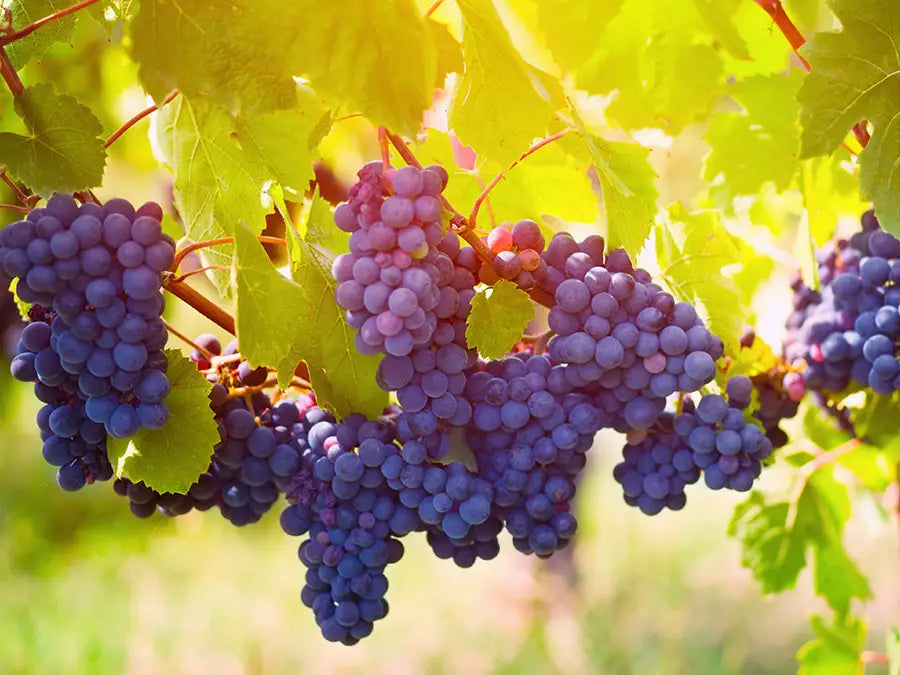
Bunches of Gamay, the unique grape variety of Régnié wines
What to eat with a Régnié AOC wine?
No need to be a wine expert to achieve a great food and wine pairing with a Régnié! This Beaujolais cru, fruity and so delicately structured, is indeed highly versatile at the table. Here are a few indulgentsuggestions to fully appreciate its qualities.
Thanks to its supple texture and vibrant red fruit aromas, a Régnié will pair perfectly with soft cheeses such as Saint-Marcellin or Saint-Félicien, two treasures from the Lyon region. Aged goat cheeses also find a wonderful place alongside it.
When it comes to meat, choose flavorful yet delicate dishes: a herb-roasted pork roast, roast poultry with thyme, or duck breast with cherries. Like Morgon or Brouilly, Régnié knows how to complement flavors without ever overpowering them, offering a wine of character that is always nuanced.
For more comforting dishes, opt for beef bourguignon, a nod to neighboring Burgundy, a Provençal stew or even a casserole of lentils with Lyon sausages.Your bottle of Régnié will indeed lighten the richness of sauces and bring a welcome freshness to the palate.
Finally, Régnié also knows how to enhance vegetarian cuisine: roasted vegetable stir-fry, mushroom risotto, or beet tart are all pairings that will benefit from its fruity profile and liveliness, creating a beautiful balance.
We also recommend serving this delicious red wine between 14 and 16°C to reveal its full aromatic palette. Decanting is also recommended for the youngest wines.
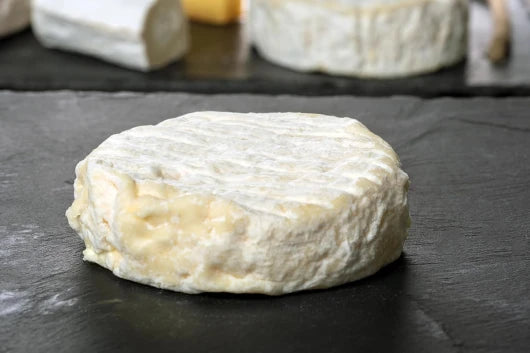
The smoothness of Saint-Marcellin enhances the freshness of Régnié
The best wines of the Régnié AOC: a few estates to discover!
Régnié boasts several top-level estates that know how to express the terroir with finesse. Notably, there is Domaine Georges Descombes (based in Morgon but producing a delicious Régnié), Domaine des Braves, as well as Antoine Sunier and Guy Breton, all recognized for their consistently high-quality cuvées.
Nevertheless, La Cave Éclairé recommends you discover the Domaine Philippe Viet. A representative of the new generation in Beaujolais, this committed winemaker combines precision, finesse, and respect for nature.
Its cuvée Haute-Ronze Mosaïque from the AOC comes from century-old Gamay vines rooted in sandy and granitic soils, offering a sublime concentration as well as a pronounced structure. A wine that will reach its peak after a few years of cellaring. Go for it, you won't be disappointed!
As you will have understood, the Régnié appellation easily rivals its prestigious Beaujolais neighbors. With a rich history, remarkable diversity of terroirs, and great versatility at the table, this discreet cru now stands out as a true jewel of Beaujolais.
To further your discovery, feel free to visit our website La Cave Éclairée. You will find expert advice, a clear guide, genuine reviews and opinions, as well as a demanding selection of the best appellations from the Beaujolais region... and much more!


