

In the heart of the Mâconnais vineyard, the Viré-Clessé AOC is among the appellations that actively contribute to the prestige of the great white wines of Burgundy. Exclusively dedicated to Chardonnay, this relatively recent appellation has established itself over the years thanks to the quality of its wines and the unique character of its terroirs.
Would you like to better understand what makes Viré-Clessé unique ? History and origin of the AOC, terroir, grape variety, wine characteristics, and food and wine pairings: discover in this guide everything you need to know about this emblematic appellation of the Mâconnais !
Contents
- History of the Viré-Clessé appellation
- The terroir of Viré-Clessé
- The different areas of Viré-Clessé
- A flagship grape variety: Chardonnay
- The wines of Viré-Clessé
- What is the aging potential of a Viré-Clessé wine ?
- The essential estates of the AOC Viré-Clessé
- Food and wine pairings with a Viré-Clessé
- How to properly taste a Viré-Clessé ?
- What is the place of Viré-Clessé in Burgundy ?
- In summary
History of the Viré-Clessé appellation
Although the AOC Viré-Clessé has only been officially recognized since 1999, the history of the vine in this part of the Mâconnais is much older. As in much of Burgundy, the first traces of viticulture indeed date back to Antiquity, when the Romans developed vine cultivation in the most favorable areas of the region. The clay-limestone hillsides now surrounding the communes of Viré and Clessé already offered particularly suitable conditions for its establishment.
In the Middle Ages, the Burgundy vineyard took on a new dimension under the influence of religious communities. The Abbey of Cluny, located a few dozen kilometers away, played a major role in the organization and development of regional viticulture. At that time, the monks did not limit themselves to cultivating the vine: they observed the soils, selected the highest quality plots, and gradually perfected cultivation practices. Their knowledge of the terroir is one of the foundations of the current Burgundian wine identity.
From the 15th century and over the following centuries, the Mâconnais vineyard continued its development due to the growth of commercial exchanges and advances in viticulture. The wines produced on the terroirs corresponding today to Viré and Clessé gradually gained regional notoriety, benefiting from particularly favorable natural conditions for the production of quality white wines.
In the 20th century, and before obtaining their own appellation, the wines from the area were marketed under the names Mâcon-Viré and Mâcon-Clessé. Despite recognition among enthusiasts and professionals, these productions therefore remained part of the regional Mâcon appellation. Over the years, the winemakers have undertaken in-depth work to have the unique identity of their terroirs and the singularity of their wines recognized.
This process culminated in 1999 with the official creation of the Viré-Clessé Appellation d’Origine Contrôlée. This recognition marks a major milestone for local estates, finally seeing the specificities of their terroirs fully acknowledged within the Burgundy vineyard.
Today, Viré-Clessé covers more than 450 hectares of vines and occupies an increasingly important place among the white wines of southern Burgundy. Alongside other appellations such as Pouilly-Fuissé or Saint-Véran, it appeals to enthusiasts seeking wines where richness, balance, and expression of the terroir find a particularly successful meeting point.
The terroir of Viré-Clessé
The identity of the wines of the Viré-Clessé AOC is based above all on a combination of terroir, climate and the expertise of each estate. Located in the north of the Mâconnais, on the terroirs of Montbellet, Viré, Clessé, and Laizé, the appellation benefits from a privileged environment to produce great white wines from Chardonnay. The diversity of soils and local climatic conditions are indeed capable of giving rise to wines that combine aromatic richness, freshness, and balance.
Limestone soils at the heart of the identity of Viré-Clessé
The Viré-Clessé vineyard extends mainly over hillsides composed of clay-limestone soils and limestone marls, from ancient geological formations. There is also the presence of crinoidal limestone, a rock rich in marine fossils which is an important characteristic of certain areas of the Mâconnais.
These lands play a major role in the expression of the wines of the appellation and promote a regular supply to the vine while naturally limiting its vigor, thus allowing a good aromatic concentration of the grapes. Chardonnay therefore finds here a particularly suitable playground for its development.
Depending on the plots and their composition, some wines will highlight freshness and tension, while others will develop more roundness and volume on the palate. This diversity explains the richness of styles observed within the appellation.
A climate conducive to grape ripening
Located in the south of Burgundy, the Viré-Clessé appellation benefits from a semi-continental climate tempered by milder influences. This combination results in hot, sunny summers favorable to grape ripening, as well as relatively cool winters.
Here, the vineyard slopes also benefit from varied exposures allowing for progressive grape ripening.The thermal amplitudes between sunny days and cooler nights also play an important role in preserving natural acidities, an essential element for the balance of the white wines produced.
A meeting between terroir and expertise
Beyond the natural characteristics of the vineyard, the work carried out in the vines and in the cellar by each wine estate also plays a decisive role. Yield management, harvest dates, and choices in vinification or aging all contribute to revealing the unique features of each vintage and plot.
It is precisely this encounter between terroirs, the climate of the Mâconnais, and the expertise of the producers that gives Viré-Clessé wines their unique identity: generous, balanced Burgundy white wines, deeply marked by their origin.
The renowned lieux-dits and areas of Viré-Clessé
Although the Viré-Clessé AOC currently has no Premier Cru classified climat, certain lieux-dits stand out for the remarkable quality of their terroir. As everywhere in Burgundy, the identity of a wine is often expressed on a very fine scale, where just a few plots are enough to reveal unique nuances and characteristics.
Among the sectors regularly highlighted are notably Quintaine, La Verchère, Thurissey as well as certain plots located around the communes of Viré and Clessé. Depending on their exposure, altitude, or the nature of the clay-limestone soils, these terroirs can give rise to distinctly different expressions of Chardonnay.
Some plots thus produce wines favoring freshness and mineral tension, while others develop more volume and richness on the palate. This diversity greatly contributes to the personality of the wines of the appellation and allows each estate to express its own interpretation of the terroir.
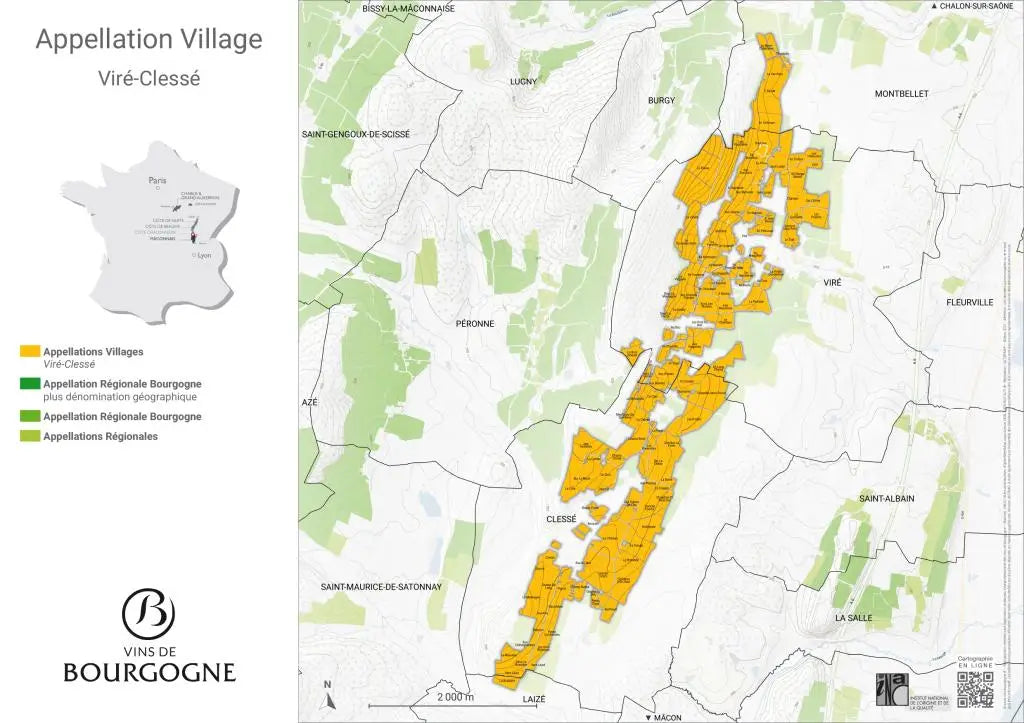 Map of the Viré-Clessé appellation
A flagship grape variety: Chardonnay
Within the Viré-Clessé AOC, Chardonnay is the only grape variety authorized by the appellation's specifications. This exclusivity strongly contributes to the identity of the wines and allows for a precise expression of the unique characteristics of the vineyard's terroirs.
Renowned for its great adaptability, Chardonnay has another essential feature: it acts more as a terroir revealer than as a grape variety imposing a dominant aromatic signature. In the Mâconnais, it finds particularly favorable conditions thanks to the limestone soils and the warmer climate of southern Burgundy.
Depending on the plot, the vintage, and the choices made by each estate, it can thus give rise to significantly different profiles. Some cuvées focus more on freshness, while others develop greater roundness and aromatic richness on the palate.
Within Viré-Clessé, Chardonnay generally produces balanced white wines, combining generosity and precision. Depending on the vintage and the producers' choices, it can also express a slight roundness, or even a discreet natural sweetness, which brings richness without masking the wine's freshness.This ability to combine freshness, aromatic expression, and terroir identity explains why Chardonnay is today the true pillar of the Viré-Clessé appellation.
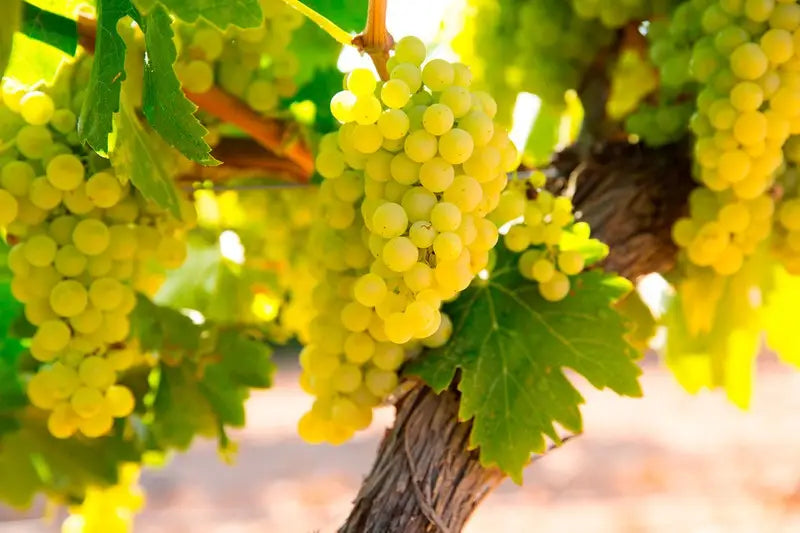 The Chardonnay grape variety is the emblematic variety of the Viré-Clessé AOC
The wines of Viré-Clessé
The white wines of the Viré-Clessé AOC are distinguished by a style that naturally combines richness, freshness, and balance. Exclusively made from Chardonnay and strongly influenced by the limestone terroirs of the Mâconnais, they offer a recognizable personality among the white wines of Burgundy. Without seeking excessive power, they are indeed appealing for their aromatic precision, generosity, and their ability to evolve over the years.
Appearance and Nose
In the glass, Viré-Clessé wines generally display a pale yellow to golden color, which can sometimes be more intense depending on the vintage or the aging method chosen by the estate. From the very first aromas, the appellation reveals a character that is often generous and complex.
Then, on the nose, one frequently finds notes of white fruits such as pear, peach, or ripe apple, accompanied by citrus fruits. Floral nuances reminiscent of acacia or hawthorn may also appear, sometimes complemented by riper touches of honey or dried fruits in certain older vintages.
The limestone terroirs of the appellation also bring a mineral dimension that contributes to the aromatic signature of the wines.
A generous palate
On the palate, Viré-Clessé wines captivate with their balance between richness and tension. The attack is often generous, with a broad texture, that can become almost enveloping in certain cuvées. This sensation is often enhanced by aging in oak barrels, a common practice in the region and on the vineyard.
This sensation of volume is generally supported by a beautiful natural acidity, bringing dynamism and freshness to the whole.Depending on the region and winemaking methods, certain cuvées may also reveal slightly buttery or subtly toasted notes, giving the wine even more complexity during tasting.
An accessible style capable of evolving
One of the major strengths of the Viré-Clessé appellation lies in its ability to offer wines that are accessible in their youth while also providing interesting aging potential in certain vintages.
When young, the wines generally appeal with the purity of their fruit, their freshness, and their immediate aromatic expression. Nevertheless, after a few years of aging, certain cuvées from the best terroirs can develop more complex notes, where ripe fruits, honey, sweet spices, or even some more mineral nuances become more prominent.
This diversity of expressions largely contributes to the success of the appellation and explains why Viré-Clessé is today considered one of the major benchmarks for white wines from southern Burgundy.
What is the aging potential of a Viré-Clessé ?
Contrary to a common misconception, Viré-Clessé wines are not only meant to be consumed young.If certain cuvées are particularly appealing for their fruit and immediate freshness, others indeed possess a true potential for aging.
Depending on the estate, the soils, the vintage, and the vinification or aging methods, a Viré-Clessé can generally evolve between 5 and 10 years, or even longer for certain cuvées from old vines or particularly high-quality terroirs.
Over the years, the aromas of fresh fruit and citrus gradually evolve towards more complex notes of honey, dried fruits, sweet spices, or even dried flowers. The palate often gains in fullness, while maintaining a beautiful freshness.
The essential estates of the Viré-Clessé AOC
The identity of Viré-Clessé has also been shaped by the work of winemakers committed to enhancing their terroirs. Through their viticultural and oenological choices, from vineyard management to wine aging, they help to express the diversity of nuances that characterize this appellation of the Mâconnais. Among the names to know within the appellation, the Domaine des Gandines deserves special attention.
Located in the heart of the Mâconnais, this family estate has gradually established itself among enthusiasts seeking intense wines marked by their origin. Grown using organic and biodynamic farming, the Dananchet family’s vineyards are carefully tended to preserve the natural balance of the soils and to promote a true expression of Chardonnay. This philosophy is reflected in all the estate’s cuvées, whether Mâcon-Villages, Mâcon-Péronne, Viré-Clessé, or even Crémant de Bourgogne, with wines renowned for their richness, aromatic finesse, and balance.
Other estates such as Domaine André Bonhomme, Domaine Pierre Gondard, and Domaine Guillemot-Michel are also worth a visit and beautifully illustrate the terroir of the Viré-Clessé appellation.
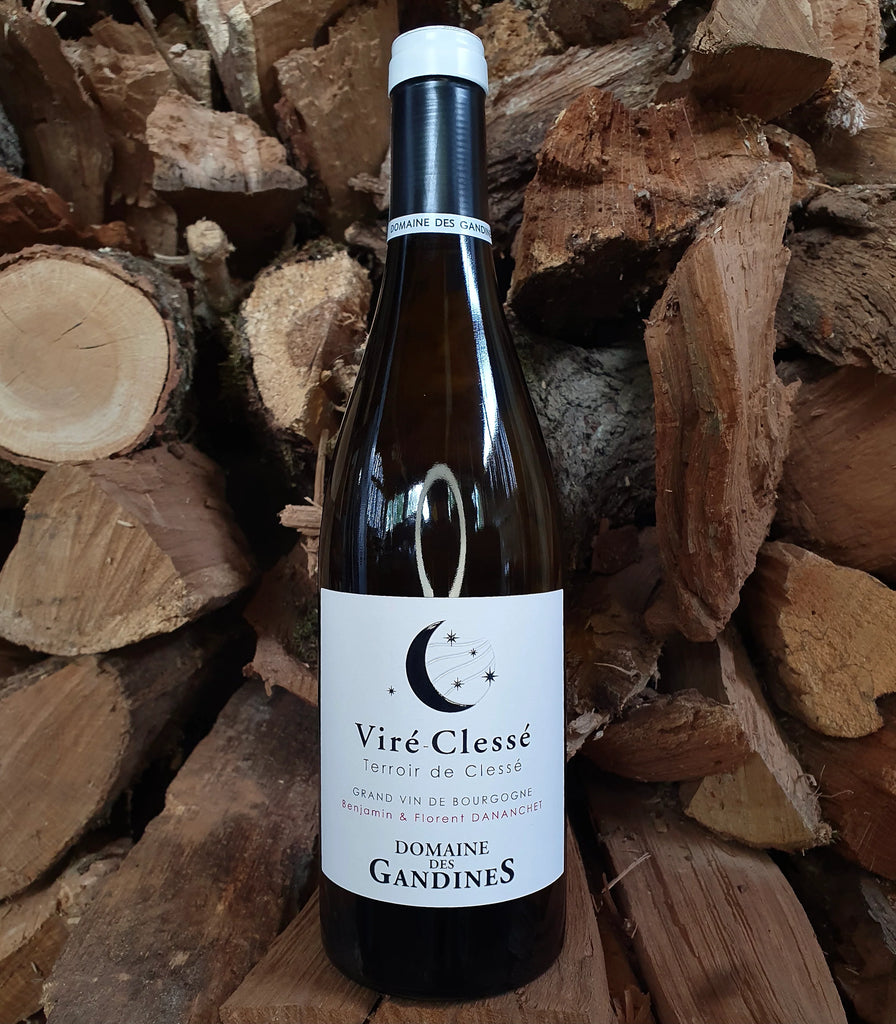 The excellent Viré-Clessé "Terroir de Clessé" from Domaine des Gandines
Food and wine pairings with a Viré-Clessé
Thanks to its freshness, aromatic richness, and lingering finish, the white wine from the Viré-Clessé AOC offers numerous possibilities at the table. Made exclusively from Chardonnay, this wine from the Mâconnais region indeed has great versatility allowing it to accompany both simple cuisine and more gourmet meals.
The most classic pairings remain fish, seafood, and shellfish. The natural freshness of the wine and its balanced structure will perfectly enhance the briny flavors here, without overpowering them.
Viré-Clessé wines will also pair very well with creamy poultry dishes, sauced fish or mushroom risottos.
Cheeses also have their place alongside wines from this Burgundy appellation. Pressed cheeses such as young Comté or certain goat cheeses can create wonderful pairings, as can other regional specialties.
More generally, the richest cuvées will easily accompany hearty dishes, while wines with a lively and mineral profile will better highlight the finesse of the products and the freshness of the flavors.
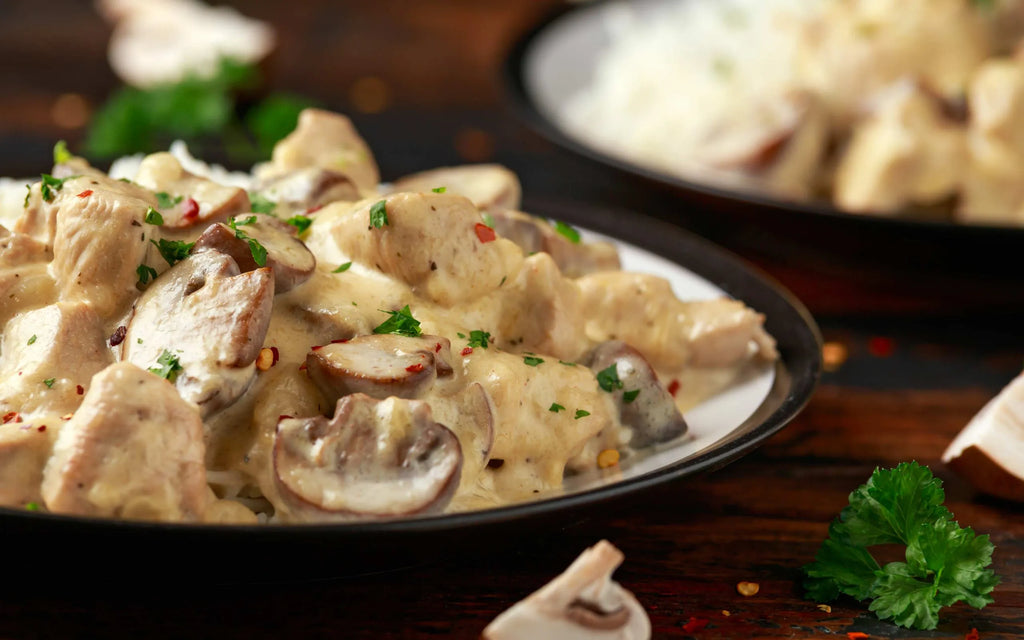 Chicken fillet with cream, an indulgent pairing with Viré-Clessé
How to properly enjoy a Viré-Clessé ?
In order to fully enjoy the white wines of the Viré-Clessé AOC, a few simple guidelines allow you to reveal all their aromatic richness and the expression of their terroir.
-The serving temperature plays an important role: it is generally recommended to serve a Viré-Clessé wine between 11 and 13°C, in order to preserve its balance between freshness, aromatic intensity, and mouthfeel. For the most mineral and lightest cuvées, serving between 8-10°C can be considered.
-The choice of glass can also influence the tasting experience. A white wine glass with a sufficiently wide bowl allows for better oxygenation and enhances the expression of aromas.
-Taking the time to observe the color, discover the nose, and then analyze the evolution of the wine on the palate ultimately allows for a better appreciation of the full personality and richness of the wines from this appellation in southern Burgundy.
What is the place of Viré-Clessé in Burgundy ?
Although a young appellation, the AOC Viré-Clessé today occupies an increasingly recognized position in the landscape of Burgundy white wines.Long overshadowed by more publicized appellations, this one has gradually established itself thanks to the quality of its wines, supported by the limestone terroirs of the Mâconnais and the work of local estates.
Viré-Clessé compared to the great whites of northern Burgundy
Compared to the great white wines of the Côte de Beaune, such as Meursault or Puligny-Montrachet, the wines of Viré-Clessé stand out for a style that is often more approachable in their youth. Whereas some emblematic appellations of northern Burgundy express their personality through pronounced tension, marked structure, or significant aging potential, Viré-Clessé appeals with a more spontaneous approach, driven by the generosity of the fruit, freshness, and the clarity of its terroirs.
This unique identity makes the appellation an excellent introduction to the diversity of the great Burgundy Chardonnays. It indeed allows one to discover the elegance and richness of Burgundy white wines in a style that is both indulgent and expressive.
Moreover, in a context where the prices of the most prestigious appellations have risen significantly, Viré-Clessé remains one of the benchmarks offering the best value for money in the region.
A distinctive identity within the Mâconnais
Within the Mâconnais, Viré-Clessé holds a special place.More confidential than some of the region's emblematic appellations such as Pouilly-Fuissé, it nevertheless stands out for the strong identity of its terroirs and the unique character of its wines.
Compared to regional appellations such as Mâcon or Mâcon-Villages, Viré-Clessé benefits from a more restricted delimitation, based on terroirs particularly suited to the expression of Chardonnay. The limestone soils and the natural conditions specific to the appellation promote the production of wines that are both generous, precise, and endowed with beautiful aromatic depth.
This assertive personality allows Viré-Clessé to establish itself as one of the essential references of the Mâconnais, appreciated for its ability to combine accessibility, richness, and expression of the terroir.
Viré-Clessé, Saint-Véran or Pouilly-Fuissé ?
Comparisons between Viré-Clessé, Saint-Véran, and Pouilly-Fuissé are frequent among enthusiasts.
With Saint-Véran, Viré-Clessé shares a pursuit of balance, of freshness and elegance typical of the great whites from southern Burgundy. However, the wines of Viré-Clessé often display a fuller palate and a more enveloping texture than those of its neighbor.
Compared to Pouilly-Fuissé, considered the major benchmark for white wines in the Mâconnais, Viré-Clessé generally adopts a more approachable style. The wines of the appellation thus place greater emphasis on fruit, freshness, and balance, while maintaining a beautiful aromatic richness.
Another distinctive feature also sets Viré-Clessé apart in the Burgundy landscape: the appellation currently has no Premier Cru classification. Unlike Pouilly-Fuissé, which obtained recognition for certain Premier Cru climates in 2020, Viré-Clessé thus remains organized under a single village appellation.
However, please note that this does not mean there are no outstanding terroirs ! Certain plots or named sites within the appellation are particularly renowned among enthusiasts and produce wines capable of reaching a remarkable level of complexity.
In summary
Through the richness of its limestone terroirs, the unique expression of Chardonnay, and the expertise of the winemakers who reveal all its nuances, the AOC Viré-Clessé today stands out as one of the must-see appellations of the Mâconnais. Long overshadowed by some of its more publicized neighbors, it has gradually gained recognition among enthusiasts thanks to wines combining freshness, balance, richness and authenticity.
One of Viré-Clessé's great strengths also lies in the diversity of its expressions. Behind a single appellation, a variety of profiles are revealed, ranging from taut and mineral wines to more ample and generous cuvées.This wealth of styles reflects the diversity of the terroirs that make up the appellation and offers a fine illustration of the potential of the great white wines of southern Burgundy.
Want to move from theory to tasting ? Discover on La Cave Éclairée a selection of Viré-Clessé wines, as well as other must-have appellations from Mâconnais and Burgundy, carefully and rigorously chosen.
Finally, enjoy fast and careful delivery throughout France and Europe, as well as personalized advice to assist you in choosing your next bottle. Cheers !


