

The Chassagne-Montrachet AOC is one of the most prestigious appellations in Burgundy and is renowned for its elegant and complex wines, mainly white but also red. Located in the heart of the Côte de Beaune, this appellation truly embodies excellence, boasting an exceptional terroir and a centuries-old winemaking tradition.
The wines of Chassagne-Montrachet stand out for their finesse, balance, and remarkable aging potential, offering a unique tasting experience highly valued by enthusiasts and collectors around the world.
Before delving into its history, terroirs, and various crus, a few figures help to better understand Chassagne-Montrachet. Today, the appellation covers around 310 hectares and includes 55 Climats classified as Premier Cru. More than 70% of the vineyard is dedicated to white wines, mainly from Chardonnay, while Pinot Noir also produces high-quality red wines.
The village is also home to three Grand Crus : Montrachet, Bâtard-Montrachet, and Criots-Bâtard-Montrachet. History, soils, climate, wine styles, Premier Crus, Grand Crus, and estates: let’s now discover what makes Chassagne-Montrachet unique and renowned.
Contents
- Wines from the Chassagne-Montrachet appellation
- The Premier Crus of the Chassagne-Montrachet appellation
- The Grand Crus of Chassagne-Montrachet
- What to eat with a Chassagne-Montrachet?
- Key estates
- The soils of the appellation
- The climate of Chassagne-Montrachet
- History of the Chassagne-Montrachet appellation
Chassagne-Montrachet wines
The white wines of Chassagne-Montrachet
Chassagne white wine embodies the elegance and richness of the great Burgundian Chardonnays. With their golden hue, the white wines here captivate with their fruity flavors, evoking notes of citrus or peach. Delicate white flower aromas such as hawthorn and acacia may also come through.
On the palate, Chassagne Chardonnays are full-bodied and generous, combining roundness and liveliness with remarkable length. As they age, the white wine here develops deep and complex notes, such as flint, hazelnut, and honey, bringing real complexity to the palate.
The price of these wines reflects their rarity and worldwide prestige.
Chassagne-Montrachet red wines
Less renowned, although it was the majority until the 1980s, Chassagne-Montrachet red wine remains very enjoyable for tasting.
The Pinot Noir plots of the appellation are mainly located on the lower and middle slopes of the hills, in areas where the exposure and soil composition are particularly well suited to this grape variety. Certain climates such as Les Caillerets, Les Embrazées and Les Vergers are thus renowned for their high-quality red wine production within the AOC.
When young, these bottles display a beautiful ruby color and offer generous aromas of cherry, wild strawberry, and redcurrant. Over time, the red wines of the AOP gain depth and also develop spicy flavors as well as hints of undergrowth, and sometimes even subtle animal notes.
The tannic texture evolves over time to become silkier, offering a red wine that can be enjoyed young for its freshness or aged for its aromatic complexity.
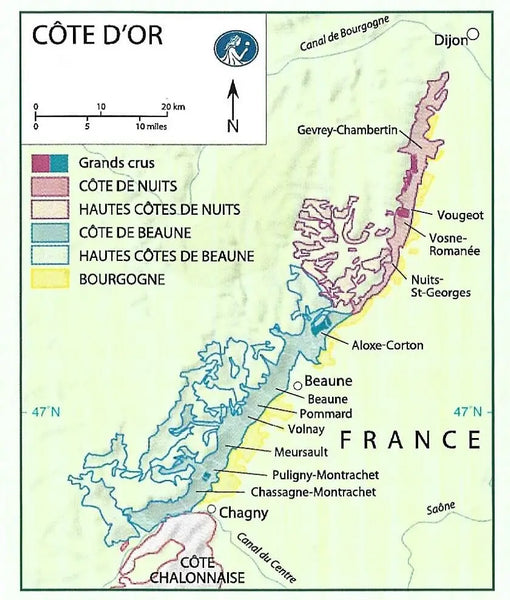
Map of the Côte d'Or vineyards in Burgundy
The Premier Crus of Chassagne-Montrachet
With a worldwide reputation, the Chassagne-Montrachet AOP has 55 Premier Crus within its territory, representing the elite terroirs of the appellation. While it is impossible to detail them all here, below is a brief overview of some of the most iconic.
- Les Caillerets : located at a high altitude (300-350 meters), this climat is one of the most renowned in Chassagne-Montrachet. The wines produced here, mainly white wines made from Chardonnay, are often characterized by great freshness, a pronounced minerality as well as complex aromas of yellow fruits and white flowers. The wines also have good aging potential and are known for their elegance and very fine structure.
- Les Chenevottes: covering 12.5 hectares, Premier Cru is among the most renowned climates of the appellation. This site produces white wines famous for their elegance and complexity. The limestone terroir and ideal exposure of the plots also allow the wines here to express exceptional minerality and freshness, while developing notes of white-fleshed fruits and sometimes slightly buttery touches if the wine has been aged in oak barrels.
- Les Macherelles : This climate produces both white and red wines. The white wines are particularly refined and well-balanced, with aromas of yellow fruits and a lovely freshness on the palate. The red wines, made from Pinot Noir, are also remarkable, offering aromas of fresh red fruits, with a delicate structure and great freshness.
- Les Embrazées : here is another climate producing both white and red wines. The Chardonnays are of outstanding quality, with a round and rich texture, while the reds are more intense and full-bodied, with notes of dark fruits and sometimes a subtle spicy touch.
- Les Vergers: this climate produces high-quality Chardonnay white wines.They are renowned for their freshness, minerality, and aromas of white fruits and white flowers. Wines from the "Les Vergers" vineyard can also develop slightly buttery notes if aged in oak barrels.
- Les Ruchottes: this terroir is one of the best for Chardonnay production in Chassagne-Montrachet. It benefits from a favorable exposure and limestone soils that promote the production of elegant and complex wines, with aromas of stone fruits, white flowers, and pronounced minerality. The white wine here is very refined and has notable aging potential.
- Le Clos Saint-Jean : although smaller in size compared to other Premier Cru vineyards, Clos Saint-Jean is highly regarded for the finesse and richness of its wines. The cuvées here stand out for their minerality, their white fruit aromas and their excellent length on the palate. There are also a few plots in this climate dedicated to Pinot Noir, but this remains quite rare.
You are now well informed about the Premier Crus of the Chassagne Montrachet AOC. Let’s now move on to the Grand Crus !
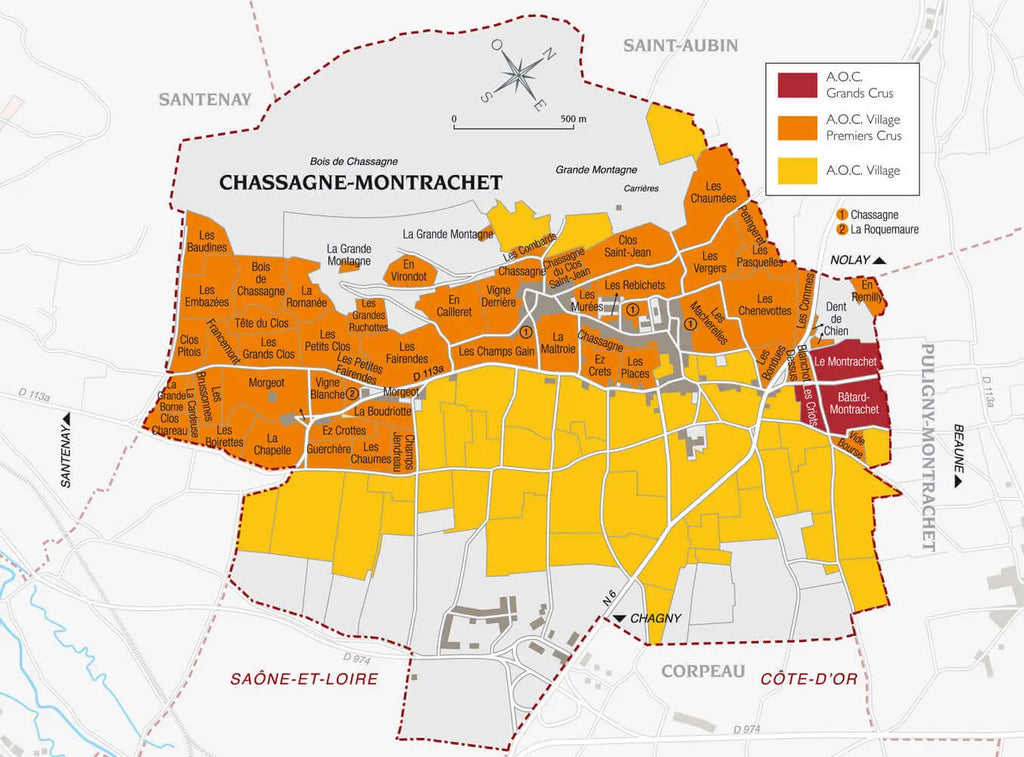
Map of the climats of Chassagne-Montrachet: Villages, Premier Crus, and Grand Crus
The Grand Crus of Chassagne-Montrachet
The commune of Chassagne-Montrachet has 3 Grand Crus. These are considered as appellations in their own right and represent the elite of Burgundy and Côte de Beaune terroirs.These are highly sought-after bottles with extremely high price points, varying depending on the estate and vintage. Let’s explore these 3 iconic terroirs!
Grand Cru Le Montrachet
The Grand Cru Montrachet is shared between the villages of Puligny-Montrachet and Chassagne-Montrachet. With a total area of about 7.8 hectares, this exceptional terroir produces some of the most prestigious and sought-after white wines in the world.
The wine here is renowned for its complexity, minerality, freshness, and lingering finish. The aromas can range from notes of white flowers and stone fruits (peach, apricot), to hints of hazelnut or fresh butter, and a mineral touch that gives it a unique structure.
The Montrachet wine is also often described as combining elegance and richness, showing exceptional aging potential . Indeed, it can improve over several decades and then develops aromas of truffle and honey.
Many renowned producers own plots in the Grand Cru Le Montrachet, such as Domaine de la Romanée-Conti, Domaine Leflaive, and Château de Chassagne-Montrachet.
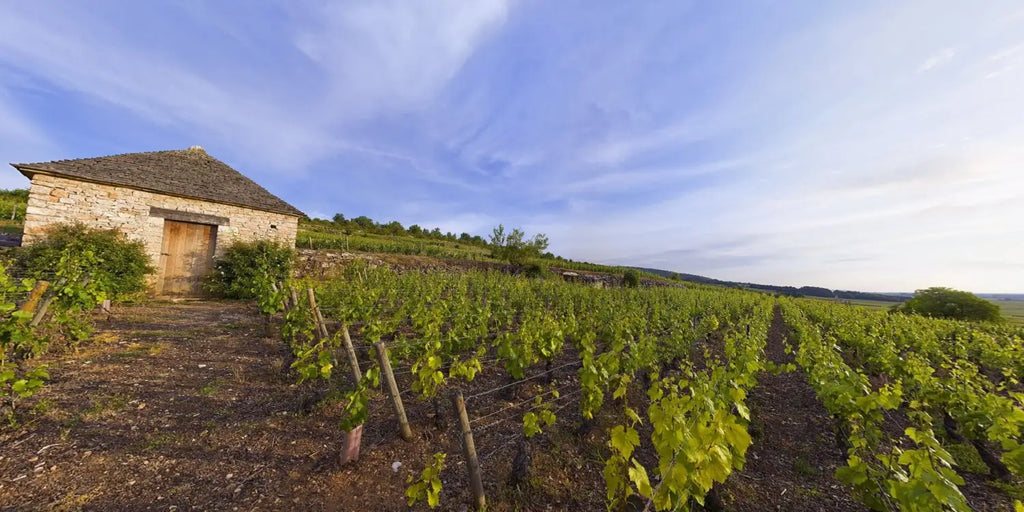 Grand Cru Le Montrachet
Grand Cru Bâtard-Montrachet
The Grand Cru Bâtard-Montrachet is also shared between the villages of Puligny-Montrachet and Chassagne-Montrachet.
With a total of 11.2 hectares, Bâtard-Montrachet produces rich, structured, and powerful white wines. However, these wines also display great elegance. In fact, the wines here are generally less full-bodied than those of the Grand Cru "Le Montrachet".
The aromas of a bottle of Bâtard-Montrachet reveal yellow fruits (peach, apricot), white flowers, a hint of butter and notes of hazelnut. The wine is very elegant and has a lovely acidity allowing it to age while retaining beautiful freshness.
Although bottle prices remain high here, Bâtard-Montrachet is still one of the Grand Crus that is most financially accessible due to its larger surface area.
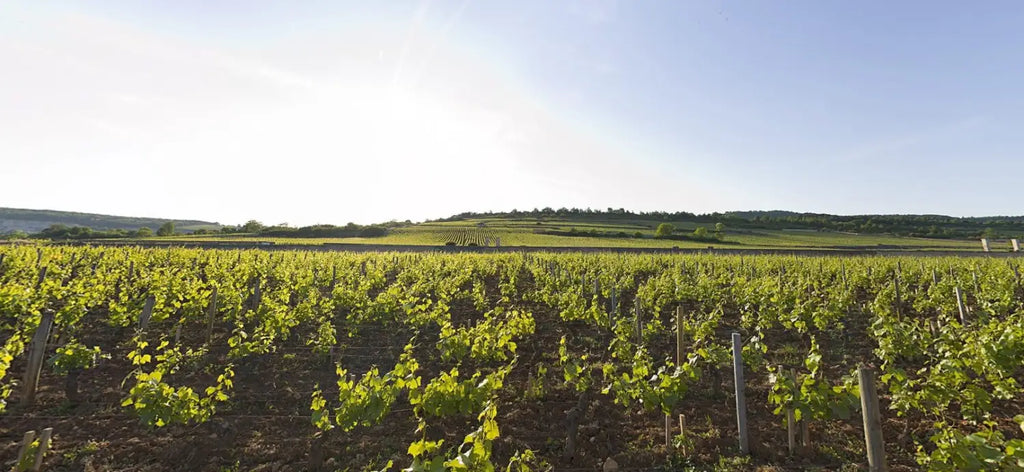 Bâtard-Montrachet Grand Cru
Criots-Bâtard-Montrachet
With only 1.57 hectares in production, Criots-Bâtard-Montrachet is the smallest of the Montrachet family Grand Crus. Unlike Montrachet and Bâtard-Montrachet, which are shared between Puligny-Montrachet and Chassagne-Montrachet, Criots-Bâtard-Montrachet is located exclusively in the commune of Chassagne-Montrachet.
This Grand Cru appellation produces only white wines made from Chardonnay.Located at around 250 meters above sea level, the vines benefit from a favorable exposure as well as the limestone and clay soils typical of this area of the Côte de Beaune.
The wines of Criots-Bâtard-Montrachet are generally distinguished by their richness, depth, and great aromatic complexity, while maintaining a beautiful freshness. They notably feature notes of ripe fruit, white flowers, hazelnut, butter, and honey, with a remarkable aging potential.
Its extremely small surface area makes it a particularly rare Grand Cru, with bottles produced in very limited quantities.
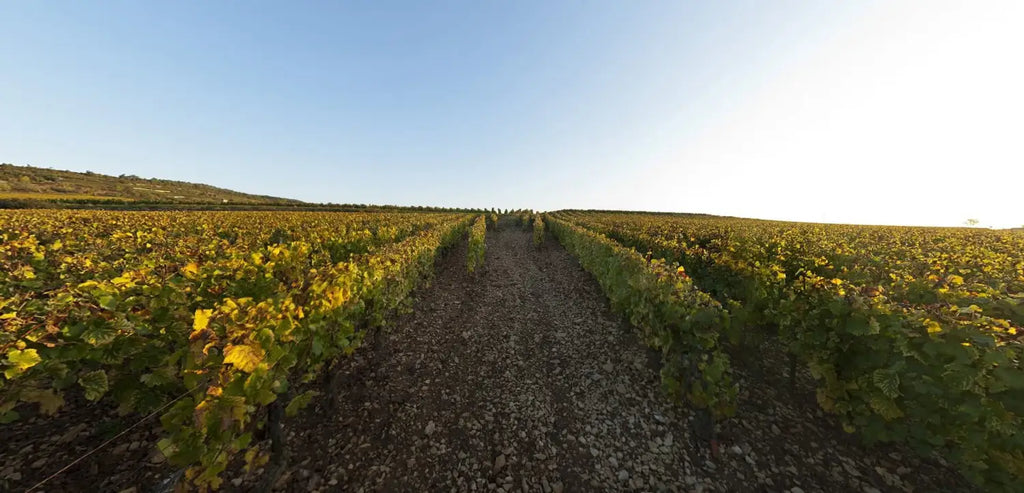 Grand Cru Criots-Bâtard-Montrachet
What to eat with a Chassagne-Montrachet?
Chassagne-Montrachet wine, whether white or red, pairs beautifully with a wide range of dishes. Here are some suggestions that are sure to whet your appetite !
With Chassagne-Montrachet white wines
Chassagne-Montrachet white wine proves to be an ideal companion for many dishes.
With a Chassagne village, try pairing it with grilled fish en papillote (sea bass, sea bream) : the freshness and lightness of your white wine will perfectly complement the tenderness of the fish.A tasting with a roast chicken can also be a great success if you choose an oak-aged white wine, bringing roundness and generosity. Finally, the freshness of a Chassagne Chardonnay will also pair interestingly with the creaminess of fresh goat cheeses !
With a Premier Cru Chardonnay from the appellation , we recommend more refined dishes. For example, the flavors of lobster with cream will pair perfectly with the aromatic richness of a Premier Cru from Clos Saint-Jean. Pan-seared scallops or sweetbreads with cream are other suitable options.
Finally, with the Grands Crus of Chassagne, try a grilled lobster with butter or a roast turbot with truffle cream to echo the tertiary notes of an old vintage from the AOP.
In any case, we recommend serving your Chassagne white wine at a temperature between 11-13°C to fully enjoy all its aromatic nuances !
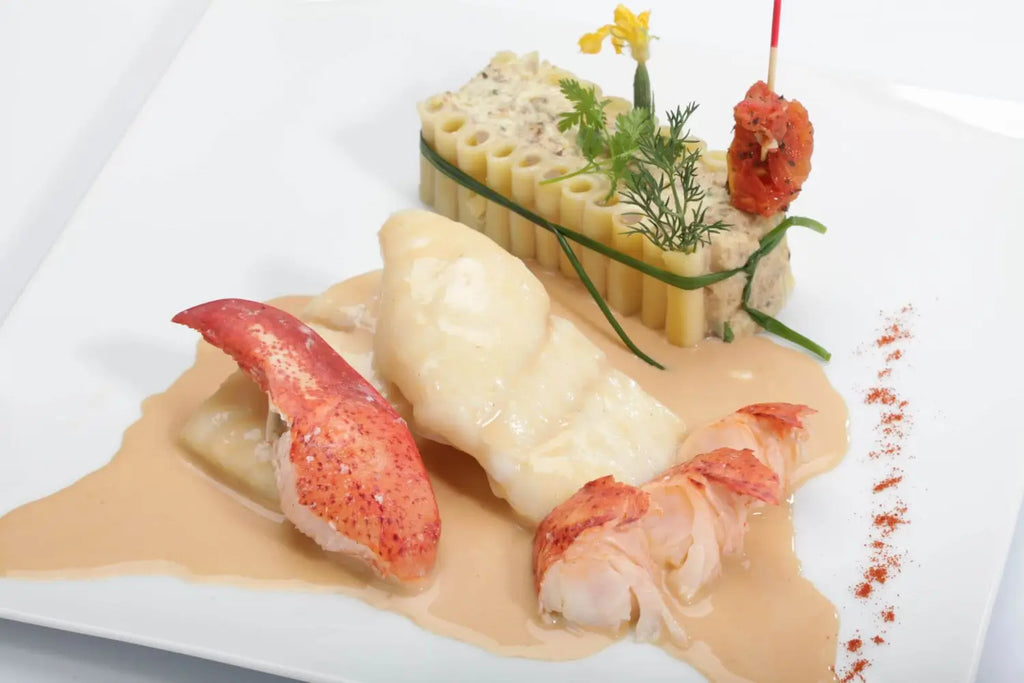 Lobster with cream: the perfect pairing with a Premier Cru from Chassagne-Montrachet
With the red wines of Chassagne-Montrachet
As for Chassagne-Montrachet reds, pairings with meat-based dishes are an obvious choice.
Thus, your bottle of Pinot Noir from the AOC will pair perfectly with a grilled lamb, a juicy pork roast or even curried poultry for a little spicy twist.
Finally, although white wine is generally a better match for cheese, try pairing Chassagne red here with an Époisses or a Morbier …you might be surprised !
From a serving temperature , perspective, Chassagne-Montrachet red wine is ideally enjoyed between 14-16°C to fully appreciate its aromatic range.
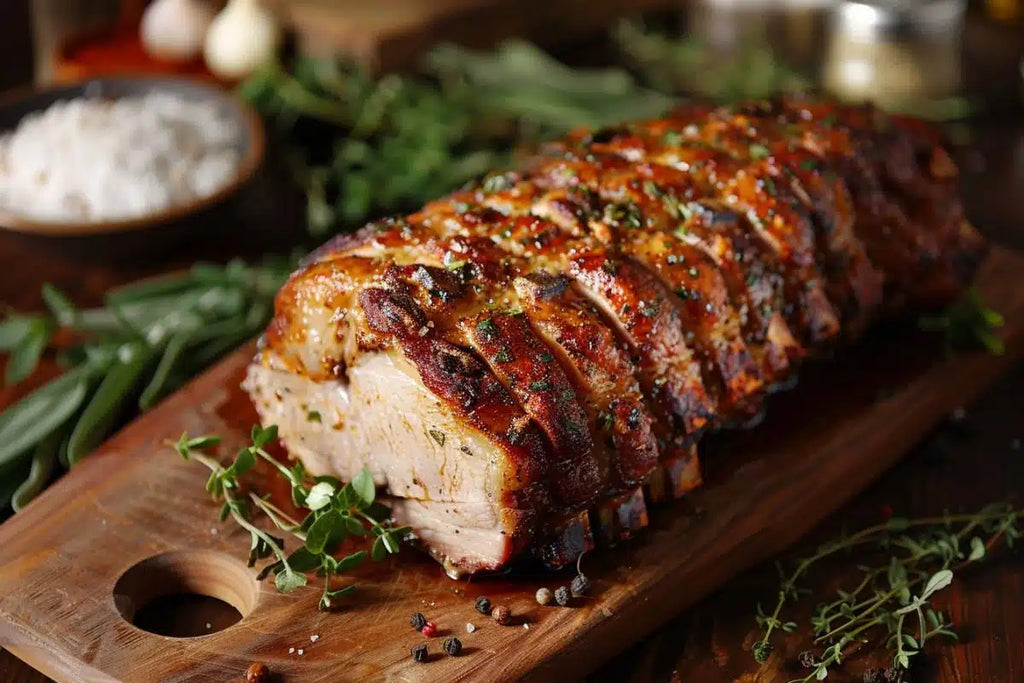 What could be better than a delicious pork roast paired with a Chassagne-Montrachet red?
Key estates to remember
While many renowned properties exist in the appellation, such as Domaine Marc Colin, Vincent Girardin, or Bachelet-Ramonet, La Cave Éclairée recommends you take a closer look at the wines from the outstanding estate Au Pied du Mont Chauve !
Located in the heart of the village of Chassagne-Montrachet, this estate belongs to the Picard family . The vineyard covers 35 hectares, all situated on the most prestigious appellations of the Côte de Beaune: Puligny-Montrachet, Chassagne-Montrachet, Saint-Aubin, as well as several Grands Crus such as Corton-Bressandes and Corton-Charlemagne.
Whether for its white or red wines, the estate puts all its heart and expertise into revealing the best of these exceptional terroirs. Among its most sought-after cuvées are notably the Chassagne-Montrachet 1er Cru Clos Saint-Jean and the Chassagne-Montrachet "En Pimont ".
The soils of the appellation
Let us now analyze the soils of the Chassagne-Montrachet AOP vineyard !
The terroir of Chassagne-Montrachet is mainly composed of limestone and clay, giving the wines great minerality and beautiful complexity.
Limestone soils generally bring structure and tension to the wines. These lands, which have built the reputation of Chassagne-Montrachet, allow Chardonnay to express itself with mineral, fruity, and sometimes floral aromas.
The clays and marls present play a more significant role for red wines, giving them roundness and richness.
The slopes of the hills of Chassagne-Montrachet are mainly facing East and South-East, ensuring the grapes have excellent sun exposure, allowing them to ripen slowly and develop a beautiful aromatic complexity in the local wines. Finally, the vines are mainly located between 220 and 325 meters above sea level.
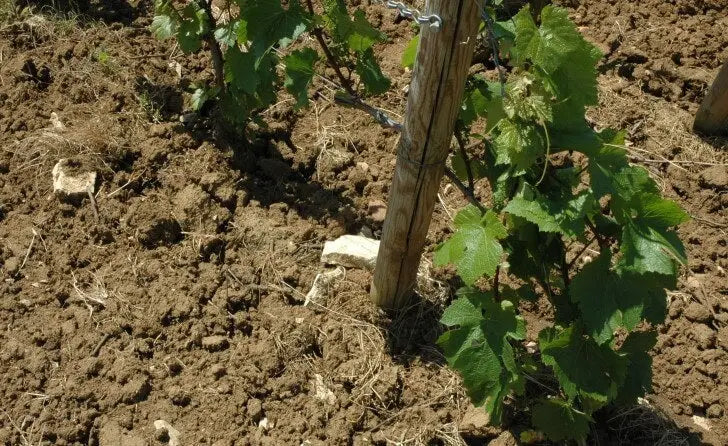 Brown, limestone, and stony soils on Chassagne-Montrachet
The climate of Chassagne-Montrachet
The climate of the Chassagne-Montrachet appellation plays a crucial role in the quality of its wine. This climate, typical of the Côte de Beaune, is defined as continental and is characterized by cold winters and hot summers, conditions that are highly favorable for Chardonnay and Pinot Noir varietals.
Chassagne-Montrachet also experiences moderate rainfall throughout the year, with frequent showers in spring and autumn.These rains can be beneficial for the vine, especially in spring, by providing the necessary moisture for healthy growth. However, excessive humidity during the grape ripening period can also pose risks, such as grey rot.
Let us also not forget that Chassagne-Montrachet is a village that benefits from microclimates thanks to the diversity of its terroirs. Each plot, or climat, indeed has its own characteristics depending on its exposure, altitude, and soil composition.
Logically, these differences contribute to the diversity of wines in the appellation, ranging from fresh and mineral cuvées to more round and opulent .
Finally, the winds also play an important role in the climate of Chassagne-Montrachet, especially those blowing from the Oisans mountains and the Alps. These winds bring a welcome coolness in summer and help prevent the appearance of certain humidity-related diseases by improving the ventilation of the vines.
History of the Chassagne-Montrachet appellation
Viticulture in Chassagne-Montrachet probably began as early as the Gallo-Roman period, when the Romans planted the first vines in Burgundy. However, in the year 92, Emperor Domitian issued an edict forbidding new plantings outside Italy, thus slowing the development of Burgundy viticulture.Two centuries later, in 280, this ban was finally lifted by Emperor Probus and the vineyards of Burgundy were able to resume their progress.
In the Middle Ages, Christianity played a central role in the development of the vineyards of France and Burgundy. The monks, great guardians of viticultural tradition, then encouraged the expansion of vineyards throughout the region and greatly improved viticultural and winemaking techniques.
It was also during this period that Chassagne-Montrachet began to establish itself as a benchmark among the best terroirs for wine. Chassagne, once known as "Cassania", gradually became rooted in the Burgundian landscape, and other neighboring villages, such as Meursault or Puligny, also began to distinguish themselves for their wines.
In 1395, a major turning point occurred when Philip the Bold, Duke of Burgundy, decided to ban the Gamay grape variety from the region in order to develop Pinot Noir. This was a historic moment, as Pinot Noir remains to this day the leading red grape variety in Burgundy wines.
During the 17th and 18th centuries, Chassagne's reputation grew thanks to merchants and nobles who were increasingly interested in Burgundy wines. At that time, the lands and climates of Chassagne continued to be more precisely segmented according to their quality, thus continuing the work begun by the monks during the Middle Ages.
In the 19th century, the phylloxera crisis severely affected Burgundy and the entire French vineyard. To save their vines, producers grafted their plants onto American rootstocks. However, this difficult period did not diminish the reputation of Chassagne-Montrachet wines, which continued to be highly sought after.
In 1879, the village of Chassagne took the name Chassagne-Montrachet, borrowing this last part from the prestigious Montrachet climat thus definitively asserting its winegrowing identity.
Finally, in 1937, the Chassagne-Montrachet AOC was created, marking the official recognition of its exceptional terroir. Chassagne-Montrachet thus became a must-have in the world of Burgundy wines.
Today, mainly focused on white wines, the appellation did not always have this profile. Until the 1980s, the AOP actually produced mainly red wines! It was only from that period onwards that Chardonnay began to overtake Pinot Noir, driven in particular by growing consumer demand. Since then, Chassagne-Montrachet has become renowned above all for its great white wines, although a few fine plots still produce high-quality reds.
This evolution, combined with the prestige of its Premiers Crus and Grands Crus, has greatly contributed to the current reputation of the appellation. Chassagne-Montrachet bottles are now highly sought after by enthusiasts and often command high prices.
You are now an expert on the AOP Chassagne-Montrachet! To celebrate, all that's left is to open a great bottle! To do so, feel free to visit our website La Cave Éclairée and choose from our stock the gem that will excite you.
Cheers !


