





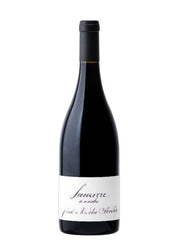


In the heart of the Lot Valley, the Cahors AOC is among the most emblematic appellations of Southwest France. Renowned for its characterful red wines mainly made from the Malbec grape variety (also known as Côt), it relies on a long winemaking history, diverse terroirs, and remarkable viticultural expertise.
Between the vineyard terraces along the Lot, the limestone hillsides of the appellation, and its different grape varieties, the Cahors vineyard offers a diversity that is often overlooked. Indeed, behind its image as a powerful red wine, there are actually cuvées with multiple profiles, capable of combining depth, freshness, fruit, and elegance.
So, what is the origin of this designation ? What are its terroirs ? How does Malbec express itself on these soils ? In this guide, discover everything you need to know about the Cahors AOC and its wines !
Contents
- History and origins of the Cahors AOC
- The terroir of Cahors
- The grape varieties of the Cahors AOC
- Wine styles of the Cahors AOC
- What is the aging potential of Cahors wines ?
- The differences between Cahors Malbec and Malbec from Argentine
- What are the differences between Cahors and Bordeaux ?
- Food pairings for Cahors wines
- The best Cahors wines to discover
- In summary
History and origins of the Cahors AOC
The history of Cahors is among the oldest in the French vineyard. The cultivation of the vine is indeed attested in the Lot Valley as early as the Gallo-Roman period, benefiting from a favorable environment and a geographical location conducive to commercial exchanges.
In the Middle Ages, the wines of Cahors gained a reputation that far exceeded the borders of South-West France. Exported to England, the Flanders and certain European courts, they were then appreciated for their deep color, concentration, and ability to age. This intensity gradually earned them the nickname "black wines", still used today.
The history of the vineyard is, however, marked by significant commercial competition with Bordeaux. For several centuries, the wines of the Haut-Pays, including those from Cahors, indeed saw their access to the Bordeaux port limited by various regulations and privileges granted to local producers. Despite these constraints, the vineyard nevertheless managed to preserve its reputation thanks to the quality of its wines.
At the end of the 19th century, as in many other French and European wine regions, Cahors was severely affected by the mildew and phylloxera crises. A large part of the vines disappeared, forcing winegrowers to undertake extensive replanting work. This reconstruction would also gradually help to strengthen the place of the Malbec grape variety in the vineyards.
While the vineyard gradually regained its dynamism, the region was struck by another major event in 1956. An exceptionally harsh winter destroyed a large part of the vines, forcing winegrowers to undertake a new phase of replanting. Nevertheless, this ordeal became an opportunity to modernize the vineyard, with significant restructuring work and better enhancement of the terroirs. The efforts made over the following decades ultimately led to the official recognition of the Cahors designation in 1971.
Today, the Cahors vineyard covers more than 3,000 hectares of vines and is among the largest red wine appellations in the southwest. Driven by a new generation of winemakers, the wines now combine power, freshness, and precision, while preserving the identity that has built their reputation for centuries.
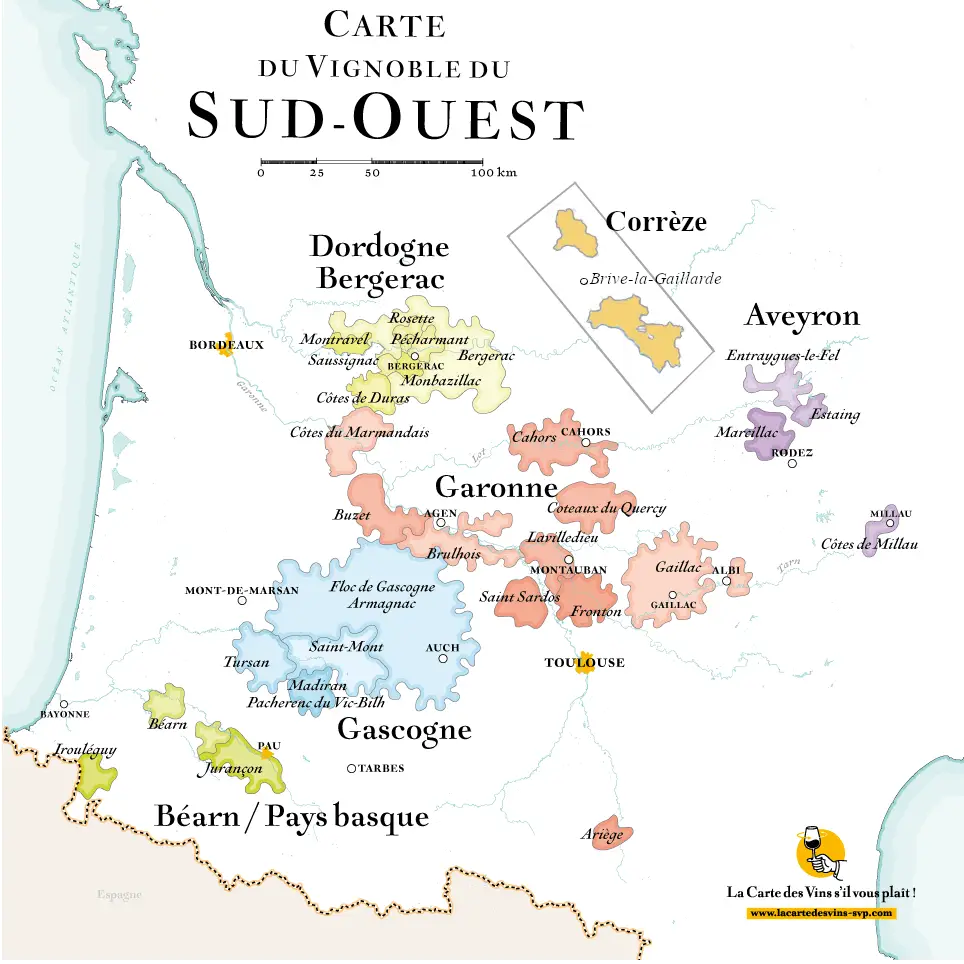 Map of the Southwest vineyard with Cahors located in the north-central area
The terroir of Cahors
The personality and variety of Cahors wines are closely linked to the diversity of the terroirs of the appellation. The AOC Cahors area extends over a landscape shaped by the Lot river, where terraces, hillsides, and limestone plateaus follow one another.
The vineyard is spread over several levels:
-The plots located near the Lot are set on soils composed of pebbles, gravel, and alluvium. They often produce wines characterized by vibrant fruit, a generous texture, and generally supple tannins, which often make them accessible when relatively young.
-The limestone hillsides and plateaus of the causse offer more challenging conditions for the vine. On these poor, well-drained soils, the roots penetrate deeply in search of water and nutrients. The wines produced here are generally distinguished by greater concentration, but also by more freshness, tension, and complexity. They often have greater aging potential and are among the most ambitious expressions of Cahors Malbec.
The climate also contributes to the identity of the vineyard. Located in the southwest of France, the region benefits from both oceanic and southern influences. Hot summers promote good ripeness of the grapes, while the temperature differences between day and night help preserve the aromatic freshness and balance of the wines.
The combination of these different terroirs, the climate, and the expertise of the winemakers gives rise to high-quality cuvées, capable of expressing all the uniqueness of the Cahors appellation.
The grape varieties of the AOC Cahors
The identity of the Cahors aoc is inseparable from Malbec, the emblematic grape variety that has greatly contributed to the reputation of the famous black wines of the Lot valley. Known locally as Côt or Auxerrois, it is the true signature of the vineyard and shapes the personality of the vast majority of the cuvées produced within the appellation.
The AOC specifications indeed require that Malbec represents at least 70% of the blend. In practice, many estates give it an even more important place, with some even producing cuvées composed exclusively of this grape variety.
Malbec primarily brings the deep color that characterizes the red wines of Cahors. On the nose, it develops notes of blackberry, blackcurrant, plum, and black cherry. On the palate, it stands out for its ample body, a beautiful concentration and a great tannic potential. Over time, Cahors wines can evolve towards aromas of cocoa, licorice, spices, truffle, or even undergrowth.
While Malbec largely dominates the grape varieties, it can nevertheless be complemented by two other grape varieties: Merlot and Tannat. The former generally brings more roundness, suppleness, and richness, while the latter reinforces the structure, tannins, and aging potential of the wines.
In Cahors, the possibility of blending all these varieties allows each estate or château of the appellation to refine the style of their cuvées. Regardless of the chosen proportion, Malbec remains at the heart of the identity of the great wines of Cahors and stands as one of the finest ambassadors of the South-West wine region.
Wine styles of the Cahors AOC
Exclusively dedicated to red wines, the Cahors AOC draws its identity from Malbec, the emblematic grape variety of the appellation, as well as from the diversity of the terroirs that make up the Lot Valley. While Cahors wines have long been associated with powerful and structured profiles, today they offer a much more nuanced range of expressions.
In their youth, they are generally distinguished by a deep color with violet highlights. This color intensity, characteristic of Malbec, has greatly contributed to the historical reputation of the famous "black wines" of Cahors.
On the nose as well as on the palate, black fruit aromas often take center stage, with notes of blackcurrant, blackberry, black cherry, or even plum. Over time, or depending on the terroir and choices in vinification and aging, this aromatic palette can be enriched with nuances of licorice, violet, sweet spices, cocoa, truffle, or undergrowth.
Within the appellation, several styles coexist:
-Wines from the alluvial terraces located near the Lot generally favor fruit brightness, roundness, and a more immediate approach. Often characterized by softer tannins, they are relatively approachable when young while still retaining a beautiful expression of Malbec.
-The cuvées originating from the limestone hillsides and plateaus display greater depth and structure. The body is often denser, the tannins more pronounced, and the aromatic complexity more developed. These wines generally combine concentration, freshness, and aging potential, and often benefit from being cellared for a few years before reaching their full expression.
Over the past decades, the style of Cahors wines has evolved considerably. Without denying the character that built their reputation, many winemakers now favor more precise vinifications and better-controlled aging in order to achieve greater balance and freshness.The expression of fruit and terroir now occupies a central place in the creation of the cuvées.
Thus, behind a common identity carried by Malbec, the Cahors appellation reveals a remarkable diversity of profiles, ranging from indulgent and approachable wines to great age-worthy cuvées among the most ambitious in the French vineyard.
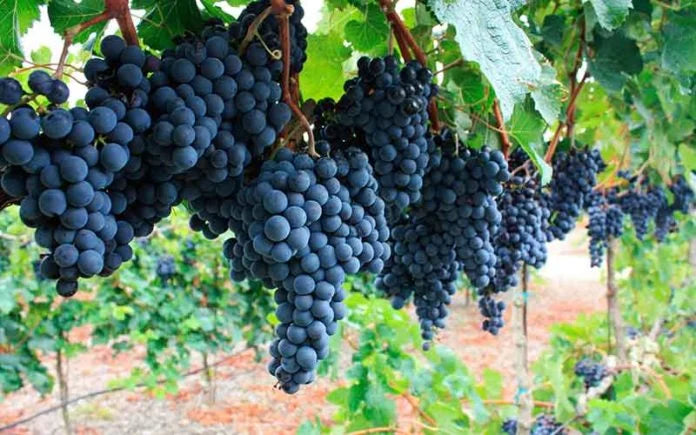
The Malbec grape variety, signature of the Cahors appellation
What is the aging potential of Cahors wines ?
Thanks to the great natural structure of Malbec and the quality of the Cahors terroirs, the AOC's red wines often offer an excellent aging potential.
The fruitiest cuvées, often originating from the first terraces of the Lot valley, can be enjoyed within their first five years in order to fully appreciate their freshness and their indulgent fruity notes.
Conversely, wines from higher altitude limestone terroirs can age favorably for 10, 15 or even 20 years for certain cuvées. Over time, the tannins of Malbec soften, the palate gains in complexity, and the aromas evolve towards tertiary notes of undergrowth, leather, or truffle.
This remarkable aging potential is one of the characteristics that distinguishes Cahors among the many other French appellations and greatly contributes to its reputation among lovers of great red wines.
Finally, it should be noted that in Cahors, many cuvées offer an excellent quality-price ratio, allowing access to ambitious age-worthy wines for a budget often lower than that of certain prestigious appellations from Bordeaux or Burgundy.
The differences between Cahors Malbec and Malbec from Argentina
While Malbec has gained worldwide fame thanks to Argentina, its roots are actually found in the southwest of France. Although they are made from the same grape variety, the wines of Cahors and those of Argentina express distinct personalities, shaped by different terroirs, climates, and winemaking approaches.
- In Cahors, Malbec develops on a mosaic of alluvial terraces, hillsides, and limestone plateaus. Combined with a temperate climate influenced by both oceanic and Mediterranean factors, these terroirs generally produce structured wines, with remarkable freshness and a solid tannic framework. The aromas often lean towards blackcurrant, blackberry, violet, and spices, evolving with age towards notes of licorice, truffle, or undergrowth.
- In Argentina, Malbec is mainly grown in the high-altitude vineyards of the Mendoza, region at the foot of the Andes mountains. The significant temperature variations between day and night here promote excellent grape ripening while preserving their acidity. Altitude also plays an essential role in the identity of these wines, with some vineyards located at over 1,000 meters. Argentine Malbecs are generally distinguished by a more velvety texture, softer tannins and highly expressive aromas of ripe black fruits, plum, and sometimes violet.
However, it would be simplistic to systematically contrast a powerful Cahors with a softer Argentinian Malbec. Viticultural practices, winemaking choices, and the diversity of terroirs today produce a wide range of styles in both countries.
Nevertheless, it is clear that Cahors wines often stand out for their freshness, structure, and aging potential, while Argentinian Malbecs generally place greater emphasis on fruit intensity, roundness, and the smoothness of the tannins.
What are the differences between Cahors and Bordeaux ?
Although Cahors and Bordeaux are among the leading references for red wine in France, these two wine regions are based on significantly different histories, terroirs, and approaches to viticulture.
The history
The vineyards of Cahors and Bordeaux both have an ancient history, but their development has followed very different paths.
Since the Middle Ages, Bordeaux has benefited from its privileged location on the Gironde estuary and has developed significant maritime trade with England and later with many international markets. This openness has gradually contributed to making Bordeaux one of the most influential and renowned vineyards in the world.
Cahors also enjoys a solid historical reputation. The famous "black wines" of Cahors were already appreciated far beyond the southwest of France and exported to many regions of Europe. However, the distance from major commercial ports and certain regulations favoring Bordeaux wines have limited their development for export.
Even today, this difference in history is reflected in the price positioning of the two vineyards. Bordeaux remains a global benchmark driven by its great vintages and prestigious appellations, while Cahors attracts many enthusiasts thanks to characterful wines often offering an excellent quality-price ratio, including for age-worthy cuvées.
The grape varieties
In Cahors, Malbec constitutes the true backbone of the appellation. It must in fact represent at least 70% of the blend and alone expresses the essential identity of the wines.Depending on the estates, it may be complemented by Merlot or Tannat, which respectively bring more roundness or structure.
In Bordeaux, the philosophy is different. Red wines are traditionally based on the blending of several grape varieties, mainly Merlot, Cabernet Sauvignon, and Cabernet Franc. Depending on the appellations and properties, these may be complemented by Petit Verdot, Malbec, or more rarely Carmenère. This diversity allows winemakers to adjust the balance of the wines according to the terroirs and the characteristics of each vintage.
Thus, while Cahors primarily highlights the personality of Malbec, Bordeaux stands out for its tradition of blending, contributing to the diversity of styles produced in the vineyard.
The terroirs
In Cahors, the vineyard mainly extends over the terraces of the Lot valley as well as on limestone hillsides and plateaus. This diversity of terroirs makes it possible to obtain very different wines depending on their origin, ranging from fruity and accessible cuvées to more concentrated wines for aging.
In Bordeaux, the vines are spread over a much larger area and are notably rooted in gravel, clay, limestone, or sandy soils depending on the appellations and sectors of the vineyard.
Tasting notes
During tasting, Cahors and Bordeaux wines display distinct personalities, even though their diversity makes any generalization excessive.
Cahors wines often present a deep and intense color, inherited from the strong coloring power of Malbec. On the palate, they are generally distinguished by a beautiful concentration, a pronounced tannic structure, and a freshness that contributes to their balance. The aromas frequently evoke blackberry, blackcurrant, plum, violet, and spices, to which may be added with aging notes of licorice, truffle, cocoa, or undergrowth.
In Bordeaux, the profiles vary considerably depending on the appellations, terroirs, and blends. The wines are often characterized by a more nuanced structure and a particularly complex aromatic expression, combining black and red fruits with notes of cedar, tobacco, graphite, sweet spices, or cigar box as they evolve. The tannins generally become more mellow and integrated over time, especially in the great age-worthy wines.
While both regions produce wines capable of aging for many years, the great Cahors wines often appeal for their intensity, depth, and assertive character, whereas the Bordeaux grands crus are particularly sought after for their aromatic complexity, balance, and remarkable aging potential.
Food pairings for Cahors wines
Thanks to the structure, natural acidity, and aromatic richness of Malbec, Cahors wines naturally find their place at the table. They are ideally paired with characterful dishes, whose generosity and intensity highlight all the complexity of the wines from the appellation.
- Charcuterie : with fruit-forward Cahors, simple and convivial pairings are ideal. Saucisson, country ham, terrines, and rillettes are a real hit here !
- Red meats and game: rib of beef, grilled ribeye, venison, or lamb chop are classic pairings with Cahors wines. The ample body of the wine and its notes of dark fruits perfectly accompany the flavors of the meat while balancing its richness.
- Southwest Specialties: duck breast, confit, cassoulet, or even traditional recipes from Lot and the Southwest naturally pair with wines from the appellation. These dishes particularly highlight the aromatic depth of Malbec and the richness of its tannins.
- Slow-cooked dishes: beef stew, braised beef cheek, civet, or other long-cooked preparations offer excellent pairings with the most structured wines of the appellation. The melting texture of the dish matches the density of the wine, creating a particularly harmonious combination.
- Aged cheeses : tomme de brebis, cantal entre-deux, salers or aged mimolette pair very well with Cahors wines after a few years of aging.
To fully enjoy the wines of the Cahors AOC, a serving temperature between 16 and 18°C is generally suitable. Young vintages also often benefit from being decanted for about thirty minutes before serving to soften their tannins and more easily reveal their black fruit and spice aromas.
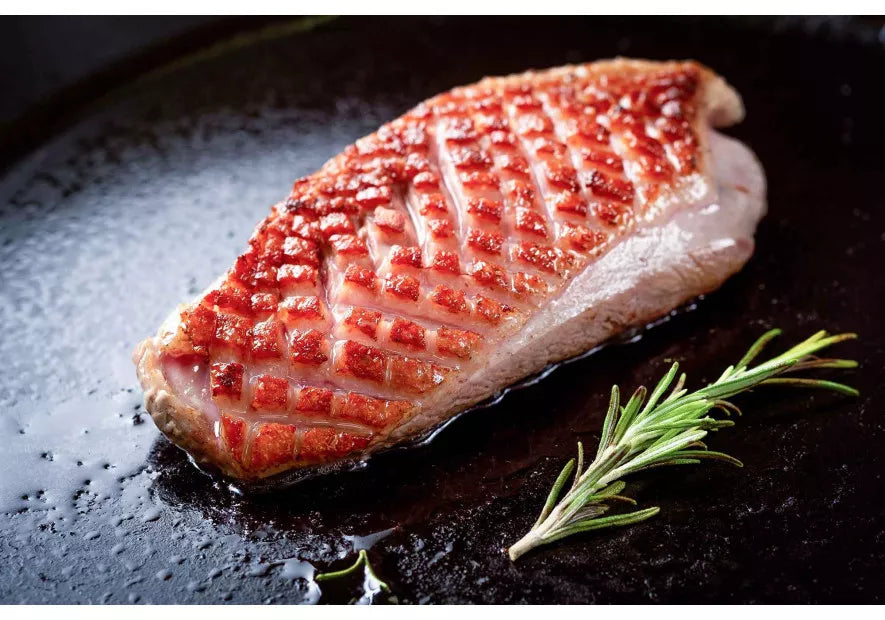 Cahors and duck breast: a classic pairing from the Southwest
The best Cahors wines to discover
Thanks to its vast area, Cahors brings together a great diversity of producers, ranging from historic estates to more recent wineries contributing to the revival of the appellation. This human richness greatly contributes to the diversity of styles found in the vineyard.
Among the most renowned references are Château du Cèdre, Clos Triguedina, Château de Haute-Serre, Château les Croisille, Le Mas del Périé, Château de Chambert, Château Eugénie, and Château de Cayx. So many estates that have contributed for many years to the influence of Cahors in France and internationally.
The modern evolution of the appellation also owes much to producers who have helped to change the sometimes austere image of Cahors wines. This is notably the case of Cosse & Maisonneuve, an estate founded by Matthieu Cosse and Catherine Maisonneuve. Since the 1990s, the couple has been among the winemakers who advocate for a precise and respectful approach to the terroirs, with controlled yields, minimally interventionist vinification, and particular attention paid to the expression of the fruit. Their cuvées have greatly contributed to demonstrating that Cahors Malbec can combine depth, freshness, and elegance, far from certain stereotypes associated with highly extracted wines.
This coexistence between large historic estates and more innovative domains is today one of Cahors' strengths. It allows enthusiasts to discover a wide variety of cuvées, from the most ambitious age-worthy wines to the most accessible and indulgent expressions of Malbec.
In summary
With its rich history, its famous black wines, its terrace and limestone plateau terroirs, as well as its emblematic Malbec grape variety, Cahors occupies a unique place in the French wine landscape.
Long renowned for its powerful, age-worthy wines, the appellation actually reveals a much wider diversity of styles than one might imagine. From fruity and accessible cuvées to the deepest and most complex wines, Cahors demonstrates all the richness that its terroirs and winemakers can offer.
Whether you wish to explore the great classics of the vineyard or discover the more modern interpretations of Malbec offered by a new generation of producers, Cahors thus offers many bottles capable of surprising and convincing every palate !
At La Cave Éclairée, we have carefully selected several renowned references to help you discover the full diversity and potential of this great appellation from the Southwest. All that remains is for you to choose the bottle that will accompany your next tasting !


