

An iconic spirit in cocktail bars as well as at-home aperitifs, Gin captivates with its aromatic richness and its flavorful history. Born in the Netherlands before conquering England and then the rest of the world, it has established itself as a must-have in contemporary mixology.
In this article, discover its origins, its different styles, the secrets of its distillation, as well as the cocktails you shouldn't miss. At the end of the article, we will also share our favorites to help you choose the ideal gin to enjoy or to give as a gift.
To your glass, the journey can begin !
Contents
History and origin of Gin
Gin as we know it today truly took shape in the 17th century. Its direct ancestor, jenever (or genever), is a Dutch spirit made from grains, flavored with juniper berries. Initially designed for medicinal purposes, juniper was renowned for its digestive and soothing properties. Straddling the line between remedy and pleasure, it found its place both in pharmacies and at festive tables.
The fate of gin changed with William III of Orange-Nassau, Dutch prince who became King of England in 1689. By importing this beverage into his new kingdom, he boosted its popularity. The English quickly adopted this aromatic spirit and perfected it in their own way: less sweet, drier, and purer, it became the London Dry Gin, a symbol of British style. Today, this gin stands out for its clean character and botanical bouquet dominated by juniper, sometimes enhanced with citrus, coriander, and spicy notes.
In the 18th century, gin established itself as the iconic spirit of London taverns, even sparking the famous Gin Craze, an era of excessive enthusiasm that led the government to regulate its production. Over time, its reputation evolved: from a popular drink, it gradually became a key ingredient in British mixology.
In the 19th century, the famous gin & tonic was born. Its creation is attributed to British officers stationed in India, who had to regularly consume quinine to protect themselves from malaria. To reduce its bitterness, they diluted it in powdered form in sweetened sparkling water, giving rise to the first tonic water. By adding a touch of gin, they transformed this bitter remedy into a refreshing and convivial beverage, quickly adopted throughout the British Empire. The gin and tonic gradually became a timeless classic, a symbol of both elegance and pleasure.
Subsequently, the popularity of gin crossed English borders. In France, it captivates with its aromatic finesse and inspires a new generation of artisan distillers, who incorporate local plants, Provençal herbs, or Mediterranean citrus fruits. Gin thus becomes a true field of creative expression, at the crossroads of Dutch traditions, English rigor, and French elegance.
Today, gin is no longer just a spirit: it is a unique sensory experience. Its meticulously selected botanicals and plants, the purity of the water used, and the mastery of its distillation make it a beverage of infinite diversity. Neat or in a cocktail, gin attracts enthusiasts from around the world, from London to Paris, from Plymouth to Tokyo, with its assertive character and its ability to reinvent itself without ever denying its origins.
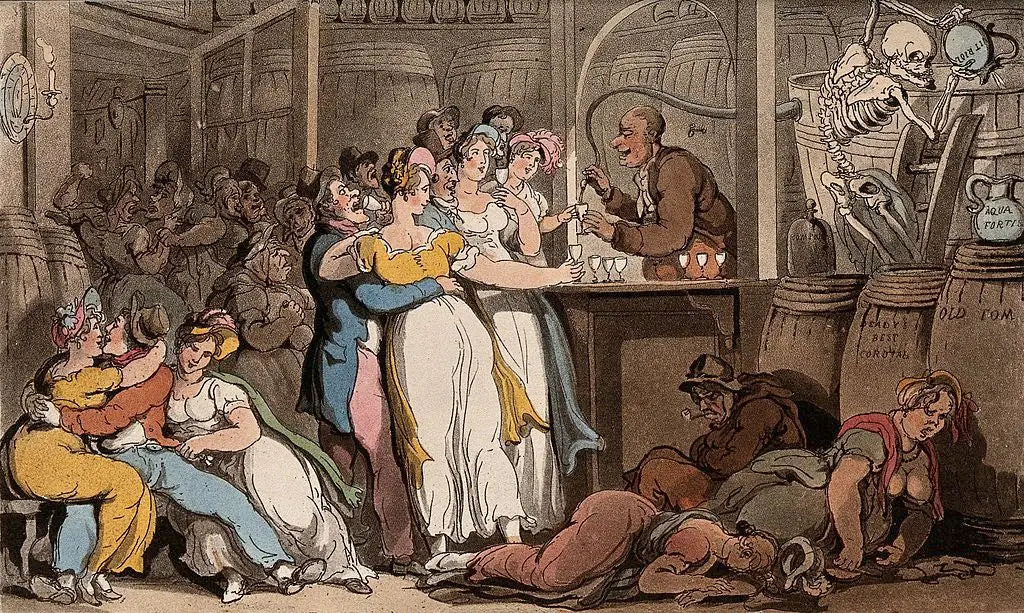 The Gin Craze, a period revealing the (excessive) passion of the English for gin
The different types of gin and their characteristics
Today, gin comes in multiple styles, each reflecting an era, a method, or a distillation philosophy. From traditional London Dry to modern infused creations, let’s discover together the main categories of this fantastic spirit.
Distilled Gin
Distilled Gin forms the basis of most modern gins. It is produced by redistillation of a neutral alcohol in the presence of botanicals and plants, mainly juniper berries, but also citrus peels, roots, spices, or flowers.
Unlike a simple Gin (without specific mention), where flavors can be added directly cold, Distilled Gin requires a complete distillation with aromatic ingredients, guaranteeing better integration of flavors and a more harmonious texture.
Once distilled, the producer may, if desired, add additional natural flavors, a freedom that distinguishes it from London Dry Gin, which is more strictly regulated. The result is a balanced, expressive, and often rounder gin, appreciated for its aromatic flexibility and the creativity it offers distillers.
London Dry Gin
London Dry Gin is the most iconic and widespread style of gin in the world. Recognizable by its dry taste and its dominant juniper flavor, it stands out for its great aromatic purity, marked by juniper berries but also often coriander, citrus peels, and sometimes herbal notes.
Contrary to what its name suggests, a bottle of London Dry Gin is not necessarily produced in London. Nevertheless, it must comply with a strict distillation method: no flavoring added after distillation and zero sweetness. Dry, lively, and elegant, London Dry Gin is the perfect base for great mixology classics such as the Gin & Tonic, the Dry Martini, or the Negroni.
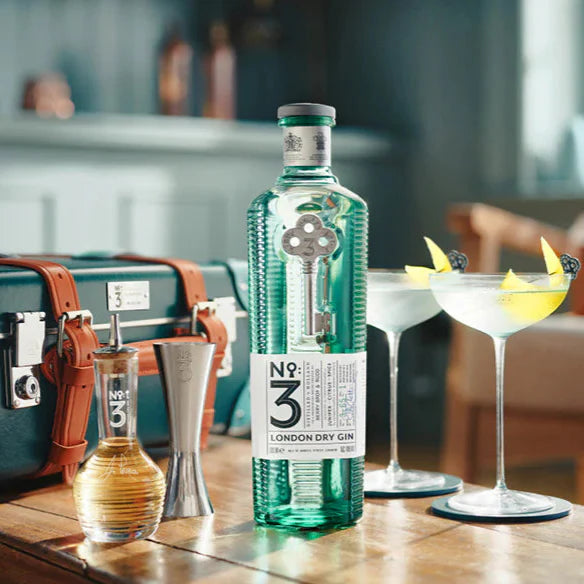
Plymouth Gin
Plymouth Gin is a rarer and rounder style, recognized by a protected geographical indication (PGI). It can only be produced in Plymouth, in the south of England. Less dry than London Dry (although it also contains no sugar), it reveals a more enveloping texture as well as slightly earthy and fruity notes. The juniper is less dominant, allowing more room for roots (angelica, iris).
If you are planning to buy a bottle of Plymouth Gin, expect a fine and balanced spirit that is equally suited to delicate cocktails or to being enjoyed neat in a tulip or old fashioned glass.
Old Tom Gin
Old Tom Gin, sometimes mistakenly called "aged gin", originated in the 18th century. It is a slightly sweet gin, the direct ancestor of London Dry, which combines the sweetness of Dutch jenever with the aromatic freshness of English gin.
Its balance between roundness and spices makes it the ideal companion for classic cocktails such as the Tom Collins or the Martinez. Today, some distillers choose to age part of it in oak barrels to give it more depth, but its identity remains that of a mellow, indulgent and authentic gin.
Flavored or infused gin
Flavored or infused gins embody contemporary creativity. They are crafted by maceration, flavoring, or infusion of fruits, flowers, herbs, or spices, before or after distillation, in order to create unique and expressive profiles. From lavender to yuzu, from apple to pink pepper, each recipe reflects the personality of the distiller and the inspiration of their terroir.
These gins, often colorful and generous on the palate, appeal to lovers of original cocktails and bring a touch of modernity to the world of traditional gin.
Aged Gin (Barrel-Aged Gin)
Finally, aged gin, also known as Barrel-Aged Gin, is a recent development that combines the world of gin with that of aged spirits.After distillation, the gin is here aged for several months in oak barrels, often in former whisky, bourbon, rum, or wine casks, which impart warm notes of vanilla, caramel, spices, and toasted wood. This maturation brings it an unprecedented roundness and complexity, softening the liveliness of the juniper to give way to a smoother texture.
Aged gin can be enjoyed neat or on the rocks (like a light whisky) in a tulip glass, as well as in reimagined cocktails such as a Negroni or an Old Fashioned. Striking a balance between tradition and innovation, it embodies the new artisanal wave that explores the boundaries of classic gin while paying tribute to the great aging techniques. Who said that aging in wood was reserved for whisky or rum ?!
The stages of gin production
The production of gin is a precise art where every detail matters. From the purity of the alcohol, the choice of botanicals and plants, to the mastery of distillation, everything comes together to create an aromatic, balanced, and refined spirit. Let’s discover together the main steps that give birth to this timeless classic.
Distillation of neutral alcohol
It all starts with a neutral alcohol, generally made from grains (wheat, rye, or barley), sometimes from beet or molasses.This alcohol, very pure (often at 96°), which could be compared to an unrectified vodka, forms the base on which all gin is built.
The first distillation aims to eliminate impurities to obtain a clear, light spirit without a pronounced character. This absolute neutrality is essential: it then allows the botanicals and plants, these aromatic ingredients that will define the personality of the gin to be enhanced.
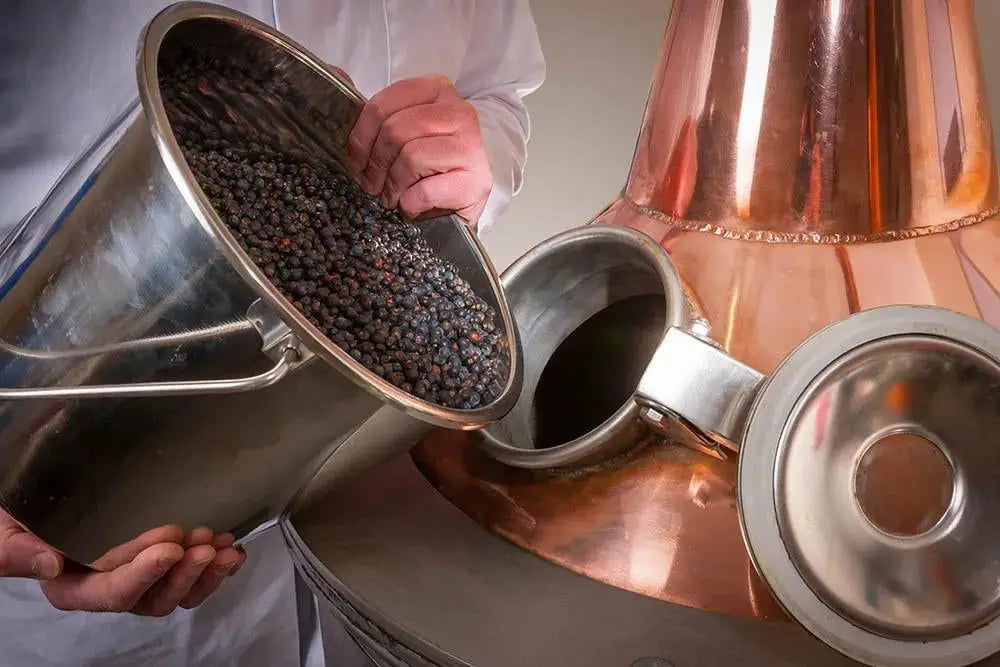 The distillation of gin ensures purity and finesse
Addition of botanicals
This is where gin comes to life. The central ingredient is very often the juniper berry, which brings its resinous and slightly peppery notes, but it is only one component of a more complex whole. Distillers also often combine coriander, citrus peels, angelica root, iris, or even exotic spices (cardamom, cinnamon, pepper, etc.).
The botanicals can be macerated directly in the alcohol for several hours or days, or distilled with steam in a basket suspended inside the still (vapor infusion method). Each distillery has its own recipe, often kept secret, and it is this skillful blend that gives each gin its unique aromatic profile.
The final distillation
After maceration or infusion, the whole is distilled a second time to extract the finest aromas. It is during this stage that the alcohol vapors are infused with the essences of juniper, citrus, and spices.
The final style depends on the type of gin desired:
- London Dry Gin follows a strict distillation process, with no sugar or flavorings added afterwards.
- Old Tom Gin may receive a slightly sweet touch, bringing roundness and smoothness.
- Plymouth Gin, produced exclusively in Plymouth, follows a traditional recipe that is softer and more rooty.
This final distillation is the heart of the process: it determines the purity, aromatic complexity, and taste balance of the gin.
Blending and dilution
Once distilled, the gin usually has an alcohol content of between 70 and 80% ABV. : far too strong to be tasted as is !
It is therefore diluted with pure water that is low in minerals in order to reach its final strength, most often between 40 and 45%. This step is crucial, as the quality of the water directly influences the texture and aromatic clarity of the gin.
Some producers then proceed with a final infusion, for example with peels, herbs, or fruits, in order to accentuate certain notes or to create a flavored gin. Others choose to age the spirit in barrels (for barrel-aged gins), thus imparting unique woody and vanilla nuances.
The best gin-based cocktails
True chameleon of spirits, gin stands out for its versatility and aromatic richness. Its neutral and dry base makes it an ideal ingredient for a multitude of creations, from the most classic to the most daring. Whether you are a fan of timeless cocktails or in search of contemporary blends, gin offers an endless playground for both bartenders and enthusiasts.
Here are the must-know classics to discover and enjoy in order to enhance this iconic spirit.
Gin & Tonic: the timeless classic
It is impossible to talk about gin without mentioning the famous Gin & Tonic. This simple yet elegant duo combines gin and tonic, revealing all the subtlety of juniper and botanicals used, balanced by the tonic’s delicate bitterness. To enhance the flavor, simply add a slice of lemon, lime, or even a bit of cucumber depending on the style and brand.
In summary, the Gin Tonic is a cocktail perfect for an aperitif or to accompany your evenings with friends !
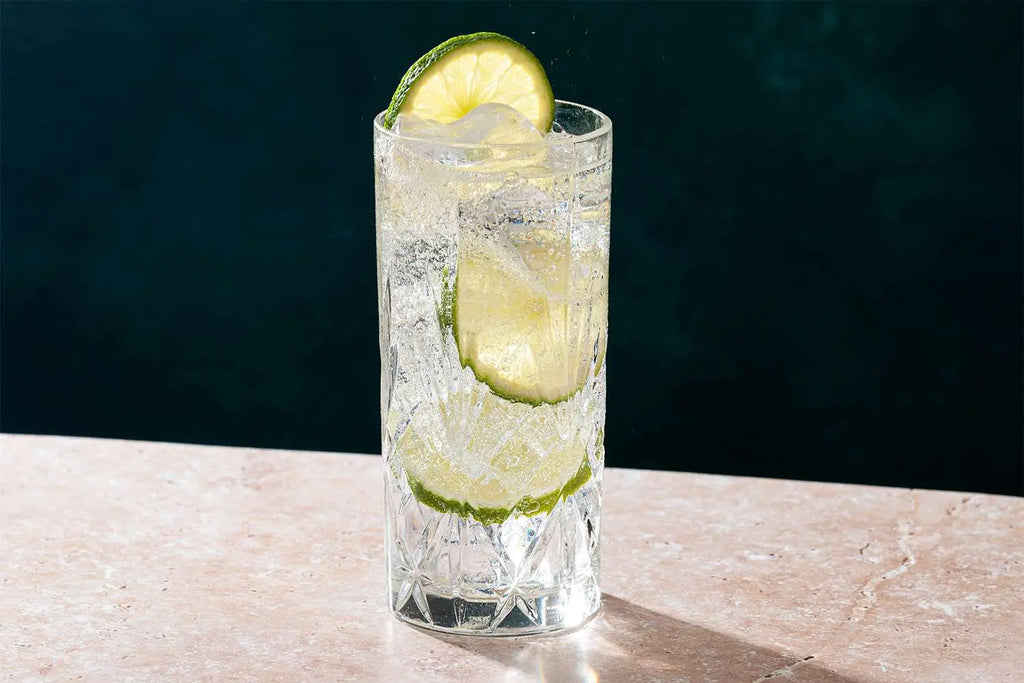
An iconic cocktail, the Gin & Tonic captivates with its lively and botanical notes
Martini
The Martini is the quintessential chic cocktail. Dry, elegant, and minimalist, it is prepared by mixing gin and white vermouth, often in varying proportions according to your taste (usually two parts gin to one part white vermouth). Traditionally, it is served with a lemon twist or an olive.
This cocktail highlights the dry and pure profile of London Dry Gin, but some prefer to use a slightly flavored gin here to add a personal touch. A timeless classic!
Negroni: an Italian classic
The Negroni is an iconic cocktail, blending Gin, Campari, and red vermouth (1 part each). This balanced trio creates a drink that is both bitter and refined, ideal for an aperitif.
With a quality gin, you get a balanced cocktail where the juniper blends with orange notes and the herbal touches of the vermouth, offering a rich and sophisticated tasting experience.
Tom Collins
The Tom Collins is a simple and refreshing cocktail: gin, lemon juice, sugar, and sparkling water. It is perfect for hot days and friendly gatherings. The sweetness of an Old Tom Gin will perfectly balance the acidity of the lemon, while bringing a beautiful aromatic profile.
A sparkling and light cocktail, ideal for summer or for your relaxing afternoons.
French 75: chic and sparkling
The French 75 is a highly popular cocktail in France and around the world, combining gin, champagne, lemon, and sugar (2 parts gin, 1 part sugar syrup, topped with champagne, ice cubes, and lemon), offering a sparkling and refined drink.
This cocktail is perfect for celebrating a special occasion or simply enjoying a sophisticated drink as an aperitif.
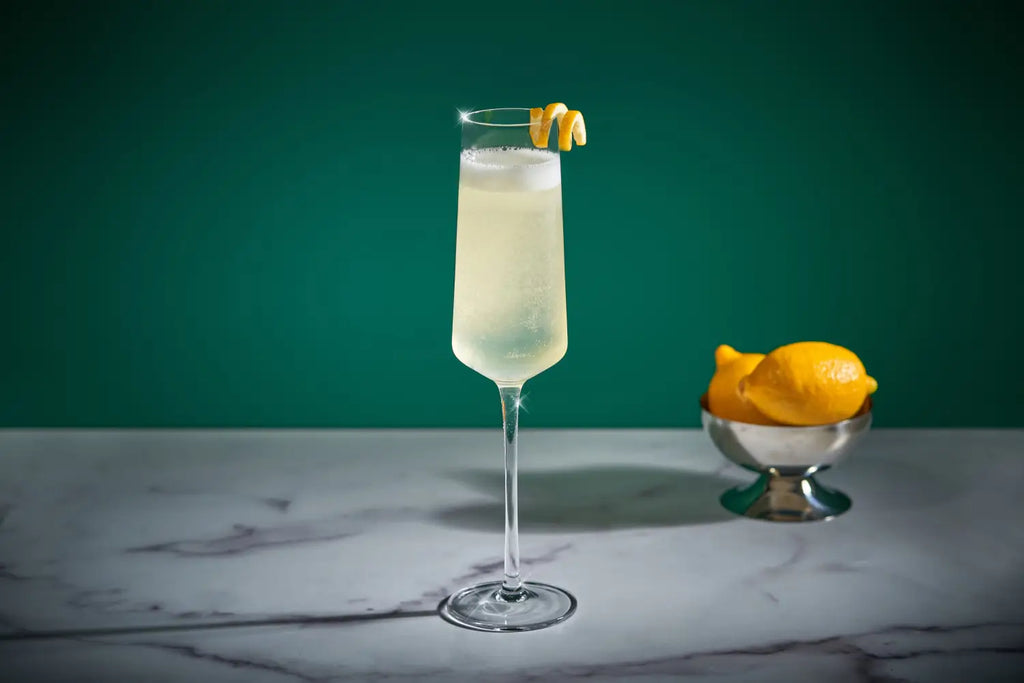 French 75, a blend of gin, fine bubbles, and lemony freshness
What are the best gins ?
Choosing a gin is a bit like choosing a perfume: it all depends on the style, character, and emotion you are looking for. Some brands have established themselves as essential references, each embodying a different facet of this fascinating world.
If you are planning to make a purchase soon, here is a selection of iconic gins to discover.
Citadelle: French craftsmanship
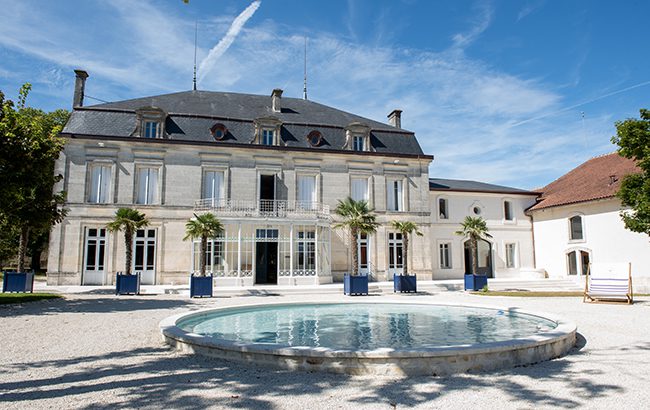
Symbol of French expertise, Citadelle is distilled in the cellars of Château de Bonbonnet, in Charente. Created by Alexandre Gabriel (Maison Ferrand), this brand highlights slow and precise distillation in open-flame stills.
Composed of 19 carefully selected botanicals, Citadelle reveals a profile that is both floral, spicy, and elegant, where juniper is balanced with notes of citrus, cinnamon, and southern flowers.
This is an ideal gin for lovers of complexity and finesse, just as comfortable in a Dry Martini as enjoyed neat over ice.
Kyoto Distillery
Japan's first artisanal gin distillery, the Kyoto Distillery embodies Japanese sobriety and precision. Its flagship gin, Ki No Bi, means "the beauty of the seasons" and is a tribute to Japanese nature and craftsmanship.
Crafted from rice alcohol and local botanicals such as yuzu, gyokuro green tea, or bamboo leaves, it offers a delicate, pure, and harmonious experience. The result: a gin of great aromatic elegance, ideal for sophisticated cocktails or pure tasting.
You are now a gin expert ! All that's left for you to do is pour yourself a glass from the bottle of your choice and enjoy your favorite drink or cocktail (always in moderation, of course).
So, as you have understood, gin is not just a simple spirit: it is a sensory journey through cultures, terroirs, and styles. From its Dutch roots to its renaissance in modern cocktail bars, it has managed to reinvent itself without ever losing its soul.
Whether it is dry, floral, aged, flavored, or infused, each bottle of gin offers a unique experience. Whether you enjoy it neat, in a classic Gin & Tonic, or a creative cocktail, take the time to explore and find the gin that suits your taste.
To make an online purchase at the best price, do not hesitate to contact your online wine merchant La Cave Éclairée ! We will be happy to guide you with precision through a selection of premium gins and spirits from around the world.


